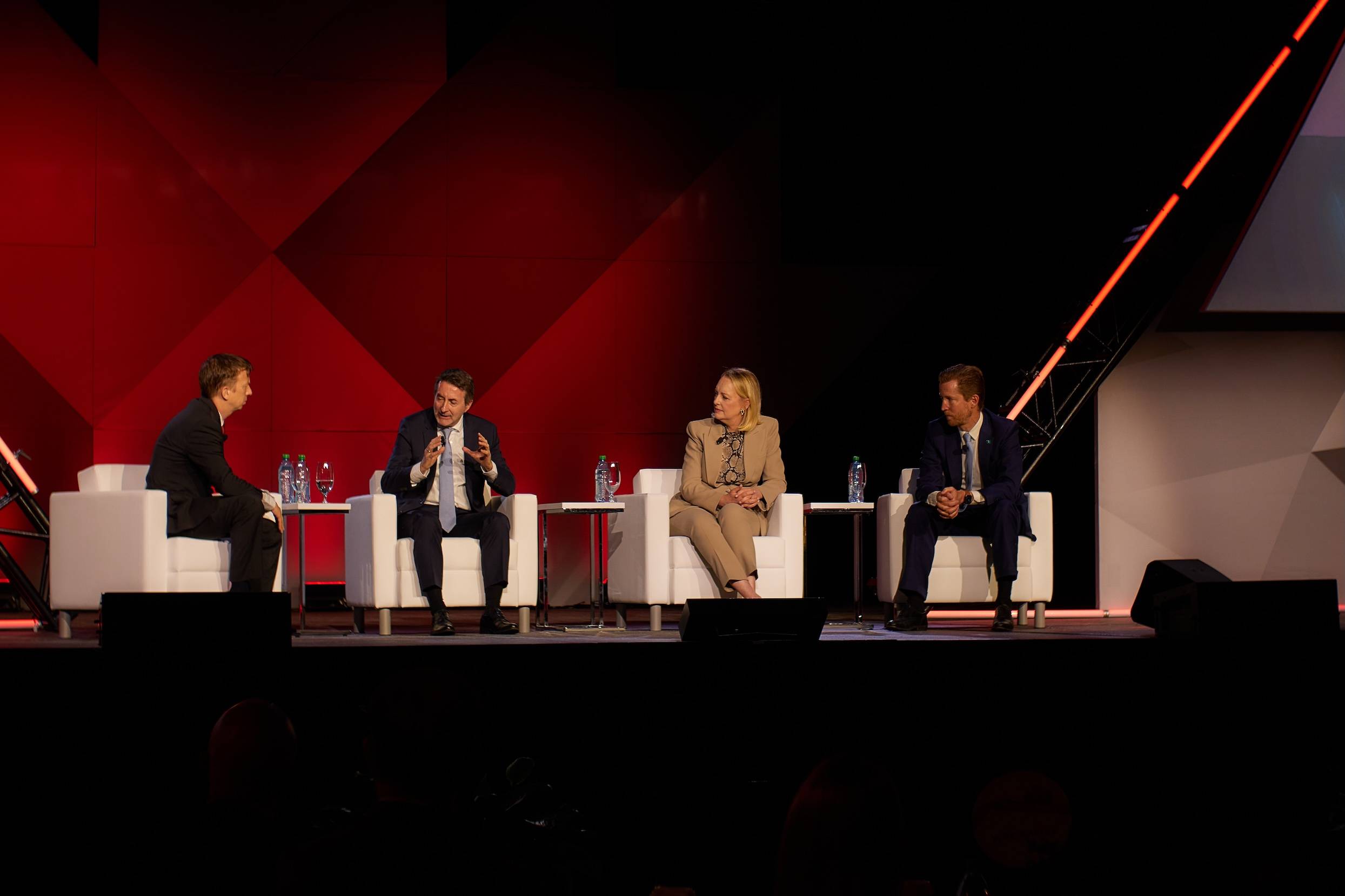

HUMAIN to Launch ‘Allam,’ the First Arabic AI Foundation Model from Saudi Arabia

Allam is the first foundational AI model developed from scratch in Saudi Arabia, focusing on the Arabic language and its dialects
TT

HUMAIN to Launch ‘Allam,’ the First Arabic AI Foundation Model from Saudi Arabia

Allam is the first foundational AI model developed from scratch in Saudi Arabia, focusing on the Arabic language and its dialects

In a bold move reflecting Saudi Arabia’s rapidly accelerating digital transformation, tech company HUMAIN is preparing to launch “Allam” - a foundational artificial intelligence model developed and trained entirely within the Kingdom.

Far from being just another addition to the world of large language models, Allam represents a clear statement from the Arab world: it has the capacity to innovate, build, and compete in this critical field on its own terms.

In an exclusive interview with Asharq Al-Awsat, HUMAIN CEO Tareq Amin revealed that the model will debut at the end of August. Allam, he explained, is built from the ground up to focus on the Arabic language in all its forms, from classical Arabic to a wide range of regional dialects, and is equipped with cultural and political safeguards tailored for the region.

“This is not just another large language model,” Amin said. “It’s proof that the Arab world can innovate, train, and deploy AI at a world-class level, according to our own standards.”

A Saudi-Built Innovation

The project was driven by a team of 40 PhD researchers, all based in the Kingdom. Working under tight confidentiality, they built what Amin describes as “the best Arabic model designed to meet our real needs.”

Allam was trained on proprietary datasets that, the company emphasizes, will “never be released on the public internet.” This gives it an unparalleled depth of local knowledge and accuracy in understanding compared with global models.

The model will first be available to the public via HUMAIN Chat, a free Arabic-language application similar to ChatGPT but with key differences. It not only handles formal Arabic with precision but can also converse naturally in dialects such as Saudi, Egyptian, Jordanian, and Lebanese. The system has already been tested in sensitive applications, including Sawtak, a tool for transcribing court session proceedings in Saudi Arabia.

“ChatGPT will never have the datasets we do,” Amin said. “I want the Arab world to start asking: why don’t we build a coalition to create AI models that reflect our culture and values?”

From the outset, Allam was designed to operate within a clear framework of responsible AI. Built-in safeguards at both the input and output stages ensure that its responses align with the cultural, social, and political norms of the region.

“This isn’t about censorship,” Amin stressed. “It’s about relevance and trust. A model is like a child: it needs guidance, education, and refinement to become a responsible adult. That’s our approach with Allam.”

HUMAIN itself is the product of a unique alliance, combining technical expertise from Aramco Digital and Saudi Arabia’s National Center for AI under the Saudi Data and Artificial Intelligence Authority (SDAIA). Amin views the launch not as a finish line, but as the starting point for continuous improvement, driven by feedback from users across the Arab world.

The company’s broader vision is to create a marketplace where developers and businesses can access Allam and deploy ready-made use cases - from business automation to citizen services - without having to start from scratch.

The Size of the Opportunity

Arabic is spoken by more than 350 million people worldwide, yet Amin points out that it remains underrepresented in leading AI models, which are typically trained primarily in English and a small number of other languages. Even when Arabic support is available, coverage of dialects and cultural nuances is limited.

HUMAIN’s focus is therefore squarely on serving government entities that rely almost entirely on Arabic, as well as private-sector industries such as tourism and healthcare.

For Amin, Allam is more than just a linguistic project. “It’s the spark that can shift the Middle East’s position in the global digital economy, from consumer to creator of original platforms and products,” he said. “We don’t yet have a complete AI ecosystem of developers and companies. We need to believe in our abilities, and the time is now.”

World-Class Infrastructure

Alongside Allam, HUMAIN has been investing heavily in infrastructure. The company recently announced a major agreement with Silicon Valley startup Groq, known for its ultra-fast, cost-efficient AI inference technology.

Amin’s relationship with Groq began two years ago when he met CEO Jonathan Ross, the original inventor of Google’s Tensor Processing Units (TPUs), at an event in Saudi Arabia. Impressed by Groq’s ASIC-based architecture optimized for inference, Amin decided to integrate their technology into HUMAIN’s operations.

That bet has paid off. HUMAIN deployed 19,000 Groq Language Processing Units (LPUs) in just six days, enabling inference services at roughly 60% lower cost than anywhere else globally. The system boasts low energy consumption, SRAM-based memory architecture, and a custom design optimized for running large models efficiently.

OpenAI Models Go Live in Saudi Arabia

The HUMAIN –Groq partnership has already delivered a milestone: the immediate availability of OpenAI’s two latest open-source models - gpt-oss-120B and gpt-oss-20B - on the GroqCloud platform, with full local hosting in the Kingdom.

Both models support a 128,000-token context window, provide real-time responses, and include integrated tools such as code execution and web search. Today, HUMAIN’s Groq-powered inference infrastructure in Dammam is serving users in 130 countries, a first for Saudi Arabia, and likely for the Middle East as a whole.

Rethinking the Enterprise Operating System

While Allam is HUMAIN’s flagship model, the company is also gearing up for another major release in October: HUMAIN One, which Amin describes as “a complete reinvention of the enterprise operating system.”

Instead of switching between dozens of separate applications, users interact with a single unified interface - text or voice-based - that can execute complex tasks seamlessly across multiple systems.

In one pilot case, a single AI agent reduced a payroll preparation process from 30 staff-hours involving four employees down to just 30 minutes, with higher accuracy. HUMAIN One’s voice interface will work on Windows, macOS, and HUMAIN’s own AI-enabled PCs, which all company staff currently use.

The HUMAIN AI Computer

This integration will extend to HUMAIN’s own AI computer, designed entirely in Saudi Arabia in partnership with Qualcomm. The device combines CPU, GPU, and Neural Processing Unit (MPU) capabilities for comprehensive AI computing power, tailored for advanced applications.

The HUMAIN AI computer will debut at the Future Investment Initiative (FII) in Riyadh this October, with a global release planned afterward. “It will change the game,” Amin said. “When you see its specs and price compared to the market, you’ll understand our edge computing strategy - delivering fast, efficient local processing without over-reliance on remote data centers.”

AI as an Economic Pillar

From Allam to Groq-powered infrastructure to HUMAIN One, all of HUMAIN’s initiatives align with Saudi Vision 2030. Amin views AI as “the foundation upon which the entire strategy is built”, not only in tourism, healthcare, and industry, but across every sector.

He praised Crown Prince Mohammed bin Salman’s approach as “both visionary and pragmatic,” treating AI “not as an optional tool, but as a necessity for economic growth, citizen empowerment, and sector-wide adoption.”

Investing in Local Talent

For Amin, HUMAIN’s success is first and foremost the result of its people, especially the Kingdom’s deep pool of AI talent.

“Some doubted whether we had the capabilities,” he said. “I told them: come and see for yourself.”

The presence of 40 PhD researchers behind Allam, he argued, is living proof that the Middle East can produce world-class AI models and challenge the assumption that the region must rely on external innovation.


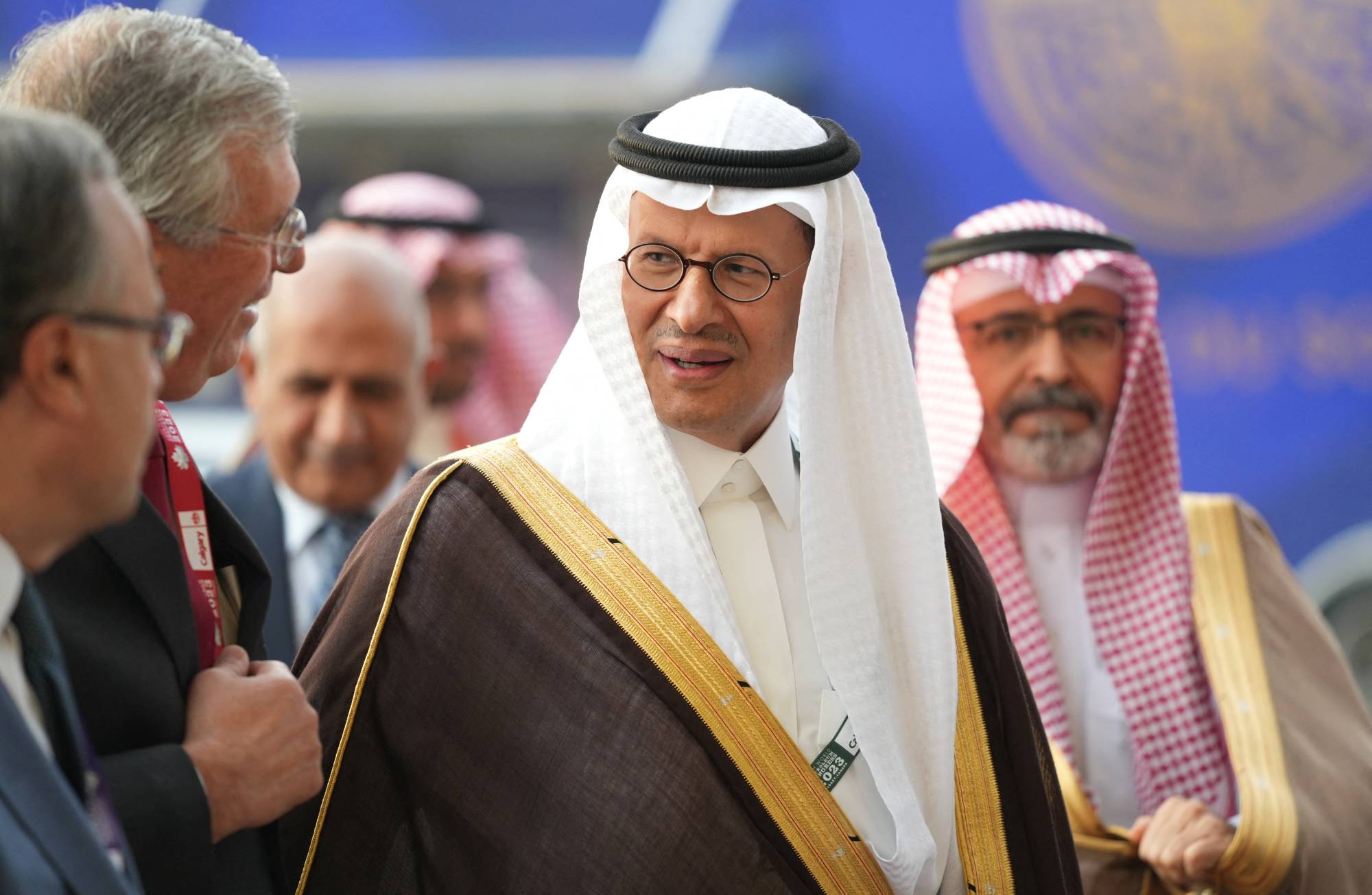
ECB's Rehn Sees Downside Risks to Inflation, Urges Action on Ukraine Funding

FILE PHOTO: Olli Rehn in Helsinki, Finland, January 28, 2024. Lehtikuva/Heikki Saukkomaa via REUTERS
TT

ECB's Rehn Sees Downside Risks to Inflation, Urges Action on Ukraine Funding

FILE PHOTO: Olli Rehn in Helsinki, Finland, January 28, 2024. Lehtikuva/Heikki Saukkomaa via REUTERS

Inflation in the euro zone faces downside risks in the medium term, even as price growth has returned to the ECB's 2% target, European Central Bank policymaker Olli Rehn said, according to a report in a magazine on Saturday.

The sharp drop from the October 2022 peak of 10.6% to around 2% currently was achieved without triggering mass unemployment or a severe slowdown, he told Italian financial magazine Milano Finanza.

"The good news is that inflation has stabilized around the ECB's symmetric 2% target, supporting real incomes in Europe," Reuters quoted him as saying. "Our latest forecast suggests inflation will remain slightly below 2% over the horizon."

Rehn also urged EU leaders to resolve a stalled plan for a Ukraine "repair loan" funded by Russia's frozen assets, calling it "essential, even existential."

He dismissed speculation about ECB involvement, saying such a move would breach the EU Treaty's ban on monetary financing.

Instead, he backed a European Commission proposal under Article 122, often called the 'EU's emergency clause,' that gives the EU Council the power to adopt measures proposed by the European Commission in exceptional circumstances, bypassing the ordinary legislative process and the European Parliament.

"Every European should support using frozen Russian assets to help Ukraine," he said.

The Finnish policymaker, who has served in senior EU roles for decades, confirmed he would be a strong candidate for ECB vice president when the post opens next year.

"I have received encouragement from various parts of Europe," Rehn added.


World Bank to Partner with Global Vaccine Group Gavi on $2 Billion in Funding

The Vaccine Alliance (GAVI) logo and US flag are seen in this illustration taken April 23, 2025. REUTERS/Dado Ruvic/Illustration/File Photo
TT

World Bank to Partner with Global Vaccine Group Gavi on $2 Billion in Funding

The Vaccine Alliance (GAVI) logo and US flag are seen in this illustration taken April 23, 2025. REUTERS/Dado Ruvic/Illustration/File Photo

The World Bank Group said on Saturday it is working with global vaccine alliance Gavi to strengthen financing for immunization and primary healthcare systems, planning to mobilize at least $2 billion over the next five years in joint financing.

The two organizations will also work together to advance vaccine manufacturing in Africa as part of a World Bank goal to help countries reach 1.5 billion people with quality, affordable health services by 2030, Reuters quoted the World Bank as saying.

Gavi is a public-private partnership that helps vaccinate more than half the world’s poorest children against diseases.

"Our expanded collaboration with the World Bank Group reflects a long-standing joint effort to support countries as they build robust and resilient health systems," said Sania Nishtar, Gavi's chief executive.

US Health Secretary Robert F. Kennedy Jr. said in June the United States would no longer contribute funding to Gavi, alleging that the group ignores safety and calling on it to "justify the $8 billion that America has provided in funding since 2001."

The Trump administration had also indicated in March it planned to cut annual funding of around $300 million for Gavi as part of a wider pullback from international aid.

In June, Gavi had more than $9 billion, less than a target of $11.9 billion, for its work over the next five years helping to immunize children.

Other donors, including Germany, Norway and the Gates Foundation, have pledged money this year for Gavi's future work.


Defying Trump, EU Hits X with $140 Million

(FILES) This illustration photograph shows the logo of social network X (formerly Twitter) and a photograph of CEO of social network X, Elon Musk displayed on a smartphone in Brussels on September 27, 2024. (Photo by Nicolas TUCAT / AFP)
TT

Defying Trump, EU Hits X with $140 Million

(FILES) This illustration photograph shows the logo of social network X (formerly Twitter) and a photograph of CEO of social network X, Elon Musk displayed on a smartphone in Brussels on September 27, 2024. (Photo by Nicolas TUCAT / AFP)

Elon Musk's social media company X was fined 120 million euros ($140 million) by EU tech regulators on Friday for breaching online content rules, the first sanction under landmark legislation that once again drew criticism from the US government.

X's rival TikTok staved off a penalty with concessions, according to Reuters.

Europe's crackdown on Big Tech to ensure smaller rivals can compete and consumers have more choice has been criticized by the administration of US President Donald Trump, which says it singles out American companies and censors Americans.

The European Commission, the EU's executive, said its laws do not target any nationality and that it is merely defending its digital and democratic standards, which usually serve as the benchmark for the rest of the world.

The EU sanction against X followed a two-year-long investigation under the bloc's Digital Services Act (DSA), which requires online platforms to do more to tackle illegal and harmful content.

The EU's investigation of ByteDance's social media app TikTok led to charges in May that the company had breached a DSA requirement to publish an advertisement repository allowing researchers and users to detect scam advertisements.

The European Commission's tech chief Henna Virkkunen said X's modest fine was proportionate and calculated based on the nature of the infringements, their gravity in terms of affected EU users and their duration.

“We are not here to impose the highest fines. We are here to make sure that our digital legislation is enforced and if you comply with our rules, you don't get the fine. And it's as simple as that,” she told reporters.

“I think it's very important to underline that DSA is having nothing to do with censorship,” Virkkunen said.

She said forthcoming decisions on companies which have been charged with DSA violations are expected to take a shorter time than the two years for the X case.

“I'm really expecting that we will do the final decisions now faster,” she said.

Ahead of the EU decision, US Vice President JD Vance said on X: “Rumors swirling that the EU commission will fine X hundreds of millions of dollars for not engaging in censorship. The EU should be supporting free speech not attacking American companies over garbage.”

TikTok, which pledged changes to its ad library to be more transparent, urged regulators to apply the law equally and consistently across all platforms.

EU regulators said X's DSA violations included the deceptive design of its blue checkmark for verified accounts, the lack of transparency of its advertising repository and its failure to provide researchers access to public data.

The Commission said the investigation into the dissemination of illegal content on X and measures taken to combat information manipulation and a separate probe into TikTok's design, algorithmic systems and obligation to protect children continue.

DSA fines can be as high as 6% of a company's annual global revenue.