

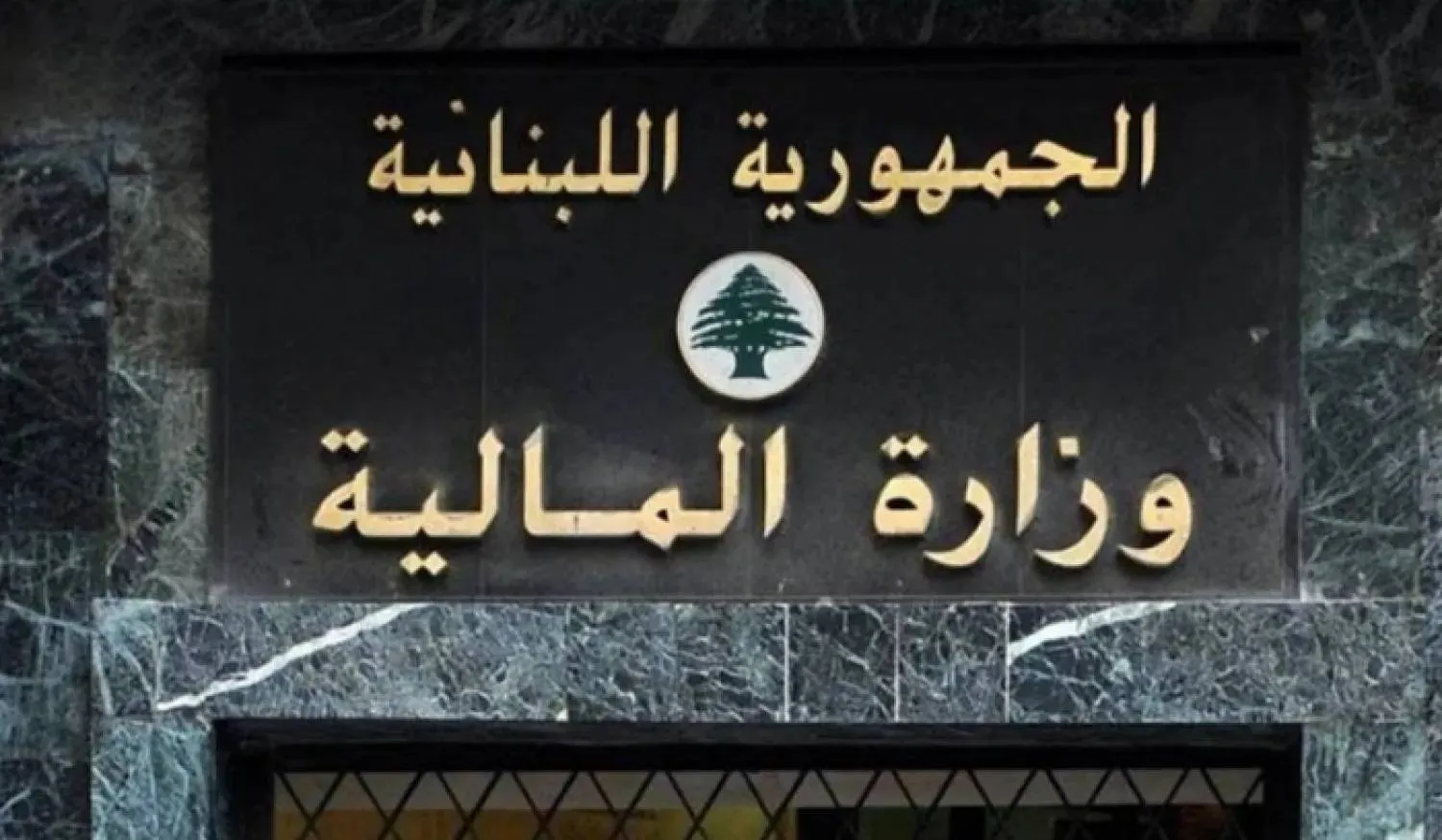

Lebanon Signals Caution as Finance Ministry Advances Recovery Strategy

Lebanon Finance Ministry Headquarters (National News Agency)
TT

Lebanon Signals Caution as Finance Ministry Advances Recovery Strategy

Lebanon Finance Ministry Headquarters (National News Agency)

Lebanon’s Finance Ministry is finalizing spending and revenue projections to complete the 2025 draft budget by the end of this month, aiming to submit it to cabinet for approval before sending it to parliament within constitutional deadlines.

A senior financial official told Asharq Al-Awsat the plan foresees about $6 billion in expenditures and revenues – up roughly $1 billion from the current budget, which was passed by government decree after parliament missed its legislative window last year amid political turmoil and fallout from the autumn Israel war.

Officials say the draft seeks to avoid a fiscal deficit by raising both income and spending in equal measure, while generating a primary surplus.

The government plans to boost investment outlays and improve public sector pay without introducing new taxes, instead counting on better collection, curbing tax evasion, and tackling smuggling and the shadow economy, which deprive the treasury of an estimated $5 billion annually.

Extra revenue is also expected from widening the taxpayer base and tightening customs receipts with advanced scanners.

Still, in line with its “no spending without matching revenue” principle, the ministry is preparing to reinstate a suspended levy on fuel consumption, with proceeds earmarked for monthly allowances to serving retired military personnel, although the measure had been frozen by a State Shura Council ruling.

Despite the projected balance, the budget once again omits debt obligations, particularly Eurobond repayments, underscoring what legal and banking sources describe as persistent hesitation by the government and finance authorities to confront the sovereign debt crisis at the core of Lebanon’s six-year financial collapse.

The ministry is also working on a long-delayed financial recovery law to address the estimated $73 billion hole in the banking system, a figure expected to rise by another $11 billion in war-related losses.

Prime Minister Nawaf Salam’s ministerial committee has now received detailed central bank data to shape the legal and operational framework for tackling the debt, restructuring Banque du Liban’s balance sheet, and determining the state’s contribution.

Parallel to the budget, the Finance Ministry is drafting a medium-term fiscal framework through 2029 to guide structural reforms demanded by international lenders.

Finance Minister Yassin Jaber has asked ministries and public institutions to factor in growth forecasts, inflation, balance of payments trends, and exchange-rate policy, with the aim of coordinating fiscal plans with development strategies to spur recovery, job creation, and better living conditions.

But business leaders remain skeptical. Financial sources say frustration is mounting over the government’s slow pace in adopting a recovery strategy, prolonging uncertainty and delaying tough decisions on how to distribute losses among the state, central bank, lenders, and depositors.

The delay comes as Lebanon approaches spring parliamentary elections, after which the government must resign, likely pushing back key financial legislation further.

If passed, the recovery law would define which debts can be repaid and which are recognized as losses, alongside a burden-sharing plan across state institutions, the central bank, commercial banks, and depositors.

It would also unlock implementation of the banking sector restructuring law approved by parliament in July but suspended until the financial recovery framework is enacted.


Mawani Signs Agreement to Construct Offshore Structures at Ras Al-Khair Port

Mawani Signs Agreement to Construct Offshore Structures at Ras Al-Khair Port
TT

Mawani Signs Agreement to Construct Offshore Structures at Ras Al-Khair Port

Mawani Signs Agreement to Construct Offshore Structures at Ras Al-Khair Port

The Saudi Ports Authority (Mawani) has signed a contract with Singatac Arabia to establish a fabrication center for offshore structures and platforms at Ras Al-Khair Port.

The contract supports the oil and gas industry and includes warehouses for prefabricated parts, specialized welding equipment, systems, and cranes to serve offshore platform and marine structure projects with an investment of SAR139 million across 100,000 square meters, according to SPA.

The project aims to create over 500 direct and indirect jobs, strengthen Ras Al-Khair Port’s operational capabilities and value-added services, expand port capacity, and increase the contribution of exports to the national economy.

Ras Al-Khair Port is distinguished by its strategic location and its ability to efficiently handle a wide range of goods. It features 14 berths with a total capacity of 35 million tons and spans an area of 23 kilometers.


Asian Shares Rise, Tracking Wall Street Gains as Trump Backs Down on Greenland

Traders work in front of screens at Hana Bank in Seoul (EPA)
TT

Asian Shares Rise, Tracking Wall Street Gains as Trump Backs Down on Greenland

Traders work in front of screens at Hana Bank in Seoul (EPA)

Asian shares mostly advanced on Thursday, tracking Wall Street, after US President Donald Trump walked back from imposing tariffs on eight European countries over Greenland and ruled out using military force to take control of the territory.

The future for the S&P 500 gained less than 0.1% and that for the Dow Jones Industrial Average was virtually flat on Thursday, The Associated Press reported.

Tokyo’s Nikkei 225 climbed 1.7% to 53,688.89, with technology stocks leading gains. SoftBank Group jumped 11.6% and equipment maker Disco Corp. soared 17.1%. Advantest, which makes testing equipment for computer chips, surged 5%.

South Korea’s Kospi closed 0.9% higher at 4,952.44 after crossing the 5,000 mark for the first time, as traders cheered. Technology-related stocks drove the rally. Shares of chipmaker SK Hynix picked up 2%, while Samsung Electronics rose 1.9%.

Hong Kong’s Hang Seng edged less than 0.1% higher to 26,600.68. The Shanghai Composite index edged 0.1% higher to 4,122.58.

In Australia, the S&P/ASX 200 gained nearly 0.8% to 8,848.70.

Taiwan’s Taiex rose 1.6%, while India’s Sensex added 0.2%.

US markets logged their biggest losses since October on Tuesday as investors reacted to Trump’s threat over the weekend to slap tariffs of 10% on Denmark, Norway, Sweden, Germany, France, the United Kingdom, the Netherlands and Finland for opposing US control of Greenland, sparking concerns over worsening relationships between the US and its European allies.

But Trump, attending the World Economic Forum in Davos, Switzerland, backed down on Wednesday and said he would not use force to acquire Greenland. The US president also said in a post on his social media site that he had agreed with the head of NATO on a “framework of a future deal” on Greenland and on Arctic security.

The easing tensions drove Wall Street optimism. On Wednesday, the S&P 500 climbed 1.2% to 6,875. The Dow Jones Industrial Average gained 1.2% to 49,077.23, while the Nasdaq composite also rose 1.2%, to 23,224.82.

Halliburton, the oil field services company, jumped 4.1% following stronger-than-expected profits for the latest quarter. United Airlines rose 2.2% also after better-than-expected quarterly profits. Netflix fell 2.2% even as it reported a stronger profit than expected, as investors focused on factors including a slowing growth of subscribers.

The price of gold fell 0.2% to $4,828.70 per ounce, reflecting investors’ reduced worries, after passing the $4,800 mark ahead of Trump’s reversal of stance on Greenland as many flocked to safe-haven assets.

In the bond market, US Treasury yields also eased following lessened fear among investors as well as a calming of Japan’s bond market turmoil. The yield on the 10-year Treasury eased to 4.25% from 4.30% late Tuesday.

Japan’s long-term bond yields surged to records earlier this week after Prime Minister Sanae Takaichi’s decision to call a snap election in February. That sparked concerns over her pledges to cut taxes and increase spending, which could hinder efforts to rein in government debt.

The US dollar rose to 158.75 Japanese yen from 158.27 yen, prompting analysts to speculate that authorities might intervene if the yen falls any further.

The euro rose to $1.1692 from $1.1687.

US benchmark crude oil shed 16 cents to $60.46 per barrel. Brent crude, the international standard, fell 24 cents to $65.00 per barrel.


Goldman Sachs Raises 2026-end Gold Price Forecast to $5,400/oz

A customer waits his turn to trade gold behind a glass window displaying gold prices at a gold shop in Bangkok (EPA)
TT

Goldman Sachs Raises 2026-end Gold Price Forecast to $5,400/oz

A customer waits his turn to trade gold behind a glass window displaying gold prices at a gold shop in Bangkok (EPA)

Goldman Sachs has raised its end-2026 gold price forecast to $5,400 per ounce from $4,900/oz earlier, noting private-sector and emerging market central banks' diversification ​into gold.

Spot gold climbed to a peak of $4,887.82 per ounce on Wednesday. The safe-haven metal has climbed more than 11% so far in 2026, extending a blistering rally that saw it jump 64% last year.

"We assume private sector diversification buyers, whose purchases hedge ‌global policy ‌risks and have driven the ‌upside ⁠surprise ​to our ‌price forecast, don't liquidate their gold holdings in 2026, effectively lifting the starting point of our price forecast," the brokerage said in a note dated Wednesday.

The brokerage also expects central bank buying to average 60 tons in 2026 as ⁠emerging market central banks are likely to continue diversification of ‌their reserves into gold.

Commerzbank, last ‍week, raised its ‍gold price forecast to $4,900 by the end ‍of this year, citing increased safe-haven demand.
