


Washington and Moscow: Secret Discussions on US Investments in Russian Energy Sector in Exchange for Peace

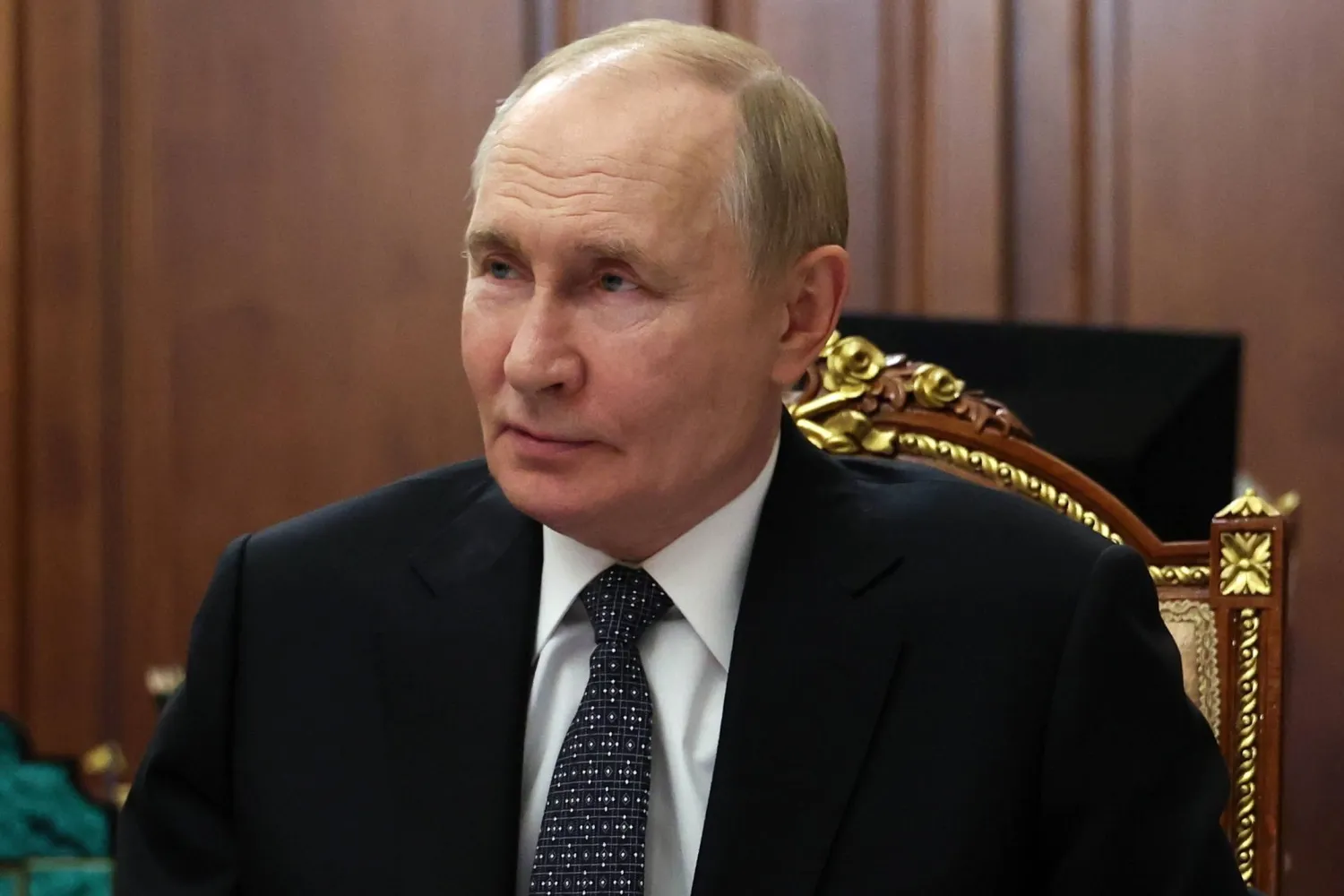
Russian President Vladimir Putin meets with Kherson Region Governor Vladimir Saldo (not pictured) at the Kremlin in Moscow, Russia, 26 August 2025. EPA/VYACHESLAV PROKOFYEV / SPUTNIK / KREMLIN POOL
TT

Washington and Moscow: Secret Discussions on US Investments in Russian Energy Sector in Exchange for Peace

Russian President Vladimir Putin meets with Kherson Region Governor Vladimir Saldo (not pictured) at the Kremlin in Moscow, Russia, 26 August 2025. EPA/VYACHESLAV PROKOFYEV / SPUTNIK / KREMLIN POOL

US and Russian government officials discussed several energy deals on the sidelines of negotiations this month that sought to achieve peace in Ukraine, according to five sources familiar with the talks.

These deals were put forward as incentives to encourage the Kremlin to agree to peace in Ukraine and for Washington to ease sanctions on Russia, they said.

The officials discussed the possibility of Exxon Mobil re-entering Russia’s Sakhalin-1 oil and gas project, three of the sources said.

Government officials also raised the prospect of Russia purchasing US equipment for its LNG projects, such as Arctic LNG 2, which is under western sanctions, four sources said.

Another idea was for the US to purchase nuclear-powered icebreaker vessels from Russia, Reuters reported on August 15.

The talks were held during US envoy Steve Witkoff’s trip to Moscow earlier this month when he met with Russian President Vladimir Putin and his investment envoy Kirill Dmitriev, three of the sources said. They were also discussed within the White House with Trump, two of the sources said.

These deals were also briefly discussed at the Alaska summit on August 15, one source said.

“The White House really wanted to put out a headline after the Alaska summit, announcing a big investment deal,” said one of the sources. “This is how Trump feels like he’s achieved something.”

Trump and his national security team continue to engage with Russian and Ukrainian officials towards a bilateral meeting to stop the killing and end the war, a White House official said in response to questions about the deals. It is not in the national interest to further negotiate these issues publicly, the official said.

Trump has threatened to impose more sanctions on Russia unless peace talks make progress and to place harsh tariffs on India, a major buyer of Russian oil. Those measures would make it difficult for Russia to maintain the same level of oil exports.

Trump’s dealmaking style of politics has been on display before in the Ukraine talks, when earlier this year the same officials explored ways for the US to revive Russian gas flows to Europe. These plans have been stalled by Brussels, which put forward proposals to fully phase out Russian gas imports by 2027.

The latest discussions have shifted to bilateral deals between the US and Russia, pivoting away from the European Union, which, as a bloc, has been steadfast in its support for Ukraine.

On the same day as the Alaska summit, Putin signed a decree that could allow foreign investors, including Exxon Mobil, to regain shares in the Sakhalin-1 project. It is conditional on the foreign shareholders taking action to support the lifting of Western sanctions on Russia.

Exxon exited its Russian business in 2022 after the Ukraine invasion, taking a $4.6 billion impairment charge. Its 30% operator share in the Sakhalin-1 project in Russia's far east was seized by the Kremlin that year.

The US has placed several waves of sanctions on Russia’s Arctic LNG 2 project, starting in 2022 and cutting off access to ice-class ships that are needed to operate in that region for most of the year.

The project is majority-owned by Novatek, which started working with lobbyists in Washington last year to try to rebuild relations and lift the sanctions.

The Arctic LNG 2 plant resumed natural gas processing in April, albeit at a low rate, Reuters reported. Five cargoes have been loaded from the project this year onto tankers under sanctions. A production train was previously shut down due to the difficulties in exporting given the sanctions.

This project was intended to have three LNG processing trains. The third is in planning stages, with technology expected to be supplied by China.

Washington is seeking to prompt Russia to buy US technology rather than Chinese as part of a broader strategy to alienate China and weaken relations between Beijing and Moscow, one of the sources said.

China and Russia declared a “no limits” strategic partnership days before Putin sent troops into Ukraine. Xi has met Putin over 40 times in the last decade and Putin in recent months described China as an ally.


Non-Oil Activities Account for Half of Saudi Economic Growth Momentum

Photo of the Saudi capital (SPA) 
TT

Non-Oil Activities Account for Half of Saudi Economic Growth Momentum

Photo of the Saudi capital (SPA) 

The Saudi economy posted real growth of 4.8% in the third quarter of 2025 compared with the same period of the previous year, reflecting the Kingdom’s sustained economic momentum. Non-oil activities were the primary engine of expansion, while seasonally adjusted real GDP rose 1.4% from the second quarter of 2025.

According to the final data released by the General Authority for Statistics (GASTAT), the annual growth figure came in slightly below the flash estimate published last October, which had projected a 5% increase. Even so, it remains the strongest quarterly performance recorded in 2025.

Non-oil activities delivered the largest contribution to overall annual growth, adding 2.4 percentage points, or 50% of the total 4.8% expansion. This outpaced the contribution from oil activities, which added 2.0 percentage points. The Authority revised its estimate for non-oil growth downward to 4.3% (from 4.5% in the flash estimate), while slightly raising its estimate for oil-sector growth to 8.3% (from 8.2%) for the previous quarter.

This improvement coincided with the gradual ramp-up in oil production following the expiration of voluntary cuts by the OPEC+ alliance at the end of August. Saudi Arabia increased its output by approximately 547,000 barrels per day starting in September, followed by an additional 137,000 barrels per day from November onward.

Both government activities and net taxes on products made modest positive contributions of 0.2 percentage points each.

On a quarterly, seasonally adjusted basis, oil and non-oil activities contributed 0.8 and 0.3 percentage points, respectively.

All economic sectors recorded positive annual growth. Oil refining emerged as the fastest-growing activity in the third quarter, rising 11.9% year-on-year and 3.9% quarter-on-quarter. It was followed by crude oil and natural gas activities, which grew 7.3% annually and 3.2% quarterly. Electricity, gas, and water services also posted gains of 6.4% year-on-year and 1.0% quarter-on-quarter.

From the expenditure perspective, performance varied between annual and quarterly comparisons. Final private consumption increased 2.6% year-on-year, but slipped 0.6% from the previous quarter. Conversely, final government consumption declined 3.1% annually, while increasing 1.4% quarter-on-quarter.

Gross fixed capital formation fell 0.7% year-on-year, but rebounded strongly on a quarterly basis with a 6.2% increase, indicating a pickup in investment spending during the third quarter.

Regarding foreign trade, the overall performance was buoyed by a significant surge in exports, which climbed 18.4% year-on-year and 7.5% quarter-on-quarter, reflecting strong external demand for Saudi products. Imports rose 4.3% annually, but edged down 1.2% on a quarterly basis.


New Law Exempts Saudi Industrial Imports in GCC States from Customs Duties  

An employee is seen at a factory in Saudi Arabia. (Vision 2030)
TT

New Law Exempts Saudi Industrial Imports in GCC States from Customs Duties  

An employee is seen at a factory in Saudi Arabia. (Vision 2030)

Saudi Arabia’s recent approval of the Unified Industrial Regulation Law for the Gulf Cooperation Council (GCC) will grant all industrial projects operating within GCC member states exemptions from customs duties on imports needed for industrial production, Asharq Al-Awsat has learned.

The exemptions will follow the unified rules governing tax-free industrial inputs agreed upon by member countries.

According to a copy of the law obtained by Asharq Al-Awsat, the competent authority in each state may offer industrial establishments a range of incentives and benefits in line with national regulations, provided they do not conflict with the GCC’s commitments to the World Trade Organization (WTO).

The law aims to regulate the industrial sector, strengthen industrial development, encourage investment, and increase the sector’s contribution to national income. It also seeks to deepen industrial linkages and economic integration among GCC countries, align industrial policies, and support national development programs.

The legislation is designed to boost cooperation and coordination among GCC states in industrial affairs, stimulate innovation, and promote the adoption and localization of advanced technologies to improve competitiveness. It reinforces policies supporting qualified national workforces in accordance with each country’s regulations.

The law encourages the digital transformation of industrial projects, the modernization of production technologies, and the adoption of Fourth Industrial Revolution tools, including advanced environmental and knowledge-based systems.

It further emphasizes compliance with safety, health, and environmental standards, the use of energy-efficient machinery, and adherence to public order and established norms across GCC states.

The law permits competent authorities to participate in industrial projects or industrial cities through capital contributions or in-kind stakes, provided such participation aligns with local legislation.

The Saudi Cabinet’s adoption of the law follows its endorsement by the GCC Supreme Council during its 43rd summit in Riyadh in 2022.

In Saudi Arabia, the Ministry of Industry and Mineral Resources will act as the competent authority. The Cabinet will set the minimum and maximum administrative and aggregate fines based on ministry recommendations.

The Minister will also appoint officials with judicial enforcement powers and issue the decision approving the law’s executive regulations.


Oil Edges Down with Ukraine Peace Talks, US Rate Decision in Spotlight

FILE PHOTO: A general view shows the West Qurna-2 oilfield in southern Basra, Iraq, April 17, 2017. REUTERS/Essam Al-Sudani/File Photo/File Photo
TT

Oil Edges Down with Ukraine Peace Talks, US Rate Decision in Spotlight

FILE PHOTO: A general view shows the West Qurna-2 oilfield in southern Basra, Iraq, April 17, 2017. REUTERS/Essam Al-Sudani/File Photo/File Photo

Oil prices edged down on Tuesday, extending losses from the 2% drop in the previous session, with markets keeping a close eye on peace talks to end Russia's war in Ukraine and a looming decision on US interest rates.

Brent crude futures were down 8 cents, or 0.1%, to $62.41 a barrel at 0409 GMT. US West Texas Intermediate crude was at $58.75, down 13 cents, or 0.2%.

Both contracts fell by more than $1 a barrel on Monday after Iraq restored production at Lukoil's West Qurna 2 oilfield, one of the world's largest, said Reuters.

"Brent's slip back toward the $62 (is) aligning seamlessly with the broader December narrative," said Phillip Nova's senior market analyst Priyanka Sachdeva. "The noise around potential Iraqi disruptions faded overnight, and the market quickly reverted to its core theme of ample supply and cautious demand expectations."

Ukraine will share a revised peace plan with the US after talks in London between its President Volodymyr Zelenskiy and the leaders of France, Germany and Britain.

"Oil is keeping to a tight trading range until we get a better idea of which way the peace talks will go," KCM Trade chief market analyst Tim Waterer said.

"If the talks break down, we expect oil to move higher, or if progress is made, and there is a likelihood of Russian supply to the global energy market resuming, prices would be expected to drop," he added.

According to sources familiar with the matter, the Group of Seven countries and the European Union are in talks to replace a price cap on Russian oil exports with a full maritime services ban in a bid to reduce Russia's oil revenue.

Also on the radar is the Federal Reserve's policy decision due on Wednesday, with markets pricing in an 87% probability of a quarter-point rate reduction.

Lower interest rates typically are a positive driver for oil demand given the decrease in borrowing costs, though some analysts were cautious about how much impact this could have on oil prices for now.

"Although markets are largely invested in upcoming FED policy decision on Wednesday for a possible 25bp cut, something that could lend short-term support at the lower end of the $60–65 band, the broader price structure remains anchored by expectations of an oversupplied 2026 (oil market)," said Phillip Nova's Sachdeva.
