


Iran's Rial Currency Falls to Near-record Lows on European 'Snapback' Sanctions Threat

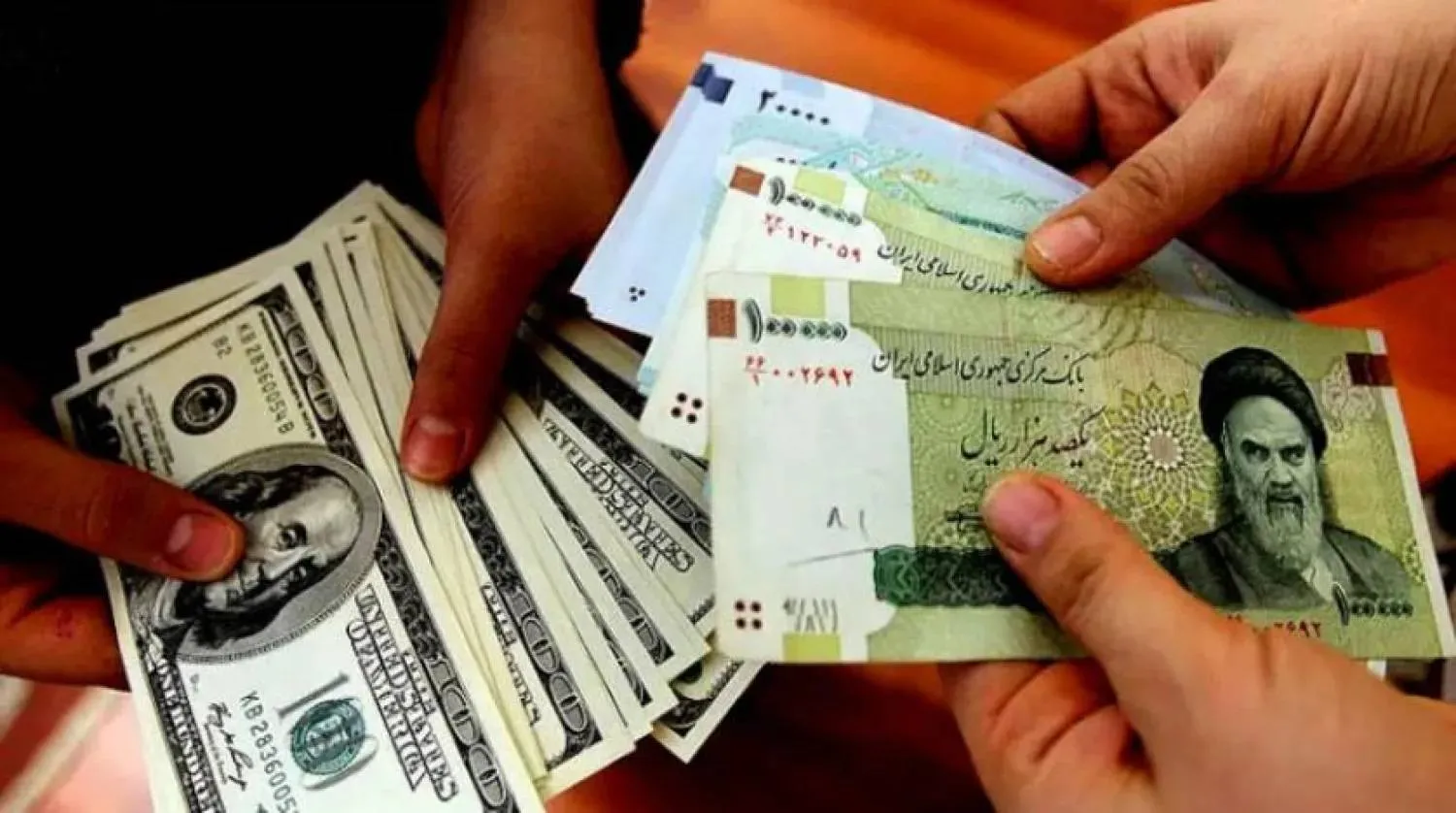
The dollar was selling for as much as 447,000 rials on Iran's unofficial market on Saturday
TT

Iran's Rial Currency Falls to Near-record Lows on European 'Snapback' Sanctions Threat

The dollar was selling for as much as 447,000 rials on Iran's unofficial market on Saturday

Iran's rial currency fell to near-record lows Thursday as concerns grew in Tehran that European nations will start a process to reimpose United Nations sanctions on the Islamic Republic over its nuclear program, further squeezing the country's ailing economy.

The move, termed the “snapback” mechanism by the diplomats who negotiated it into Iran’s 2015 nuclear deal with world powers, was designed to be veto-proof before the world body and would be likely to go into effect after a 30-day window. If implemented, the measure would again freeze Iranian assets abroad, halt arms deals with Tehran and penalizes any development of its ballistic missile program, among other measures.

In Tehran on Thursday, the rial traded at over 1 million to $1. At the time of the 2015 accord, it traded at 32,000 to $1, showing the currency's precipitous collapse in the time since. The rial hit its lowest point ever in April at 1,043,000 rials to $1.

France, Germany and the United Kingdom warned Aug. 8 that Iran could trigger snapback when it halted inspections by the International Atomic Energy Agency after Israeli strikes at the start of the two countries’ 12-day war in June. Israeli attacks then killed Tehran’s top military leaders and saw Supreme Leader Ali Khamenei go into hiding.

Iran appears resigned Iran initially downplayed the threat of renewed sanctions and engaged in little visible diplomacy for weeks after Europe’s warning, but has engaged in a brief diplomatic push in recent days, highlighting the chaos gripping its theocracy.

Foreign Minister Abbas Araghchi, speaking last week, signaled Iran’s fatalistic view of its diplomacy with the West, particularly as the Israelis started the war just as a sixth round of negotiations with the United States were due to take place.

“Weren’t we in the talks when the war happened? So, negotiation alone cannot prevent war,” Araghchi told the state-run IRNA news agency. “Sometimes war is inevitable and diplomacy alone is not able to prevent it.”

At issue is Iran’s nuclear enrichment Before the war in June, Iran was enriching uranium up to 60% purity, a short, technical step away from weapons-grade levels of 90%. It also built a stockpile containing enough highly enriched uranium to build multiple atomic bombs, should it choose to do so.

Iran long has insisted its program is peaceful, though Western nations and the IAEA assess Tehran had an active nuclear weapons program up until 2003.

It remains unclear just how much the Israel and US strikes on nuclear sites during the war disrupted Iran’s program, The Associated Press said.

Under the 2015 deal, Iran agreed to allow the IAEA even greater access to its nuclear program than those the agency has in other member nations. That included permanently installing cameras and sensors at nuclear sites. Other devices, known as online enrichment monitors, measured the uranium enrichment level at Iran’s Natanz nuclear facility.

The IAEA also regularly sent inspectors into Iranian sites to conduct surveys, sometimes collecting environmental samples with cotton clothes and swabs that would be tested at IAEA labs back in Austria. Others monitor Iranian sites via satellite images.

But IAEA inspectors, who faced increasing restrictions on their activities since the US unilaterally withdrew from Iran’s nuclear deal in 2018, have yet to access those sites. Meanwhile, Iran has said it moved uranium and other equipment out prior to the strikes — possibly to new, undeclared sites that raise the risk that monitors could lose track of the program’s status.

On Wednesday, IAEA inspectors were on hand to watch a fuel replacement at Iran's Bushehr nuclear reactor, which is run with Russian technical assistance.


China’s Top Diplomat Tours Africa with Focus on Strategic Trade Routes

China's Foreign Minister Wang Yi delivers a speech at the ministerial conference of the 2024 Summit of the Forum on China-Africa Cooperation (FOCAC) in Beijing, China September 3, 2024. (Reuters)
TT

China’s Top Diplomat Tours Africa with Focus on Strategic Trade Routes

China's Foreign Minister Wang Yi delivers a speech at the ministerial conference of the 2024 Summit of the Forum on China-Africa Cooperation (FOCAC) in Beijing, China September 3, 2024. (Reuters)

China’s top diplomat began his annual New Year tour of Africa on Wednesday, focusing on strategic trade access across eastern and southern Africa as Beijing seeks to secure key shipping ​routes and resource supply lines.

Foreign Minister Wang Yi will travel to Ethiopia, Africa's fastest-growing large economy; Somalia, a Horn of Africa state offering access to key global shipping lanes; Tanzania, a logistics hub linking minerals-rich central Africa to the Indian Ocean; and Lesotho, a small southern African economy squeezed by US trade measures, on this year’s trip, which runs until January 12.

Beijing aims to highlight countries it views as model partners of President Xi Jinping's flagship "Belt and Road" infrastructure program and to expand export markets, particularly in young, ‌increasingly affluent ‌economies such as Ethiopia, where the IMF forecasts growth of ‌7.2% ⁠this ​year.

China, ‌the world's largest bilateral lender, faces growing competition from the European Union to finance African infrastructure, as countries hit by pandemic-era debt strains now seek investment over loans.

"Foreign Minister Wang's visit aims to deepen political and mutual trust," a ministry spokesperson said, adding that the trip would "strengthen exchanges and mutual understanding between the two great civilizations of China and Africa."

Wang opened 2025 by visiting Namibia, the Republic of Congo, Chad and Nigeria.

FIRST DIPLOMATIC MISSION TO SOMALIA IN DECADES

His upcoming visit ⁠to Somalia will be the first by a Chinese foreign minister since the 1980s and is expected to provide Mogadishu ‌with a diplomatic boost after Israel became the first ‍country to formally recognize the breakaway ‍Republic of Somaliland, a northern region that declared itself independent in 1991.

Beijing, which reiterated its ‍support for Somalia after the Israeli announcement in December, is keen to reinforce its influence around the Gulf of Aden, the entrance to the Red Sea and a vital corridor for Chinese trade transiting the Suez Canal to Europe.

Further south, Tanzania is central to Beijing's plan to secure access to ​Africa's vast copper deposits. Chinese firms are refurbishing the Tazara Railway that runs through the country into Zambia. Li Qiang made a landmark trip ⁠to Zambia in November, the first visit by a Chinese premier in 28 years.

The railway is widely seen as a counterweight to the US and European Union-backed Lobito Corridor, which connects Zambia to Atlantic ports via Angola and the Democratic Republic of the Congo.

CHINA CHAMPIONS FREE TRADE IN LESOTHO

By visiting the southern African kingdom of Lesotho, Wang aims to highlight Beijing's push to position itself as a champion of free trade.

Last year, China offered tariff-free market access to its $19 trillion economy for the world's poorest nations, fulfilling a pledge by Chinese President Xi Jinping at the 2024 China-Africa Cooperation summit in Beijing.

Lesotho, one of the world's poorest nations with a gross domestic product of just over $2 billion, was among the countries hardest ‌hit by US President Donald Trump's sweeping tariffs last year, facing duties of up to 50% on its exports to the United States.


Morocco to Ban Frozen Sardine Exports from February

Passengers walk in front of Fes Railway Station, decorated with Africa Cup of Nations (AFCON) theme colors and flags, in the Moroccan city of Fes, January 5, 2026. (Reuters)
TT

Morocco to Ban Frozen Sardine Exports from February

Passengers walk in front of Fes Railway Station, decorated with Africa Cup of Nations (AFCON) theme colors and flags, in the Moroccan city of Fes, January 5, 2026. (Reuters)

Morocco will halt exports of frozen sardines from February ​1 to protect domestic supplies and contain prices, the cabinet member in charge of fisheries, Zakia Driouich, said.

Sardines are a staple for ‌Moroccan households, ‌and ‌the country ⁠is ​the ‌world's top exporter of the fish, thanks to its long Atlantic and Mediterranean coastlines.

The decision was triggered by a noticeable ⁠drop in supply, Driouich told ‌members of parliament ‍late on ‍Tuesday, without specifying how ‍long the ban would last.

Pelagic species such as sardines account for around 80% ​of Morocco's coastal fish resources, compared with 20% ⁠for white fish, she said.

The national canned-sardine industry (UNICOP) urged authorities in June to act against illegal fishing after reporting falling catches.

Morocco's sardine landings dropped 46% in 2024 to 525,000 metric tons, according ‌to official data.


Saudi Cabinet Approves Operating Framework for National Minerals Program

Custodian of the Two Holy Mosques King Salman bin Abdulaziz chairs the cabinet meeting on Tuesday (SPA)
TT

Saudi Cabinet Approves Operating Framework for National Minerals Program

Custodian of the Two Holy Mosques King Salman bin Abdulaziz chairs the cabinet meeting on Tuesday (SPA)

The Saudi Cabinet approved on Tuesday the draft regulations and operating procedures of the National Minerals Program, which was authorized for establishment in July 2024.

The program focuses on boosting the efficiency and adequacy of current and future mineral supply chains and operates under the supervision of the Ministry of Industry and Mineral Resources, as part of the Kingdom’s broader efforts to maximize value from the mining sector and strengthen the continuity of mineral supply chains at both regional and global levels.

The initiative aligns with Saudi Arabia’s strategic push to develop its mining industry as a key pillar of economic diversification.

Minister of Industry and Mineral Resources Bandar Alkhorayef had previously said the program would serve as a powerful enabling tool to bolster the quality and reliability of mineral supply chains, ensure sustained supplies for local industries and major projects, support the development of national infrastructure, and help achieve the goals of Vision 2030.

The program would play an active role in driving growth in the minerals sector and unlocking the Kingdom’s significant mineral resources, he added.

The program is designed to unify key roles among relevant stakeholders, address existing gaps to ensure uninterrupted mineral supply chains, build local capabilities in the sector, contribute to exploration activities, and secure industrial supplies for domestic industries and large-scale projects.

In a related development, Riyadh will host the fifth edition of the International Mining Conference from Jan. 13-15, under the patronage of Custodian of the Two Holy Mosques King Salman bin Abdulaziz.

The event aims to further cement Saudi Arabia’s leadership in the global mining sector, with expectations that around 200 exhibiting and sponsoring entities will participate. Around 150 memorandums of understanding and strategic agreements will be signed to support global mineral supply chains.
