


Saudi Economy Accelerates as Diversification and Legal Reforms Drive Growth

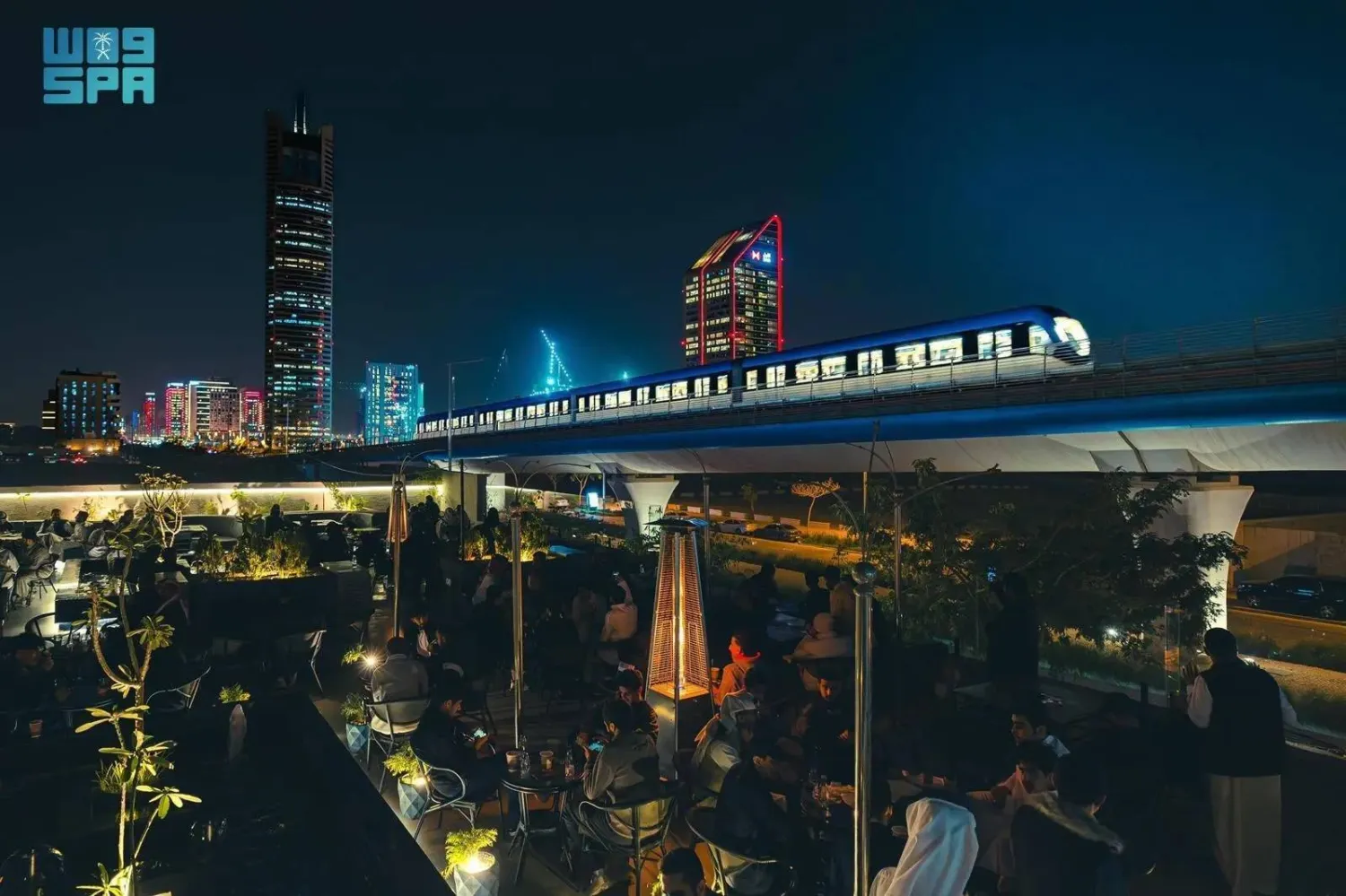
Quality of life represents a strategic national priority in Saudi Arabia (SPA). 
TT

Saudi Economy Accelerates as Diversification and Legal Reforms Drive Growth

Quality of life represents a strategic national priority in Saudi Arabia (SPA). 

Saudi Arabia’s economy has undergone nearly a decade of transformation under Crown Prince Mohammed bin Salman, as sweeping reforms and diversification efforts reshape the country’s economic landscape.

Since the launch of Saudi Vision 2030 in April 2016, the Kingdom has embarked on its most significant economic shift in decades. The transformation has extended far beyond fiscal adjustments or limited diversification programs, evolving instead into a broad structural reform aimed at reducing reliance on oil and building a more diverse and dynamic economy.

Economic indicators suggest the strategy is gaining traction. Saudi Arabia’s gross domestic product (GDP) rose from about SAR 2.6 trillion in 2016 to nearly SAR 4.7 trillion in recent years, roughly $1.3 trillion, according to the latest official figures. That represents an average cumulative annual growth rate of about 8 percent, placing the Kingdom among the fastest-growing major economies globally during this period.

The shift reflects Vision 2030’s broader strategy to expand non-oil industries and widen the country’s production base beyond hydrocarbons.


Faisal Al-Fadhel, a legal expert in economic legislation and a member of the board of trustees of the Riyadh Economic Forum, said the reforms launched under Crown Prince Mohammed bin Salman have introduced a more diversified and sustainable economic model.

“Saudi Arabia has moved toward reducing its dependence on oil while expanding promising sectors such as tourism, technology, logistics and advanced industries,” Al-Fadhel told Asharq Al-Awsat. “This approach enhances the resilience of the national economy and increases the attractiveness of the Saudi market for both domestic and foreign investors.”

Recent economic indicators support that assessment. Non-oil activities have recorded strong growth, the private sector’s contribution to GDP has expanded, and foreign direct investment inflows have increased. At the same time, Saudi Arabia has improved its standing in global competitiveness indicators, reinforcing its ambitions to become a regional hub for business and investment.

Al-Fadhel noted that the transformation has also been supported by a broad legislative reform agenda designed to modernize the regulatory environment. Key economic and commercial laws — including the Companies Law, Investment Law, and Bankruptcy Law — have been updated, alongside regulations related to corporate governance, investor protection and competition. The reforms aim to improve transparency, regulatory certainty and the efficiency of the investment environment.

Non-Oil Sectors Lead Growth

One of the most visible outcomes of the economic shift is the rising contribution of non-oil sectors, which now account for 56 percent of GDP. Data show that non-oil activities were the primary driver of real economic growth in 2025.

Saudi Arabia ended 2025 with its strongest growth in two years, with GDP expanding 4.5 percent, according to estimates by the General Authority for Statistics (GASTAT). The economy grew 5 percent in the fourth quarter, with all major sectors contributing to the expansion compared with 2024.

Labor Market Changes

The Saudi labor market has also seen notable shifts. Unemployment among Saudi nationals has declined, while female participation in the workforce has reached record levels following a series of labor and regulatory reforms.

More than 2.48 million Saudis have joined the private sector in recent years, reflecting the impact of job localization policies. Economic transformation programs have also generated roughly 800,000 new jobs, with strong growth in engineering professions.

Employment opportunities have expanded particularly in tourism, supported by major entertainment and tourism projects, as well as in the pharmaceutical and medical manufacturing industries, where job numbers have doubled.

Investment at the Center

Investment has become a central pillar of the Kingdom’s economic strategy. Crown Prince Mohammed bin Salman has positioned both domestic and foreign investment as key drivers of growth and diversification.

The government established the Ministry of Investment and launched the National Investment Strategy as a comprehensive framework to boost capital formation. Total investment — measured by fixed capital formation — has risen from about SAR 672 billion in 2017 to roughly SAR 1.44 trillion by the end of 2024, more than doubling in less than a decade.

Al-Fadhel emphasized that the private sector is a critical partner in achieving Vision 2030 goals through expanded investment, technological adoption, innovation, and entrepreneurship.

Public Investment Fund Expands Role

The Public Investment Fund (PIF) has emerged as a central instrument of the transformation. With assets estimated at SAR 3.47 trillion, it has become one of the world’s largest sovereign wealth funds.

PIF is leading major investments in tourism, renewable energy, industry, technology and entertainment while launching large-scale development projects designed to create new industries and strengthen Saudi Arabia’s position as a global economic hub.


China Shipping Giant Cosco Resumes Bookings to Some Gulf Countries

A cargo ship operated by Cosco Shipping is docked at the foreign trade container terminal of Qingdao Port, operated by Shandong Port Group, in China's eastern Shandong province on March 25, 2026. (Photo by CN-STR / AFP)
TT

China Shipping Giant Cosco Resumes Bookings to Some Gulf Countries

A cargo ship operated by Cosco Shipping is docked at the foreign trade container terminal of Qingdao Port, operated by Shandong Port Group, in China's eastern Shandong province on March 25, 2026. (Photo by CN-STR / AFP)

Chinese shipping giant Cosco said on Wednesday that it was resuming new bookings for container shipments to some Gulf countries, after a three-week suspension in response to the Middle East war.

The state-owned, Shanghai-based firm was among several major shipping groups to pause operations in the Strait of Hormuz, a key waterway through which one-fifth of the world's oil and gas passes normally.

Tehran has said several times it was not targeting friendly nations, but transits through the Strait had nevertheless largely ground to a halt.

Iran said in a statement circulated by the International Maritime Organization on Tuesday that "non-hostile vessels" would be granted safe passage through the waterway.

Cosco "resumed new bookings for general cargo containers for shipments" from the "Far East" to the UAE, Saudi Arabia, Bahrain, Qatar, Kuwait, and Iraq "with immediate effect", according to a company statement.

It did not mention shipments travelling in the opposite direction, from the Gulf.

"New booking arrangements and the actual carriage are subject to change due to the volatile situation in the Middle East region," it added.

Cosco, which operates one of the world's largest oil tanker fleets, announced on March 4 that it would suspend new bookings for services for routes through the Strait of Hormuz owing to the "escalating conflicts in the Middle East region and resultant restrictions on maritime traffic".


Qatar Emir Makes Minor Changes to QIA Board

People visit a mall in Doha on March 23, 2026. (Photo by AFP)
TT

Qatar Emir Makes Minor Changes to QIA Board

People visit a mall in Doha on March 23, 2026. (Photo by AFP)

Qatar's Emir Sheikh Tamim bin Hamad Al Thani issued a decree on Wednesday ⁠making minor changes to ⁠the board of the ⁠Qatar Investment Authority, while keeping Sheikh Bandar bin Mohammed bin Saud Al Thani as chairman and Sheikh ⁠Mohammed ⁠bin Hamad bin Khalifa Al Thani as deputy chairman.

The decision stipulated that QIA’s Board of Directors would be restructured as follows: Sheikh Bandar bin Mohammed bin Saud Al Thani as Chairman, Sheikh Mohammed bin Hamad bin Khalifa Al Thani as Deputy Chairman, Ali bin Ahmed Al Kuwari as a member, Saad bin Sherida Al Kaabi as a member, Sheikh Faisal bin Thani bin Faisal Al-Thani as a member, Nasser bin Ghanim Al Khelaifi as a member, and Hassan bin Abdullah Al Thawadi as a member.

The decision is effective starting from its date of issue and is to be published in the official gazette.


Oil Falls More Than 5% and World Shares Gain Over Possible de-escalation of Iran War

A man fills his car with petrol at the petrol station in Port Dickson, Negri Sembilan, Malaysia, 25 March 2026. EPA/FAZRY ISMAIL
TT

Oil Falls More Than 5% and World Shares Gain Over Possible de-escalation of Iran War

A man fills his car with petrol at the petrol station in Port Dickson, Negri Sembilan, Malaysia, 25 March 2026. EPA/FAZRY ISMAIL

Oil prices fell more than 5% and world shares gained on Wednesday over the possibility of a de-escalation of the Iran war and negotiations between the United States and Iran. US futures were up 0.9%.

In early European trading, Britain's FTSE 100 rose 1% to 10,072.60. France's CAC 40 was up 1.4% to 7,855.31, while Germany's DAX was 1.6% higher at 22,989.80.

Tokyo’s Nikkei 225 was up 2.9% to 53,749.62. South Korea’s Kospi gained 1.6% to 5,642.21.

Hong Kong’s Hang Seng rose 1.1% to 25,335.95, while the Shanghai Composite index was 1.3% higher at 3,931.84. Labubu doll maker Pop Mart's Hong Kong-listed shares fell 22.5%, after it announced annual revenue for last year that was largely in line with analysts’ estimates.

Australia’s S&P/ASX 200 climbed 1.9%. Taiwan’s Taiex was up 2.5%.

US President Donald Trump's claims of progress being made from talks with Iran this week and his postponement on Monday of a deadline to “obliterate” Iran’s power plants over the reopening of the Strait of Hormuz have also fueled optimism that an end to the Iran war could come soon.

Trump's administration has offered a 15-point ceasefire plan to Iran, but an Iranian military spokesperson mocked the US’ attempt at a ceasefire deal Wednesday.

With the Strait of Hormuz being a key waterway for crude oil and liquefied natural gas transport, oil and gas prices have spiked and fluctuated in recent days.

Oil prices fell again on growing hopes for a de-escalation. Brent crude, the international standard, fell 5.2% to $94.97 per barrel. It was around $104 on Tuesday.

Benchmark US crude was down 5.3% early Wednesday to $87.44 a barrel.

While Iran has denied negotiations were taking place, and attacks in the Middle East continued, Pakistan has offered to host talks between Washington and Tehran. And as Trump raised optimism of a de-escalation of the war, at least 1,000 more American troops from the 82nd Airborne Division are said to be deployed to the Middle East in the coming days.

On Tuesday, US stocks closed lower. The S&P 500 lost 0.4% to 6,556.37. The Dow Jones Industrial Average edged down 0.2% to 46,124.06, while the Nasdaq composite was 0.8% lower to 21,761.89.

Shares of Estee Lauder sank more than 9%, following confirmation that the US-listed company is in merger talks with Spanish beauty and perfume group Puig.

In other dealings early Wednesday, gold prices resumed its rise after falling earlier. It dropped in part because of rising US Treasury yields over dimming expectations of a Federal Reserve rate cut after the spike in oil prices threatened to fuel global inflation.

The price of gold was up 3.6% early Wednesday to $4,561.90 per ounce. It was above $5,000 earlier this month.

The US dollar was at 158.84 Japanese yen, up from 158.69. The euro was trading at 1.1602, down from $1.1608.
