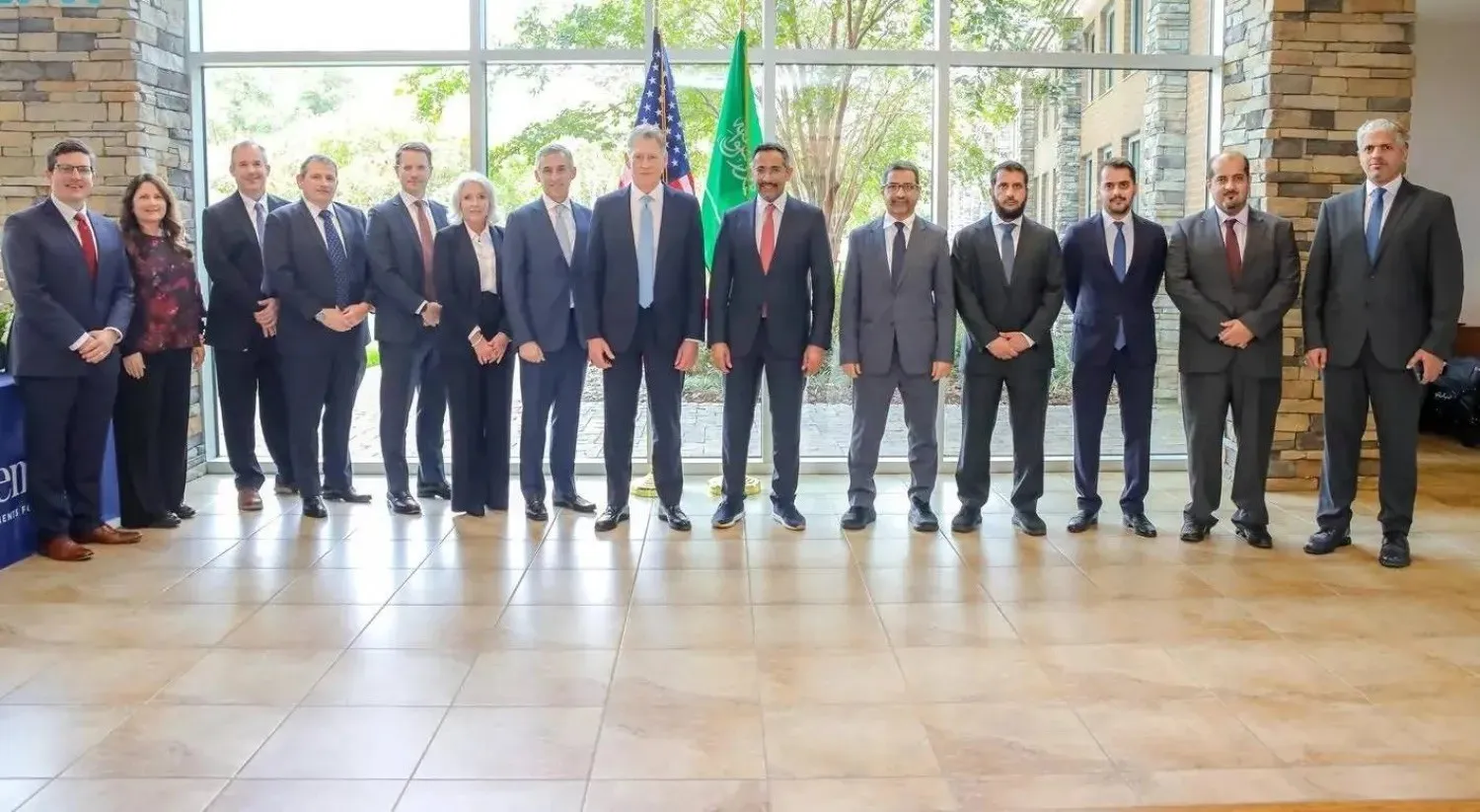
Saudi Arabia laid out a new strategy in Rome to strengthen global supply chains and build a broader partnership model with Europe, seeking to move beyond current geopolitical pressures and deepen economic ties across regions.
Public Investment Fund Governor and Saudi Aramco Chairman Yasir Al-Rumayyan said Aramco was studying plans to establish additional oil storage facilities in strategic locations worldwide to strengthen energy security.
At the same time, he said the PIF was preparing about 140 new investment opportunities for European partners worth 10.4 billion euros by 2030, after its investments helped support European GDP by $80.6 billion and create 160,000 jobs.
The targets came as Riyadh activated 41 contingency and business continuity plans to address the fallout from the closure of the Strait of Hormuz and Bab al-Mandab and secure shipping and air traffic.
Italian Prime Minister Giorgia Meloni called for European-Gulf relations to move toward an untapped strategic integration linking three continents, while Saudi Arabia’s tourism sector continued to show resilience, supported by domestic and religious tourism despite regional pressures.
The remarks came during al-Rumayyan’s participation in a high-level panel at the FII PRIORITY Europe 2026 summit, affiliated with the Future Investment Initiative Institute, held in the Italian capital.
Al-Rumayyan said Saudi Aramco already owns vital oil storage facilities in several major global markets, particularly in Asia, South Korea and Japan. He said the company was now seriously studying additional storage facilities in different regions to help stabilize markets and protect supply lines from sudden shocks.
The Aramco chairman said recent crises had underscored the importance of long-term planning. The company, he said, maintained continuity in more than 99% of its operations during recent periods of tension and restarted facilities previously hit by missile attacks in record time, reflecting the efficiency of its infrastructure and the resilience of its supply chains.
On partnership with Europe, al-Rumayyan said the PIF planned to offer about 140 new investment opportunities to expand cooperation with European partners. The opportunities linked to joint projects are worth a total of 10.4 billion euros ($11.97 billion) and extend through 2030, he said.
He also pointed to regulatory and legal challenges that have slowed the expansion of Saudi investments in Europe and affected major companies such as Aramco, SABIC and the sovereign wealth fund.
Some rules, he said, not only limit new capital flows but also threaten the sustainability of existing projects. Still, he said European policymakers and regulators were aware of the obstacles, raising hopes for better solutions in the coming period.
On the wider energy transition, al-Rumayyan called for “energy realism,” saying new and renewable energy sources were an important strategic addition but not a full replacement for oil and gas.
Vital industries such as petrochemicals, fertilizers and food production still depend on fossil fuels, he said, while global energy demand is rising with the rapid expansion of artificial intelligence applications and data centers.
Europe and the Gulf
Meloni said the next phase required Europe and Gulf states to move toward a deeper relationship based on strategic partnership and economic integration. The two sides, she said, have major potential to link three continents and expand trade, energy flows and investment.
Speaking at the FII PRIORITY Europe 2026 summit in Rome on Thursday, Meloni said Europe needed to strengthen its independence and industrial and technological capabilities, while cooperation with the Gulf offered an opportunity to build a shared path that supports global stability and growth.
She said strengthening cooperation between Europe and Gulf states was a priority for the next phase, adding that the partnership had significant untapped potential and could become a decisive bridge between West and East, and between Africa and Asia.
Meloni said Italy intended to play a leading role in that effort as a gateway to Europe and a natural hub for energy, logistics and trade in the Mediterranean.
Europe and the Gulf, she said, could together offer a strategic cooperation model that can be replicated and expanded, turning energy, trade, infrastructure and connectivity networks into sources of stability rather than vulnerability.
Treaties of Rome
Meloni said the choice of Rome for the summit carried special significance. The city hosted the signing of the Treaties of Rome in 1957, which laid the foundations of today’s European Union. As the 70th anniversary of those treaties approaches, she said Europeans should reflect on the Europe they want and need to build.
She said that vision was aligned with the Future Investment Initiative’s role as a global agenda bringing together ideas, capital, technology and practical projects to build the future. She voiced hope that Rome would become the initiative’s permanent European stop, where results are measured, progress is reviewed and new priorities are set jointly.
Hormuz crisis
Saudi Transport and Logistics Services Minister Saleh al-Jasser said the current Strait of Hormuz crisis had required countermeasures, prompting Riyadh to activate 41 business continuity and emergency plans that had already been prepared and tested. That readiness, he said, allowed the kingdom to respond quickly from the earliest days of the crisis.
Speaking at the summit, al-Jasser said the region was facing difficult conditions, but Saudi Arabia was ready to address the developments. He cited a 2013 experience when the kingdom faced challenges in the Red Sea and had to redirect its trade eastward toward the Arabian Gulf, while protecting trade flows and preserving supply chain resilience.
Al-Jasser said the kingdom helped manage disrupted flights and evacuate passengers who had landed at different airports. It also rerouted ships bound for ports in the Eastern Province to ports in the western region.
The minister said the challenges were not limited to the closure of the Strait of Hormuz but also included ongoing difficulties in Bab al-Mandeb.
Some international shipping companies, he said, were hesitant to cross, requiring coordination, information sharing and a greater role for the private sector. Since the start of the current crisis, more than 23 new shipping services have been launched in coordination with the private sector, he said.
Saudi tourism developments
Saudi Tourism Minister Ahmed al-Khateeb said domestic tourism represents between 60% and 65% of total tourism activity in the kingdom, making it a key source of balance and stability during periods of disruption to international travel.
Strong local demand, he said, helped keep Saudi Arabia’s tourism sector moving, particularly during seasons and holidays when domestic destinations reach full bookings. That demand strengthened the sector’s ability to withstand external shocks.
Al-Khateeb said the global and Saudi tourism sectors had faced pressure in recent months from geopolitical tensions, higher travel costs and fluctuations in air traffic. Even so, he said the system had shown an ability to recover and maintain relative stability.
Global tourism has fully recovered from the fallout of the coronavirus pandemic, he said, with the number of travelers worldwide reaching about 1.5 billion last year and total spending hitting about $2.2 trillion. Yet travelers still represent only about 20% of the world’s population, he said, pointing to significant room for growth.
In Saudi Arabia, he said, the kingdom received about 123 million visitors in the previous year. Tourism now accounts for 5.2% of GDP, with a strategic target to raise that share to 10%.
Al-Khateeb said the sector has created about 1 million jobs since the launch of tourism transformation programs, driven by expanding investment in destinations, infrastructure and related services.
“The start of this year was strong for Saudi Arabia and Gulf states, before tourism movement was affected by regional tensions, higher fuel costs and the cancellation of a number of flights, which affected demand levels and travel costs,” he said.
Despite those pressures, he said the kingdom ended the first five months of the year with positive performance and only a slight decline of about 5% to 6% compared with the same period last year. He described that as a “resilient” performance under global conditions.
Al-Khateeb said religious tourism remains a core pillar of stability, as Saudi Arabia hosts the Two Holy Mosques, ensuring a steady flow of visitors throughout the year for Hajj and Umrah.
Former president of the Future Investment Initiative Institute Richard Attias said Europe was at a turning point as the world undergoes rapid and unprecedented change.
According to Attias, artificial intelligence is reshaping industries, capital flows are shifting, energy systems are being redrawn, supply chains are being restructured, geopolitical balances are changing and new global centers are emerging at an exceptional pace.