



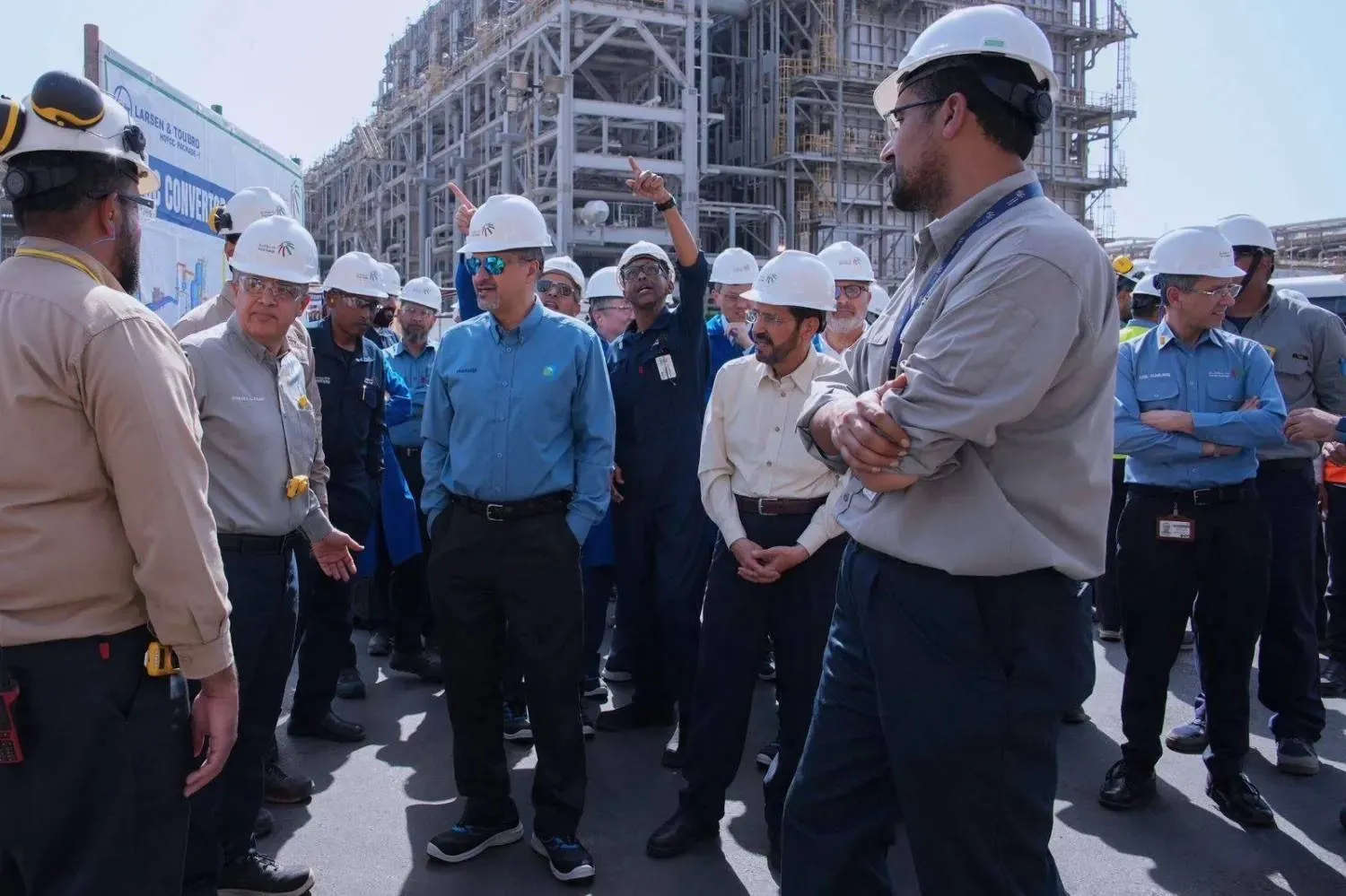

Rabigh Refining and Petrochemical Co. (Petro Rabigh), Saudi Arabia’s largest refining and petrochemicals company, has launched a capital restructuring plan aimed at reducing accumulated losses that reached SAR7.3 billion ($1.95 billion) by the end of the second quarter of 2025.
The plan, which involves a capital increase followed by an equal reduction, is the first of its kind in the Saudi financial market. It is designed to place Petro Rabigh, which is jointly owned by Saudi Aramco and Japan’s Sumitomo Chemical, on a more stable financial footing, according to Chairman Ibrahim Al-Buainain.
The company’s accumulated losses have exceeded the 20 percent capital threshold set by the Saudi Capital Market Authority (CMA). As of June 30, they represented 43.9 percent of the firm’s capital, forcing management to present a survival plan.
CMA regulations require companies that cross this limit to disclose the reasons behind their losses and detail recovery strategies, or consider liquidation, within 180 days.
Under the board’s proposal, Petro Rabigh will raise its capital from SAR16.71 billion ($4.45 billion) to SAR21.97 billion ($5.86 billion), funded by Aramco and Sumitomo. The additional SAR5.26 billion ($1.4 billion) will be used to reduce debt, strengthen the balance sheet, and improve operational efficiency.
The restructuring will then proceed in two phases. In the first, Petro Rabigh will introduce two share classes: Class A, which represents existing shares, and Class B, a new category of non-voting shares.
Class B shareholders will gain rights to dividends starting in 2028 and priority in liquidation, but will not be granted voting power, ensuring the current governance structure remains intact.
In the second phase, the company will reduce its capital back to SAR16.71 billion by lowering the nominal share value from 10 riyals ($2.66) to 6.85 riyals ($1.83). This will allow Petro Rabigh to offset accumulated losses without canceling shares.
The recapitalization follows an earlier agreement reached in August of last year, when Sumitomo Chemical reinvested the proceeds from a SAR2.6 billion ($693 million) share sale into Petro Rabigh as part of a deal with Aramco.
Under the terms, both Aramco and Sumitomo contributed equal amounts, raising a total of SAR5.26 billion. After the transaction, Aramco increased its stake in the company to 60 percent, while Sumitomo’s share fell to 15 percent.
Petro Rabigh was listed on the Saudi stock exchange in January 2008 with a market capitalization of SAR18.3 billion ($4.88 billion). Today, its market value is about 12.3SAR billion ($3.28 billion).
According to Mohammed Al-Farraj, senior asset management executive at Arbah Financial, the injection of funds and the loan concessions provided by the founding shareholders will ease financial pressures and reduce debt burdens.
“This improvement in liquidity enhances the company’s flexibility, allowing it to finance operations and new projects without relying on additional borrowing,” he said.
Al-Farraj noted that the introduction of non-voting Class B shares strikes a balance between raising new capital and preserving shareholder control.
“These shares grant rights to future dividends and liquidation proceeds but not to decision-making, which protects existing investors from dilution while enabling the founders to provide fresh support,” he explained.
He added that the combined increase and subsequent reduction of capital represents a dual-track strategy that simultaneously strengthens funding and erases accumulated losses, improving the balance sheet and restoring investor confidence.
Overall, he argued, the plan should improve Petro Rabigh’s capital structure, enhance market trust, and provide the financial flexibility needed for expansion or to withstand economic headwinds.
Financial advisor Mohammed Al-Maimouni of Al-Mutadawil Al-Arabi said the CMA granted Petro Rabigh an exceptional exemption from public offering rules, allowing the new share class to be issued through a private placement to the founding shareholders only.
He described this as “a critical point,” stressing that the restructuring is targeted exclusively at the company’s founders and not at the broader shareholder base.
He also noted that the recapitalization is tied to Aramco’s acquisition of Sumitomo’s stake, making the process part of a wider restructuring of both ownership and finances.
Looking ahead, Al-Maimouni observed that individual investors will not be able to participate in the capital increase.
He said that while the plan could yield positive results in the medium term if Petro Rabigh successfully reduces its debt and improves operating performance, investors should remain cautious.
“The company still faces market and operational risks,” he added, “and the financial turnaround may take years before its results are fully reflected.”


