


Fitch Downgrade Casts Shadow over New French PM's Budget Battles

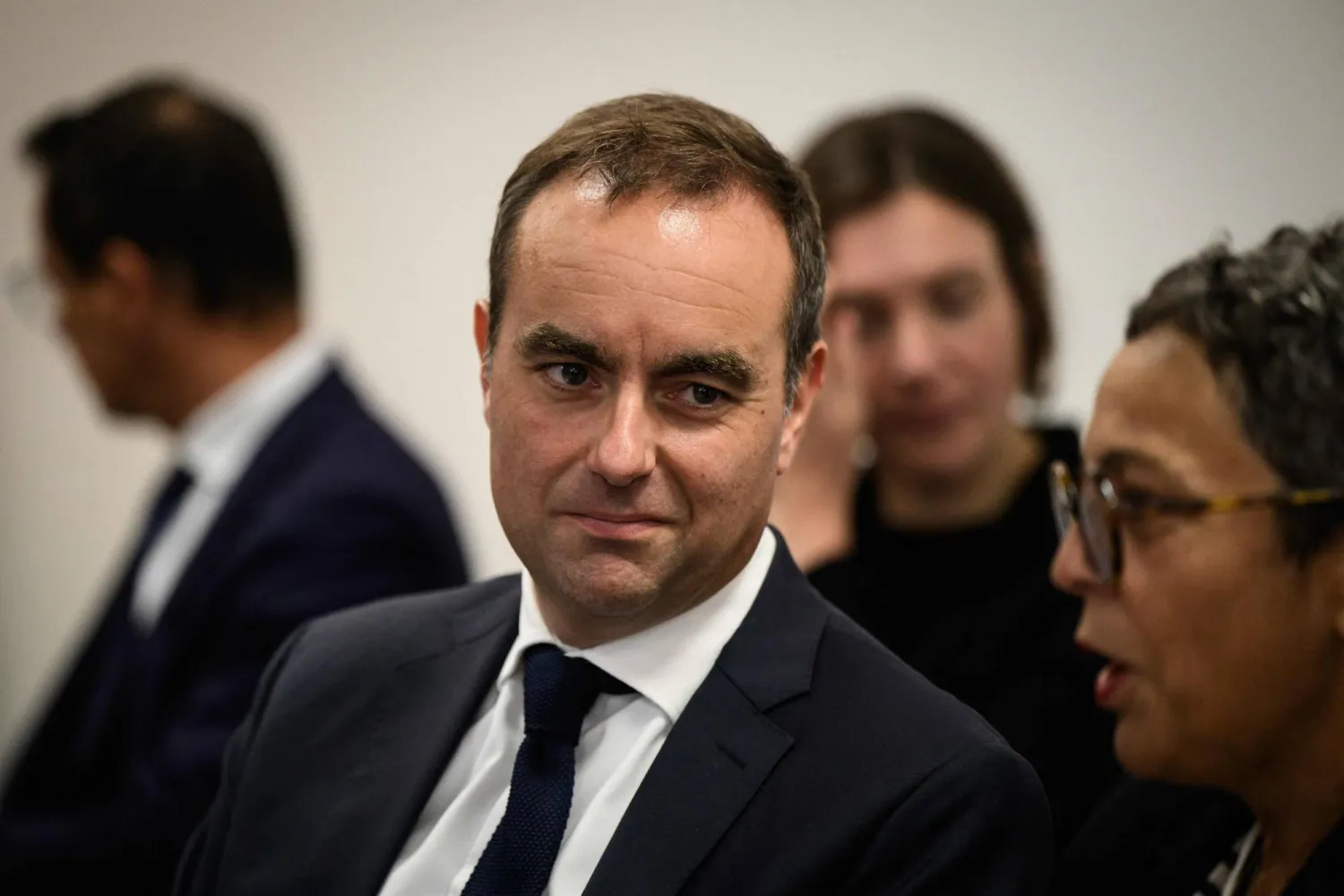
Newly appointed France's Prime Minister Sebastien Lecornu attends a meeting as he visits the departmental health center in Macon, central eastern France, on September 13, 2025. (Photo by JEFF PACHOUD / AFP)
TT

Fitch Downgrade Casts Shadow over New French PM's Budget Battles

Newly appointed France's Prime Minister Sebastien Lecornu attends a meeting as he visits the departmental health center in Macon, central eastern France, on September 13, 2025. (Photo by JEFF PACHOUD / AFP)

Fitch's downgrade of France's credit rating has cast a pall over newly installed Prime Minister Sebastien Lecornu as he begins talks to draft a budget, while unions plan strikes over spending cuts and employers protest against the threat of tax hikes.

Citing political instability and rising debt, Fitch cut its rating late Friday to A+ from AA-, giving France its lowest credit score on record just days after President Emmanuel Macron tapped Lecornu to be his fifth prime minister in two years.

Analysts said the downgrade had already been priced in by markets, which largely held ground on Monday. The closely watched risk premium France pays over German debt was steady at just under 80 basis points, while French stocks rose and the euro was little changed.

But the timing could hardly be worse. Fitch's downgrade fires the starting gun on the government's complex sprint to present a first draft of the 2026 budget to parliament by October 7, with a possible extension until October 13.

Lecornu faces a near-impossible task to make the cuts demanded by investors growing impatient with France's spending, while also winning over three ideologically distinct parliamentary blocs with differing views on how to cut the budget.

He also faces pressure from the streets. Unions have called for nationwide strikes on Thursday to protest against Lecornu's plans to reduce the budget deficit - the euro zone's biggest at 5.4% of output this year.

On Saturday, in his first interviews since taking office, Lecornu said he would scrap his predecessor's unpopular plans to eliminate two public holidays and was open to discussing higher taxes on the wealthy.

The Socialists are demanding a wealth tax on the ultra-rich as a condition for not voting to topple his government. The head of the MEDEF employers federation, Patrick Martin, said on Saturday they would mobilize in mass against any such project.

A major tax hike could also alienate the conservative Republicans, whose leader, outgoing Interior Minister Bruno Retailleau, said the Socialists' demands would "only make matters worse" in already high-tax France.

With France's borrowing costs rising, the budget would have to put public finances on a "healthy trajectory,” Lecornu said.

"The future budget may not fully reflect my convictions ... In fact, that's almost certain!" he added, urging "frank" discussions with the Socialists, Greens and Communists.

Lecornu gave few indications of his budget priorities, other than saying he wanted to give local governments more power and cut down on the layers of bureaucracy.

"We remain negative on France as we do not see how the new Lecornu government would be able to credibly deliver fiscal reforms," said Mohit Kumar, economist at Jefferies.

Kumar said his main worry was the upcoming rating reviews by Moody's and S&P on October 24 and November 28.

"If political uncertainty lingers, there is a risk of at least one more downgrade," said Kumar, noting that a second downgrade following Fitch's could lead to some forced selling of French debt.

Meanwhile, the far-right National Rally's Marine Le Pen renewed pressure on Macron to call new parliamentary elections - an idea he has rejected so far. Party leader Jordan Bardella said Lecornu must show a clear break with past policies or face a vote against his government.



Egypt Imposes Business Curfew to Counter Soaring Fuel Costs

Cairo was forced to raise fuel prices by more than 30 percent, after strikes on regional oil infrastructure and threats against the Strait of Hormuz (File Photo)
TT

Egypt Imposes Business Curfew to Counter Soaring Fuel Costs

Cairo was forced to raise fuel prices by more than 30 percent, after strikes on regional oil infrastructure and threats against the Strait of Hormuz (File Photo)

Egypt has ordered shops, restaurants and shopping malls to close from 9:00 pm from Saturday, hoping to curb energy bills that have more than doubled because of the Iran war.

Prime Minister Mostafa Madbouly announced the curfew and said it would last for a month initially.

"Shops, shopping centers, restaurants and cafes will all close at 9:00 pm on weekdays," he said, adding that on Thursdays and Fridays at the weekend they will be allowed to stay open until 10:00 pm, Reuters reported.

The premier said that before the war, Egypt's monthly energy bill was $560 million. Today, for the same quantity, he said Egypt is paying $1.650 billion.

Madbouly said Cairo must work on the "worst-case scenario" in the face of a war whose outcome is unpredictable.

Tourism Minister Sherif Fathy said the new restrictions "will not affect tourists" or flagship destinations, a statement from his office said.

At the beginning of March, Cairo was forced to raise fuel prices by more than 30 percent, after strikes on regional oil infrastructure and threats against the Strait of Hormuz, the crucial shipping route now virtually paralysed by the war.

Around a fifth of global crude oil and liquefied natural gas passes through the waterway in peacetime.

The rerouting of shipping away from the Suez Canal is also depriving Cairo of a vital source of foreign currency.


Turkish Central Bank Forex Sales since Start of Iran War Close to $45 Billion

Turkish Central Bank (official website)
TT

Turkish Central Bank Forex Sales since Start of Iran War Close to $45 Billion

Turkish Central Bank (official website)

The Turkish Central Bank's balance sheet for this week will show foreign exchange sales amounting to near $20 billion, bringing the total forex sales since the beginning of the Iran war to nearly $45 billion, bankers said, Reuters reported.

According to calculations made by four bankers, based on preliminary data for the first part of the week and their estimates for the rest of the week, the central bank's balance sheet will show $18-21 billion in foreign exchange sales.

Bankers said that although $8 billion of the total $20 billion was made before a public holiday last week, this figure will be reflected in the balance sheet on the first day of this week.

The central bank sold $26 billion in foreign exchange in the first three weeks of the war, using its gold reserves as well, resulting in a $35 billion decrease in its net reserves.


Mawani Adds Marsa Ocean Shipping's RSX Service to Jeddah Islamic Port

Mawani Adds Marsa Ocean Shipping's RSX Service to Jeddah Islamic Port
TT

Mawani Adds Marsa Ocean Shipping's RSX Service to Jeddah Islamic Port

Mawani Adds Marsa Ocean Shipping's RSX Service to Jeddah Islamic Port

The Saudi Ports Authority (Mawani) has announced the addition of the RSX service by Marsa Ocean Shipping to Jeddah Islamic Port, featuring a capacity of up to 372 TEUs and connecting Jeddah with the regional ports of Aden, Hodeidah, and Djibouti, SPA reported.

This expansion aligns with the National Transport and Logistics Strategy, aiming to enhance the Kingdom’s operational efficiency and its ranking in global performance indicators.

As a primary gateway, Jeddah Islamic Port utilizes its 62 multipurpose berths and specialized terminals to support a total capacity of 130 million tons, reinforcing Saudi Arabia’s position as a global logistics hub connecting three continents.