
The International Monetary Fund (IMF) on Friday said Lebanon’s economy shows resilience despite the significant impact of the regional conflict.
But the Fund called on Lebanon to strengthen its newly passed banking resolution law and adopt a more ambitious 2026 government budget, as the country seeks to stabilize its economy and unlock international financial support.
“The recent approval of the Bank Resolution Law reflects the dedicated efforts of all stakeholders, though the legislation needs further refinement,” IMF mission chief Ernesto Ramirez Rigo said in a statement.
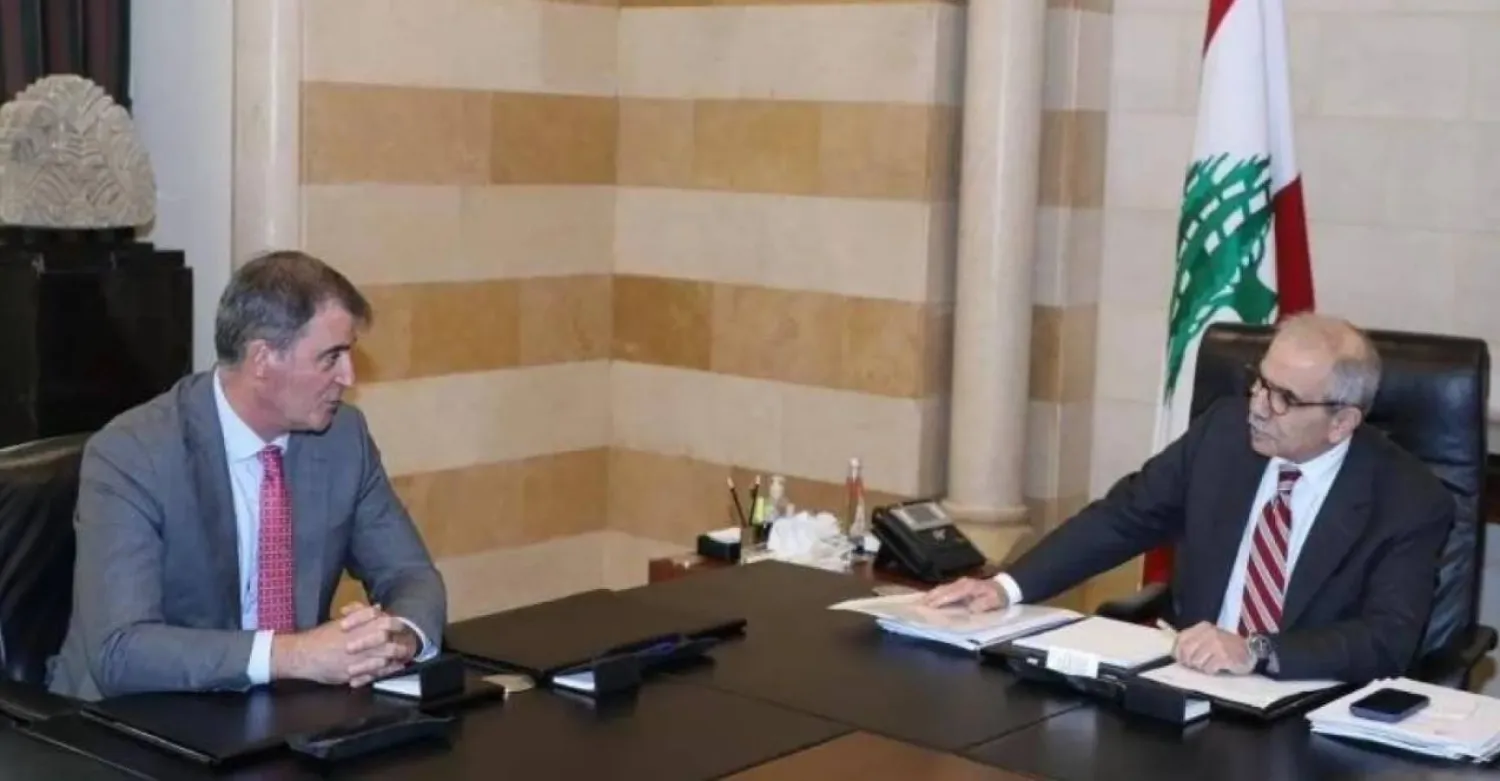
An IMF mission, led by Rigo, concluded on Thursday a four-day visit to Beirut where it discussed with authorities their policy and reforms strategy, mainly on the banking sector and the 2026 government budget.
“Lebanon’s economy shows resilience despite the significant impact of the regional conflict, and is recently experiencing a partial economic rebound on the back of strong diaspora tourism,” Rigo said in the statement.
He noted that the Lebanese authorities have correctly maintained a tight fiscal and monetary stance, accumulating some additional international reserves and keeping a small fiscal surplus.
Rigo’s team welcomed the long-awaited establishment of regulatory authorities in the electricity and telecommunications sectors, the rebuild of statistical capacities at the fiscal level and the strengthening of digital processes for tax compliance.
However, the IMF said restoring strong and sustainable growth requires implementing ambitious and comprehensive reforms to tackle the structural weaknesses that have been hampering Lebanon’s potential for years.
“They are also needed to attract international support to help the country rebuild its economy and reconstruct the war-devastated areas,” it said.
Against this backdrop, the mission focused primarily on the authorities’ efforts to rehabilitate the banking sector and the 2026 government budget.
It said the authorities have made progress in developing a strategy to address the severe banking sector challenges.
“The recent approval of the Bank Resolution Law reflects the dedicated efforts of all stakeholders, though the legislation needs further refinement,” the Fund noted, adding that its team has suggested amendments to fully align it with international standards and ensure the effectiveness of bank restructuring processes.
It also said the authorities should continue working to develop the strategy to recognize and allocate losses, and restore the viability of the banking sector consistent with international standards, protection of small depositors, and sustainability of public debt.
Concerning the 2026 government budget, the IMF team expected a more ambitious approach than in the draft approved by the cabinet.
On the revenue side, the government has rightly envisaged measures to broaden the tax base and improve compliance, it said. However, the team added, tax policy reforms should also be considered to create fiscal space for priority spending on reconstruction and social protection.
It said the retraction of excise taxes on fuel poses “serious concerns” regarding the ability of the government to finance its spending.
On the expenditure side, all expected items should be transparently recorded, including those externally financed, it added.
Overall, the IMF noted, spending decisions need to be consistent with available financing.
The mission also called for stepping up efforts toward the adoption of an ambitious medium-term fiscal framework, which is necessary for developing a credible strategy to restore fiscal and debt sustainability.
“The mission looks forward to continuing discussions with the authorities on these issues, including during the upcoming IMF Annual Meetings (next October),” it said, reiterating its commitment to supporting Lebanon in its endeavor to develop and implement a comprehensive economic reform program, in a manner consistent with its policies and mandate.