


Oil Edges Lower for Fourth Day on Oversupply Concerns

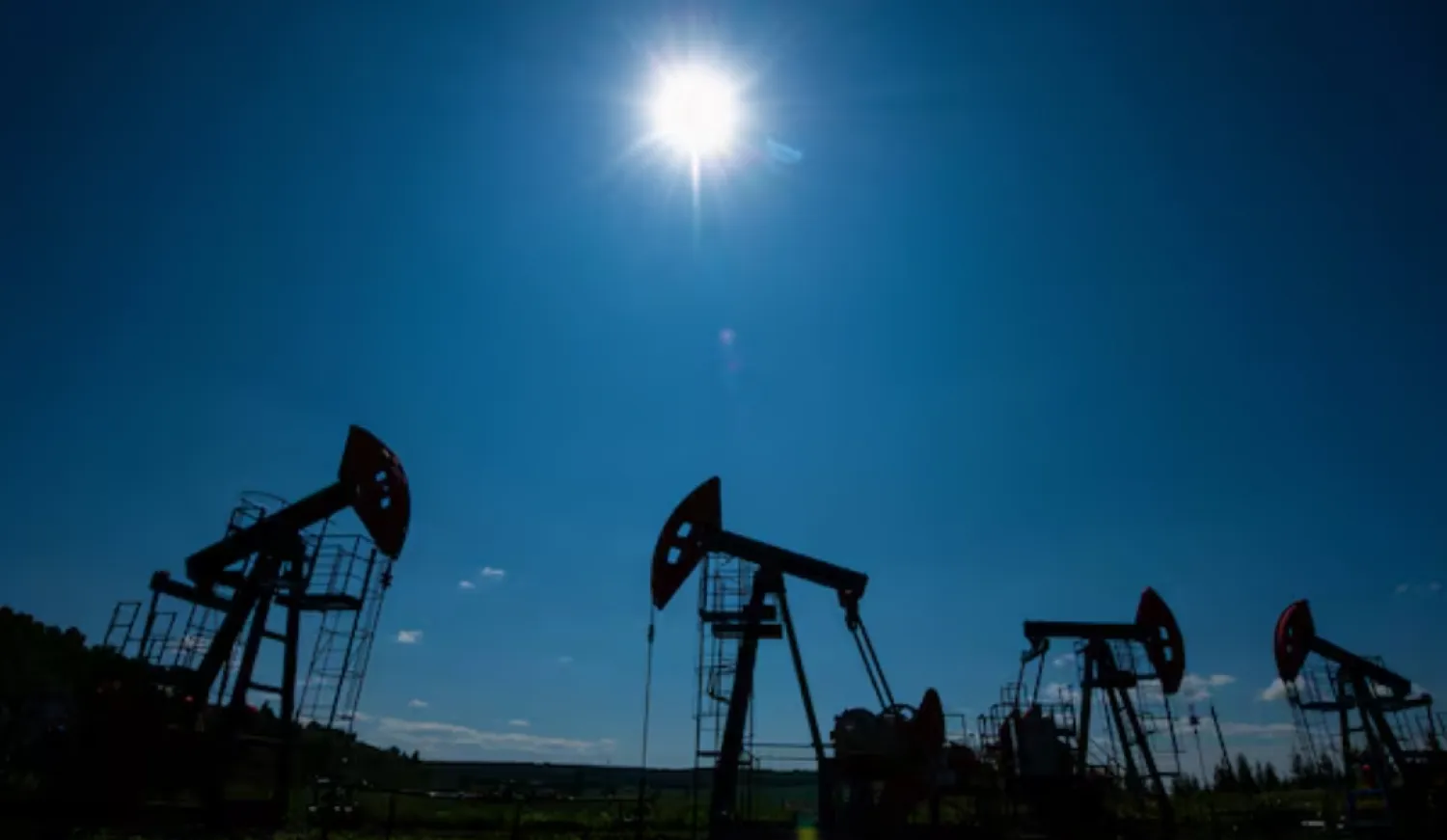
A view shows oil pump jacks outside Almetyevsk, in the Republic of Tatarstan, Russia July 14, 2025. REUTERS/Stringer/File Photo
TT

Oil Edges Lower for Fourth Day on Oversupply Concerns

A view shows oil pump jacks outside Almetyevsk, in the Republic of Tatarstan, Russia July 14, 2025. REUTERS/Stringer/File Photo

Oil prices edged lower on Thursday, extending a run of declines into a fourth day due to concerns about oversupply in the market. Brent crude futures fell 37 cents, or 0.6%, to $64.98 a barrel at 1127 GMT. Earlier in the session, it hit the lowest level since June. US West Texas Intermediate crude retreated by 36 cents, or 0.6%, to $61.42 a barrel.

A US government shutdown increased uncertainty about the global economic outlook, while expectations of higher output by OPEC+, the Organization of the Petroleum Exporting Countries (OPEC) and allied producers, weighed on sentiment, said Hiroyuki Kikukawa, chief strategist at Nissan Securities Investment.

Jorge Montepeque, managing director at Onyx Capital Group, said some banks, such as Macquarie, have put out predictions of a super glut in oil markets, which have weighed on sentiment. The Group of Seven nations' finance ministers said on Wednesday they will take steps to increase pressure on Russia by targeting those who are continuing to boost purchases of Russian oil and those that are facilitating circumvention. The US will provide Ukraine with intelligence for long-range missile strikes on Russian energy infrastructure, two officials told Reuters on Wednesday, confirming an earlier Wall Street Journal report.

This will make it easier for Ukraine to hit refineries, pipelines and other infrastructure with the aim of depriving the Kremlin of revenue and oil, the WSJ said.

"There is some concern in the market again that Russian oil could get disrupted," said Giovanni Staunovo, commodity analyst at UBS. But as long as there aren't disruptions yet, the impact on prices will likely be minor, he said.

Stockpiling demand from China, the world's largest crude oil importer, also underpinned oil prices, limiting the downside, traders said.

The Energy Information Administration said on Wednesday that US crude oil, gasoline and distillate inventories rose last week as refining activity and demand softened.

Crude inventories rose by 1.8 million barrels to 416.5 million barrels in the week ended on September 26, compared with expectations in a Reuters poll for a 1-million-barrel rise.



Fitch Affirms Saudi Arabia’s Credit Rating at ‘A+’ with Stable Outlook

FILE PHOTO: The Fitch Ratings logo is seen at their offices at Canary Wharf financial district in London,Britain, March 3, 2016. REUTERS/Reinhard Krause/File Photo
TT

Fitch Affirms Saudi Arabia’s Credit Rating at ‘A+’ with Stable Outlook

FILE PHOTO: The Fitch Ratings logo is seen at their offices at Canary Wharf financial district in London,Britain, March 3, 2016. REUTERS/Reinhard Krause/File Photo

Fitch Ratings has affirmed Saudi Arabia’s sovereign credit rating at A+ with a stable outlook, according to a report issued by the agency on Friday.

The agency said the Kingdom’s credit profile reflects the strength of its fiscal position, noting that its government debt-to-GDP ratio and net sovereign foreign assets are significantly stronger than the medians for both the “A” and “AA” rating categories.

Fitch also highlighted Saudi Arabia’s substantial financial buffers, including deposits and other public sector assets.

The ratings agency projected real GDP growth of 4.8% in 2026 and expects the fiscal deficit to narrow to 3.6% of GDP by the end of 2027.

Fitch also said non-oil revenues are expected to continue benefiting from strong economic activity and improved revenue efficiency.

The agency praised the momentum of economic reforms, including the updated investment system and the continued opening of the real estate and equity markets to foreign investors.


Oil Prices Rise 1% as Supply Risks Remain in Focus

The Nave Photon, carrying crude oil from Venezuela, is docked at Port Freeport in Freeport, Texas, US, January 15, 2026. REUTERS/Antranik Tavitian
TT

Oil Prices Rise 1% as Supply Risks Remain in Focus

The Nave Photon, carrying crude oil from Venezuela, is docked at Port Freeport in Freeport, Texas, US, January 15, 2026. REUTERS/Antranik Tavitian

Oil prices rose over 1% on Friday as supply risks remained in focus despite the receding likelihood of a US military strike against Iran.

Brent crude was up 84 cents, or 1.3%, to $64.60 a barrel at 1413 GMT, on course for a fourth consecutive weekly gain. US West Texas Intermediate was up 80 cents, or 1.4%, to $59.99.

At those levels, Brent was on course for a 2% weekly gain and WTI for a 1.4% gain. Brent ⁠was up a little more than $1 at its intraday peak as investors continue to weigh the potential for supply outages should tensions in the Middle East escalate, Reuters reported.

"While geopolitical tensions in the Middle East have eased, they have not disappeared, and market participants remain concerned about potential supply disruptions," said UBS analyst Giovanni Staunovo.

Both benchmarks hit multi-month highs this week ⁠after protests flared up in Iran and US President Donald Trump signaled the potential for military strikes, but lost over 4% on Thursday as Trump said that Tehran's crackdown on the protesters was easing, allaying concerns of possible military action that could disrupt oil supplies.

"Above all, there are worries about a possible blockade of the Strait of Hormuz by Iran in the event of an escalation, through which around a quarter of seaborne oil supplies flow," Commerzbank analysts said in a note.

"Should there be signs of a sustained easing on ⁠this front, developments in Venezuela are likely to return to the spotlight, with oil that was recently sanctioned or blocked gradually flowing onto the world market."

Meanwhile, analysts expect higher supply this year, potentially creating a ceiling for the geopolitical risk premium on prices.

"Despite the steady drumbeat of geopolitical risks and macro speculation, the underlying balance still points to ample supply," said Phillip Nova analyst Priyanka Sachdeva.

"Unless we see a genuine revival in Chinese demand or a meaningful bottleneck in physical barrel flows, oil looks range-bound, with Brent broadly hovering between $57 and $67."


Gold Eases as Strong US Data, Easing Geopolitical Tensions Sap Momentum

FILE PHOTO: A saleswoman displays a gold necklace inside a jewellery showroom on the occasion of Akshaya Tritiya, a major gold buying festival, in Kolkata, India, May 7, 2019. REUTERS/Rupak De Chowdhuri/File Photo
TT

Gold Eases as Strong US Data, Easing Geopolitical Tensions Sap Momentum

FILE PHOTO: A saleswoman displays a gold necklace inside a jewellery showroom on the occasion of Akshaya Tritiya, a major gold buying festival, in Kolkata, India, May 7, 2019. REUTERS/Rupak De Chowdhuri/File Photo

Gold prices ticked lower on Friday, extending losses from the previous session, as stronger-than-expected US economic data and easing geopolitical tensions in Iran hampered bullion's bullish momentum.

Spot gold eased 0.3% to $4,603.02 per ounce by 0918 GMT. However, the metal is poised for a weekly gain of about 2% after scaling a record peak of $4,642.72 on Wednesday. US gold futures for February delivery edged 0.4% lower to $4,606.70.

"There was ‌a lot of ‌momentum in the (gold) market, which seems to ‌have ⁠faded slightly ‌at the moment....the economic news flow out of the US has been causing some headwinds rather than tailwinds as of late, which is reflected in a somewhat stronger US dollar," said Julius Baer analyst Carsten Menke.

The US dollar hovered near a six-week high on the back of positive economic data on Thursday showing initial jobless claims dropped 9,000 ⁠to a seasonally adjusted 198,000 last week, below economists' forecast of 215,000.

A firmer ‌dollar makes greenback-priced bullion more expensive for overseas ‍buyers. On the geopolitical front, people ‍inside Iran, reached by Reuters on Wednesday and Thursday, said ‍protests appeared to have abated since Monday.

Safe-haven gold tends to do well during times of geopolitical and economic uncertainty. Meanwhile, gold demand in India stayed muted this week as prices hit record highs again, taking the shine off retail buying, while bullion traded at a premium in China as demand remained steady ahead of the Lunar ⁠New Year.

Spot silver shed 1.1% to $91.33 per ounce, although it was headed for a weekly gain of over 14% after hitting an all-time high of $93.57 in the previous session. "The silver market seemed very determined to reach the $100 per ounce threshold before moving lower again....speculative traders are keeping an eye on that level even though it would not be sustainable in the medium to longer-term," Menke added.

Spot platinum dropped 2.7% to $2,345.78 per ounce, and was set to gain more than 3.1% for the week so far. Palladium lost 2.6% to $1,755.04 per ‌ounce, after hitting a more than one-week low earlier, and was headed for a weekly loss of 3.3%.