


IMF Sees Mixed Global Inflation Picture in Face of Higher Tariffs

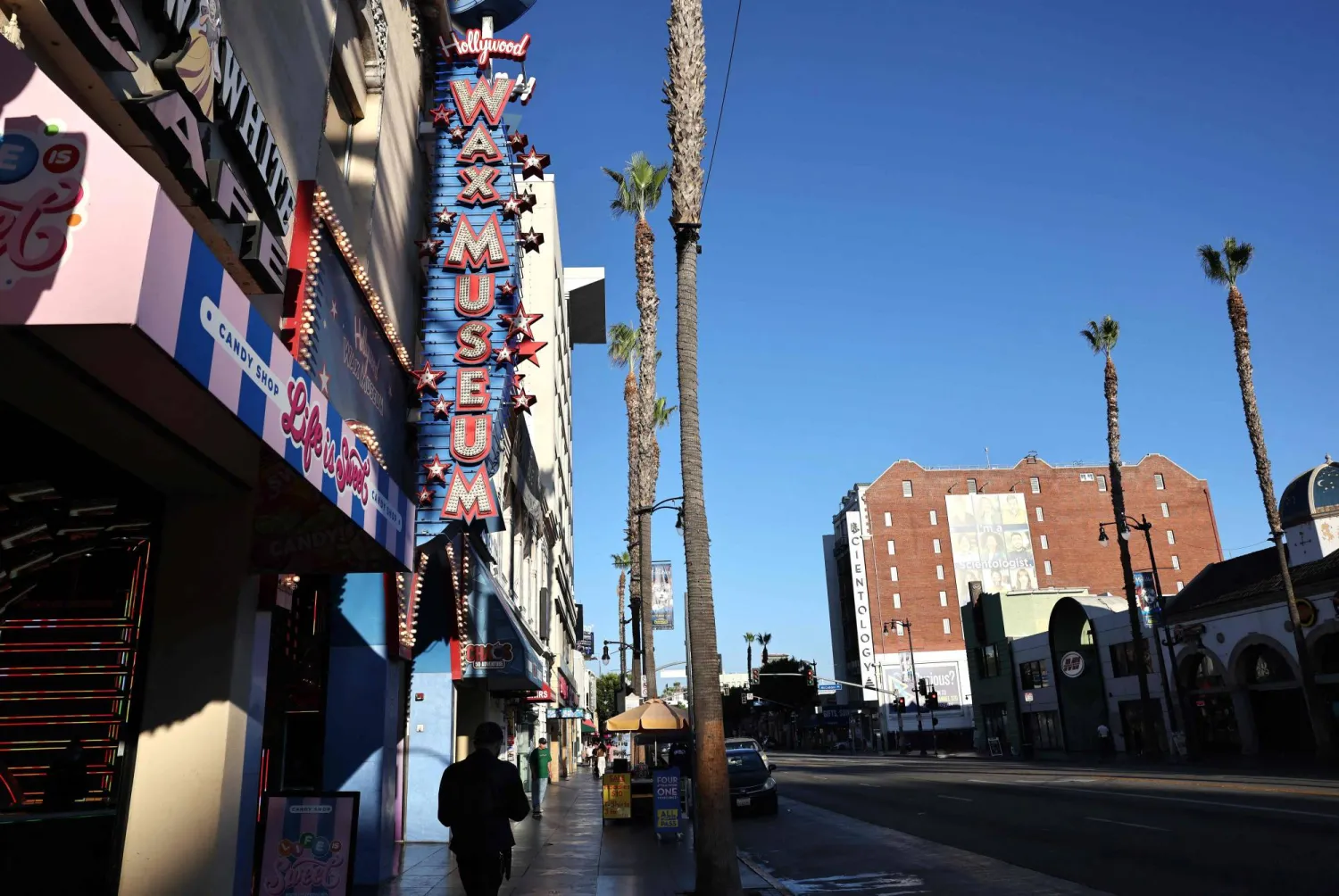
LOS ANGELES, CALIFORNIA - OCTOBER 01: People walk on Hollywood Boulevard on October 01, 2025 in Los Angeles, California. Mario Tama/Getty Images/AFP
TT

IMF Sees Mixed Global Inflation Picture in Face of Higher Tariffs

LOS ANGELES, CALIFORNIA - OCTOBER 01: People walk on Hollywood Boulevard on October 01, 2025 in Los Angeles, California. Mario Tama/Getty Images/AFP

The International Monetary Fund sees a mixed inflation picture globally as companies in the US and other tariff-raising countries have so far absorbed much of the higher duties, while demand remains suppressed in major exporting countries like China, IMF spokesperson Julie Kozack said on Thursday.

Kozack told a regular press briefing that the global economy has shown resilience in the face of uncertainty over tariffs as the IMF and World Bank Group prepare for their annual meetings in Washington later this month.

"We see global growth in the first half of the year having held steady, but we are starting to see signs of a slowdown globally now," Kozack said.

"With respect to inflation, what we see globally is a bit of a mixed picture."

She said that while pass-through of some tariffs to price hikes is helping to push up core inflation in the US, headline inflation was rising faster in Britain, Australia and India. But inflation pressures are "very muted" in China and some other Asian countries, reflecting tariffs' impact on demand for their exports.

"We do see firms absorbing some of the tariff impact, so that seems to be part of the contributing factor to the fact that we've seen relatively limited impact so far on inflation in the US," Reuters quoted Kozack as saying. "How long that will last, I think, is a question."

She said the IMF's next World Economic Outlook due on October 14 will seek to address the question of tariff impacts on the US economy and inflation, as will the IMF's annual "Article IV" review of US economic policies due in November.

Kozack said that a softening US labor market made it appropriate for the Federal Reserve to reduce its policy interest rate at its September meeting, as inflation is on a path toward the Fed target. But she added that inflation was subject to upside risks, so the Fed must keep a close watch on incoming data for inflationary pressures as it considers its next rate decision.

Asked about the economic impact of the partial US government shutdown that started on Wednesday, Kozack said that the IMF was monitoring these developments and still formulating its assessment.

"That impact will depend very much on the duration of the shutdown and the modalities of the shutdown, and we certainly hope that a compromise can be found to ensure that the federal government remains fully funded," Kozack added.

Italy in Talks with US, Azerbaijan, Algeria to Offset Loss of Gas from Qatar

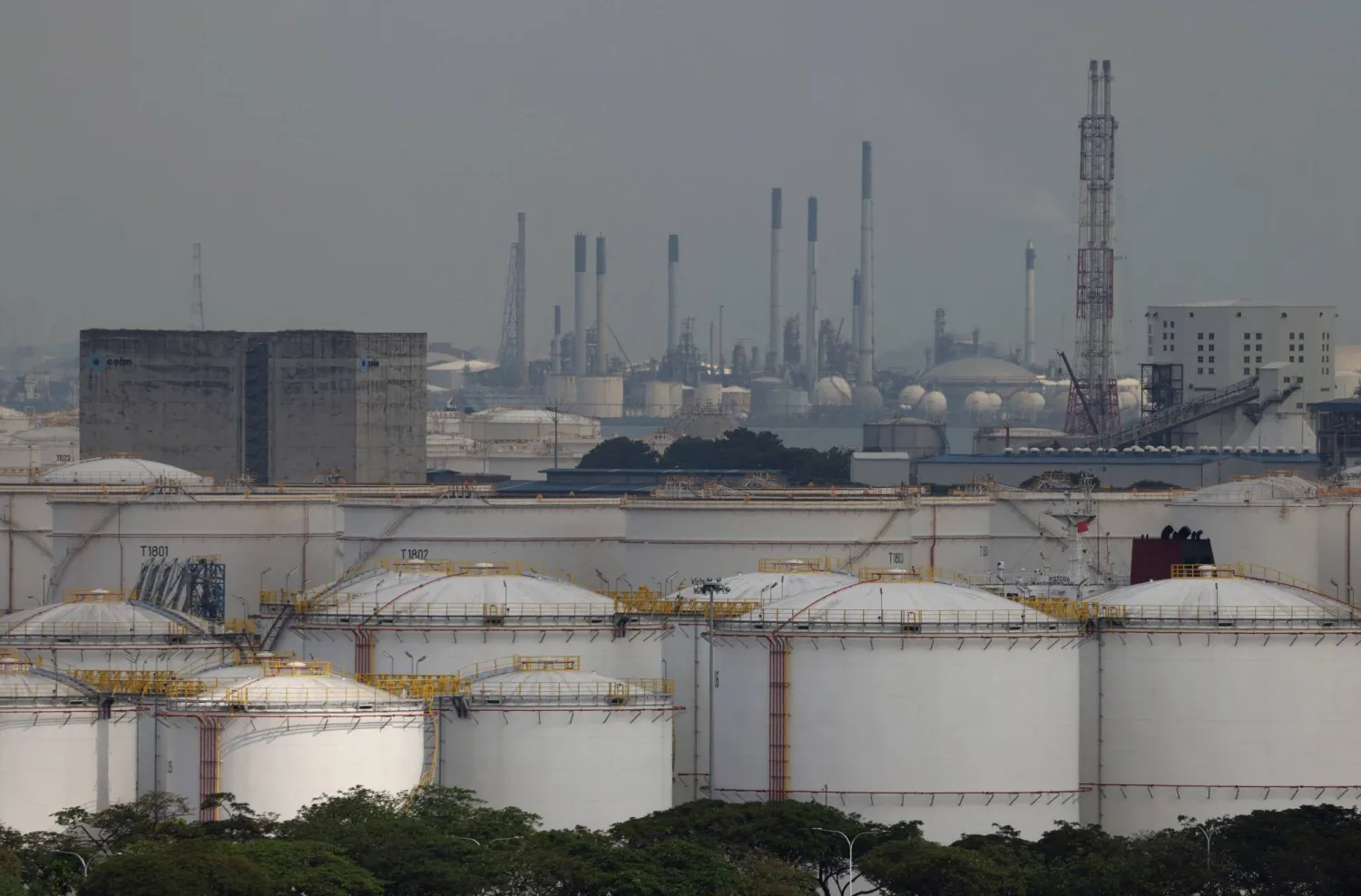
A general view shows cisterns at the deposit of an oil site, in Rome on March 19, 2026. (Photo by Andreas SOLARO / AFP)
TT

Italy in Talks with US, Azerbaijan, Algeria to Offset Loss of Gas from Qatar

A general view shows cisterns at the deposit of an oil site, in Rome on March 19, 2026. (Photo by Andreas SOLARO / AFP)

Italy is talking to several countries, including the United States, Azerbaijan and Algeria, to secure gas supplies now that Iranian strikes on Qatar appear to have halted its exports for an extended period, Energy Minister Gilberto Pichetto Fratin said.

Iranian attacks have knocked out 17% of Qatar's liquefied natural gas (LNG) export capacity, causing an estimated $20 billion in lost annual revenue and ⁠threatening supplies to Europe ⁠and Asia, QatarEnergy's CEO told Reuters on Thursday.

"The very fact that Qatar's LNG plant that had been shut down was also bombed had a devastating impact on prices," Pichetto Fratin said on Friday attending ⁠an event in Milan.

Edison, an Italian unit of French power company EDF, has a long-term contract with QatarEnergy for the supply of 6.4 billion cubic meters of gas per year to Italy, nearly 10% of the country's annual gas consumption.

Qatar had already declared force majeure on gas exports earlier this month, flagging to Edison it would not be ⁠able ⁠to fulfill its contractual obligations concerning April.

The pause in supplies is likely be longer-lasting after its gas infrastructures were hit hard this week, QatarEnergy's CEO said.

Pichetto Fratin said on Friday that despite the disruption in supplies from the Middle East, Italy had agreed with the European Union that the bloc should not return to buying its gas from Russia.


Shell: Repair of Second Unit at Pearl Facility in Qatar to Take About a Year

A digital price sign is seen at a Shell gasoline station in San Francisco, California, USA, 18 March 2026. EPA/JOHN G. MABANGLO
TT

Shell: Repair of Second Unit at Pearl Facility in Qatar to Take About a Year

A digital price sign is seen at a Shell gasoline station in San Francisco, California, USA, 18 March 2026. EPA/JOHN G. MABANGLO

Shell said on Friday that full repair of its train two at the Pearl GTL (gas-to-liquids) facility in Qatar would ⁠take around a ⁠year, confirming a statement to Reuters from QatarEnergy, after Iranian ⁠attacks earlier this week.

Shell said train one at the facility was not damaged, and its QatarEnergy LNG N(4), which Shell has ⁠a ⁠30% interest in and which equates to 2.4 MTPA of equity production, was not impacted.

Shell has a 100% interest in Pearl GTL in Qatar, which has capacity to process up to 1.6 billion cubic ⁠feet ⁠per day of wellhead gas, converting it into 140,000 bpd of gas-to-liquids.


US Stocks Sink on Fears the War with Iran will Keep Interest Rates High

A bobble head depicting US President Donald Trump sits on a desk as traders works on the floor of the New York Stock Exchange (NYSE) at the opening bell in New York City, on April 14, 2025.  (Photo by TIMOTHY A. CLARY / AFP)
A bobble head depicting US President Donald Trump sits on a desk as traders works on the floor of the New York Stock Exchange (NYSE) at the opening bell in New York City, on April 14, 2025. (Photo by TIMOTHY A. CLARY / AFP)
TT

US Stocks Sink on Fears the War with Iran will Keep Interest Rates High

A bobble head depicting US President Donald Trump sits on a desk as traders works on the floor of the New York Stock Exchange (NYSE) at the opening bell in New York City, on April 14, 2025.  (Photo by TIMOTHY A. CLARY / AFP)
A bobble head depicting US President Donald Trump sits on a desk as traders works on the floor of the New York Stock Exchange (NYSE) at the opening bell in New York City, on April 14, 2025. (Photo by TIMOTHY A. CLARY / AFP)

US stocks are sinking Friday as hopes wither on Wall Street for a possible cut to interest rates by the Federal Reserve this year because of the war with Iran.

The S&P 500 fell 0.9% and was on track for a fourth straight losing week, its longest such streak in a year. The Dow Jones Industrial Average was down 285 points, or 0.6%, as of 10:30 a.m. Eastern time, and the Nasdaq composite was 1.2% lower.

Stocks sank under the weight of leaping yields in the bond market. They will make mortgage rates and other borrowing more expensive for US households and companies, slowing the economy, and they grind down on prices for all kinds of investments. Treasury yields have been jumping since the war began because it could cause a long-term spike in oil and natural gas prices that drives up inflation, The AP news reported.

Worries have gotten so high that traders have canceled nearly all their bets that the Federal Reserve could cut interest rates this year, according to data from CME Group. Some even see a possibility for a rate hike in 2026, which was a nearly unthinkable scenario before the war began.

Lower interest rates would give the economy and investment prices a boost, and they're something President Donald Trump has angrily been calling for. Before attacks by the United States and Israel began the war with Iran, traders were betting heavily that the Fed would cut interest rates at least twice this year.

But lower rates risk worsening inflation. And with oil prices so much higher now, investors see little room for central banks worldwide to cut interest rates to help their economies. Besides the Federal Reserve, central banks in Europe, Japan and the United Kingdom also held their interest rates steady this past week.

Friday's worries came even as oil prices calmed a bit. A barrel of Brent crude, the international standard, added 0.3% to $109.02 after drifting lower earlier in the morning. Benchmark US crude rose 0.3% to $95.78 per barrel.

The price of Brent has zigzagged sharply on its way there from roughly $70 per barrel before the war began. Big swings up and down have struck hour to hour as financial markets try to handicap how long the war will last and how much damage it will do to oil and gas production in the Arabian Gulf.

Much of the focus is on the Strait of Hormuz, a narrow waterway off Iran’s coast. A fifth of the world’s oil typically sails through it, but Iran has effectively closed it to its enemies.

On Wall Street, Super Micro Computer dropped 28% and helped drag the US stock market lower. The US government accused a senior vice president of the company and two others affiliated with it of conspiring to smuggle billions of dollars of computer servers containing advanced Nvidia chips to China.

The company said it’s cooperated with the investigation and is not a defendant in the indictment. It placed its two accused employees on administrative leave and terminated its relationship with an accused contractor.

On the winning side of Wall Street was FedEx, which rose 2.2% after delivering a much stronger profit for the latest quarter than analysts expected.

In the bond market, the yield on the 10-year Treasury jumped to 4.37% from 4.25% late Thursday and from just 3.97% before the war started. That's a significant move for the bond market.

The two-year Treasury yield, which more closely tracks expectations for what the Fed will do, jumped to 3.92% from 3.79% late Thursday and is near its highest level since the summer.

Outside of Wall Street, indexes fell in Europe following their wipeouts on Thursday. Indexes also sank in China, though South Korea’s Kospi added 0.3%.