



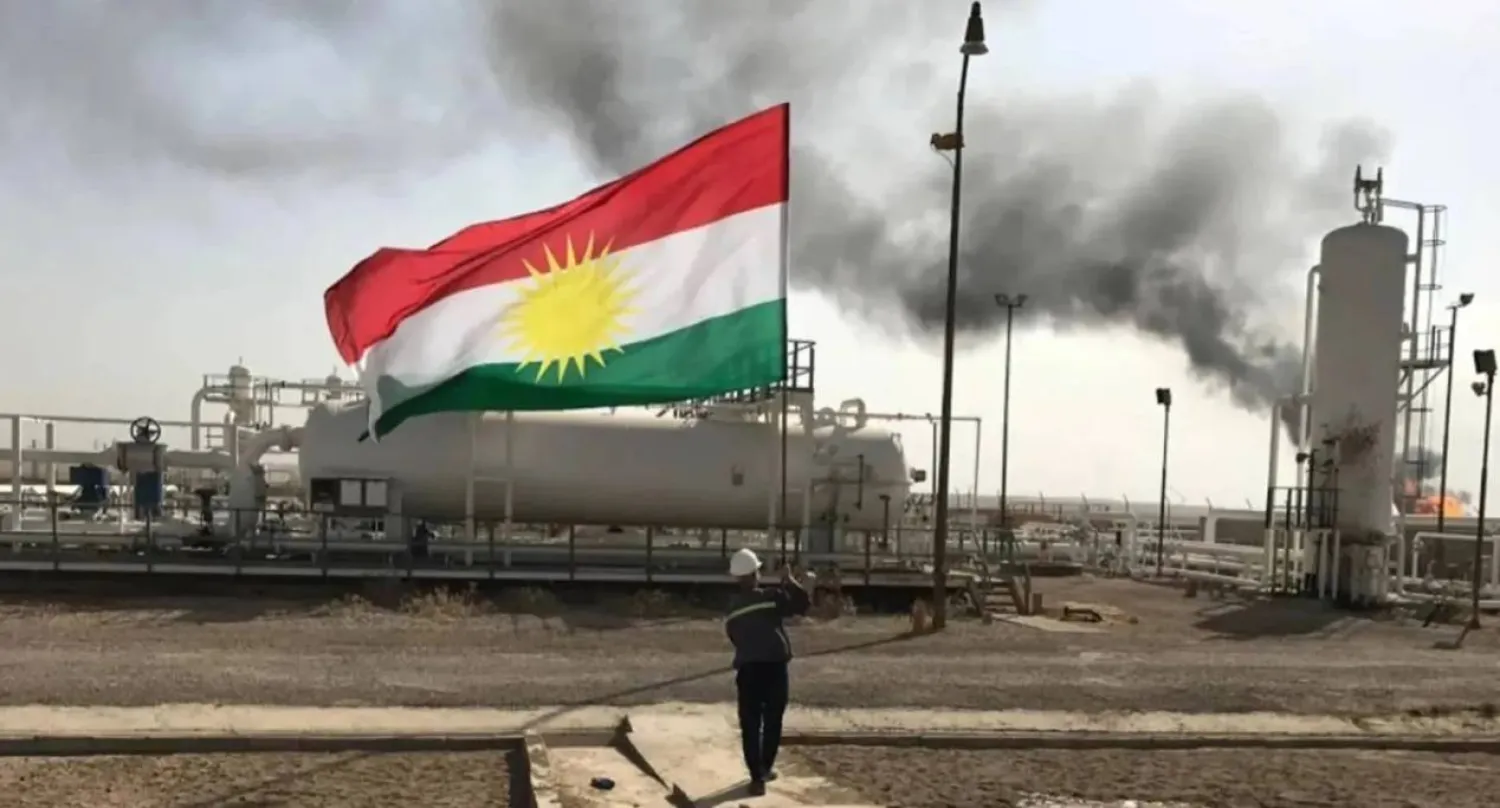

Iraqi Oil Minister Hayan Abdul Ghani announced on Saturday that the federal government has received more than one million barrels of crude oil from the Kurdistan Region since exports resumed last week.
He also confirmed that the first tanker carrying Kurdistan Region oil has been loaded at the Turkish port of Ceyhan, ready to carry the first federally-managed shipment to global markets.
“A few days ago, flows from the Kurdistan Region through the Iraq-Türkiye pipeline resumed after a suspension of more than two years,” Abd Al-Ghani told the Iraqi News Agency (INA).
For the first time, he said, the federal government is receiving oil produced in the region and taking charge of the process of exporting it outside of Iraq.
The Minister noted that over one million barrels have already been transferred and that the first tanker, with a capacity of 650,000 barrels, is now being loaded at Ceyhan.
“Once loading is completed, the tanker will depart to its contracted destination,” Abdul Ghani added, describing the resumption as “a great achievement by the Iraqi federal government and the Kurdistan Regional Government (KRG).”
An agreement between Iraq's federal government, the Kurdistan Regional Government and eight international oil companies to reopen the Kirkuk-Ceyhan pipeline after 2-1/2 years will allow 180,000 to 190,000 barrels per day of crude to flow, Iraq's Federal Oil Minister told Kurdish broadcaster Rudaw last week.
The agreement on exporting oil from the Kurdistan Region’s fields came into force on Saturday, September 27.
The director of the State Oil Marketing Organization (SOMO), Ali Nazar al-Shatri, said revenues from Kurdistan Region’s oil sales will be directed to the federal budget.
“Europe needs Kurdish oil as an alternative to Russian supplies,” he said, confirming that shipments will be destined for European, North American, and other international markets.
Iraq’s oil exports were anticipated to rise to 3.65 million barrels per day during the month of September following the resumption of crude oil exports.
Al-Shatri earlier said the deal was reached thanks to determined and constructive negotiations that prioritized Iraq’s unity and its oil revenues as the backbone of the federal budget.
Direct talks were also held with producing companies in the Region, leading to assurances and a robust mechanism to safeguard their entitlements.
“A specialized international consulting firm will be contracted by the federal Ministry of Oil to reevaluate production and transportation costs in the region's producing fields to determine whether these costs are higher or lower than $16 per barrel, which will be considered an advance,” Al-Shatri said.
“This agreement will not be temporary, but will establish long-term understandings,” he also stressed.
“It will serve as a definitive end to all the disputes we witnessed in the previous phase, and will be a declaration of the seriousness of the federal government, the Kurdistan Regional Government, and the companies operating in Iraq to commit to implementing it and ending all forms of dispute, suspicion of smuggling, or production outside government control.”


