France to Supply Two Thirds of Morocco's Soft Wheat Needshttps://english.aawsat.com/business/5194702-france-supply-two-thirds-moroccos-soft-wheat-needs
France to Supply Two Thirds of Morocco's Soft Wheat Needs
Spring wheat is harvested on a farm near Beausejour, Manitoba, Canada, Aug. 20, 2020. (Reuters)
French wheat exporters will supply Morocco with two thirds of its soft wheat needs, or 3.5 million metric tons, in the 2025-2026 season, Philippe Heusele, international head at French grain industry group Intercereales, said on Tuesday.
Morocco is expected to import 5.5 million tons of soft wheat, its main staple, this market year from June to the end of May 2026, according to estimates by Moroccan traders and French grains association Synacomex, Reuters reported.
Morocco has reported below-average harvests in recent years because of drought. This season it reported a soft wheat harvest of 2.4 million tons.
Despite the weak domestic harvest, stockpiles remain at a "comfortable level", covering more than three months of industrial millers' needs, said Abdelkader Alaoui, president of the FNM industrial milling federation.
Moroccan traders attending an Intercereales conference in Casablanca see the French harvest as best positioned, given its availability and proximity to Moroccan ports compared with other origins such as the Black Sea region and Argentina.
"We are also looking at Russian, German and Polish wheat as well as Argentina, where prices are interesting," said Omar Yacoubi, head of FNCL, Morocco's grain traders federation.
From June to September, Morocco imported 1.5 million tons of soft wheat, including 996,368 tons from France, followed by the United States (94,688 tons), Russia (85,499 tons) and Lithuania (63,000 tons), FNCL data shows.
Paris Club Says Debt Restructurings Need Improvement
Tourists with an umbrella take a photo in Paris, Monday, June 22, 2026. (AP Photo/Christophe Ena )
Despite progress in recent years the process for helping over-indebted countries restructure their public debts needs further improvement, the Paris Club said Tuesday.
The Paris Club brings together 22 mostly Western creditor nations which negotiate together on the terms to reduce the debt burden of countries that can no longer pay back their loans.
The group, in its annual report, said better coordination among creditors, more transparency and better information sharing could help improve the process, AFP reported.
In 2020, the Paris Club and the G20 nations launched a so-called Common Framework to streamline the debt restructuring of eligible low-income countries.
"Over the course of five years, the Common Framework has delivered significant results in practice," the Paris Club's co-chairman, Thomas Revial, said in the report.
He noted that more than $45 billion of external debt has been restructured under the framework.
"Negotiation timeframes have been compressed between each successive case: it took one year to Ethiopia and its official bilateral creditors" to reach a preliminary agreement restructuring $8.4 billion of debt in March 2025.
He noted however that Zambia hasn't fully restructured its debt six years after starting the process, when bilateral deals should be completed within a year of a preliminary agreement being reached.
The Paris Club members negotiate only their bilateral debts with over-indebted countries, but they require that private creditors don't receive more favorable terms, thus helping nations achieve better results.
Revial said one way to facilitate the process further would be to allow debtor countries to share information on the official creditor's debt treatment to its other creditors, without non-disclosure agreements.
"The Common Framework should eventually become the standard framework for sovereign debt restructurings beyond low-income countries," said Revial.
"It is indeed apparent that a lack of coordination of official bilateral creditors can lead to stalemate and prevent debtor countries from recovering," he added.
The Paris Club, which is housed in the French Treasury, celebrates its 70th anniversary this year.
Saudi Arabia’s Investment Appeal Lures Global Manufacturershttps://english.aawsat.com/business/5287821-saudi-arabia%E2%80%99s-investment-appeal-lures-global-manufacturers
Saudi Arabia’s Investment Appeal Lures Global Manufacturers
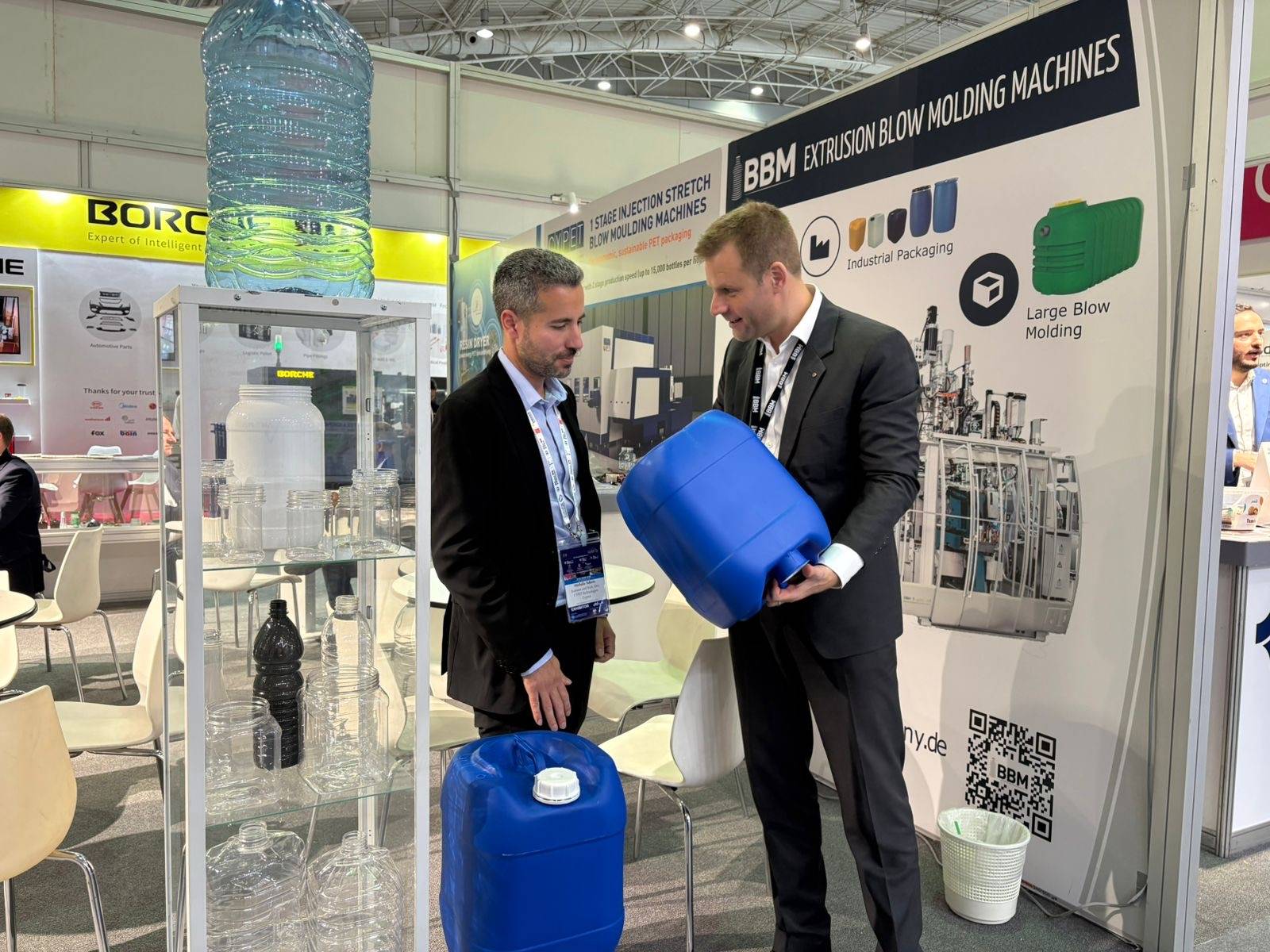
The German pavilion at Riyadh International Industry Week 2026 in Riyadh. (Asharq Al-Awsat)
Saudi Arabia’s push to build a broader industrial base and attract global investment is turning the Kingdom into a strategic market for international manufacturers seeking stability and long-term growth.
The growing presence of global companies in Saudi Arabia shows how the industrial transformation driven by Vision 2030 is reshaping the investment landscape, supported by advanced infrastructure, a strategic location and policies that strengthen the competitiveness of local production.
That momentum is clear at Riyadh International Industry Week 2026, now underway in the Saudi capital, with more than 400 manufacturing companies from over 20 countries taking part.
Sebastian Walter, business development director for the Middle East and West Africa and France at Germany’s BBM, an engineering and machinery manufacturing company, and one of its co-owners, told Asharq Al-Awsat that Saudi Arabia has been one of the company’s largest export markets worldwide for about 15 years.
He said the rapid growth of local manufacturing and industrial investment is driving demand for packaging solutions and industrial components, including in sectors linked to the automotive industry.
BBM's Business Development Manager showcases the company's products (Asharq Al-Awsat)
Packaging
Speaking during Riyadh International Industry Week 2026 at the Riyadh International Convention and Exhibition Center, Walter said Saudi Arabia is among the global markets with the highest number of BBM machines installed.
He said the shift toward local manufacturing, instead of importing value-added products, has strengthened demand for packaging solutions.
The growth, he added, is not limited to packaging. It is also extending to other industries, including the automotive sector, where demand for locally manufactured components is rising.
Walter, whose company is a leading manufacturer of plastic-forming machinery, said Saudi Arabia’s investment environment has become far more open than it was two decades ago.
He cited the possibility of full foreign ownership, easier access to qualified Saudi talent, competitive energy prices and the kingdom’s geographic position, which gives manufacturers access to African and Asian markets.
He said BBM views Saudi Arabia as a stable and strategic market within its operations in the Middle East and Africa. The Kingdom is the company’s most important market in the Arab region and one of its most important worldwide, he said.
Over more than 20 years in the Saudi market, BBM has built long-term partnerships with several major local companies, Walter added.
Local production
Walter said the automotive sector is one of the most promising areas for cooperation in the coming years.
Higher levels of local production by companies such as Lucid and Ceer, he said, will bring an integrated industrial value chain to Saudi Arabia and create fresh opportunities for manufacturers, suppliers and industrial solutions providers.
He said many investors still focus heavily on initial capital spending when making purchasing or manufacturing decisions. But the more important factor, he added, is the long-term cost per unit produced and operational efficiency.
Companies that adopt advanced technologies and plan for expansion tend to focus more on productivity and operational efficiency, he said.
Walter said BBM chose Dubai as its regional headquarters for the Middle East and Africa because of its connectivity and ease of travel to regional markets, especially Africa, where the company’s business has expanded significantly in recent years.
At the same time, he said travel and visa procedures for Saudi Arabia have become easier than before.
Raw materials
Walter said BBM is following developments in the availability of raw materials used by some of its customers.
That area has faced some challenges in the past, he said, but Saudi Arabia still offers promising opportunities for expansion in petrochemicals, food industries, pharmaceuticals and automotive manufacturing.
He said he expects industrial activity in Saudi Arabia to keep growing in the coming years, supported by investment and new projects.
Walter urged investors to look at industrial opportunities from two angles.
The first, he said, is to develop products already available in the market and make them more competitive. The second is to identify specialized products found in other markets but not yet produced locally.
Investors, he added, should analyze the real cost of manufacturing rather than focusing only on the size of the initial capital investment.
Week’s events
Riyadh International Industry Week 2026 opened on Sunday under the patronage of the Ministry of Industry and Mineral Resources at the Riyadh International Convention and Exhibition Center, with more than 400 exhibitors from 20 countries taking part.
The event brings together three specialized exhibitions: the 21st Saudi Plastics & Petrochem exhibition, Saudi Print & Pack, and the fourth Saudi Smart Logistics exhibition.
The week runs until June 24 and is jointly organized by Riyadh Exhibitions Company Ltd. and Germany’s Messe Düsseldorf.
It includes panel discussions and specialized workshops with local and international officials and experts. Sessions cover industrial transformation, innovation, localization, industrial enablers and advanced packaging solutions, along with the latest practices in plastics, packaging, printing and plastic recycling.
The event comes as Saudi Arabia’s industrial sector undergoes a period of growth and development, driven by Vision 2030, which aims to strengthen the Kingdom’s position as a leading industrial power regionally and globally.
Gold Slips Over 2% as Dollar Holds Firm on Fed Rate-hike Expectationshttps://english.aawsat.com/business/5287454-gold-slips-over-2-dollar-holds-firm-fed-rate-hike-expectations
Gold Slips Over 2% as Dollar Holds Firm on Fed Rate-hike Expectations
British gold bars and sovereign coins on display in a London shop. (Reuters)
Gold prices fell more than 2% on Tuesday, pressured by a firmer US dollar on expectations of Federal Reserve interest rate hikes this year, while investors assessed US-Iran peace talks.
Stocks across the globe declined amid concerns over AI-related share valuations and as higher interest rates loomed. Crude fell 1% while the dollar held near a one-year high, making gold less affordable for buyers holding other currencies.
Spot gold was down 2.2% at $4,099.84 per ounce, as of 0753 GMT. US gold futures for August delivery fell 2% to $4,117.70, Reuters reported.
Spot silver slumped 5% to $61.90 per ounce, platinum lost 3% to $1,628.55, and palladium was down 2.9% at $1,229.28.
"Gold had received some relief from lower oil prices this week, but it is getting no such favors from the US dollar, which continues to push higher on expectations of Fed rate hikes," said Tim Waterer, chief market analyst at KCM Trade.
Traders now see an 88% chance of a rate hike in December, up from 61% before the Fed meeting last week, according to the CME FedWatch Tool, as investors price in hawkish monetary policy under new Chair Kevin Warsh.
Chicago Fed President Austan Goolsbee said that with the labor market stable, he is focused on figuring out whether too-high inflation will stay that way or recede, as the effects of high tariffs fade, and if the conflict in the Middle East gets resolved.
The US has waived sanctions on Iran for 60 days after the first talks under a nascent peace deal, while officials reported a sustained lull in fighting in Lebanon under the agreement aimed at ending hostilities across the region.
US Vice President JD Vance said talks with Iranian officials in Switzerland had laid a good foundation for a final peace deal, although Iran denied that it had begun discussions of its nuclear program.
Investors await US Personal Consumption Expenditures data, the Fed's preferred inflation gauge, due on Thursday, for further cues on monetary policy.
لم تشترك بعد
انشئ حساباً خاصاً بك لتحصل على أخبار مخصصة لك ولتتمتع بخاصية حفظ المقالات وتتلقى نشراتنا البريدية المتنوعة