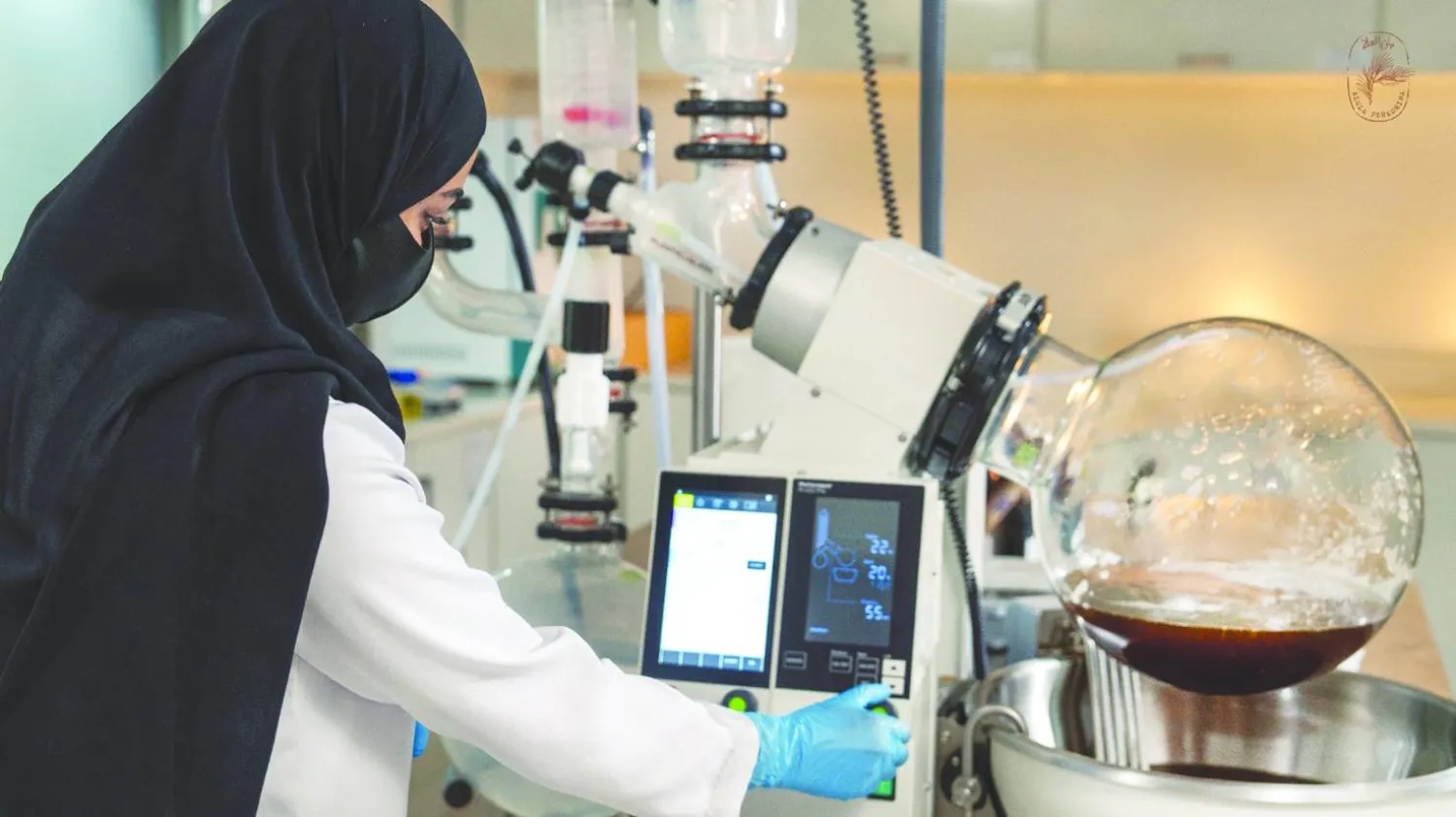
In AlUla, where the Peregrina tree has been part of the local environment for generations, the tree is taking a new path from fields to laboratories and global markets. Rather than simply marketing raw materials, AlUla Peregrina is seeking to develop oils, extracts, and natural ingredients for applications in beauty and personal care, adding value to a local resource before it reaches overseas markets.
AlUla Peregrina was established in 2021 by the Royal Commission for AlUla, with the aim of developing economic uses for the tree and its extracts. The company is now expanding its applications in skincare, haircare, and wellness products, while also developing its presence in international markets.
The strategy comes as efforts to increase the added value of local resources and expand non-oil exports gain importance. The company is betting that developing and manufacturing ingredients within Saudi Arabia can generate greater economic returns than exporting raw materials, while creating opportunities for products that carry Saudi knowledge and technology into international markets.
In an exclusive interview with Asharq Al-Awsat, Eng. Abobakar Alanazi, Chairman of the Board of AlUla Peregrina, said the company's ambition is to establish AlUla Peregrina as a leading Saudi platform for high-quality active natural ingredients, expanding from AlUla into regional and global markets, with a focus on skincare, haircare, and personal care.
Added Value
According to Alanazi, the company is gradually building a presence in international markets, benefiting from growing demand for natural ingredients with traceable origins and scientific evidence, alongside increasing interest in responsible supply chains.
He said the goal extends beyond exporting a Saudi product to developing ingredients and products based on local natural resources and combining scientific research, development, and manufacturing within Saudi Arabia, thereby increasing the product's added value before it reaches overseas markets.
Development efforts focus on the Arabian Peregrina tree, Moringa peregrina, and its natural compounds, including ceramides, plant exosomes, bioactive peptides, and antioxidants. Alanazi said the company has developed a range of oils and extracts that can be used in various skincare applications.
The development of these products is based on scientific research, laboratory testing, and clinical evaluations to verify their effectiveness before moving into commercial applications. Alanazi said these efforts have resulted in four registered patents, reflecting part of the company's research and development work.
Hospitality Sector
In the hospitality sector, Alanazi said the company is developing customized formulations and solutions for hotels and spas, inspired by Arab traditions of personal care but presented in contemporary formulations. These solutions include formulations and fragrances that can be tailored to reflect the identity of each establishment rather than offering a standardized product.
He explained that product development begins by identifying the needs of the market and partners, followed by scientific and technical evaluation before arriving at the final formulation.
On sustainability, he said responsible practices form part of the company's business model and supply chain, from cultivation and harvesting in cooperation with local farmers to the processing and development of ingredients in AlUla. The company is focusing on tracing raw materials and identifying their sources and journey throughout the production process, alongside responsible sourcing practices.
He noted that the supply chain has undergone verification by the Union for Ethical BioTrade (UEBT) in relation to responsible sourcing, in line with relevant international standards. He said developing processing and production operations within Saudi Arabia contributes to increasing local added value and supports the emergence of an integrated economic value chain around the activity in the region.
The company is also working to strengthen the participation of local farmers and suppliers, transfer knowledge, and develop the capabilities needed to support the growth of the natural ingredients sector in Saudi Arabia.
Economic Diversification
Alanazi said AlUla Peregrina's business model aligns with several objectives of Saudi Vision 2030, particularly economic diversification, increasing local content, and developing value-added industries, while also benefiting from growth in the tourism and hospitality sectors.
“We are transforming a natural resource from AlUla into ingredients and products that are developed and manufactured locally, creating economic value beyond the sale of raw materials,” he said.
He added that the growth of tourism and hospitality in Saudi Arabia is creating opportunities to develop Saudi solutions for hotels, resorts, and the wellness sector that are connected to the identity of the place and the visitor experience.
He pointed to an opportunity to develop a specialized sector for natural ingredients and their applications in personal care and beauty that could expand beyond the domestic market, bringing together natural resources, scientific research, manufacturing, and services linked to tourism and hospitality.
International Expansion
The Chairman of the Board said exports are a key pillar of the company's growth strategy, amid growing global demand for natural ingredients with traceable origins and scientific evidence supporting their use.
“What distinguishes our model is that the added value is created within Saudi Arabia, starting with the natural resource and research and development, through processing and manufacturing, and ultimately to the finished product or ingredient tailored for overseas markets,” he said.
He explained that the company is not simply seeking to export raw materials, but to develop specialized, higher-value products and ingredients.
Alanazi revealed that the company is working to expand its commercial relationships and presence in international markets through trade fairs and specialized platforms, as well as by building partnerships with global companies and brands. He said international expansion could support the growth of Saudi non-oil exports while opening new markets for products and ingredients developed locally.
The long-term goal, he added, is for products developed in AlUla to reach global markets under the “Made in Saudi” brand, reflecting not only their country of origin but also the development, knowledge, and manufacturing added to the products locally.