

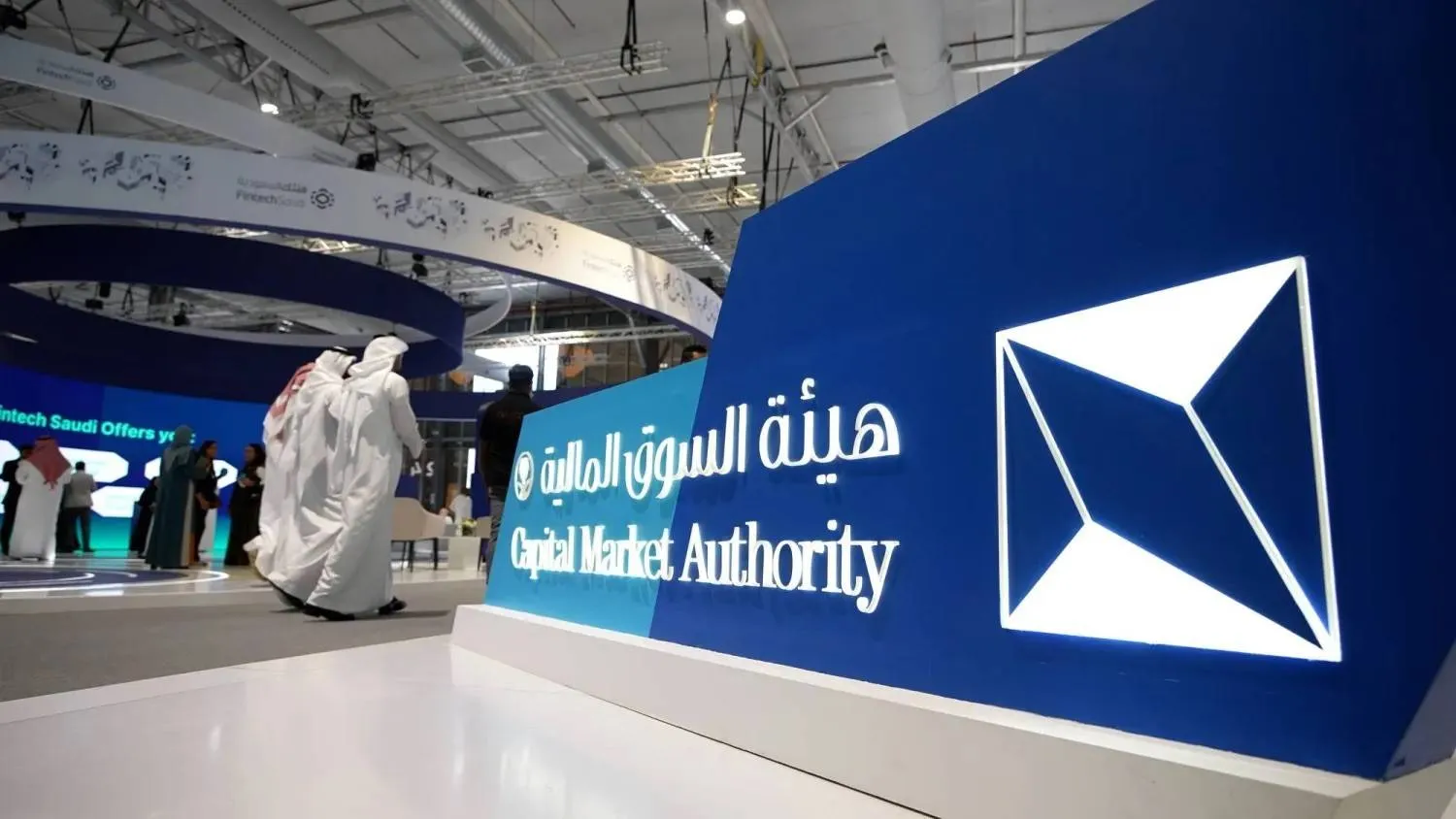

Saudi Capital Market Authority Proposes Rule Changes to Attract More Investors  

The Capital Market Authority. (Turki Al-Aqaili) 
TT

Saudi Capital Market Authority Proposes Rule Changes to Attract More Investors  

The Capital Market Authority. (Turki Al-Aqaili) 

The Saudi Capital Market Authority (CMA) has invited public feedback on a proposal to introduce “simplified investment funds”, as part of its broader strategy to strengthen the asset management sector and expand investment opportunities for all investor categories.

According to a statement from the CMA, the project aims to establish a flexible regulatory framework for investment funds characterized by lower establishment and management costs and greater structural flexibility. The proposed framework would also simplify the contractual relationship between fund managers and investors, making it easier to meet the diverse investment needs of targeted clients.

The proposal allows for the creation of funds tailored for institutional and qualified investors, with lighter regulatory requirements and reduced financial disclosure obligations.

It forms part of the CMA’s initiatives to boost the attractiveness of Saudi Arabia’s asset management sector and align it with international best practices observed in major global markets.

Key elements of the proposal include limiting fund offerings to specific categories of investors eligible under the CMA’s rules, and removing the requirement to appoint a custodian for funds structured as special purpose entities.

Additionally, the proposal permits the offering of fund units to non-resident foreign investors, the Saudi government, public entities, and government institutions through fund managers holding an international license for securities activities.

The CMA proposes giving fund managers more flexibility regarding the timeline for notifying the authority before launching a fund, provided that notice is submitted prior to the proposed offering date.

If approved, the new framework would allow greater adaptability in defining the contractual relationship between fund managers and unit holders, including fund termination and liquidation terms, investment unit classes, reporting requirements, and procedures for amending fund conditions. This, the CMA noted, is expected to boost the regulatory environment and increase the overall attractiveness of investment funds in the Kingdom.

The CMA added that the proposal complements its earlier project on the international license framework for securities firms, which was opened for public consultation in May 2025. Together, the two initiatives represent a strategic step toward transforming Saudi Arabia’s asset management sector from a domestic market player into a regional and global financial hub.

The Kingdom’s assets under management surged past SAR 1 trillion ($266.6 billion) in 2024, marking 20.9% growth from 2023. Investment funds accounted for over SAR 700 billion ($186.6 billion), a 25.2% increase year-on-year. Private funds represented 75% of total fund assets, while the number of investors jumped 64.9% to reach 152,405 by the end of 2024.



Lebanese Banks Escalate Dispute Over Taxes on Unrealized Gains

Finance Minister Yassine Jaber meets with a delegation from the Association of Banks in Lebanon in October 2025 (National News Agency)
TT

Lebanese Banks Escalate Dispute Over Taxes on Unrealized Gains

Finance Minister Yassine Jaber meets with a delegation from the Association of Banks in Lebanon in October 2025 (National News Agency)

Lebanese banks have escalated their dispute with the Ministry of Finance, announcing a one-day strike every week starting Wednesday in protest against demands to amend their tax returns for 2020 through 2024. The proposed adjustments would subject unrealized accounting gains and provisions set aside to cover actual losses to taxation.

The Association of Banks in Lebanon (ABL) has authorized its board of directors to take further action if the relevant authorities fail to respond to its demands. The association is seeking a legislative resolution to the dispute as Parliament prepares to discuss next year's draft state budget.

The unanimous decision to strike follows a letter the association received from the Finance Ministry several days ago. The ministry said its audit departments would begin reviewing banks' tax returns in the middle of next month to verify their accuracy and compliance with existing laws, while allowing taxpayers to challenge any subsequent tax assessments or penalties.

The banks have called on the authorities to withdraw the request for amended tax returns, reconsider the proposed tax treatment and take the necessary measures, including legislative amendments where needed, to exclude unrealized accounting gains and loss provisions from taxable income.

The association believes Parliament's consideration of next year's draft budget provides an opportunity to resolve the issue through legislative amendments.

Dispute Over Constitutionality of Tax Assessments

On the legal front, the banks base their objections, as previously reported by Asharq Al-Awsat, on Articles 81 and 82 of the Lebanese Constitution, which require new taxes or changes to existing taxes to be enacted through legislation passed by Parliament.

The association argues that administrative regulations cannot serve as a sufficient basis for imposing new tax liabilities. It maintains that accounting differences arising from the collapse of the Lebanese pound, calculated using the difference between historical cost and the prevailing exchange rate, do not represent genuine profits but reflect actual losses that should not be taxed.

The Finance Ministry, meanwhile, bases its position on regulatory decisions issued by the finance minister and an opinion issued by the Legislation and Consultation Commission in early 2025. Under the ministry's interpretation, these provide grounds for taxing banks on accounting differences arising from the gap between the historical cost exchange rate and the dollar's actual exchange rate at the time of assessment.

The banks warn that collecting the disputed taxes, estimated at approximately $600 million, would deplete part of their remaining cash liquidity and undermine their ability to repay depositors. They argue that the measures would place additional burdens on both banks and depositors as a result of a crisis in which the state defaulted on its obligations.

The association maintains that protecting available liquidity and directing it toward repaying depositors should take precedence over collecting taxes on gains it describes as unrealized and existing only on paper.

The dispute has intensified over recent weeks through a series of exchanges between the ministry and the banks, following the ministry's demand that lenders submit revised tax returns retroactively for the five years from 2020 through 2024.

The banks had requested joint meetings to clarify what they consider shortcomings in the proposed tax treatment before formally rejecting the required measures in their latest letter, citing legal, accounting and regulatory concerns.

According to the banking association's legal and accounting assessment, the disputed foreign exchange differences arose from the revaluation of accounts following the sharp depreciation of the Lebanese pound. They do not constitute actual profits or represent a genuine increase in banks' wealth or ability to pay taxes.

The association also argues that the provisions in question were established to cover actual losses resulting from the state's failure to meet its obligations, in accordance with applicable accounting and regulatory standards. Taxing these amounts, it says, fails to distinguish between realized profits, accounting gains and actual losses.

In explaining its position, the association draws a distinction between profits generated through economic activity and nominal or accounting gains resulting from extraordinary currency fluctuations and the revaluation of accounts. It stresses that the latter do not reflect any genuine increase in banks' wealth or taxable capacity.

As for provisions against Eurobond holdings, the association says they were established in accordance with applicable accounting and regulatory standards, with the approval of the Banking Control Commission of Lebanon, to account for losses arising from the Lebanese government's default on its debt obligations.

In a statement, the association reiterated its categorical rejection of the Finance Ministry's demand to amend tax returns, arguing that the proposed measures would impose taxes on unrealized accounting gains and provisions intended to cover losses resulting from the government's default on Eurobonds.

It said its position was driven by its responsibility to protect depositors' rights and preserve the banking sector's remaining liquidity.


Saudi Arabia Elected to International Telecommunication Union Council

A session of the ITU Plenipotentiary Conference (PP-26) in Doha (Communications, Space and Technology Commission)
TT

Saudi Arabia Elected to International Telecommunication Union Council

A session of the ITU Plenipotentiary Conference (PP-26) in Doha (Communications, Space and Technology Commission)

Saudi Arabia has been elected to the Council of the International Telecommunication Union (ITU) for the 2027–2030 term, joining 47 other countries on the 48-member council, elected from the union’s 194 member states. The election took place during the ITU Plenipotentiary Conference in Doha, Qatar.

The election strengthens Saudi Arabia’s role in shaping the ITU’s strategic direction and setting international priorities in the telecommunications, space and technology sectors. It also supports efforts to bridge the digital divide and expand access to modern technologies and artificial intelligence.

Minister of Communications and Information Technology and Chairman of the Board of Directors of the Communications, Space and Technology Commission (CST), Abdullah Al-Swaha, said Saudi Arabia’s election reflects the international community’s confidence in the Kingdom’s role and contributions to advancing the telecommunications, space and technology sectors and strengthening international partnerships.

He said the Kingdom is working with its partners to expand opportunities to benefit from technology and help countries build their digital capabilities.

CST Governor Haitham Al-Ohali said the council membership reflects confidence in Saudi Arabia’s contributions to the ITU and its ability to work with the international community to achieve the union’s objectives.

He added that the Kingdom would work with its partners during the upcoming term to strengthen digital infrastructure, develop capabilities and support developing countries in expanding access to telecommunications services, helping bridge the digital divide and broaden access to technology and artificial intelligence.

The ITU Council oversees the organization’s work between Plenipotentiary Conferences, monitoring its policies, strategies and financial plans. Membership gives countries a role in guiding international efforts in the telecommunications and technology sectors.

Saudi Arabia joined the ITU in 1949 and was first elected to its Council in 1965. Since then, the Kingdom has contributed to the union’s work and initiatives and helped shape its policies and strategies.


Saudi Arabia Issues Over 80,000 Building Permits in Nine Months

A residential development in Saudi Arabia’s Qassim region (SPA)
TT

Saudi Arabia Issues Over 80,000 Building Permits in Nine Months

A residential development in Saudi Arabia’s Qassim region (SPA)

Saudi Arabia issued more than 80,000 building permits during the first nine months of 2026 as part of efforts to regulate urban growth, improve city efficiency and attract investment in urban development.

The Ministry of Municipalities and Housing said permits are issued through the Balady platform using streamlined electronic procedures. The process involves selecting the permit type, entering the applicant’s information, choosing the cadastral survey report and submitting the required plans and documents through an engineering office. Permits are issued once all requirements have been met.

The ministry said the procedures help regulate construction and urban development, simplify permitting to support investment, improve the urban landscape and enhance the quality of municipal services by accelerating processes and improving the user experience.