

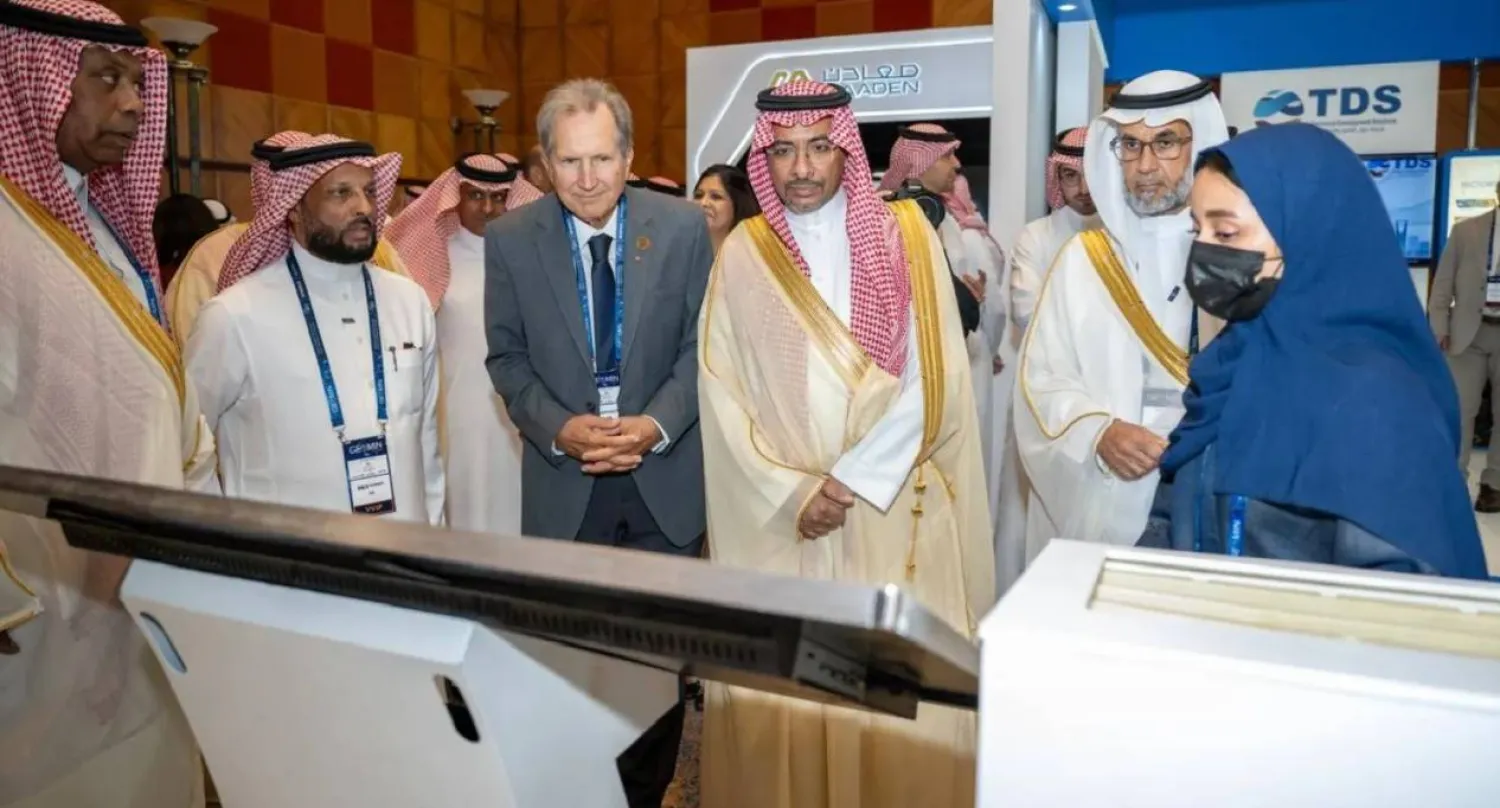

Al-Khorayef: ‘Economic Corridor’ Positions Saudi Arabia as Global Hub

Minister of Industry and Mineral Resources Bandar Al-Khorayef at Jeddah Forum (Asharq Al-Awsat)
TT

Al-Khorayef: ‘Economic Corridor’ Positions Saudi Arabia as Global Hub

Minister of Industry and Mineral Resources Bandar Al-Khorayef at Jeddah Forum (Asharq Al-Awsat)

Saudi Arabia is moving swiftly to cement its position as a global manufacturing and production hub, capitalizing on its sweeping economic transformation.

The “New Economic Corridor” stands out as a pivotal initiative supporting this drive, built on four integrated national strategies: localization, industry, mining, and exports.

Together, these strategies aim to turn the Kingdom into a regional and global platform for production and exports, one that attracts high-value investments and fuels economic transformation under Vision 2030.

Speaking to Asharq Al-Awsat, Minister of Industry and Mineral Resources Bandar Al-Khorayef said Saudi Arabia’s alignment of these four strategies positions it to become both a regional and global manufacturing center.

He noted that the Kingdom’s strong natural and human resources, including abundant oil, gas, petrochemicals, and minerals, complement its strategic geographic location, which grants access to key and emerging markets across the region, Africa, Central Asia, and other parts of Asia.

Boosting Petrochemical Conversion

Al-Khorayef revealed that efforts are underway to channel part of Saudi Arabia’s petrochemical exports into local downstream industries.

A successful pilot project carried out in cooperation with the Ministry of Energy led to a domestic demand surge of more than 300,000 tons for one product, with more items expected to be added in the future. This initiative, he said, will bolster downstream industries and strengthen their contribution to the national economy.

Expanding Pharmaceutical and High-Tech Manufacturing

On pharmaceuticals, the minister pointed to a clear plan that has significantly increased the number of local factories. The Kingdom, he said, has succeeded in localizing the production of sensitive medical products such as insulin and is currently advancing projects in vaccines and biologics.

Al-Khorayef also highlighted Saudi Arabia’s growing focus on advanced technology industries, including electronics and microchips. He cited partnerships with private-sector firms such as Alat and cooperation with the Ministry of Communications to promote information technology within this advanced industrial push.

Attracting Future Technologies

The minister emphasized the Kingdom’s strong infrastructure, noting that its ports, roads, and railways reflect political and financial stability and enhance competitiveness in the energy sector, a critical component of industrial zones.

“This combination of resources, location, and infrastructure makes Saudi Arabia a key partner and an essential hub in global industries,” he said, adding that the ministry’s focus is on attracting technologies of the future rather than those of the past.

Over the past six years, Al-Khorayef said, the government has introduced a range of effective policies and incentives - most notably the promotion of local content, which has become the biggest driver of investment. It gives investors priority in the domestic market, including in government procurement and major corporate contracts.

He added that the state’s investment in industrial city infrastructure has been a decisive factor, with more than 25 million square meters developed and advanced industrial cities and ready-built factories established.

These conditions, he explained, make investment easier, thanks to industrial financing from the Saudi Industrial Development Fund, export financing from the Saudi EXIM Bank, and incentives under the “Made in Saudi” program led by the Saudi Export Development Authority.

These policies, he said, are stable and long-term, while temporary incentives are available for energy projects and standardized incentives for localization, subject to the approval of a ministerial committee, measures that enhance the Kingdom’s ability to attract quality investments.

Expanding Global Partnerships

Al-Khorayef said his recent tours to several world capitals aim to encourage the Saudi private sector to forge international partnerships and promote the Kingdom as a leading global investment destination.

He noted that Saudi Arabia recently took part in Germany’s K Show 2025, where German companies expressed keen interest in investing in the Kingdom.

The minister also said Saudi Arabia has become a global platform for discussing mining issues among governments and companies, stressing that the sector needs more firms, investment, and scientific research. He said current efforts focus on strengthening the technical and scientific aspects of mining to enhance its efficiency.

Mining, he added, is the third pillar of Saudi industry after oil, gas, and petrochemicals, with mineral wealth estimated at around 2.5 trillion riyals ($667 billion).

He disclosed that efforts are underway to extract lithium from water used in oil and gas operations as well as from desalinated and seawater, expressing optimism about achieving positive results in the near future.



Bulgaria Adopts the Euro, Nearly 20 Years After Joining the EU

 A map of Bulgaria with the EU symbol is projected on the Bulgarian National Bank as people celebrate New Year's Eve and Bulgaria's adoption of the euro in Sofia, Bulgaria, Thursday Jan. 1, 2026. (AP)
A map of Bulgaria with the EU symbol is projected on the Bulgarian National Bank as people celebrate New Year's Eve and Bulgaria's adoption of the euro in Sofia, Bulgaria, Thursday Jan. 1, 2026. (AP)
TT

Bulgaria Adopts the Euro, Nearly 20 Years After Joining the EU

 A map of Bulgaria with the EU symbol is projected on the Bulgarian National Bank as people celebrate New Year's Eve and Bulgaria's adoption of the euro in Sofia, Bulgaria, Thursday Jan. 1, 2026. (AP)
A map of Bulgaria with the EU symbol is projected on the Bulgarian National Bank as people celebrate New Year's Eve and Bulgaria's adoption of the euro in Sofia, Bulgaria, Thursday Jan. 1, 2026. (AP)

Bulgaria became the 21st country to switch to the euro as it entered the New Year on Thursday, a milestone met with both cheers and fears, nearly 20 years after the Balkan nation joined the European Union.

At midnight (2200 GMT Wednesday), Bulgaria gave up the lev currency, which has been in use since the late 19th century, and Bulgarian euro coins were projected onto the central bank's building.

Successive governments in the country of 6.4 million people have advocated joining the euro, hoping that it will boost the economy of the European Union's poorest member, reinforce ties to the West and protect against Russia's influence.

But Bulgarians have long been divided over the switch, with many worrying the introduction could usher in higher prices and add to the political instability rattling the country.

In a speech broadcast shortly before midnight, President Rumen Radev hailed the euro adoption as the "final step" in Bulgaria's EU integration, as thousands of people braved sub-zero temperatures in the capital Sofia to celebrate the New Year.

Radev however voiced regret that Bulgarians had not been consulted by referendum on the adoption.

"This refusal was one of the dramatic symptoms of the deep divide between the political class and the people, confirmed by mass demonstrations across the country."

Anti-corruption protests swept a conservative-led government from office in mid-December, leaving a country anxious about inflation on the verge of its eighth election in five years.

"People are afraid that prices will rise, while salaries will remain the same," a woman in her 40s who declined to give her name told AFP in Sofia.

At one of the city's largest markets, stalls displayed prices of everything from groceries to New Year's Eve essentials like sparklers in both levs and euros.

"The whole of Europe has managed with the euro, we'll manage too," retiree Vlad told AFP.

- Easier trade, travel -

European Commission president Ursula von der Leyen said Wednesday that Bulgaria's move into the eurozone marked "an important milestone" that would bring "practical benefits" to Bulgarians.

"It will make travelling and living abroad easier, boost the transparency and competitiveness of markets, and facilitate trade," she said.

Central bank governor Dimitar Radev said the euro symbolized much more than "just a currency -- it is a sign of belonging".

But according to the latest Eurobarometer survey, 49 percent of Bulgarians are against the switch.

Outgoing prime minister Rossen Jeliazkov sought to reassure the public ahead of the move, saying he was "counting on the tolerance and understanding of citizens and businesses".

He added that inflation in the Black Sea nation, which joined the EU in 2007, was not linked to the euro's adoption.

But the concerns of Bulgarians about inflation are not idle.

Food prices rose by five percent year-on-year in November, more than double the eurozone average, according to the National Statistical Institute.

"Unfortunately, prices no longer correspond to those in levs," pastry shop owner Turgut Ismail, 33, told AFP, saying that prices have already begun surging.

A euro protest campaign earlier this year tapping into a generally negative view of the single currency among much of the population also fanned fears of price hikes.

- Queues and possible disruptions -

Given Bulgaria's ongoing political instability, any problems with euro adoption would be seized on by anti-EU politicians, warned Boryana Dimitrova of the Alpha Research polling institute.

Some people, including business owners, have complained that it has been difficult to get their hands on euros, with shopkeepers saying they haven't received the euro starter packages they ordered.

Banks said there could be some disruption at cash machines in the hours surrounding the switch. Earlier this week, people queued outside the Bulgarian National Bank and several currency exchange offices in Sofia to obtain euros.

The euro was first rolled out in 12 countries on January 1, 2002. Croatia was the latest to join, in 2023.

Bulgaria's accession will bring the number of Europeans using the euro to more than 350 million.


Saudi Industry Ministry Concludes Ninth Licensing Round, with 24 Companies and Consortia Awarded 172 Mining Sites

Saudi Industry Ministry Concludes Ninth Licensing Round, with 24 Companies and Consortia Awarded 172 Mining Sites
TT

Saudi Industry Ministry Concludes Ninth Licensing Round, with 24 Companies and Consortia Awarded 172 Mining Sites

Saudi Industry Ministry Concludes Ninth Licensing Round, with 24 Companies and Consortia Awarded 172 Mining Sites

The Saudi Ministry of Industry and Mineral Resources announced on Wednesday the names of 24 companies and consortia that have won licenses in the ninth exploration licensing round, the largest in the Kingdom’s history to date.

The winning entities were awarded 172 mining sites, including 76 sites that advanced to a multi-round public auction, across three mineralized belts in the regions of Riyadh, Madinah, and Qassim, with total committed exploration spend of over SAR671 million during the first two years of their work programs.

This milestone comes as part of the ministry’s ongoing efforts to accelerate mineral exploration and development in the Kingdom, in line with the objectives of Vision 2030, which positions the mining sector as the third pillar of the national industrial economy, said the ministry in a statement.

The ninth round offered over 24,000 km2, spanning the Ad-Duwaihi/Nabitah gold belt in Riyadh Region, as well as the Nuqrah and Sukhaybirah/As-Safra gold belts in Madinah and Qassim regions. These areas are rich in strategic minerals, including gold, copper, silver, zinc, and nickel. The round witnessed strong interest and high-quality competition from leading local and international companies, reflecting growing confidence in Saudi Arabia’s mining investment environment and its attractiveness at both regional and global levels.

The list of winning companies includes several leading international firms and prominent local companies, namely: Desert EX Pty Ltd Company; Batin Alard for Gold Company; Royal Roads Arabia Company; Sierra Nevada Gold Inc. Company; Aurum Global Group; Brunswick Exploration Incorporated; EQLEED-INDOTAN Mining Company; Helderberg Limited Company; Rawafed Alola for Mining Company; Saudi Gold Refinery Limited Company; Arabian Discovery Mining Company; Al Ghazal Al Arabi Mining Company; Almasar Minerals Holding Limited Company; Al Tasnim Enterprises LLC Company; Arabian Gulf Skylark. The Distinguished Consortium Mining Company, Two Limited Company; Maaden Ivanhoe Electric Exploration and Development Limited Company.

Several newly formed consortia also emerged winners in the licensing round, such as Demir Engineering Ltd, Dahrouge Geological Consulting Ltd, and Kaz United Mining LLC Consortium; KENZ Global Resources Ltd, and Manahil Al Sharq Mining and Al Rayyan Mining Resources Co. Consortium; Maaden Barrick Technology Experts Co. and Andiamo Exploration Ltd Company; Shandong Gold (Beijing) Industrial Investment Co., Ltd., Development Co., Ltd., and Ajlan & Bros Company for Mining; Midana Exploration Pty Ltd and Saudi Arabian Mining Company (Maaden) Consortium; and McEwen Mining Inc. and Sumou Holding Company Consortium.

The ninth round saw 26 qualified companies participate via the electronic bidding platform. The round was conducted in several stages with the highest levels of transparency: prequalification, site selection via the platform, and a multi-round public auction for sites attracting more than one bidder.

The ministry further noted that the scale of investment commitments in this round supports the development of underexplored greenfield areas and helps unlock the Kingdom’s estimated mineral wealth of SAR9.4 trillion, thereby strengthening the resilience of mineral supply chains.

The ministry confirmed that licensing will continue through the 10th round, spanning 13,000 km2 across Madinah, Makkah, Riyadh, Qassim, and Hail. It will include new sites that extend the mineralized belts offered in the ninth round.

The ministry will announce additional exploration and investment opportunities for 2026 at the fifth edition of the Future Minerals Forum (FMF), scheduled to take place in Riyadh from January 13 to 15.

These efforts are part of the Kingdom’s comprehensive strategy for the mining and mineral industries, aimed at maximizing the value of mineral resources, attracting global investment, creating jobs, enhancing value-chain integration, and reinforcing Saudi Arabia’s position as a global mining hub, in line with the ambitions of Vision 2030, it stressed.


Expo 2030 Riyadh Awards the Main Utilities and Infrastructure Works Package

The milestone demonstrates the project’s increasing momentum as it shifts from early works to large-scale construction activity. (SPA)
TT

Expo 2030 Riyadh Awards the Main Utilities and Infrastructure Works Package

The milestone demonstrates the project’s increasing momentum as it shifts from early works to large-scale construction activity. (SPA)

In a step aimed at advancing construction activities, Expo 2030 Riyadh awarded its Main Utilities and Civil Works package to Nesma and Partners - marking a significant moment in the journey to bring to life one of the most ambitious global mega-events ever developed.

The milestone demonstrates the project’s increasing momentum as it shifts from early works to large-scale construction activity.

In a statement on Wednesday, Expo 2030 Riyadh Company said the Main Utilities and Infrastructure Works package aims to prepare the site for subsequent construction phases and supports the operational requirements of the event itself.

The scope of work includes constructing roads within the Expo site and installing essential utilities that will form the infrastructure backbone of the entire development.

Around 50 kilometers of infrastructure networks will be delivered as part of this package – including water, sewage, EV charging stations, and electrical and communication systems. Together, these works are essential to support the next stages of master plan development and allow Expo 2030 Riyadh’s experience-defining structures to take shape.

CEO of Expo 2030 Riyadh Company Talal Al-Marri said: “This milestone marks an important step in accelerating construction activities in the Expo 2030 Riyadh site. By moving early on the infrastructure that underpins the entire site, we are creating the conditions for safe, coordinated, and high-quality delivery across all future phases of development, while ensuring a lasting legacy well beyond 2030.”

“The contract has been awarded ahead of schedule to accelerate the delivery timeline as part of a phased approach that will see construction across infrastructure, buildings, and public spaces advance steadily through 2026 and into early 2027,” he stressed.

President and Chief Executive Officer of Nesma and Partners Samer Abdul Samad said: “We are proud to be entrusted with delivering this phase of infrastructure for Expo 2030 Riyadh. This project is not only about scale, but also about precision, integration, and responsibility.”

“Our focus will be on delivering high-quality infrastructure that supports the ambition of Expo 2030 Riyadh and sets a strong foundation for everything that follows,” he added.

Expo 2030 Riyadh Company has embedded high standards for quality, sustainability, innovation, worker welfare, and health and safety into the delivery of the works, reinforcing its commitment to responsible construction and creating a safe, inclusive environment for everyone involved in the program.