Saudi Aramco to Take Minority Stake in PIF-owned Humain
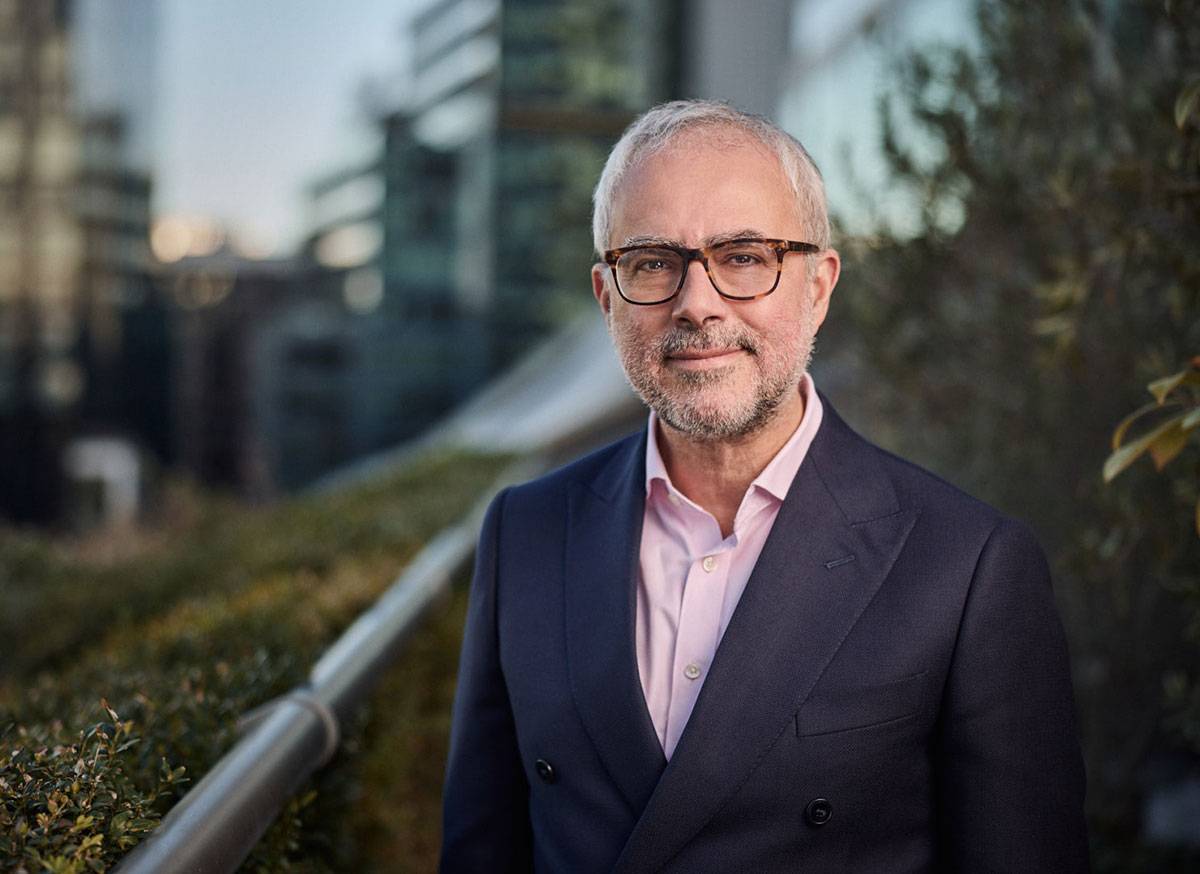
The deal aims to combine PIF and Aramco's AI assets and expertise under Humain. Photo: Aramco
Saudi Arabia's Public Investment Fund (PIF) and Aramco said on Tuesday that they signed a non-binding term sheet for the oil giant to acquire a minority stake in Humain, an artificial intelligence company majority-owned by PIF.
The deal aims to combine the two entities' AI assets and expertise under Humain to accelerate its global growth and strengthen Saudi Arabia's position as a leading AI hub, Aramco said in a statement.
Deputy Governor and Head of MENA Investments at PIF Yazeed Al-Humied said: “By combining PIF and Aramco’s AI assets under Humain, we are fueling AI talent, innovation and intellectual property, while aligning and accelerating future investment opportunities.”
“This development is aligned with PIF’s strategy by further strengthening Saudi Arabia’s position as a globally competitive AI hub and places the country at the heart of reshaping the future of global AI,” he added.
Aramco President and CEO Amin Nasser stated that the oil giant’s planned investment in Humain is expected to further strengthen its leadership in industrial AI applications and digital solutions, while accelerating the development of the Kingdom’s AI infrastructure.
“Aramco is well positioned to capture opportunities from rising energy demand linked to AI growth, using advanced technologies to improve efficiency, reduce emissions, and sustain our competitive edge as one of the world’s leading integrated energy and chemicals companies,” he said.
East Pipes Signs $12.27 Million Contract with Aramco
One of the manufacturing facilities of Eastern Pipes Company in Saudi Arabia. (Company photo)
Saudi Arabia's East Pipes Integrated Company for Industry has signed a new five-month contract with Saudi Aramco to manufacture and supply steel pipes, with the total value exceeding 46 million riyals ($12.27 million), including value-added tax, the company said on Thursday.
The contract was formally signed on Tuesday, Sept. 22, 2026, after the contract award procedures were completed on the same day.
The company said the contract is expected to have a positive financial impact, which will be reflected in its financial results for the fourth quarter of fiscal year 2026-2027.
The company said there were no related parties involved in the transaction and that the contract was concluded under customary commercial terms and conditions, in line with transparency and corporate governance requirements.
Saudi Sukuk, Bonds Gain New Route to Liquidityhttps://english.aawsat.com/business/5321873-saudi-sukuk-bonds-gain-new-route-liquidity
An investor walks past the Tadawul logo at the Saudi stock exchange. (Reuters)
Saudi Arabia is bringing trade execution, clearing and settlement into a connected electronic workflow for its riyal-denominated sukuk and bond market, a step aimed at making secondary trading more efficient.
The change could make existing liquidity easier to find, improve price discovery and cut manual processing. It follows an approach seen in international markets, where electronic trading has developed alongside integrated local post-trade systems.
Tradeweb’s alternative trading system, previously available to international investors in Saudi Arabia, now also offers an electronic route for domestic investors and dealers.
The US-based company said GIB Capital and Saudi Awwal Bank executed the first domestic trade on the system.
Trade details were sent to the Securities Clearing Center Company, known as Muqassa, for post-trade processing and then to the Securities Depository Center Company, known as Edaa, for settlement.
Tradeweb is licensed by Saudi Arabia’s Capital Market Authority to operate the system for sukuk and debt instruments.
Under the new process, a domestic investor can request and compare quotes electronically from eligible dealers. Once a trade is executed, its details go to Muqassa, which sends settlement instructions to Edaa. Participation is limited to professional investors and domestic dealers who meet the relevant registration and account requirements.
Previously, domestic execution and settlement followed separate processes, which could require trade details to be transferred or entered into different systems.
The connected electronic record should reduce repeated data entry and manual intervention, while making trades easier to trace and audit. The trades remain bilateral, and existing local settlement arrangements still apply.
Electronic trading does not create liquidity in itself, Enrico Bruni, Tradeweb’s Managing Director and Co-head of Global Markets, told Asharq Al-Awsat. It does, he said, make existing liquidity easier to find and access.
A standardized, traceable request-for-quote process lets investors compare prices from eligible dealers. Bruni said wider use among clients and dealers could, over time, improve price discovery and deepen the secondary market.
Enrico Bruni, Tradeweb’s Managing Director and Co-head of Global Markets. (Tradeweb)
From international to domestic trading
Tradeweb launched the alternative trading system in Saudi Arabia in October 2025, initially allowing international investors to trade riyal-denominated sukuk and debt instruments electronically. Early trades involved international institutions, including BlackRock, BNP Paribas and Goldman Sachs.
The domestic route gives institutions and dealers in Saudi Arabia an electronic trading channel while keeping post-trade processing and settlement within local infrastructure. A transaction can now start with an electronic request for quotes and proceed through local clearing and settlement.
The platform is still at an early stage. Bruni did not provide specific trading-volume figures since its launch, saying activity first focused on access for international investors before trading between domestic participants was added.
A growing need for price discovery
The process arrives as Saudi Arabia’s riyal debt market expands and international participation increases.
Saudi government debt instruments are expected to enter J.P. Morgan’s emerging-market government bond index in stages from January 2027, widening the pool of investors who track the index or invest in its securities.
That broader international investor base, alongside growing domestic participation, could increase demand for efficient access to dealer liquidity and clearer price discovery as the secondary market develops.
Scope for expansion
Bruni said electronic trading could eventually extend beyond government sukuk and riyal-denominated debt instruments to corporate bonds, repurchase agreements and derivatives. Any addition would depend on client demand, available liquidity and regulatory approval.
Tradeweb said the current infrastructure could support other products and trading methods while preserving Saudi market account structures, settlement arrangements and trading practices.
Over the next two to three years, Bruni said, success would be measured less by a particular trading volume than by regular use among more domestic and international investors, a larger network of liquidity providers and a wider range of traded instruments.
For now, the change is chiefly operational: it connects execution with local clearing and settlement and makes dealer liquidity easier to access.
As participation grows, that could help develop secondary trading in riyal-denominated sukuk and bonds.
ECB Says Will Have to Act Again if 2nd-round Inflation Effects Appearhttps://english.aawsat.com/business/5321729-ecb-says-will-have-act-again-if-2nd-round-inflation-effects-appear
European Central Bank (ECB) President Christine Lagarde (CL) and Gabriel Makhlouf (CR), Governor of the Central Bank of Ireland during the family photo at the Informal meeting of EU Finance Ministers in Dublin Castle, Dublin, Ireland 18 September 2026. EPA/BRYAN MEADE
ECB Says Will Have to Act Again if 2nd-round Inflation Effects Appear
European Central Bank (ECB) President Christine Lagarde (CL) and Gabriel Makhlouf (CR), Governor of the Central Bank of Ireland during the family photo at the Informal meeting of EU Finance Ministers in Dublin Castle, Dublin, Ireland 18 September 2026. EPA/BRYAN MEADE
European Central Bank will have to raise interest rates again if high energy prices feed through to other areas but so far there is no sign of such second-round inflation effects, ECB policymaker Gabriel Makhlouf said on Wednesday.
"Although inflation is above our target, we're not seeing the sorts of second round effects that start feeding through to prices," Makhlouf, Ireland's central bank chief, told national broadcaster RTE in an interview.
"If that happens (energy prices remain high and feed into other areas), we will have to take action again to meet our target."
Makhlouf cautioned earlier this month following the ECB's second interest rate hike this year that raising interest rates "a great deal more" risked damaging economic growth.
Also Wednesday, the ECB said the European Union could close a third of its productivity gap with the United States if it had as many large companies, adding its voice to calls for reforms that make it easier for businesses to scale up.
European policymakers are trying to tackle the EU's economic underperformance relative to the United States, which is home to many of the world's largest companies and is leading the race to develop artificial intelligence.
EU workers produce 20% less output per hour than their US counterparts, according to academic studies. They were almost on an even keel in 1995.
ECB staff found that if Europe had the same distribution of large and small firms as the United States – without changing how productive each type of company is – the productivity gap would shrink by roughly one-third.
Large firms are significantly more productive than smaller ones. Companies with at least 250 employees generate an average of €86,800 in value added per worker annually, while firms with fewer than 10 employees produce less than half that amount.
The ECB said Europe's weaker productivity performance also reflects lower innovation, fragmented regulation and less developed capital markets, all of which make it harder for companies to grow and compete internationally.
The central bank backed the proposed "EU Inc" framework, an EU-wide corporate law regime aimed at reducing barriers to cross-border business activity.
Modelled loosely on Delaware's corporate framework in the United States, EU Inc would create a single legal structure operating across the bloc, bypassing a patchwork of 27 national company law systems and dozens of corporate forms.
"EU Inc. has the potential to support the Single Market, by strengthening competition, innovation and productivity growth," the ECB said.
لم تشترك بعد
انشئ حساباً خاصاً بك لتحصل على أخبار مخصصة لك ولتتمتع بخاصية حفظ المقالات وتتلقى نشراتنا البريدية المتنوعة