



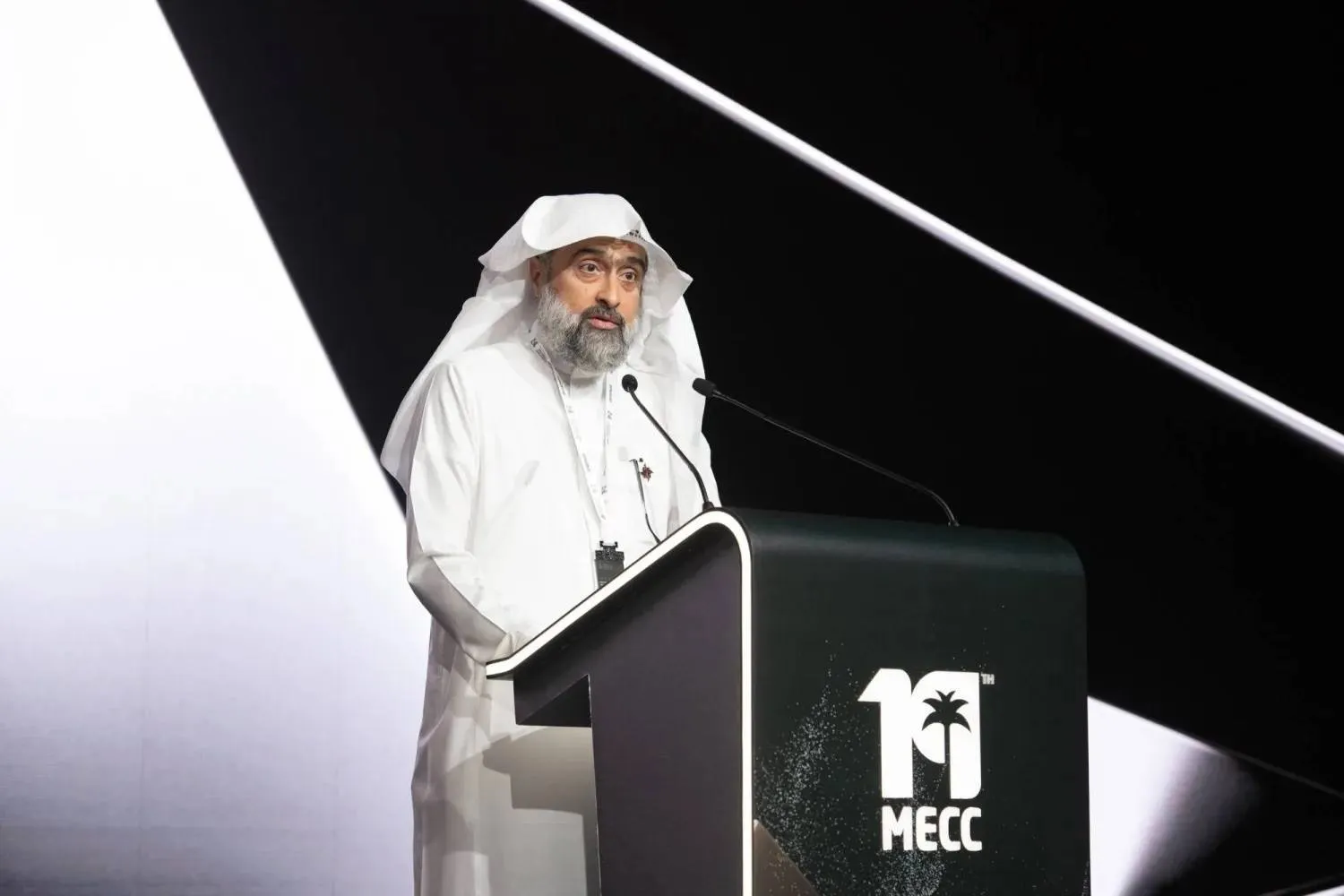

Saudi Aramco announced the signing of 28 memorandums of understanding (MoUs) worth more than $1 billion during the 19th Middle East Corrosion Conference and Exhibition, held in Dhahran, eastern Saudi Arabia.
The agreements cover proposed collaborations in research and development of advanced materials and technologies, the establishment of local manufacturing facilities, and joint training and development initiatives.
The event, hosted in the Kingdom for the first time, brought together thousands of experts to discuss methods to prevent metal corrosion, a global issue that costs an estimated $3 trillion annually.
In his opening remarks, Wail Al-Jaafari, Aramco’s Executive Vice President of Technical Services, described corrosion as “not merely a technical challenge but a strategic priority tied directly to operational reliability, safety, and environmental responsibility.”
Al-Jaafari noted that Aramco has invested more than $70 million over the past three years in corrosion management technologies, resulting in savings exceeding $770 million.
“We now use AI-powered solutions to predict corrosion before it occurs through an extensive network of Internet of Things sensors across our facilities and pipelines,” he said. “This network provides more than ten million readings annually to monitor corrosion at over 40 sites.”
He added that Aramco’s ambitions go beyond its own facilities. “We are combining our expertise, knowledge, and intellectual property with artificial intelligence to develop advanced solutions serving the wider energy and industrial sectors.”
Highlighting the economic potential of AI, Ahmad Al-Khowaiter, Aramco’s Executive Vice President of Technology and Innovation, said global corrosion-related costs amount to nearly 3 percent of global GDP.
“Studies show that applying AI and other advanced technologies could save about $1 trillion annually. Every dollar lost to corrosion increases risks to safety, the environment, and the continuity of energy supplies that billions depend on. AI allows us to anticipate failures, improve maintenance schedules, and extend the lifespan of critical assets.”
Al-Khowaiter stressed that the combination of cutting-edge technologies, skilled talent, and strategic partnerships would enable Aramco to lead the energy sector’s transition and set new global benchmarks for the AI era.
The Middle East Corrosion Conference, first held in 1979, is the region’s oldest and largest event dedicated to corrosion studies. This year’s edition attracted over 5,200 participants from 45 countries, featured more than 300 research papers and 25 workshops, and hosted the first student hackathon on innovation in corrosion science and materials engineering.


