


Trump Cuts Tariffs on Beef, Coffee and Other Foods as Inflation Concerns Mount

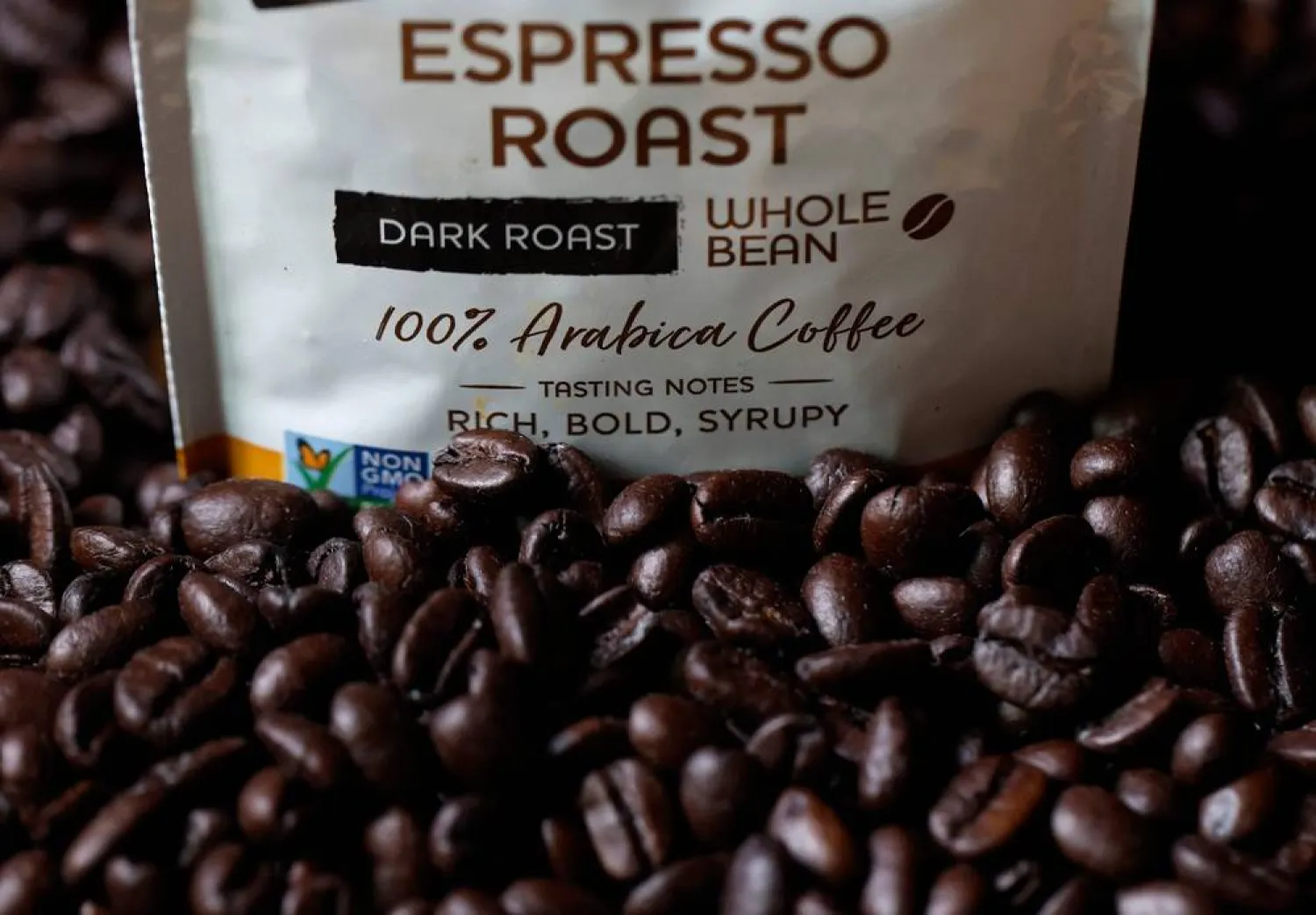
In this photo illustration, coffee beans are displayed on November 13, 2025 in San Anselmo, California. (Getty Images/AFP)
TT

Trump Cuts Tariffs on Beef, Coffee and Other Foods as Inflation Concerns Mount

In this photo illustration, coffee beans are displayed on November 13, 2025 in San Anselmo, California. (Getty Images/AFP)

US President Donald Trump on Friday rolled back tariffs on more than 200 food products, including such staples as coffee, beef, bananas and orange juice, in the face of growing angst among American consumers about the high cost of groceries.

The new exemptions - which took effect retroactively at midnight on Thursday - mark a sharp reversal for Trump, who has long insisted that the sweeping import duties he imposed earlier this year are not fueling inflation.

"They may in some cases" raise prices, Trump said of his tariffs when asked about the move aboard Air Force One on Friday evening. But he insisted that overall, the US has "virtually no inflation."

Democrats have won a string of victories in state and local elections in Virginia, New Jersey and New York City, where growing voter concerns about affordability, including high food prices, were a key topic.

Trump also told reporters aboard Air Force One that he would move forward with a $2,000 payment to lower- and middle-income Americans that would be funded by tariff revenues next year sometime.

"The tariffs allow us to give a dividend if we want to do that. Now we're going to do a dividend and we're also reducing debt," he said.

The Trump administration announced framework trade deals on Thursday that, once finalized, will eliminate tariffs on certain foods and other imports from Argentina, Ecuador, Guatemala and El Salvador, with US officials eyeing additional agreements before year's end.

Friday's list includes products US consumers routinely purchase to feed their families at home, many of which have seen double-digit year-over-year price increases. It includes over 200 items ranging from oranges, acai berries and paprika to cocoa, chemicals used in food production, fertilizers and even communion wafers.

The White House, in a fact sheet on the order, said it came on the heels of "significant progress the President has made in securing more reciprocal terms for our bilateral trade relationships."

It said Trump decided certain food items could be exempted since they were not grown or processed in the United States, and given the conclusion of nine framework deals, two final agreements on reciprocal trade, and two investment deals.

Ground beef, as of the latest available data for September, was nearly 13% more expensive, according to Consumer Price Index data, and steaks cost almost 17% more than a year ago. Increases for both were the largest in more than three years, dating back to when inflation was nearing its peak under Trump's predecessor, Democrat Joe Biden.

Although the US is a major beef producer, a persistent shortage of cattle in recent years has kept beef prices high.

Banana prices were about 7% higher, while tomatoes were 1% higher. Overall costs for food consumed at home were up 2.7% in September.

The tariff exemptions won praise from many industry groups, while some expressed disappointment that their products were excluded from the exemptions.

"Today’s action should help consumers, whose morning cup of coffee will hopefully become more affordable, as well as US manufacturers, which utilize many of these products in their supply chains and production lines," FMI-Food Industry Association president Leslie Sarasin said in a statement.

Asked if further changes were planned, Trump told reporters aboard Air Force One, "I don't think it'll be necessary."

"We just did a little bit of a rollback," he said. "The prices of coffee were a little bit high, now they'll be on the low side in a very short period."

NEW FOCUS ON AFFORDABILITY

Trump has upended the global trading system by imposing a 10% base tariff on imports from every country, plus additional specific duties that vary from state to state.

Trump has focused squarely on the issue of affordability in recent weeks, while insisting that any higher costs were triggered by policies enacted by Biden, and not his own tariff policies.

Consumers have remained frustrated over high grocery prices, which economists say have been fueled in part by import tariffs and could rise further next year as companies start passing on the full brunt of the import duties.

The top Democrat on the House of Representatives Ways and Means Committee, Richard Neal, said the Trump administration was "putting out a fire that they started and claiming it as progress."

"The Trump Administration is finally admitting publicly what we've all known from the start: Trump's Trade War is hiking costs on people," Neal said in a statement. "Since implementing these tariffs, inflation has increased and manufacturing has contracted month after month."



Saudia to Launch Riyadh-Kozhikode Flights in February

Saudi Arabian Airlines plane, is seen at the airport of the Red Sea resort of Sharm el-Sheikh, Egypt, August 9, 2021. Picture taken through a window. REUTERS/Mohamed Abd El Ghany/File Photo
TT

Saudia to Launch Riyadh-Kozhikode Flights in February

Saudi Arabian Airlines plane, is seen at the airport of the Red Sea resort of Sharm el-Sheikh, Egypt, August 9, 2021. Picture taken through a window. REUTERS/Mohamed Abd El Ghany/File Photo

Saudia Airlines has added Kozhikode, India, to its network of scheduled international destinations, marking its seventh destination in the country alongside Bangalore, Mumbai, Kochi, Delhi, Hyderabad, and Lucknow, as part of the airline’s strategy to reach new international markets, connect the Kingdom to the world through its modern fleet, and strengthen its global competitive position, SPA reported.

Flights to Kozhikode will begin on February 1, 2026, with four weekly departures from King Khalid International Airport in Riyadh.

Reservations are available through the airline’s website and mobile applications.

The addition of Kozhikode further expands Saudia's growing operational network, which now covers over 100 destinations across four continents and operates more than 550 domestic and international flights daily.


Egypt Signs Renewable Energy Deals Worth $1.8 Billion

The Wolf Moon, the first supermoon of 2026, lights up the night sky in Cairo, Egypt, January 3, 2026. REUTERS/Mohamed Abd El Ghany
TT

Egypt Signs Renewable Energy Deals Worth $1.8 Billion

The Wolf Moon, the first supermoon of 2026, lights up the night sky in Cairo, Egypt, January 3, 2026. REUTERS/Mohamed Abd El Ghany

Egypt has signed renewable energy deals worth a combined $1.8 billion, state TV reported on Sunday.

Among the deals were contracts with Norwegian renewable energy developer Scatec and China's Sungrow.

Egypt hopes to have renewable energy reach 42% of its electricity generation mix by 2030, but officials say the goal will be ⁠at risk without more international support.

The first project will be the construction by Scatec of a solar energy plant to generate electricity and energy storage stations in Upper Egypt's Minya, ⁠an Egyptian cabinet statement said.

It would have a generation capacity of 1.7 gigawatts supported by battery storage systems with total capacity of 4 gigawatt hours.

A second project will be a Sungrow factory to manufacture energy storage batteries at the Suez Canal Economic Zone. A share of the factory's output ⁠would be supplied to the first project, the cabinet said.

The deals also include power purchase agreements, with Scatec signing a deal for total capacity of 1.95 gigawatts and 3.9 gigawatt hours of battery storage systems, the Norwegian company said in a statement.


Iraq Says Gas Flaring to Reach Zero by End-2028

Iraq’s Prime Minister Mohammed Shia al-Sudani inspects the electricity ministry pavilion at the Iraq Energy Exhibition and Conference
TT

Iraq Says Gas Flaring to Reach Zero by End-2028

Iraq’s Prime Minister Mohammed Shia al-Sudani inspects the electricity ministry pavilion at the Iraq Energy Exhibition and Conference

Iraq’s Prime Minister Mohammed Shia al-Sudani stated on Saturday that the government is moving forward with the development of clean and renewable energy sectors.

Speaking at the opening of the Iraq Energy Exhibition and Conference, al-Sudani said Iraq has made significant progress in capturing associated gas, with the rate of flaring reduced by more than 72%.

He said flaring will be fully eliminated by the end of 2028.

“We have infrastructure projects at the level of the Ministry of Oil that ensure export capacity and the diversification of export outlets,” al-Sudani said, according to the Iraqi News Agency.

He added that Iraq is holding talks with international companies to invest in associated gas and free gas in oil fields and exploration blocks, expressing hope that the conference would help reinforce this direction. He said the government has also moved toward establishing a permanent platform to secure Iraq’s gas needs through imports or future exports.

Al-Sudani stated that the Ministry of Electricity is working to increase power generation under an ambitious plan that exceeds 57,000 megawatts through the Siemens and GE project.

He added that the ministry is also advancing renewable energy projects, both large and small, with a plan at the district and subdistrict levels in Baghdad and other provinces to transition to renewable energy, which is expected to be implemented by next summer.

He said the government is placing strong emphasis on both conventional and renewable energy in a way that ensures sustainable development.

Al-Sudani stated that the exhibition showcases Iraq’s position as a promising market with significant opportunities in the energy sector, through various projects, partnerships, and investment opportunities.

He said the government has made significant progress in boosting energy production through major oil projects in partnership with global companies, including TotalEnergies and BP, adding that talks are ongoing with ExxonMobil, Chevron, and other international firms.

Talks with Chevron

Iraq’s Oil Minister Hayan Abdul Ghani said talks are underway with Chevron regarding the West Qurna 2 oil field, which is operated by Lukoil and represents the company’s largest foreign asset.

Chevron and Exxon Mobil are among the potential bidders for Lukoil’s overseas assets following the imposition of US sanctions on the Russian oil producer.

Speaking to reporters after the opening of the energy exhibition and conference, Abdul Ghani stated that negotiations with Chevron over the West Qurna 2 field in Basra province are ongoing.

He added that Basra Oil Company, the second partner in the field, has not yet taken over operations following Lukoil’s withdrawal.

Al-Sudani opened the 11th edition of the Iraq Energy Exhibition and Conference in Baghdad on Saturday, with the participation of more than 450 local, Arab, and international companies specializing in energy and investment.

The event runs for three days.

The Iraqi Company for Exhibitions and Commercial Services said the conference, held at the Baghdad International Fairgrounds from Jan. 10 to 12, will feature panel discussions, specialized workshops, and meetings aimed at supporting the energy sector and expanding partnership and investment opportunities, with participation from more than 450 companies.

Iranian gas

Iraq’s Ministry of Electricity said there are no indications that Iranian gas supplies will resume soon.

A ministry spokesperson stated that media outlets were notified via a message from Iran on Telegram, which indicated that gas supplies had been halted due to low temperatures and Tehran’s domestic gas needs.

Iraq announced in December that Iranian gas supplies had ceased, resulting in the shutdown of some power generation units and load reductions at others. The Ministry of Electricity said the grid lost between 4,000 and 4,500 megawatts as a result.

Iran supplies between 30% and 40% of Iraq’s gas and electricity needs.

Electricity ministry officials previously stated that peak winter demand in Iraq reaches approximately 48,000 megawatts, while domestic production stands at around 27,000 megawatts, forcing the country to rely on imports to bridge the gap.