


Lenovo: Partnership with ALAT to Add $10 Billion to Saudi Economy by 2030

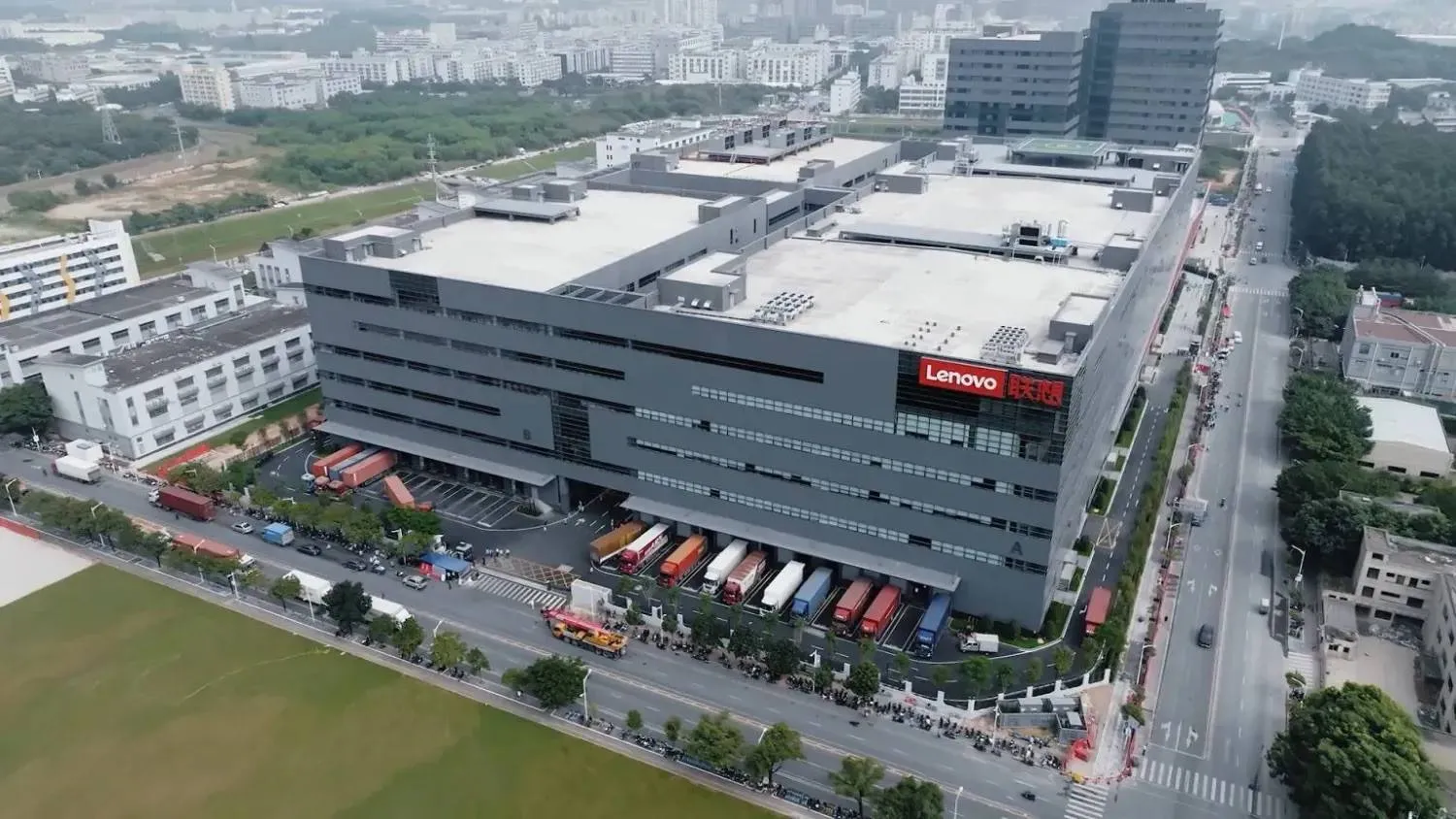
A Lenovo factory (the company’s website)
TT

Lenovo: Partnership with ALAT to Add $10 Billion to Saudi Economy by 2030

A Lenovo factory (the company’s website)

Following the establishment of a factory by Lenovo in Riyadh through a $1 billion partnership with Alat, a company affiliated with the Public Investment Fund, the project has now entered its active execution phase.

Production is scheduled to begin in 2026 and will see millions of desktop and laptop computers and servers carrying the “Made in Saudi” label being manufactured, coinciding with Saudi Arabia’s efforts to double non-oil industrial exports to $149 billion by 2030.

The Lenovo-Alat collaboration alone is expected to contribute as much as $10 billion to the Kingdom’s non-oil GDP by the end of this decade.

Officials from Lenovo’s Chinese headquarters told Asharq Al-Awsat that the project goes beyond a purely financial investment. It is intended to become a platform for digital innovation, artificial-intelligence applications and the integration of local start-ups into Lenovo’s global innovation chains, thereby enabling the Kingdom to benefit from the company’s international manufacturing and advanced-technology expertise.

They added that the project supports the aims of Saudi Vision 2030 by boosting domestic manufacturing, doubling non-oil industrial exports and generating direct and indirect employment for Saudi youth, alongside upskilling them in AI and advanced computing.

The initiative is among the most prominent examples of Saudi Arabia’s shift towards becoming a regional hub for advanced technologies and artificial intelligence, with a focus on integrating multinational companies into the local innovation ecosystem and localizing high-tech industries under global sustainability standards.

Lawrence Yu, Head of Lenovo’s Middle East & Africa regional headquarters, told Asharq Al-Awsat that the partnership with Alat “marks a turning point from dependence on imported technologies to developing local capabilities.”

He noted the project will transform the Kingdom into “a regional base for advanced manufacturing in computing and artificial intelligence.”

A State-of-the-Art Facility

Yu explained that the new facility in Riyadh has been designed according to the highest global sustainability standards. Production is set to commence in 2026, manufacturing millions of “Made in Saudi” desktop and laptop computers and servers, supporting both local and regional demand and positioning Saudi Arabia at the forefront of digital transformation in the region.

He added that the project will provide approximately 15,000 direct jobs and 45,000 indirect jobs, as well as support the development of local skills in AI and advanced digital technologies.

On his part, Giovanni Di Filippo, Vice President and General Manager for Lenovo Saudi Arabia, described the project as “a strategic step to reinforce the company’s global footprint and diversify its manufacturing geography.”

He explained that Lenovo will transfer part of its technology, manufacturing capabilities and supply-chains to the Kingdom, enabling local start-ups such as Novo Genomics and Nybl Global to be integrated into the company’s global innovation system and scale internationally.

Di Filippo noted that the project aligns with Vision 2030’s targets to enhance local manufacturing and increase the industrial sector’s contribution to GDP to more than $238 billion, and to double non-oil industrial exports to $149 billion by 2030. He emphasized that the Lenovo-Alat partnership alone will contribute up to $10 billion to the non-oil GDP by the end of the current decade.

The officials pointed out that this initiative marks a clear shift in the Kingdom’s strategy from reliance on imported technologies to building local capabilities. It reinforces Saudi Arabia’s role as a regional hub for AI and advanced computing, and supports the private sector and innovation across a variety of fields, including major digital and cultural events such as esports and Expo 2030.

Yu affirmed Lenovo’s commitment to supporting local entrepreneurs and equipping Saudi youth with future skills in advanced manufacturing and AI. He said the company is working with Alat on programs to develop the Saudi workforce, enabling them to lead the digital transformation and contribute to the knowledge-economy, in line with the Kingdom’s commitment to investing in human capital and innovation.

Di Filippo added that the project is not simply about technical manufacturing, but about localizing multinational companies and integrating them into Saudi Arabia’s innovation ecosystem.

He said the partnership with Alat ensures the benefit of extensive regional networks and deep local market experience, making the project a driver of innovation and industrial growth in the Kingdom.



Saudi Arabia’s Mawani, ARASCO to Establish Logistics Center at King Abdulaziz Port

Saudi Arabia’s Mawani, ARASCO to Establish Logistics Center at King Abdulaziz Port
TT

Saudi Arabia’s Mawani, ARASCO to Establish Logistics Center at King Abdulaziz Port

Saudi Arabia’s Mawani, ARASCO to Establish Logistics Center at King Abdulaziz Port

The Saudi Ports Authority (Mawani) signed a contract with Arabian Agricultural Services Company (ARASCO) to establish a logistics center for storage and distribution at King Abdulaziz Port in Dammam, reported the Saudi Press Agency on Monday.

Valued at SAR200 million, the center will span 40,000 square meters and aims to bolster food security in the Kingdom while increasing port capacity.

The move aligns with the objectives of the National Transport and Logistics Strategy to solidify the Kingdom's position as a global logistics hub.

The contract further strengthens Mawani’s ongoing efforts to boost the efficiency of national supply chains and optimize operations at King Abdulaziz Port.

The investment is designed to bolster King Abdulaziz Port's capabilities in grain unloading and storage by constructing warehouses capable of handling up to 100,000 metric tons.


Iranian Products Featured at Arab, Global Expo in Makkah 

The Iranian pavilion at the Arab and Global Expo in Makkah. (SPA)
TT

Iranian Products Featured at Arab, Global Expo in Makkah 

The Iranian pavilion at the Arab and Global Expo in Makkah. (SPA)

The Iranian pavilion at the Arab and Global Expo in Makkah displayed a variety of Iranian products from numerous sectors, attracting a large number of visitors.

The pavilion featured food items, spices, sweets, and nuts, as well as textiles, leather goods, handicrafts, and handmade items, all representing Iranian heritage.

The pavilion's participation aims to strengthen trade relations with the Saudi and Gulf markets and open new channels for economic cooperation.

The exhibition provides an important platform to showcase the quality and competitiveness of Iranian industries.

The Arab and Global Expo in Makkah, running until December 12, is one of the most prominent trade events, bringing together companies and institutions from several countries to promote trade and present innovative and diverse products to visitors.


China's Trade Surplus Tops $1 Trillion despite Plunge in US-bound Exports

China's exports topped expectations last month and sent the trade surplus to a record above $1 trillion. AFP
TT

China's Trade Surplus Tops $1 Trillion despite Plunge in US-bound Exports

China's exports topped expectations last month and sent the trade surplus to a record above $1 trillion. AFP

China's towering annual trade surplus surpassed $1 trillion for the first time last month, data showed Monday, as a sharp drop in shipments to the United States was offset by surging exports to other major markets.

Presidents Xi Jinping and Donald Trump reached a tentative truce to their fierce trade war when they met in late October, agreeing a pause to painful measures that included lofty tit-for-tat tariffs.

Exports have served as a key economic lifeline for China as trade and relations with the United States and others have fluctuated in recent years.

That has helped temper a prolonged debt crisis in the country's vast property sector and sluggish domestic spending, which have weighed on growth and are among the most pressing issues facing Beijing.

Exports climbed 5.9 percent year-on-year in November, reversing the slight decline recorded in October, the General Administration of Customs said.

The reading was also above a Bloomberg forecast of four percent growth.

The jump came despite a continued downturn in shipments to the United States, which sank 28.6 percent to $33.8 billion in November, the data showed.

"Weakness in exports to the United States was more than offset by shipments to other markets," Zichun Huang of Capital Economics wrote in a note.

"Exports are likely to remain resilient, thanks to trade rerouting and rising price competitiveness as deflation pushes down China's real effective exchange rate," Huang said.

The surge in shipments last month added to the country's ballooning annual trade surplus for the first 11 months of the year, which the Customs data showed hit $1.08 trillion in November.

"China's trade surplus this year has already surpassed last year's level, and we expect it to widen further next year," Huang wrote.

But the imbalance has long been a sticking point for major Western trading partners.

French President Emmanuel Macron threatened in remarks published Sunday to impose tariffs on China if Beijing fails to reduce its massive trade surplus with the European Union.

Macron -- who concluded a state visit to China last week -- warned in business daily Les Echos that "Europeans will be forced to take strong measures in the coming months".

In a further sign of China's weak domestic consumption, the data showed Monday that imports rose 1.9 percent on-year in November -- slower than the three percent increase predicted by Bloomberg.

"The rebound of export growth in November helps to mitigate the weak domestic demand," Zhiwei Zhang, president and chief economist at Pinpoint Asset Management, wrote in a note.

"The economic momentum slowed in the fourth quarter partly driven by the continued weakness in the property sector," he said.

Xi and Trump agreed at the October meeting in South Korea to scale back sky-high tariffs on each other's goods and blistering export controls that had sent shockwaves across global industries.

The detente is due to expire late next year, allowing time for officials to reach a permanent deal -- though experts warn such a breakthrough will be challenging.

"There's no guarantee this uneasy truce will last that long," Lynn Song, ING chief economist for Greater China, said last week.

"A lot needs to go right for the agreement to hold for the full year," he wrote, adding that "it seems prudent to expect a softer external demand backdrop for next year."

China's leaders -- who are targeting overall growth this year of five percent -- are expected to convene a key meeting this week focused on economic planning.