


World Shares Are Mixed and US Futures Slip as Brent Hovers Above $100 a Barrel

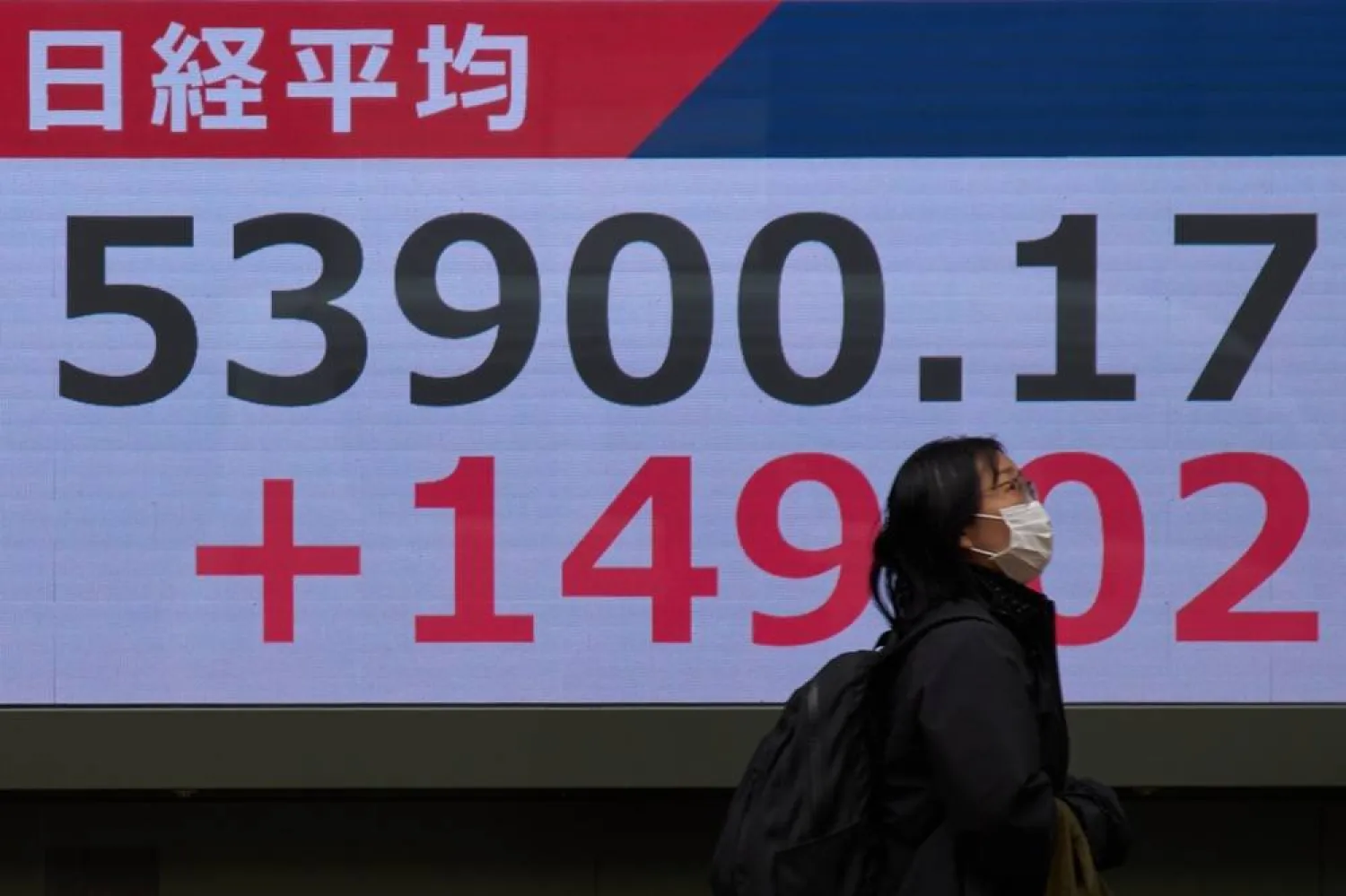
 A person walks near a stock price monitor showing Nikkei index at a security company Tuesday, March 17, 2026, in Tokyo. (AP)
A person walks near a stock price monitor showing Nikkei index at a security company Tuesday, March 17, 2026, in Tokyo. (AP)
TT

World Shares Are Mixed and US Futures Slip as Brent Hovers Above $100 a Barrel

 A person walks near a stock price monitor showing Nikkei index at a security company Tuesday, March 17, 2026, in Tokyo. (AP)
A person walks near a stock price monitor showing Nikkei index at a security company Tuesday, March 17, 2026, in Tokyo. (AP)

Shares were mixed in Europe and Asia on Tuesday after a drop in oil prices helped send the US stock market to its best day since the war in Iran began.

The reprieve in prices for crude was short-lived, with Brent crude climbing nearly 4% early Tuesday to $104.13 a barrel. US benchmark crude also climbed, to $97.53 per barrel after dipping to about $93 on Monday.

US futures fell back, with the contracts for the S&P 500 and the Dow Jones Industrial Average down 0.3%.

In Asian trading, Tokyo's Nikkei 225 gave up early gains to slip 0.1% to 53,700.39 and the Kospi in South Korea jumped 1.6% to 5,640.48.

Hong Kong's Hang Seng added 0.1% to 25,668.54, while the Shanghai Composite index dropped 0.9% to 4,049.91.

In Australia, the S&P/ASX 200 gained 0.4% to 8,614.30 after the central bank hiked its benchmark interest rate to 4.1%.

Citing higher fuel prices, the Reserve Bank of Australia on Tuesday lifted the cash rate from 3.85% which it set at its Feb. 3 meeting in response to surging inflation. That rise was Australia’s first since November 2023.

Taiwan's Taiex rose 1.5% and India's Sensex picked up 0.6%.

On Monday, the S&P 500 climbed 1% for its biggest gain in five weeks. The Dow Jones Industrial Average added 0.8% and the Nasdaq composite jumped 1.2%.

The driver for markets has been oil prices, which have spiked from roughly $70 before the United States and Israel began their attacks on Iran. In response, Iran has nearly halted traffic through the narrow Strait of Hormuz, where a fifth of the world’s oil typically sails from the Gulf to customers worldwide. That has oil producers cutting production because their crude has nowhere to go.

The worry in financial markets is that if the strait remains closed for a long time, it could keep enough oil off the market to drive inflation up to a debilitating level for the global economy.

“The panic is still there, just dialed down a notch as crude slipped off the boil. Brent easing back toward $100 flipped the tape from bunker mentality to opportunistic risk-taking in a heartbeat,” Stephen Innes of SPI Asset Management said in a commentary.

President Donald Trump over the weekend demanded that other countries hurt by the closure of the Strait of Hormuz “take care of that passage” and said his country “will help - A LOT!”

The US and Israel have kept pummeling what they describe as military targets in Iran’s capital, and Israel stepped up its campaign against Iran-backed Hezbollah in Lebanon. More than 1 million people have been displaced in Lebanon — roughly 20% of the nation’s population — as UN peacekeepers say Israel is massing ground troops along the border.

Uncertainty over the war's scope and duration have roiled financial markets since the war began just over two weeks ago, though markets have a track record of bouncing back relatively quickly from military conflicts. Many professional investors are expecting that to be the case again, if oil prices don't go too high for too long. That has helped keep US stock prices near their record levels.

Higher prices are complicating the Federal Reserve's mission of balancing growth and inflation as President Donald Trump pushes the central bank to slash interest rates. Traders do not expect the Fed to cut rates at its policy meeting that wraps up on Wednesday.

Nvidia, whose chips are powering much of the world’s move into artificial-intelligence technology rose 1.6% on Monday as its CEO, Jensen Huang, talked up AI's possibilities at a conference, saying he foresaw $1 trillion in demand for AI chips through 2027. It was the strongest single force lifting the S&P 500.

In other dealings early Tuesday, the US dollar rose to 159.18 Japanese yen from 159.05 yen. The euro slipped to $1.1498 from $1.1507.



Oil Prices Drop awaiting Mideast Peace Progress

In an aerial view, a Valero refinery is seen on May 05, 2026 in Corpus Christi, Texas. Corpus Christi is facing a looming water crisis driven by rising temperatures, prolonged drought conditions, and increasing demand from local oil refineries.   Brandon Bell/Getty Images/AFP
In an aerial view, a Valero refinery is seen on May 05, 2026 in Corpus Christi, Texas. Corpus Christi is facing a looming water crisis driven by rising temperatures, prolonged drought conditions, and increasing demand from local oil refineries. Brandon Bell/Getty Images/AFP
TT

Oil Prices Drop awaiting Mideast Peace Progress

In an aerial view, a Valero refinery is seen on May 05, 2026 in Corpus Christi, Texas. Corpus Christi is facing a looming water crisis driven by rising temperatures, prolonged drought conditions, and increasing demand from local oil refineries.   Brandon Bell/Getty Images/AFP
In an aerial view, a Valero refinery is seen on May 05, 2026 in Corpus Christi, Texas. Corpus Christi is facing a looming water crisis driven by rising temperatures, prolonged drought conditions, and increasing demand from local oil refineries. Brandon Bell/Getty Images/AFP

Oil prices fell and global stock markets traded mixed Thursday awaiting an update on a US plan to end the Middle East war and reopen the Strait of Hormuz.

Having plunged more than 10 percent at one point Wednesday on peace hopes, crude futures fell far less sharply Thursday, with losses of around two percent.

European stock markets declined after big gains the previous session, while leading Asian markets climbed.

Tokyo soared 5.6 percent, which largely reflected resumption of trading in Japan after the country's public holidays this week.

"The wild streak of enthusiasm which hit markets amid hopes for a major de-escalation in the Iran conflict is tempering," noted Susannah Streeter, chief investment strategist at Wealth Club.

"There's a realisation that there are more hurdles to climb for a longer-term resolution to be agreed, even though Iran is reported to be studying a US peace proposal aimed at formally ending the conflict."

US President Donald Trump said an agreement could be near after positive talks, with Iran adding that it would pass on its latest position to mediator Pakistan.

The war, launched by the United States and Israel in late February, has seen Iran respond with attacks across the Middle East and impose a chokehold on the Strait of Hormuz, the gateway to the Gulf oil and gas industries and a strategic trade route.

In foreign exchange Thursday, the dollar lost some of its safe haven support.

Investors in Tokyo were closely watching the yen after speculation of intervention by the Japanese government to prop up the beleaguered currency.

Norway's central bank on Thursday hiked its guiding rate by a quarter point to 4.25 percent, citing a risk that the war in the Middle East could worsen already elevated inflation.

"Inflation is too high and has run above target for several years," Norges Bank governor Ida Wolden Bache said in a statement.

Away from the war, there has been a fresh wave of cash pumped into the technology sector as traders snap up all things artificial intelligence, helped by standout earnings from Apple, Google parent Alphabet, Microsoft and Samsung during the ongoing first-quarter reporting season.

Emirates Group on Thursday announced a three-percent rise in annual profits to $5.7 billion despite severe disruption to flights owing to the war.


Shell's Profit Beats Expectations at $6.9 Billion

(FILES) The Shell logo is pictured above a Shell petrol station in London on January 30, 2026. (Photo by HENRY NICHOLLS / AFP)
TT

Shell's Profit Beats Expectations at $6.9 Billion

(FILES) The Shell logo is pictured above a Shell petrol station in London on January 30, 2026. (Photo by HENRY NICHOLLS / AFP)

Shell's first-quarter profit beat estimates and hit its highest in two years at $6.9 billion on Thursday, boosted by gains linked to the Middle East war, leading the company to raise the dividend by 5%.

At the same time, it slowed its quarterly share buyback program to $3 billion from $3.5 billion to help divert cash to its balance sheet as a short-term liquidity squeeze after war-related energy supply disruption increased its debt.

"It really reflects that confidence we have in the long term cash ⁠flows of the ⁠company," Shell's Chief Financial Officer Sinead Gorman said on a call with reporters of the dividend hike. She added she still felt Shell shares were undervalued.

Turning to the buybacks, she said she had reduced them to allocate cash to the balance sheet.

Shell's shares were down 2.2% in early trading, broadly in line with other oil majors' shares as ⁠benchmark global oil prices have retreated from peaks well above $100 a barrel, Reuters reported.

First-quarter adjusted earnings, Shell's definition of net profit, rose to $6.92 billion, beating an analyst consensus of $6.36 billion in a company-provided poll and up from $5.58 billion a year earlier.

Profits at its chemicals and products unit, which includes refining and its oil trading desk, were $1.93 billion, beating expectations of $1.24 billion and up from $0.45 billion last year.

This echoes big oil trading profits at its European peers BP and TotalEnergies that also take speculative bets on moving prices in contrast with their more cautious US rivals.

Shell's oil and gas output fell 4% compared with the previous quarter, mainly due ⁠to outages in ⁠Qatar where part of its Pearl gas-to-liquids plant was damaged in the Middle Eastern conflict that began at the end of February. Full repairs might take about a year, Shell has said.

Shell's gearing, or debt to equity ratio including leases, rose to 23.2% from 20.7% at end-2025. Shell had flagged higher debt due to managing war-related price and supply disruptions and volatility.

Gorman told reporters she was very happy with Shell's balance sheet.

Its cash flow from operating activities at $6.1 billion was hit by large swings in inventory values, pushing working capital - a liquidity measure of current assets minus liabilities - to minus $11.2 billion.

Shell expects working capital movements to reverse over time provided oil and gas prices ease.


Gold Gains for 3rd Day on US-Iran Peace Deal Optimism

Gold bars after being removed from their molds at a refinery smelter in Sydney (AFP)
TT

Gold Gains for 3rd Day on US-Iran Peace Deal Optimism

Gold bars after being removed from their molds at a refinery smelter in Sydney (AFP)

Gold prices rose for a third consecutive session on Thursday, supported by a softer dollar as hopes of a US-Iran deal eased concerns over inflation and prolonged high interest rates.

Spot gold was up 1% at $4,738.86 per ounce, as of 0728 GMT, after rising about 3% on Wednesday to hit its highest point since April 27. US gold futures for June delivery rose 1.2% to $4,748.50, Reuters reported.

US President Donald Trump ⁠predicted a swift ⁠end to the war with Iran as Tehran considered a US peace proposal that sources said would formally end the conflict while leaving unresolved key US demands that Iran suspend its nuclear program and reopen the Strait of Hormuz.

"Gold is edging higher today, supported by a subdued dollar and retreating oil prices ⁠as the existing ceasefire holds, albeit tentatively, and hopes grow for a more durable long-term agreement between Washington and Tehran," said Tim Waterer, chief market analyst at KCM Trade.

The dollar hovered near a more than three-month low hit in the previous session, making bullion less expensive for holders of other currencies.

Benchmark 10-year US Treasury yields have eased 0.6% so far this week, reducing the opportunity cost of holding gold.

Oil prices fell below $100 a barrel as optimism grew about a possible end to the war in ⁠the Middle ⁠East.

Gold prices have fallen more than 10% since the war began in late February, pressured by higher oil prices. Elevated crude oil prices can stoke inflation, increasing the likelihood of higher interest rates. While gold is seen as an inflation hedge, high interest rates tend to weigh on the non-yielding asset.

Investors now await the monthly US employment report on Friday to see if the US economy remains resilient enough to keep the Federal Reserve's monetary policy on hold.

Spot silver rose 2.6% to $79.31 per ounce, platinum was up 1% at $2,081.68, and palladium gained 1.3% to $1,556.79.