



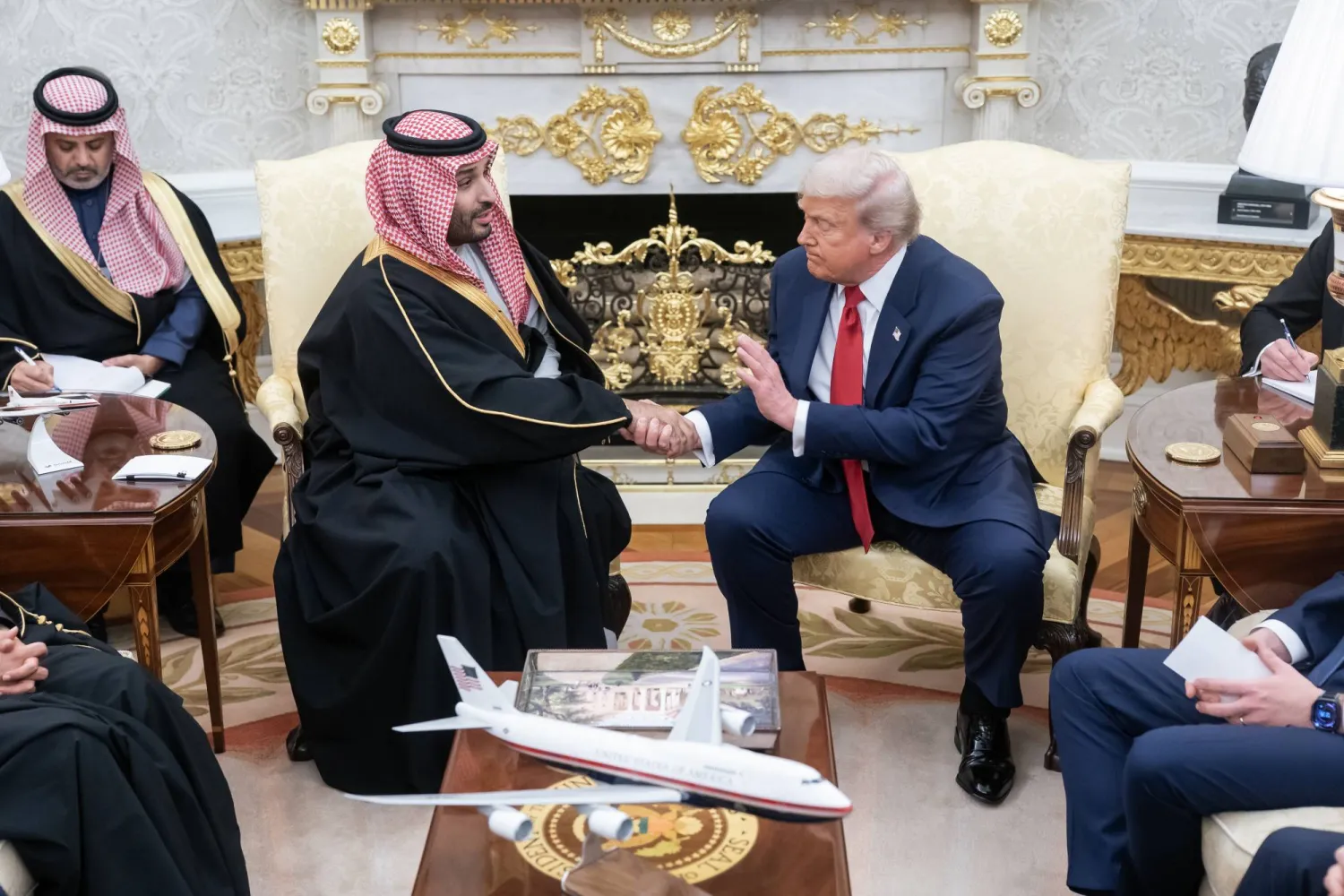

Former US officials predicted that the Saudi talks at the White House will focus on three main pillars that would pave the way for regional stability and stimulate economic investments.
Scott Pruitt, former Administrator of the Environmental Protection Agency (EPA), said the first pillar is “security and regional architecture. Second is energy, not only oil and gas, but also hydrogen, ammonia, and critical minerals that will power the next generation of industry. The third is investment and technology.”
Prince Mohammed bin Salman, Crown Prince and Prime Minister, had arrived in the US on Tuesday where he held talks with President Donald Trump that focused on consolidating the strategic partnership between their countries. Numerous agreements were announced on the sidelines of the visit.
Pruitt told Asharq Al-Awsat that the relationship between Saudi Arabia and the US “has moved from transactional to strategic.”
“When I first engaged on these issues in government, the focus was largely energy supply and security guarantees. Today, we see structured strategic dialogues, US companies embedded in Saudi mega-projects, two-way investment flows, and growing cooperation in space, digital infrastructure, and advanced industry,” he added.
“The Kingdom’s reforms and Vision 2030 agenda have opened new sectors, tourism, entertainment, logistics, where American firms are natural partners. In short, the cooperation is deeper, more diversified, and more forward-looking than at any other time in our history,” he stressed.
“Visits at this level do two critical things: they set direction and they de-risk action,” Pruitt went on to say. “This meeting can give political backing to move from talking points to term sheets, advancing joint ventures in defense and space, localizing manufacturing in the Kingdom, and forming long-term offtake and investment agreements.”
“As a former regulator, I also see a crucial opportunity for the US and Saudi Arabia to shape the standards and ‘rules of the road’ for these new energy and technology sectors together, instead of leaving that space to others. If that happens, trade, co-investment, and technology transfer will not just increase, but will be anchored in a shared strategic framework that benefits both nations for decades,” he stressed.
Strategic industries
Brian D. Ballard, founder of Ballard Partners, told Asharq Al-Awsat that the Crown Prince’s visit “underscores the renewed strength and shared vision of Saudi-American relations under Trump’s leadership. This visit comes at a pivotal moment as both nations advance a common agenda of security, investment, and innovation.”
“Trump and the Crown Prince are expected to focus on deepening cooperation in defense, trade, and energy - pillars of a partnership that continues to drive prosperity and stability across both nations,” he continued.
“The US-Saudi relationship has reached new heights, grounded in mutual respect and economic opportunity. Under Trump’s leadership, we’ve seen exceptional momentum in technology transfer, energy diversification, and private-sector engagement aligned with Vision 2030,” he remarked.
“This visit will further expand collaboration in strategic industries - from defense and space to renewable energy and hydrogen - cementing the US-Saudi partnership as one of the most consequential alliances shaping the global future,” he added.
Emerging technologies
Edward Mermelstein, former New York City Commissioner for International Affairs, said the Crown Prince’s visit “has the potential to accelerate cooperation” between the Kingdom and the US.
In remarks to Asharq Al-Awsat, he noted that “Saudi Arabia is advancing some of the world’s most ambitious green energy projects, including major investments in hydrogen and ammonia production.”
“Security and energy will always remain essential pillars of the relationship, but the most forward-looking conversations will center on emerging technologies, supply-chain resilience, advanced manufacturing, and economic diversification,” he went on to say.
“The US offers unparalleled expertise in advanced technology, clean energy engineering, defense innovation, and space science,” he said.
“During my tenure as Commissioner for International Affairs in New York City, I saw significant Saudi interest in our city’s leadership in artificial intelligence, life sciences, and urban innovation. At the same time, American companies are increasingly drawn to the scale and ambition of projects underway in the Kingdom.”
“A stronger federal relationship will accelerate what is already happening at the city level. New York and Riyadh are natural partners in creating tech ecosystems, supporting investment platforms, and building the next generation of sustainable and digital infrastructure,” Mermelstein remarked.
“The Crown Prince’s visit adds political support to these efforts and will speed the movement of capital, talent, and technology,” he said.
“This visit arrives at a moment when both countries are looking to deepen cooperation that delivers practical results. Throughout my years of working closely with the Saudi Consulate in New York and engaging with Saudi delegations across business, culture, and technology, I witnessed how Vision 2030 has already reshaped conversations in the United States,” he stated.
“The Crown Prince’s visit elevates that progress to the national level. It signals that both governments are ready to translate shared ambitions into action. For major cities like New York and Riyadh, this creates new opportunities to expand collaboration in technology, investment, education, cultural exchange, and sustainable development. It reinforces a partnership that is already producing real impact on the ground,” he added.


