


China's Trade Surplus Tops $1 Trillion despite Plunge in US-bound Exports

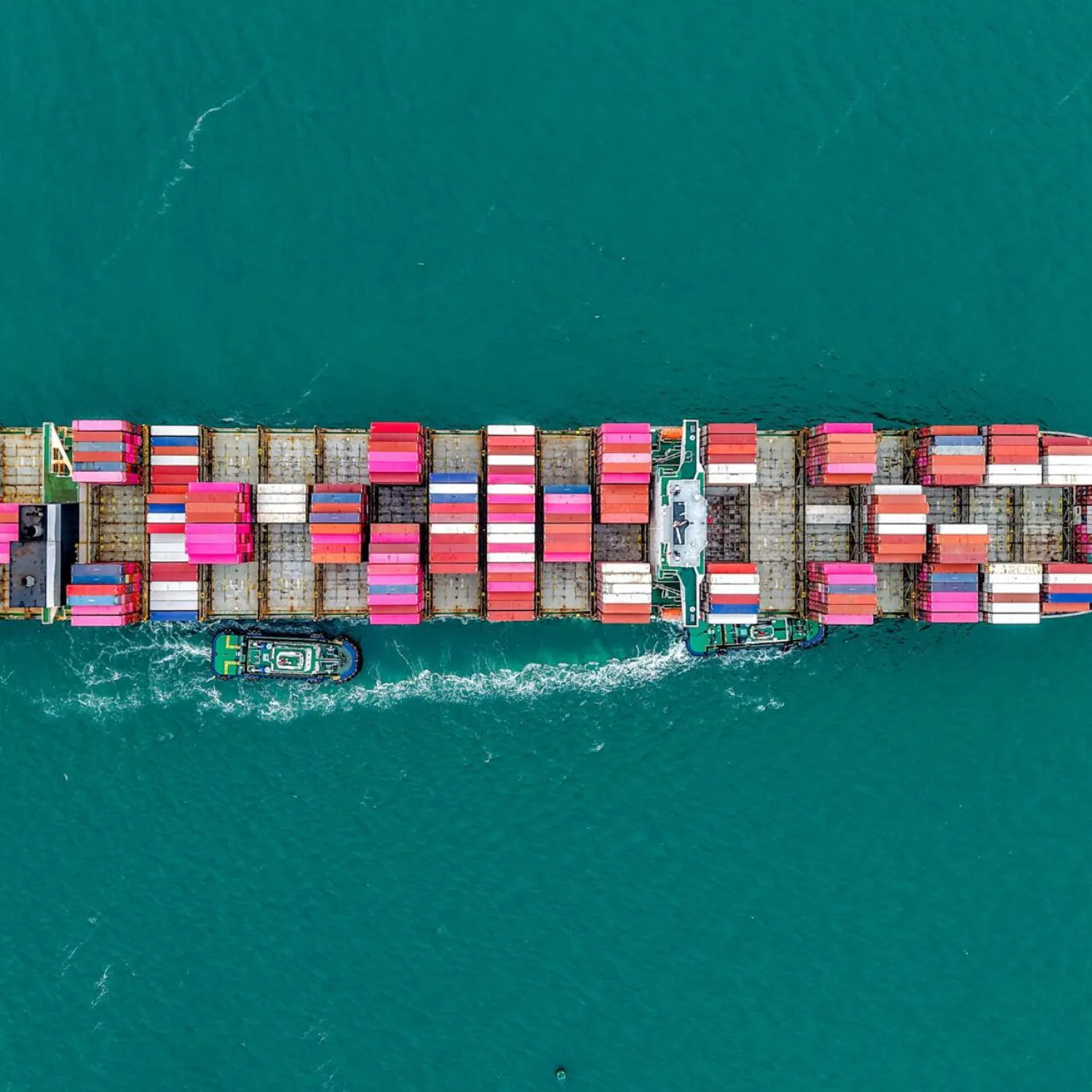
China's exports topped expectations last month and sent the trade surplus to a record above $1 trillion. AFP
TT

China's Trade Surplus Tops $1 Trillion despite Plunge in US-bound Exports

China's exports topped expectations last month and sent the trade surplus to a record above $1 trillion. AFP

China's towering annual trade surplus surpassed $1 trillion for the first time last month, data showed Monday, as a sharp drop in shipments to the United States was offset by surging exports to other major markets.

Presidents Xi Jinping and Donald Trump reached a tentative truce to their fierce trade war when they met in late October, agreeing a pause to painful measures that included lofty tit-for-tat tariffs.

Exports have served as a key economic lifeline for China as trade and relations with the United States and others have fluctuated in recent years.

That has helped temper a prolonged debt crisis in the country's vast property sector and sluggish domestic spending, which have weighed on growth and are among the most pressing issues facing Beijing.

Exports climbed 5.9 percent year-on-year in November, reversing the slight decline recorded in October, the General Administration of Customs said.

The reading was also above a Bloomberg forecast of four percent growth.

The jump came despite a continued downturn in shipments to the United States, which sank 28.6 percent to $33.8 billion in November, the data showed.

"Weakness in exports to the United States was more than offset by shipments to other markets," Zichun Huang of Capital Economics wrote in a note.

"Exports are likely to remain resilient, thanks to trade rerouting and rising price competitiveness as deflation pushes down China's real effective exchange rate," Huang said.

The surge in shipments last month added to the country's ballooning annual trade surplus for the first 11 months of the year, which the Customs data showed hit $1.08 trillion in November.

"China's trade surplus this year has already surpassed last year's level, and we expect it to widen further next year," Huang wrote.

But the imbalance has long been a sticking point for major Western trading partners.

French President Emmanuel Macron threatened in remarks published Sunday to impose tariffs on China if Beijing fails to reduce its massive trade surplus with the European Union.

Macron -- who concluded a state visit to China last week -- warned in business daily Les Echos that "Europeans will be forced to take strong measures in the coming months".

In a further sign of China's weak domestic consumption, the data showed Monday that imports rose 1.9 percent on-year in November -- slower than the three percent increase predicted by Bloomberg.

"The rebound of export growth in November helps to mitigate the weak domestic demand," Zhiwei Zhang, president and chief economist at Pinpoint Asset Management, wrote in a note.

"The economic momentum slowed in the fourth quarter partly driven by the continued weakness in the property sector," he said.

Xi and Trump agreed at the October meeting in South Korea to scale back sky-high tariffs on each other's goods and blistering export controls that had sent shockwaves across global industries.

The detente is due to expire late next year, allowing time for officials to reach a permanent deal -- though experts warn such a breakthrough will be challenging.

"There's no guarantee this uneasy truce will last that long," Lynn Song, ING chief economist for Greater China, said last week.

"A lot needs to go right for the agreement to hold for the full year," he wrote, adding that "it seems prudent to expect a softer external demand backdrop for next year."

China's leaders -- who are targeting overall growth this year of five percent -- are expected to convene a key meeting this week focused on economic planning.



King Abdulaziz Int’l Airport Records Increase in Passenger Traffic in November 2025

King Abdulaziz International Airport recorded notable growth in operational performance during November 2025. (SPA)
TT

King Abdulaziz Int’l Airport Records Increase in Passenger Traffic in November 2025

King Abdulaziz International Airport recorded notable growth in operational performance during November 2025. (SPA)

King Abdulaziz International Airport recorded notable growth in operational performance during November 2025 compared to the same period in 2024, the Saudi Press Agency reported on Monday.

The total number of passengers reached 4.86 million, marking an increase of 8.6 percent, while the total number of flights reached 25,900, reflecting a growth of 10.6 percent.

The airport recorded its highest operating day on November 20, 2025, serving more than 176,800 passengers in a single day, representing a 9.6 percent increase compared to the peak day recorded in November 2024. The total number of handled baggage items also rose to 5.6 million, registering a year-on-year growth of 25.4 percent.

From the beginning of 2025 through November 30, the total number of passengers reached 48 million, an increase of 8.9 percent compared to the same period in 2024. Over the same period, the number of flights reached 273,700, reflecting an increase of 8.2 percent.

These figures highlight the continued expansion of services at King Abdulaziz International Airport, one of the region's most prominent aviation hubs. They also underscore ongoing efforts to enhance operational efficiency and provide a seamless and comfortable travel experience, supporting increased travel options and contributing to the growth of tourism and trade.


French Economy Likely to Grow at Least 0.8% in 2025, Finance Minister Says

French Minister for Economy, Finance, and Industrial, Energy and Digital Sovereignty Roland Lescure attends the 7th formal meeting of the Franco-Chinese Business Council in Beijing on December 4, 2025. (Reuters)
TT

French Economy Likely to Grow at Least 0.8% in 2025, Finance Minister Says

French Minister for Economy, Finance, and Industrial, Energy and Digital Sovereignty Roland Lescure attends the 7th formal meeting of the Franco-Chinese Business Council in Beijing on December 4, 2025. (Reuters)

Unless there is a sharp reversal in the final three months of the year, the French economy is likely to grow by at least 0.8% in 2025, outpacing the 0.7% that the government had anticipated, Finance Minister Roland Lescure said on Sunday.

"We will most likely exceed the government's growth forecast for this year. We had predicted 0.7%, but I think we will have at least 0.8%. That's good news," Lescure told LCI television.

"So we would really need to have a bad fourth quarter, which I don't believe will happen, for us to be below 0.8%, so 0.8% is within reach," he added.

France's economy grew 0.5% in the third quarter, final data from statistics office INSEE showed in November, reflecting resilience in the euro zone's second-largest economy.


Saudi Real Estate Shifts from Temporary Upswing to Operational Maturity

Real estate projects in Riyadh (SPA) 
TT

Saudi Real Estate Shifts from Temporary Upswing to Operational Maturity

Real estate projects in Riyadh (SPA) 

Saudi Arabia’s listed real estate sector recorded an exceptional and unprecedented transformation in the third quarter of 2025, with profits surging more than sixfold. Total earnings jumped 633.6 percent to $496 million (SAR 1.86 billion), compared with $67.5 million a year earlier, an indication that the industry has entered a phase of sustained operational maturity rather than a short-term cyclical rebound.

The sharp rise reflects the companies’ success in restructuring their product portfolios, enhancing cash flows, and shifting from “paper growth” to revenue-driven expansion supported by project deliveries and operational income.

Sector analysts attributed the leap in profitability to the rollout of major real estate projects in large cities, higher project quality, improved financing conditions, and stronger liquidity.

They noted that the leap aligns with the rapid expansion of Saudi Arabia’s non-oil economy, which now contributes about 56 percent of GDP. This has strengthened demand across residential, commercial, industrial, and office real estate, supporting profit growth alongside recent regulatory reforms.

During the first nine months of 2025, listed real estate firms achieved combined profits of $1.44 billion (SAR 5.4 billion), led by Cenomi Centers, Jabal Omar, and Masar (Umm Al-Qura for Development and Construction) - a 244 percent increase from the same period in 2024.

Financial disclosures show that nine out of sixteen listed developers reported higher profits in Q3, while four companies returned to profitability. Masar topped the sector in Q3 with SAR 516.6 million in earnings, up 341.9 percent year-on-year. Cenomi Centers ranked second with SAR 499.8 million, a rise of 52.2 percent, followed by Dar Al-Arkan, whose profits climbed 89 percent to SAR 255.6 million.

Real estate specialist Abdullah Al-Mousa told Asharq Al-Awsat that the historic profit surge confirms the sector has “entered a stage of operational maturity,” reflecting companies’ improved efficiency, stronger recurring revenues, and the successful transition to asset-operation models.

He identified three key drivers: higher-quality projects and stronger occupancy across income-generating assets; improved financing conditions amid stabilizing interest rates; and the completion of major projects, particularly in Riyadh and Makkah.

Al-Mousa expects continued positive performance in coming quarters, though at a more moderate pace, supported by new strategic projects entering operation, sustained housing demand, rising commercial activity in Riyadh, and ongoing regulatory reforms that reduce risk and attract institutional investment.

Real estate analyst Salman Saeed said the strength of the non-oil economy has sharply boosted demand in housing, retail, industrial, and office markets. He highlighted reforms such as the expansion of the white-land tax and rental-regulation measures, along with significant government support for homeownership, which has raised the share of Saudi citizens owning homes.

Saeed noted that rising demand for commercial and office space, driven by multinational companies relocating to Riyadh, has lifted occupancy rates and diversified developers’ income streams. Some firms also improved results through land sales and divestment of non-core assets, enhancing operational efficiency.