


How 2025 Decisions Redrew the Future of Riyadh’s Real Estate Market

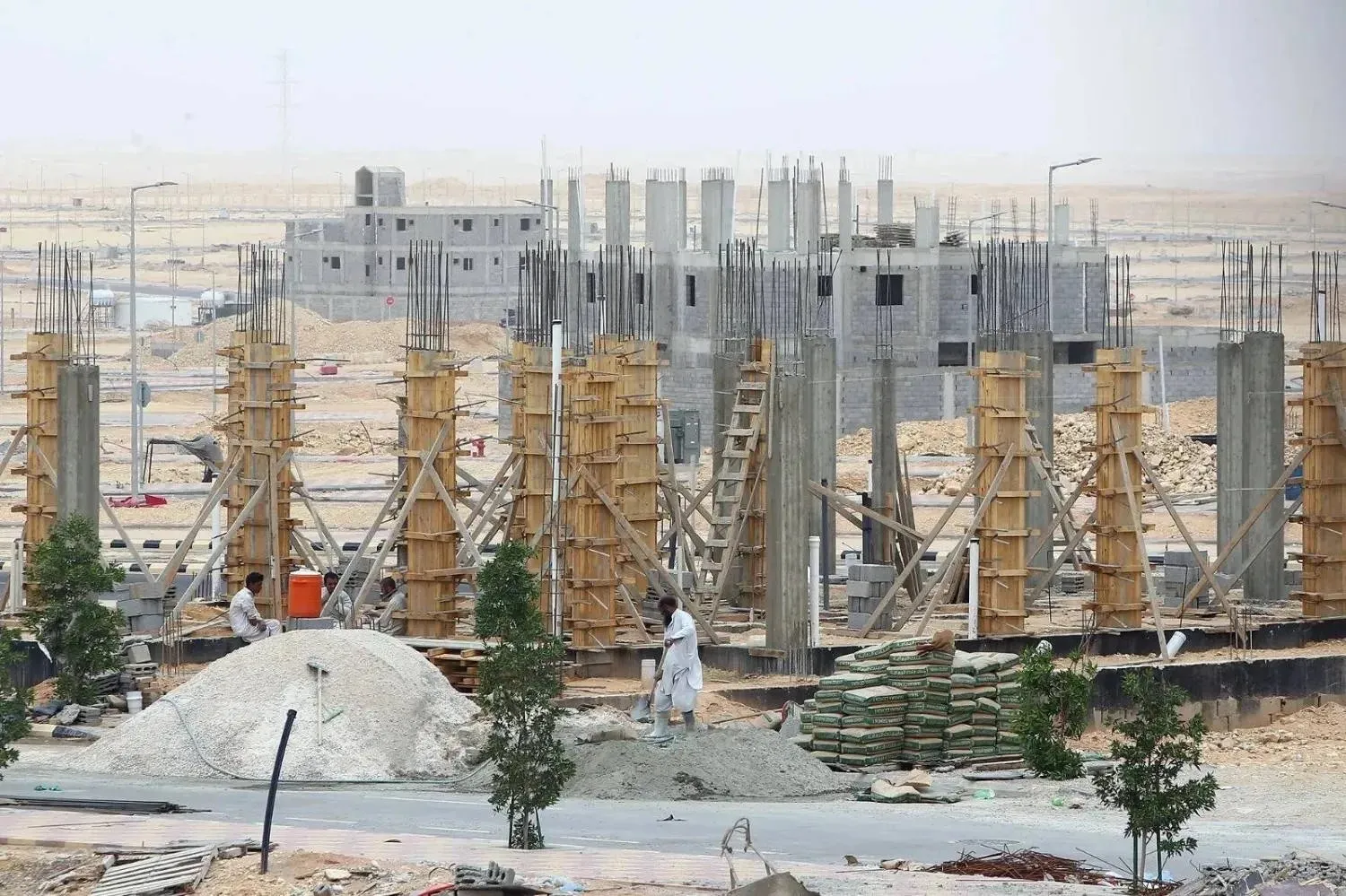
Construction is seen at a real estate project in Riyadh. (SPA)
TT

How 2025 Decisions Redrew the Future of Riyadh’s Real Estate Market

Construction is seen at a real estate project in Riyadh. (SPA)

The Saudi capital underwent an unprecedented structural shift in its real estate market in 2025, driven by a forward-looking agenda led by Prince Mohammed bin Salman, Crown Prince and Prime Minister. Far from incremental regulation, the year’s measures amounted to a deep corrective overhaul aimed at dismantling long-standing distortions, breaking land hoarding, expanding affordable housing supply, and firmly rebalancing landlord-tenant relations.

Together, the decisions ended years of speculation fueled by artificial scarcity and pushed the market toward maturity, one grounded in real demand, fair pricing, and transparency.

Observers dubbed 2025 a “white revolution” for Saudi real estate. The reforms severed the link between property and short-term speculation, restoring housing as a sustainable residential and investment product. Below is a detailed outline of the most significant of these historic decisions:

1- Unlocking land, boosting supply

In March, authorities lifted restrictions on sale, subdivision, development permits, and planning approvals for 81 million square meters north of Riyadh. A similar decision in October freed another 33.24 million square meters to the west.

The Royal Commission for Riyadh City was also mandated to deliver 10,000 - 40,000 fully serviced plots annually at subsidized prices capped at SAR 1,500 per square meter, curbing price manipulation and offering real alternatives for citizens.

2- Rent controls and contractual fairness

To stabilize households and businesses, the government froze annual rent increases for residential and commercial leases in Riyadh for five years starting in September. Enforced through the upgraded “Ejar” platform, the move halted arbitrary hikes while aligning growth with residents’ quality of life.

3- Tougher fees

An improved White Land Tax took effect in August, extending beyond vacant plots to include unoccupied built properties. Annual fees rose to as much as 10% of land value for parcels of 5,000 square meters or more within urban limits, raising the cost of land hoarding and incentivizing prompt development.

4- Investment openness and digital governance

A revised foreign ownership regime allowed non-Saudis - individuals and companies - to own property in designated zones under strict criteria, injecting international liquidity. Transparency was reinforced by the launch of the “Real Estate Balance” platform, providing real-time price indicators based on actual transactions and curbing phantom pricing.

5- Quality and urban standards

Policy shifted from quantity to quality with mandatory application of the Saudi Building Code and sustainability standards for all new developments, ensuring long-term operational value and preventing low-quality sprawl.

Structural shift

Sector specialists told Asharq Al-Awsat the measures represent a qualitative leap in market management, moving Riyadh from a scarcity and speculation-led cycle to a balanced market governed by genuine demand, efficient land use, disciplined contracts, and transparent indicators.

Khaled Al-Mobid, CEO of Menassat Realty Co., said the reforms were timely and corrective after years of rapid price escalation. He noted early positives: slowing price growth, a return to realistic negotiations, increased supply in some districts, and better-quality offerings focused on intrinsic value rather than quick appreciation.

Abdullah Al-Moussa, a real estate expert and broker, described the steps as addressing root causes, not symptoms.

He observed a behavioral shift, especially in northern Riyadh, from “hold and wait” to reassessment, alongside calmer price momentum, renewed interest in actual development, and clearer rental dynamics.

Saqr Al-Zahrani, another market expert, told Asharq Al-Awsat that the reforms tackled structural imbalances by breaking artificial scarcity created by undeveloped land banks.

Opening vast tracts north and west and introducing market-wide indicators restored “organized abundance,” aligning prices with real demand and purchasing power without heavy-handed intervention, he remarked.

He added that recent months have seen weaker demand for raw land and stalled auctions, contrasted with rising interest in off-plan sales and partnerships with developers.

Banks, too, have reprioritized toward projects with operational viability, lifting overall supply quality despite a temporary slowdown in some transactions.

Consumers, meanwhile, are showing greater patience and interest in self-build options, signaling a maturing market awareness.

Outlook

Experts expect the effects to continue through 2027, delivering broad price stability with limited corrections in overheated locations rather than sharp declines.

Homeownership, especially among young buyers, is projected to rise as capital shifts from land speculation to long-term development.

The 2025 decisions were not short-term fixes but the launch of a new social and economic trajectory for Riyadh’s property market, redefining real estate as a housing service and value-adding investment, not a speculative vessel.

As Riyadh advances toward becoming one of the world’s ten largest city economies, its real estate reset offers a model for aligning regulation with quality of life, transparency, and sustainable growth.


Egypt Signs Renewable Energy Deals Worth $1.8 Billion

The Wolf Moon, the first supermoon of 2026, lights up the night sky in Cairo, Egypt, January 3, 2026. REUTERS/Mohamed Abd El Ghany
TT

Egypt Signs Renewable Energy Deals Worth $1.8 Billion

The Wolf Moon, the first supermoon of 2026, lights up the night sky in Cairo, Egypt, January 3, 2026. REUTERS/Mohamed Abd El Ghany

Egypt has signed renewable energy deals worth a combined $1.8 billion, state TV reported on Sunday.

Among the deals were contracts with Norwegian renewable energy developer Scatec and China's Sungrow.

Egypt hopes to have renewable energy reach 42% of its electricity generation mix by 2030, but officials say the goal will be ⁠at risk without more international support.

The first project will be the construction by Scatec of a solar energy plant to generate electricity and energy storage stations in Upper Egypt's Minya, ⁠an Egyptian cabinet statement said.

It would have a generation capacity of 1.7 gigawatts supported by battery storage systems with total capacity of 4 gigawatt hours.

A second project will be a Sungrow factory to manufacture energy storage batteries at the Suez Canal Economic Zone. A share of the factory's output ⁠would be supplied to the first project, the cabinet said.

The deals also include power purchase agreements, with Scatec signing a deal for total capacity of 1.95 gigawatts and 3.9 gigawatt hours of battery storage systems, the Norwegian company said in a statement.


Iraq Says Gas Flaring to Reach Zero by End-2028

Iraq’s Prime Minister Mohammed Shia al-Sudani inspects the electricity ministry pavilion at the Iraq Energy Exhibition and Conference
TT

Iraq Says Gas Flaring to Reach Zero by End-2028

Iraq’s Prime Minister Mohammed Shia al-Sudani inspects the electricity ministry pavilion at the Iraq Energy Exhibition and Conference

Iraq’s Prime Minister Mohammed Shia al-Sudani stated on Saturday that the government is moving forward with the development of clean and renewable energy sectors.

Speaking at the opening of the Iraq Energy Exhibition and Conference, al-Sudani said Iraq has made significant progress in capturing associated gas, with the rate of flaring reduced by more than 72%.

He said flaring will be fully eliminated by the end of 2028.

“We have infrastructure projects at the level of the Ministry of Oil that ensure export capacity and the diversification of export outlets,” al-Sudani said, according to the Iraqi News Agency.

He added that Iraq is holding talks with international companies to invest in associated gas and free gas in oil fields and exploration blocks, expressing hope that the conference would help reinforce this direction. He said the government has also moved toward establishing a permanent platform to secure Iraq’s gas needs through imports or future exports.

Al-Sudani stated that the Ministry of Electricity is working to increase power generation under an ambitious plan that exceeds 57,000 megawatts through the Siemens and GE project.

He added that the ministry is also advancing renewable energy projects, both large and small, with a plan at the district and subdistrict levels in Baghdad and other provinces to transition to renewable energy, which is expected to be implemented by next summer.

He said the government is placing strong emphasis on both conventional and renewable energy in a way that ensures sustainable development.

Al-Sudani stated that the exhibition showcases Iraq’s position as a promising market with significant opportunities in the energy sector, through various projects, partnerships, and investment opportunities.

He said the government has made significant progress in boosting energy production through major oil projects in partnership with global companies, including TotalEnergies and BP, adding that talks are ongoing with ExxonMobil, Chevron, and other international firms.

Talks with Chevron

Iraq’s Oil Minister Hayan Abdul Ghani said talks are underway with Chevron regarding the West Qurna 2 oil field, which is operated by Lukoil and represents the company’s largest foreign asset.

Chevron and Exxon Mobil are among the potential bidders for Lukoil’s overseas assets following the imposition of US sanctions on the Russian oil producer.

Speaking to reporters after the opening of the energy exhibition and conference, Abdul Ghani stated that negotiations with Chevron over the West Qurna 2 field in Basra province are ongoing.

He added that Basra Oil Company, the second partner in the field, has not yet taken over operations following Lukoil’s withdrawal.

Al-Sudani opened the 11th edition of the Iraq Energy Exhibition and Conference in Baghdad on Saturday, with the participation of more than 450 local, Arab, and international companies specializing in energy and investment.

The event runs for three days.

The Iraqi Company for Exhibitions and Commercial Services said the conference, held at the Baghdad International Fairgrounds from Jan. 10 to 12, will feature panel discussions, specialized workshops, and meetings aimed at supporting the energy sector and expanding partnership and investment opportunities, with participation from more than 450 companies.

Iranian gas

Iraq’s Ministry of Electricity said there are no indications that Iranian gas supplies will resume soon.

A ministry spokesperson stated that media outlets were notified via a message from Iran on Telegram, which indicated that gas supplies had been halted due to low temperatures and Tehran’s domestic gas needs.

Iraq announced in December that Iranian gas supplies had ceased, resulting in the shutdown of some power generation units and load reductions at others. The Ministry of Electricity said the grid lost between 4,000 and 4,500 megawatts as a result.

Iran supplies between 30% and 40% of Iraq’s gas and electricity needs.

Electricity ministry officials previously stated that peak winter demand in Iraq reaches approximately 48,000 megawatts, while domestic production stands at around 27,000 megawatts, forcing the country to rely on imports to bridge the gap.


IMF: Saudi Transformation on Track Supported by Deeper Reforms

The Saudi capital, Riyadh (Reuters)
TT

IMF: Saudi Transformation on Track Supported by Deeper Reforms

The Saudi capital, Riyadh (Reuters)

Saudi Arabia enters a new phase described as one of the most sensitive and influential in the course of its economic transformation, according to the International Monetary Fund (IMF), which said next year will be pivotal for the Kingdom thanks to deeper reforms implemented throughout the past years.

In a “country focus” released last month, Amine Mati and Yuan “Monica” Gao Rollinson, both in the IMF’s Middle East and Central Asia Department, showed that growth in Saudi Arabia has been fueled not only by investment, but also by people as private sector job creation has surged, particularly among women while unemployment rates reached record-lows.

The two economists said the resilience shown in 2025 underscores the progress already achieved in reducing the economy’s exposure to oil fluctuations.

They said that despite oil prices falling nearly 30% below their 2022 peak, the non-oil economy maintained strong momentum.

“This strength reflects the impact of Saudi Vision 2030 reforms—diversification gaps with emerging markets have narrowed, and the business environment now rivals that of advanced economies,” the two IMF experts said.

At the same time, Saudi Arabia is strategically shifting some of its spending priorities, with some of its investment focus moving toward AI and advanced technologies as part of its broader effort to diversify the economy.

The IMF paper said deeper reforms—including the steadfast implementation of recently enacted laws that ease access for foreign investors— will help foster an investor-friendly business environment and attract more private investment.

At the banking sector, it noted that the Saudi Central Bank’s continued vigilance in monitoring emerging risks will be critical in preventing vulnerabilities from building up.

“As conditions evolve, the central bank should continue to proactively deploy prudential measures to keep the financial system resilient,” it said.

Over time, deepening capital markets—so that companies can raise more financing through bonds and equity—will help ease pressure on banks, facilitate credit for small and medium enterprises, and create a more balanced mix of funding for the economy.

Looking ahead, Saudi Arabia faces a new test: how to sustain reform momentum in an era of potentially lower oil revenues without slipping back into the stop-and-go cycles that followed past oil booms, the two IMF economists said.

They said fortunately, Saudi Arabia approaches this challenge from a position of relative strength thanks to public debt-to-GDP ratios that remain low while foreign assets are still ample.

At the same time, the IMF noted that the sustainability of such progress relies on Saudi Arabia’s ability to anchor spending decisions within a consistent, multi-year framework will be vital for maintaining long-term sustainability.

The Fund showed that sustaining Saudi Arabia’s growth momentum will increasingly depend on two engines: a skilled workforce and a vibrant private sector.

Deeper reforms—including the steadfast implementation of recently enacted laws that ease access for foreign investors— will help foster an investor-friendly business environment and attract more private investment.

“The sovereign wealth fund can act as a complementary catalyst here by spurring new projects and partnerships, while making sure it leaves ample room for both domestic and international private investors to thrive,” the IMF paper noted.

Last October, the IMF had raised Saudi Arabia's economic growth forecast to 4% for 2026, supported by the expansion of non-oil activities and higher oil prices.

Meanwhile, the Saudi Finance Ministry forecasted real GDP growth of 4.6% in 2026, driven by non-oil activities and private-sector leadership.
