


Saudi Arabia Turns Potato Farming Challenge into Export Opportunity

Saudi Arabia Turns Potato Farming Challenge into Export Opportunity
TT

Saudi Arabia Turns Potato Farming Challenge into Export Opportunity

Saudi Arabia Turns Potato Farming Challenge into Export Opportunity

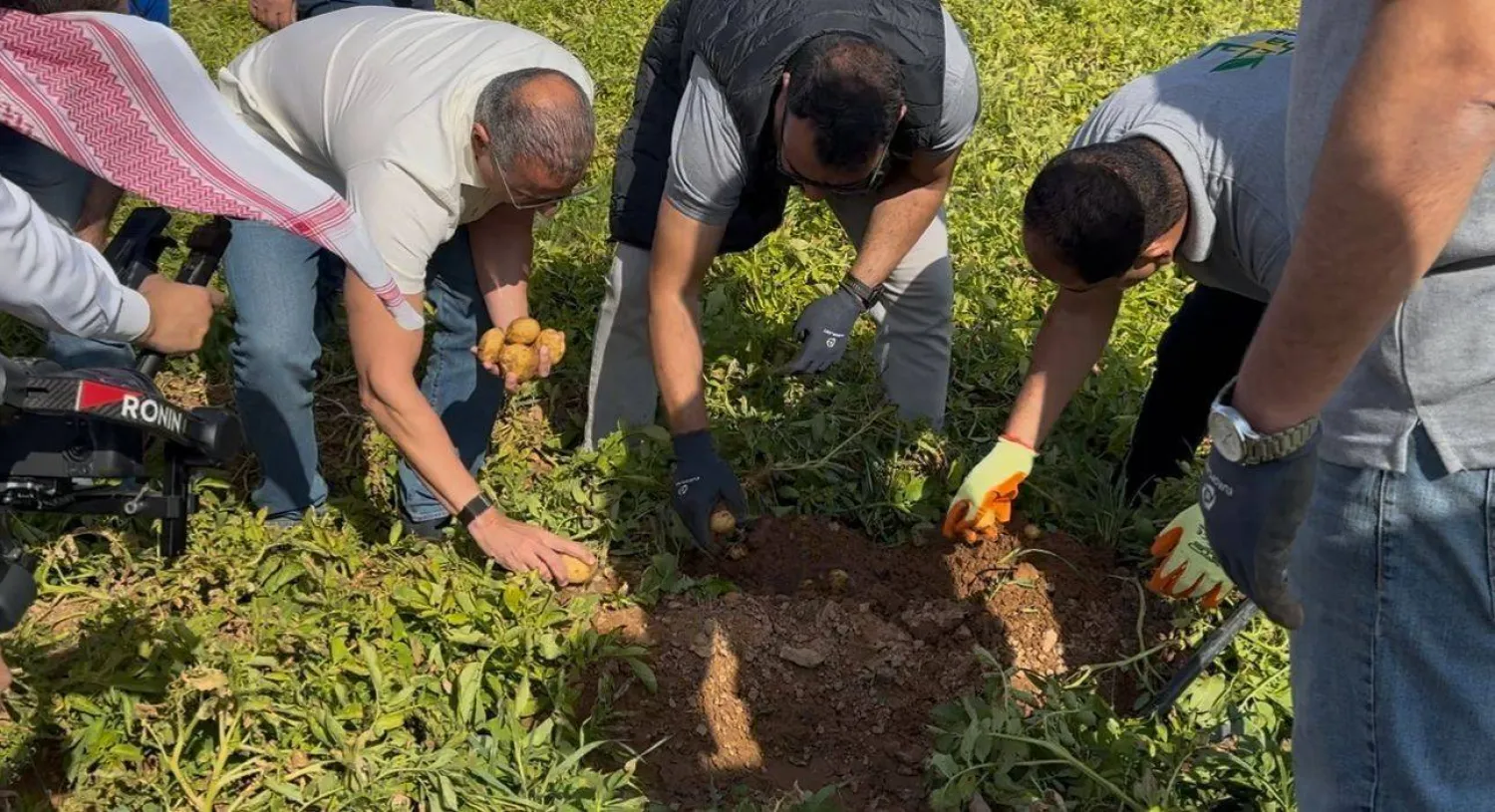
In the deserts of Hail in northern Saudi Arabia, where rugged mountains border a climate that turns mild in summer and biting in winter, an unlikely agricultural success story has emerged.

From sandy soil that appears unforgiving at first glance, uniform potatoes are harvested to meet the exacting standards of local and international markets, supplying global food companies and contributing to the growth of a thriving export industry.

Grown not on traditional farmland but in a desert landscape long constrained by water and energy shortages, the crop has become a case study in how agricultural innovation and industrial sustainability can converge, positioning Saudi Arabia among the world's exporters of potatoes and processed potato products.

Potatoes in Hail are cultivated in sandy soil that gives the crop sufficient room to grow without deformities, setting it apart from harder soils that reduce quality and market acceptance. The main challenge, however, was not the soil but groundwater scarcity, making the search for innovative irrigation solutions a necessity rather than a choice.

That marked the start of a shift. Farmers have adopted drip irrigation systems powered by solar energy to reduce consumption and increase productivity, transforming Hail into a strategic production hub that contributes to self-sufficiency and exports to global markets.

According to previous remarks by Saudi Industry Minister Bandar Alkhorayef, the kingdom developed an irrigation model tailored to potatoes grown for potato chip manufacturing and export.

Alkhorayef said at the time that PepsiCo, which produces the well-known Lay’s brand, faced difficulties exporting potatoes grown in the kingdom. He stated that the government had collaborated with the Ministry of Agriculture to address the issue.

“They had a valid concern related to water scarcity, so we developed an appropriate irrigation model, which was approved by the agriculture ministry, resolving the export problem,” he said.

According to the Ministry of Environment, Water, and Agriculture, Saudi Arabia experienced a significant increase in potato production in 2023, with output rising by 47 percent to exceed 621,750 tonnes. The self-sufficiency rate reached 86.8 percent, according to the latest officially announced figures.

Hamoud Al Saleh, founder and chairman of Lahaa Agricultural Production, one of the Saudi suppliers to PepsiCo, said the kingdom had exported potatoes to Russia for six consecutive years, in addition to other countries including Norway, Lebanon, Syria and Jordan, while also supplying local factories.

Challenges

Some European markets still face hurdles in importing Saudi potatoes due to the absence of trade protocols, while Norway has proven more flexible, continuing imports over recent years, Al Saleh said.

He said groundwater remains the biggest challenge for farmers. Speaking to Asharq Al Awsat, Al Saleh said PepsiCo supported the company in implementing drip irrigation, covering part of the cost for three years and providing experts to help design and approve the system, which significantly increased productivity.

He said yields per hectare rose to between 50 and 60 tonnes in some fields, alongside a notable reduction in water consumption. He added that Saudi potatoes show high resilience to environmental conditions.

Energy has also been a challenge, with agricultural equipment relying heavily on diesel. This has prompted many farmers to adopt solar power, thereby easing operating costs for both farmers and the state.

Al Saleh unveiled a new project costing 15 million riyals, approximately $4 million, spanning 700 hectares and utilizing a combination of diesel and solar energy, describing it as a long-term investment aimed at enhancing sustainability and reducing consumption.

Resource efficiency

PepsiCo said resource efficiency has become a central pillar of its regional strategy. Ahmed El Sheikh, president and general manager for the Middle East, North Africa and Pakistan, said the company had adopted advanced drip irrigation systems in cooperation with specialized firms and the agriculture and industry ministries.

He said this helped cut water use by around 30 percent compared to traditional irrigation, alongside a shift toward solar energy instead of diesel, which reduced fuel and energy consumption.

Regarding exports, El Sheikh stated that most products are shipped to Gulf states and Jordan, with efforts underway to explore exports to Syria from plants within the kingdom.

In terms of investments linked to Vision 2030, he stated that the company has invested 300 million riyals, approximately $80 million, in new production lines targeting both local and export markets.

He stated that local content reached 95 percent for certain packaging materials that were previously imported, while locally sourced potatoes also achieved 95 percent, with ongoing efforts to reach 100 percent.

Local content refers to the share of raw materials, manufactured inputs, or extracted resources produced inside Saudi Arabia, whether agricultural, industrial, or packaging-related.

Regarding workforce localization, El Sheikh stated that some plants, including the Dammam factory, have achieved Saudization rates of 80 percent, with the appointment of the first Saudi female plant manager.

In research and development, the company stated that it has established an R&D center with investments exceeding 30 million riyals, approximately $8 million, thereby localizing operations within the kingdom instead of relying on overseas centers.

El Sheikh said the company has reached full operational capacity in working with farmers on potato crops, calling it a major achievement that it hopes to replicate with other crops in the future.

Water scarcity by the numbers

This agricultural experience comes amid mounting challenges to water resources. The National Water Strategy says Saudi Arabia has a limited stock of exploitable non-renewable groundwater, with low recharge rates not exceeding 2.8 billion cubic meters annually.

Total water demand is estimated at approximately 24.8 billion cubic meters, with an annual growth rate of around 7 percent.

The strategy states that agriculture is the largest consumer of water in the kingdom, accounting for approximately 84 percent of total demand, and relies heavily on non-renewable resources that make up nearly 90 percent of agricultural water use.

Agriculture ministry data show irrigation efficiency does not exceed 50 percent, compared with more than 75 percent under global best practices. Fodder cultivation alone consumes about 67 percent of agricultural water, according to the latest available figures.

Government role

This shift in potato farming would not have been completed without government support. The kingdom developed and approved an irrigation model suited to potatoes grown for chips and export as the preferred method, prompting PepsiCo to expand its factories in the Eastern Province with investments exceeding 300 million riyals.

This helped make Saudi Arabia the world’s second-largest hub for potato chip manufacturing, according to previous remarks by the industry minister.

Beyond exports, the model strengthens self-sufficiency. Under this approach, Saudi potatoes have become more than just an ingredient in chips, turning into a symbol of integration between agriculture and industry and evidence of the kingdom’s ability to transform environmental challenges into global economic and investment opportunities, in line with the ambitions of Vision 2030.



Trump's Greenland Threat Puts Europe Inc back in Tariff Crosshairs

A worker adjusts European Union and US flags at the EU Commission headquarters in Brussels, November 11, 2013.
TT

Trump's Greenland Threat Puts Europe Inc back in Tariff Crosshairs

A worker adjusts European Union and US flags at the EU Commission headquarters in Brussels, November 11, 2013.

Just as European companies were getting used to last year's hard-won US trade tariff deals, President Donald Trump has put them back in his ​crosshairs with an explosive threat to place levies on nations that oppose his planned takeover of Greenland.

Trump on Saturday said he would put rising tariffs from February 1 on goods imported from EU members Denmark, Sweden, France, Germany, the Netherlands and Finland, along with Britain and Norway, until the US is allowed to buy Greenland, a step major EU states decried as blackmail.

On Sunday, European Union ambassadors reached broad agreement to intensify efforts to dissuade Trump from imposing those tariffs, while also readying a package of retaliatory measures should the duties go ahead, EU diplomats said.

The shock move has rattled through industry and sent shockwaves through markets amid fears of a return to the volatility of last year's trade war, which was only eased with tariff deals reached in the middle of the year.

"This is a very serious situation, the scale of which is unknown," Gabriel Picard, ‌chairman of the French ‌wine and spirits export lobby FEVS, told Reuters.

He said the industry had already seen a ‌20% ⁠to ​25% hit ‌to US activity in the second half of last year from previous trade measures, and new tariffs would bring a "material" impact.

But he said what was happening went far beyond sectoral issues. "It is more a matter of political contacts and political intent that must be taken to the highest level in Europe, so that Europe, once again, is united, coordinated, and if possible speaks with one voice."

STAND-OFF COULD BRING BACK LAST YEAR'S TRADE WAR

In a post on Truth Social, Trump said additional 10% import tariffs would take effect next month on goods from the listed European nations — all already subject to tariffs imposed by the US president last year of between 10% and 15%.

The bloc - which had an estimated $1.5 trillion in goods and services trade with the US in 2024 - looks set ⁠to fight back. Europe has major carmakers in Germany, drugmakers in Denmark and Ireland, and consumer and luxury goods firms from Italy to France.

EU leaders are set to discuss options at an emergency ‌summit in Brussels on Thursday, including a 93 billion euro ($107.7 billion) package of tariffs on ‍US imports that could automatically kick in on February 6 after a ‍six-month pause.

The other is the so far never used "Anti-Coercion Instrument" (ACI), which could limit access to public tenders, investments or banking activity or restrict ‍trade in services, in which the US has a surplus with the bloc.

Analysts said the key question was how Europe responded - with a more "classic" trade war tit-for-tat tariff retaliation, or an even tougher approach.

"The most likely way forward is a return to the trade war that was put on hold in high-level US agreements with the UK and the EU in summer," said Carsten Nickel, deputy director of research at Teneo in London.

COMPANIES WILL LOOK TO TRADE WITH 'LESS PROBLEMATIC NATIONS'

German submarine maker ​TKMS CEO Oliver Burkhard said the Greenland threat was perhaps the jolt that Europe needed to toughen its approach and focus on developing its own joint programmes to be more independent from the US.

"It is probably necessary... to get ⁠a kick in the shin to realise that we may have to suit up differently in the future," he told Reuters.

Susannah Streeter, chief investment strategist at Wealth Club, said the new threat created "another layer" of complexity for firms grappling with an already "chaotic" US market. Firms had little capacity to soak up new tariffs, she added.

"A trade war only creates losers," said Christophe Aufrere, director general of French autos association the PFA.

An official at a French industry association that represents the country's largest firms added the Greenland issue was turning tariffs into a "tool for political pressure", and called for the region to reduce its dependency on the US market.

Neil Shearing, group chief economist at Capital Economics, pointed out that some EU countries - Spain, Italy and others - were not on the tariff list, which would likely see "re-routing" of trade within the EU free trade bloc to avoid the taxes.

Analysts added the new tariffs - if imposed - would likely hurt Trump. They would push up US prices and lead to front-loading of exports before the tariffs kicked in, while encouraging companies to seek new markets.

"For Europe, this is a bad geopolitical headache and a moderately significant economic problem. But it could also backfire for Trump," said Holger Schmieding, London-based chief economist at Berenberg.

"Logic ‌still points to an outcome that respects Greenland's right to self-determination, strengthens security in the Arctic for NATO as a whole, and largely avoids economic damage for Europe and the US."


IMF Upgrades Outlook for Surprisingly Resilient World Economy to 3.3% Growth this Year

FILE PHOTO: A view of the International Monetary Fund (IMF) logo at its headquarters in Washington, D.C., US, November 24, 2024. REUTERS/Benoit Tessier//File Photo/File Photo
TT

IMF Upgrades Outlook for Surprisingly Resilient World Economy to 3.3% Growth this Year

FILE PHOTO: A view of the International Monetary Fund (IMF) logo at its headquarters in Washington, D.C., US, November 24, 2024. REUTERS/Benoit Tessier//File Photo/File Photo

An unexpectedly sturdy world economy is likely to shrug off President Donald Trump's protectionist trade policies this year, thanks partly to a surge of investment in artificial intelligence in North America and Asia, the International Monetary Fund said in a report out Monday.

The 191-nation lending organization expects that global growth will come in at 3.3% this year, same as in 2025 but up from the 3.1% it had forecast for 2026 back in October, The Associated Press reported.

The world economy "continues to show notable resilience despite significant US-led trade disruptions and heightened uncertainty,'' IMF chief economist Pierre-Olivier Gourinchas and his colleague Tobias Adrian wrote in a blog post accompanying the latest update to the fund's World Economic Outlook.

The US economy, benefiting from the strongest pace of technology investment since 2001, is forecast to expand 2.4% this year, an upgrade on the fund's October forecast and on expected 2025 growth — both 2.1%.

China — the world's second-largest economy — is forecast to see 4.5% growth, an improvement on the 4.2% the IMF had predicted October, partly because a trade truce with the United States has reduced American tariffs on Chinese exports.

India, which has supplanted China as the world's fastest-growing major economy, is expected to see growth decelerate from 7.3% last year (when it was juiced by an unexpectedly strong second half) to a still-healthy 6.4% in 2026.


France Says Still Loyal to Syria Kurds, Hails Ceasefire

Syrian army personnel celebrate as government forces enter Raqqa city following the withdrawal of Syrian Democratic Forces, in Raqqa, Syria, January 18, 2026. REUTERS/Karam al-Masri
TT

France Says Still Loyal to Syria Kurds, Hails Ceasefire

Syrian army personnel celebrate as government forces enter Raqqa city following the withdrawal of Syrian Democratic Forces, in Raqqa, Syria, January 18, 2026. REUTERS/Karam al-Masri

France on Monday welcomed a ceasefire between the Syrian government and Kurdish-led forces and stressed it remained loyal to the latter who spearheaded the battle against the ISIS group.

"France is faithful to its allies," the foreign ministry said, urging all sides to respect the ceasefire deal, which will also see the Kurdish administration and forces integrate into the state after months of stalled negotiations.