

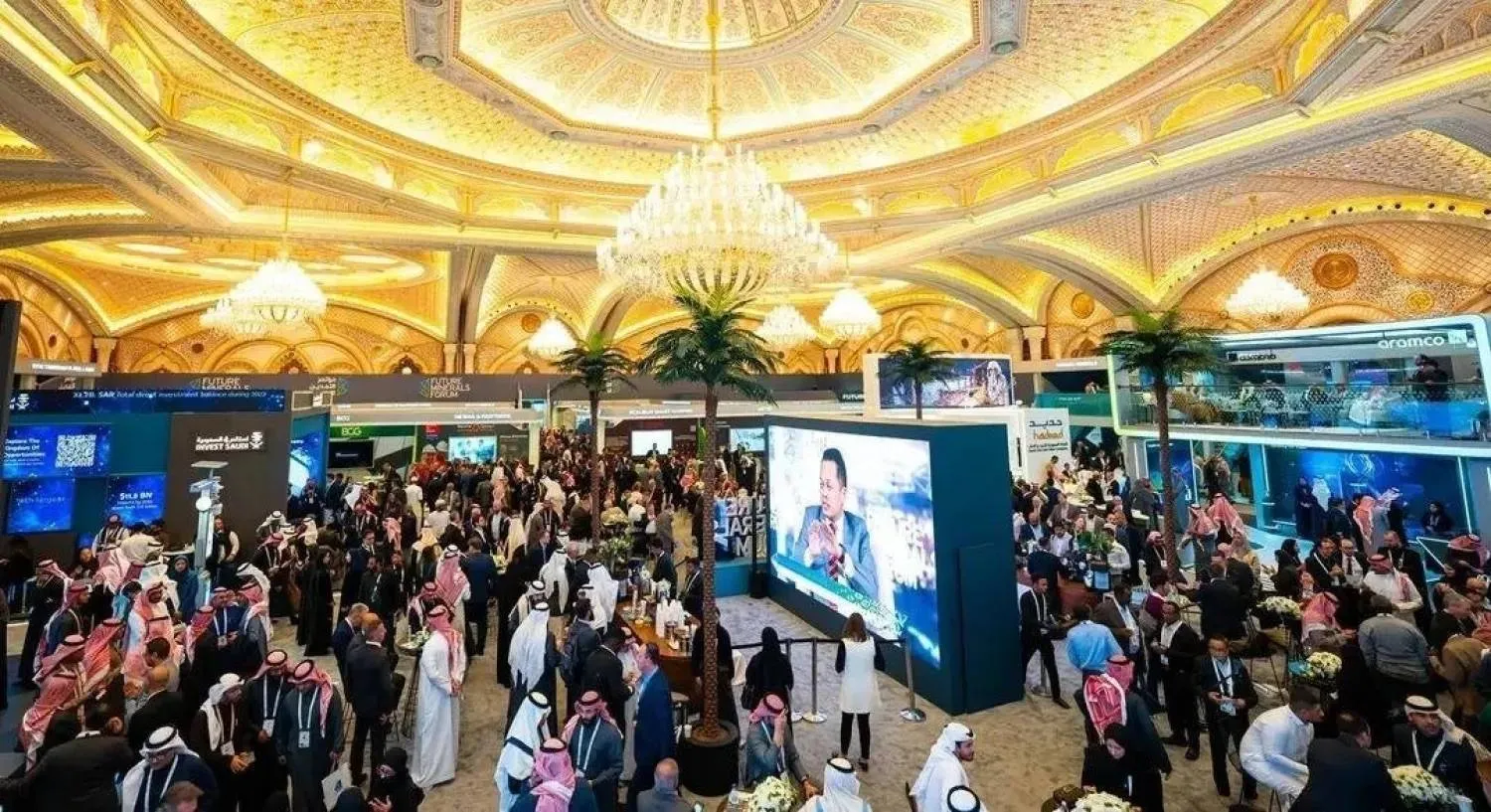

International Mining Conference Opens in Riyadh on Tuesday 

People attend the fourth edition of the International Mining Conference in Riyadh. (SPA)
TT

International Mining Conference Opens in Riyadh on Tuesday 

People attend the fourth edition of the International Mining Conference in Riyadh. (SPA)

Under the patronage of Custodian of the Two Holy Mosques King Salman bin Abdulaziz Al Saud, the fifth edition of the International Mining Conference will open in Riyadh on Tuesday under the theme “Minerals: Meeting the Challenges of a New Era of Development.”

Around 200 exhibiting and sponsoring entities are expected to participate, paving the way for the signing of approximately 150 memoranda of understanding and strategic agreements.

Organized by the Ministry of Industry and Mineral Resources, the three-day conference aims to bring together governments, mining companies, financial institutions, and governmental and non-governmental organizations to strengthen global dialogue on the future of the minerals sector.

Strategic pillars

This year’s conference is built around three strategic pillars designed to transform challenges into regional and international opportunities. The first focuses on developing innovative financing models for infrastructure, enabling the activation of seven major mineral corridors in Africa and South America, with the potential for expansion to other regions.

The second pillar centers on capacity-building in mineral-producing countries through the establishment of a global network of centers of excellence specializing in geology, innovation, sustainability, workforce development, and regulatory frameworks.

The third pillar aims to boost transparency across manufacturing value chains through the launch of a pilot system for tracking mineral supply chains, which could later be scaled globally.

International ministerial meeting

As in previous editions, the conference will open with an international ministerial meeting for ministers responsible for mining, reinforcing its position as the largest multilateral governmental platform in the sector.

Participation this year is expected from 100 countries, up from 90 in the previous edition, including 16 G20 members and around 50 international organizations, among them the United Nations, the World Bank, the International Council on Mining and Metals, the UN Industrial Development Organization, and the International Organization for Standardization.

Last year’s meeting produced several landmark initiatives, including agreement on an international framework for critical minerals to strengthen global supply chains and the launch of a network of centers of excellence spanning Africa, West Asia, and Central Asia.

Saudi Minister of Industry and Mineral Resources Bandar Alkhorayef said the fifth edition of the conference would further consolidate the Kingdom’s role as a global leader in shaping the future of mining and minerals, attracting investment, and ensuring responsible and secure mineral supplies.

He described the event as a call for collective action and a platform for building new partnerships.

The previous edition witnessed the signing of 126 agreements and memoranda of understanding worth SR107 billion ($28.5 billion), alongside four strategic projects. These included a joint venture between Saudi Aramco and Maaden to explore critical minerals for the energy transition, a potential expansion of the Mansourah–Massarah mine, new discoveries at Wadi al-Jaw and the Shiban deposits, the acquisition of Al Rajhi Steel Industries by Hadeed, and plans to build the first fully integrated steel plant outside China in partnership with Baosteel, Aramco, and the Saudi Public Investment Fund.

Outlook for the minerals sector

Coinciding with the conference, organizers released the Future Minerals Indicators Report, offering a comprehensive assessment of the global minerals sector amid surging demand driven by the energy transition, advanced manufacturing, and mounting supply-chain pressures.

The report stressed that minerals have become a strategic pillar of energy security and long-term industrial development, calling for a shift from diagnosis to implementation through clear policies, targeted investment, and broader international cooperation.



Saudi Arabia Expands Investment Prospects in Military Industries

The Saudi pavilion reinforced the Kingdom’s position as a leading investment destination in the military industry sector. (Asharq Al-Awsat)
TT

Saudi Arabia Expands Investment Prospects in Military Industries

The Saudi pavilion reinforced the Kingdom’s position as a leading investment destination in the military industry sector. (Asharq Al-Awsat)

Saudi Arabia used the Eurosatory 2026 defense and security show to open new investment horizons, showcasing promising opportunities and a regulatory environment designed to attract capital.

The participation helped sharpen the appeal of the Kingdom’s military industries and drew the attention of major global companies seeking strategic partnerships that support Saudi localization targets.

The Saudi pavilion, held at the Paris exhibition from June 15 to 19, reinforced the Kingdom’s position as a leading investment destination in the military industry sector.

Organized by the General Authority for Military Industries (GAMI), the pavilion brought together 10 government and private entities alongside the authority.

The participation underlined Saudi Arabia’s welcome to investors from around the world seeking opportunities in the military industries sector. It also highlighted the Kingdom’s efforts to localize more than 50% of military spending by 2030.

On the sidelines of the exhibition, GAMI Governor Ahmad Al-Ohali met Patrick Pailloux, French Director General for Armament (DGA), as well as representatives of major global defense companies.

The meetings focused on ways to strengthen cooperation in military industries and exchange expertise, supporting the development of a sustainable sector, improving the readiness of military equipment, boosting self-sufficiency and contributing to the national economy.

The Saudi participation also saw the signing of several agreements and memorandums of understanding, part of GAMI’s efforts to develop military industries, strengthen supply chains and enable strategic partnerships.

The authority organized a workshop titled “Developing Supply Chains in Military Industries,” which discussed how an attractive investment environment for local and international investors can help build a diversified and prosperous economy in the sector.

The pavilion showcased the integration of government efforts, national industrial and service capabilities, and the innovative technologies presented by participating Saudi companies. It also highlighted the country’s attractive investment environment and the rapid growth of its military industries sector.

The sector’s contribution to GDP rose from 2.2 billion riyals, or about $587 million, in 2021 to 6.6 billion riyals, or about $1.76 billion, in 2024. The localization rate of military spending also climbed to nearly 25% in 2024, as the Kingdom works toward localizing more than 50% of military spending by 2030.

GAMI said the Saudi pavilion’s participation strengthened the Kingdom’s position as a trusted international partner, expanded its network of relations with major global companies and enabled national firms to showcase their capabilities while exploring opportunities for growth and expansion in global markets.


Iraq Raises Southern Oil Output to 1.75 Million bpd

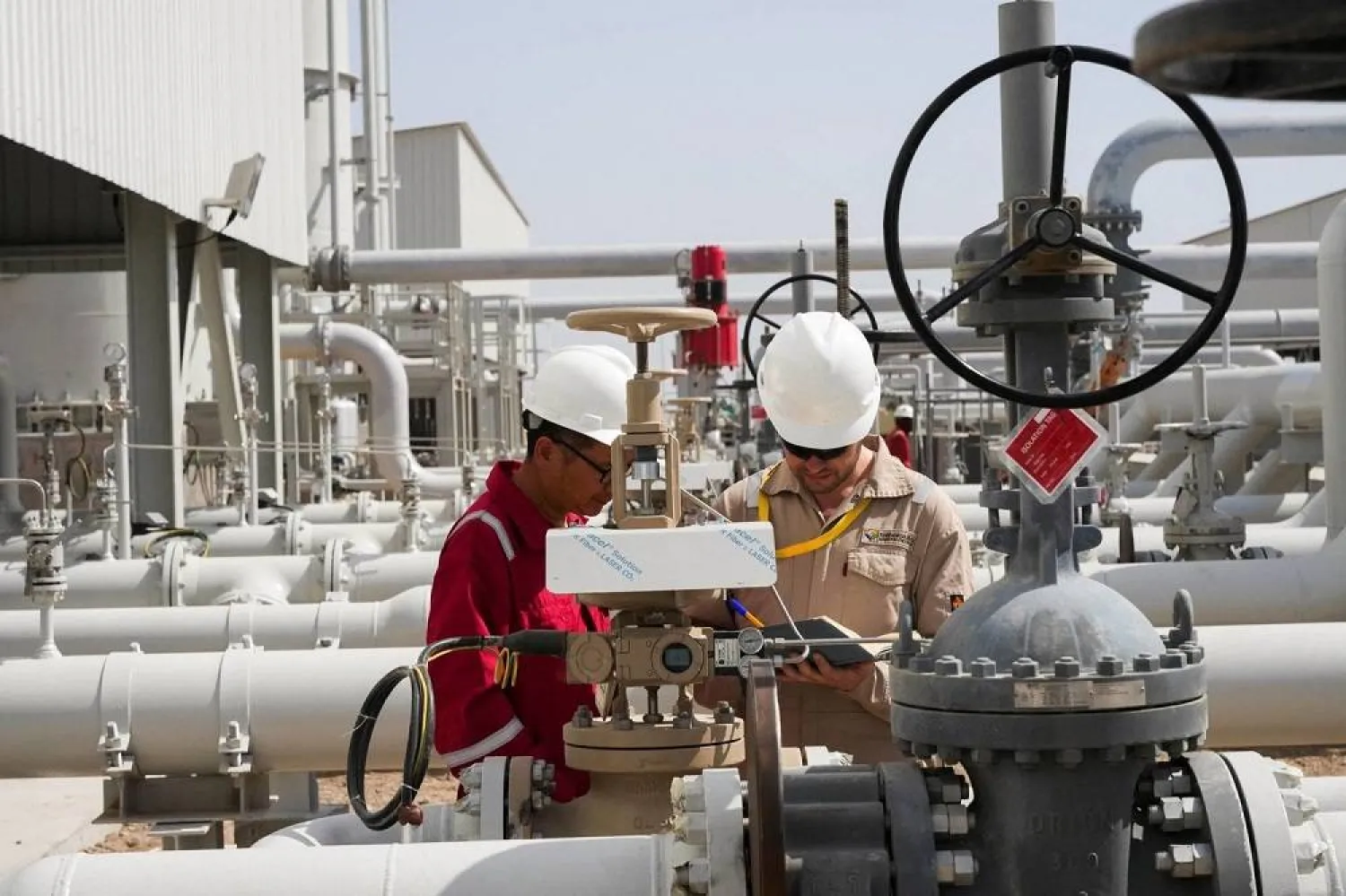
Technicians working at the Majnoon oil field in Basra, Iraq. (Reuters)
TT

Iraq Raises Southern Oil Output to 1.75 Million bpd

Technicians working at the Majnoon oil field in Basra, Iraq. (Reuters)

Iraq has increased crude oil production from its southern fields by 250,000 barrels per day to around 1.75 million barrels per day as more tankers load crude from the country's ports, Iraqi oil officials told Reuters on Friday, Reuters reported.


The officials said Iraq plans to raise production further to two million barrels per day in the coming few days.


Iraq, like other Gulf oil producers, has suffered the biggest drop in oil revenue as a result of the effective closure of the Strait of Hormuz amid the US-Iran War.


Saudi Arabia Showcases Tourism Success at FII Europe Summit

The minister's participation in the leading global forum aims to underline the global success story of Saudi Arabia's tourism sector - SPA
TT

Saudi Arabia Showcases Tourism Success at FII Europe Summit

The minister's participation in the leading global forum aims to underline the global success story of Saudi Arabia's tourism sector - SPA

Minister of Tourism Ahmed Al-Khateeb participated in the FII PRIORITY Europe Summit, held in Rome from June 17 to 19, 2026, where he showcased Saudi Arabia's remarkable transformation of its tourism sector in line with the ambitious goals of Saudi Vision 2030.

As part of the summit's official program, the minister participated in a fireside chat titled "Resilient by Design: Vision 2030 and the Architecture of Enduring Value." During the session, he shared insights into the evolution of Saudi Arabia's tourism sector, highlighting its robust performance amid regional challenges over the past six months and emphasizing the sector's resilience, its ability to recover quickly, and its continued momentum toward sustained growth, SPA reported.

Al-Khateeb also underscored the Kingdom's significant investments in developing world-class tourism destinations, noting the tangible economic and social impact these investments are generating, including the creation of employment opportunities for Saudi nationals.
Addressing the role of emerging technologies, Al-Khateeb spoke about the integration of artificial intelligence (AI) in the tourism sector: "In Saudi Arabia, we are using AI, and we will continue to use AI, because we are very advanced when it comes to technology.

At the same time, we are committed to preserving the human element in the sector. We want AI to empower people, support them, and help them in welcoming our guests and sharing our culture and hospitality".

The minister's participation in the leading global forum aims to underline the global success story of Saudi Arabia's tourism sector, which in less than a decade has evolved into a dynamic, integrated ecosystem, offering a wide range of investment opportunities across destinations, hospitality, infrastructure, digital services, and human capital development.

The participation also served as a platform to highlight what the Kingdom's tourism sector offers European partners: a fast-growing and stable market, positioned as a global gateway for collaboration in investment, artificial intelligence, and innovation.

On the sidelines of FII PRIORITY Europe, Al-Khateeb held a series of bilateral meetings with international investors and industry leaders, focused on strengthening strategic partnerships and unlocking new opportunities for investment and tourism experience development in the Kingdom.

Coinciding with the summit, the Ministry of Tourism released its annual statistical report 2025, showing how Saudi Arabia's tourism sector moved from ambition to scale, emerging as one of the Kingdom's strongest growth drivers in non-oil sectors.

According to the report, Saudi Arabia recorded historic results in 2025 with around 123 million inbound and domestic tourists, representing growth of approximately 6% compared to 2024. This included 29.3 million inbound tourists and 93.3 million domestic tourists. Total tourism spending reached approximately SAR304 billion, reflecting growth of 7% compared to 2024, with inbound tourism contributing SAR176.6 billion and domestic tourism contributing SAR127.1 billion.