Gold Breaks above $4,800/oz as Geopolitical Tensions Spur Safe-haven Bids
UK gold bars and gold Sovereign coins are displayed at Baird & Co in Hatton Garden in London, Britain, October 8, 2025. REUTERS/Hiba Kola
Gold surpassed $4,800 an ounce for the first time on Wednesday as geopolitical tensions including US President Donald Trump's bid to control Greenland drove safe-haven demand.
Spot gold was up 2.1% at $4,865 per ounce by 9:30 a.m. ET (1430 GMT), after rising as far as $4,887.82 earlier in the session. US gold futures for February delivery climbed nearly 2% to $4,858.3 per ounce, Reuters reported.
"There's a bit of fear of missing out on this trade and I think given the geopolitical situation in the world, it's a perfect storm for higher gold and higher silver prices right now," said RJO Futures senior market strategist Bob Haberkorn. US stocks staged a modest recovery after the sharpest equities selloff in three months, as investors digested Trump's speech in Davos, Switzerland, in which he said Europe is headed in the wrong direction but ruled out using force to acquire Greenland. Meanwhile, the US Supreme Court is set to consider Trump's unprecedented attempt to fire Federal Reserve Governor Lisa Cook, in a case that tests the central bank's independence. The Fed is likely to hold its key interest rate through this quarter and possibly until Chair Jerome Powell's tenure ends in May, according to a majority of economists polled by Reuters.
Lower interest rates are favourable for non-yielding gold.
Spot silver was steady at $94.61 an ounce, after hitting a record high of $95.87 on Tuesday, driven by supply tightness and increasing industrial demand.
"Silver's rise to a three-digit number is looking quite possible given the price momentum we are seeing, but it will not be a one-way move. There could be some correction in prices and volatility can be higher," said Soni Kumari, ANZ commodity strategist.
Spot platinum was 1% higher at $2,487.05 per ounce after hitting a record $2,511.80 earlier in the day. Palladium was down 0.9% at $1,849.25, after touching its highest in a week.
IEA: Global Oil Supply to Fall by Around 3.9 Million bpd this Yearhttps://english.aawsat.com/business/5272713-iea-global-oil-supply-fall-around-39-million-bpd-year
IEA: Global Oil Supply to Fall by Around 3.9 Million bpd this Year
The IEA slashed its previous forecast, which had projected a 1.5 million bpd drop in global oil supply (X)
Global oil supply will not meet total demand this year as the Iran war wreaks havoc on Middle East oil production, the International Energy Agency said in its monthly oil market report on Wednesday.
The US and Israel's war with Iran, subsequent damage to Iran and its Gulf neighbors' oil infrastructure and the effective closure of the Strait of Hormuz have caused the largest oil supply crisis in history, sending oil prices skyrocketing.
"With Hormuz tanker traffic still restricted, cumulative supply losses from Middle East Gulf producers already exceed 1 billion barrels with more than 14 million (barrels per day) of oil now shut in, an unprecedented supply shock," said the agency, which advises industrialized countries.
The IEA forecasts imply that supply will come in 1.78 million bpd below total demand in 2026, erasing a 410,000 bpd surplus projected in last month's report and a close to 4 million bpd surplus in its December report.
"Our latest supply and demand estimates imply that the market will remain severely undersupplied through the end of 3Q26, even assuming the conflict ends by early June," the Paris-based agency said, adding that the second-quarter deficit will be as stark as 6 million bpd.
The IEA's base-case forecast is for a gradual resumption of traffic through the strait from the third quarter onwards, it said, which could see the market return to a "modest surplus" by the fourth quarter, allowing depleted stocks to begin to rebuild.
Supply losses led to a 246 million barrel drawdown in global oil inventories in March and April, Reuters quoted the IEA as saying, which could increase price volatility ahead of the peak summer demand period.
The 32-member IEA coordinated the largest-ever release of 400 million barrels of oil from strategic reserves in March in a bid to calm markets. It said around 164 million barrels of that total has already been released.
Overall global oil supply will fall by around 3.9 million barrels per day across 2026 due to the war, the agency said, slashing its previous forecast, which had projected a 1.5 million bpd drop.
The IEA now sees demand falling by 420,000 bpd this year, compared to a previous forecast of an 80,000 bpd drop.
Consumption is also under pressure due to the war as price spikes lead to demand destruction and slower economic growth, it said.
Iraq Resumes Condensate Exports after Shipping Disruptionhttps://english.aawsat.com/business/5272687-iraq-resumes-condensate-exports-after-shipping-disruption
Iraq Resumes Condensate Exports after Shipping Disruption
Tankers load oil cargoes at an offshore facility linked to Iraq’s Basra oil field. (Reuters)
Iraq resumed condensate exports on Tuesday after a suspension caused by the Iran conflict and disruptions to regional shipping operations, the oil ministry said.
Deputy Oil Minister for Gas Affairs Izzat Saber Ismail announced that Basra Gas Company had loaded 50,000 cubic meters of condensate onto the tanker Dakosh, adding that the cargo was shipped in line with technical and commercial standards.
The tanker departed on Tuesday after completing technical and logistical procedures, he said in a statement.
“This achievement was made possible through coordination between the ministry, Basra Gas Company and related entities to overcome challenges and ensure smooth export operations,” Ismail stated.
He added that Iraq was working to maintain normal tanker traffic and loading operations in the coming days to stabilize exports and meet contractual commitments.
Separately, Deputy Oil Minister Bassem Mohammed Khudair said Iraq could restore more than 3 million barrels per day of crude exports to global markets within 168 hours if navigation restrictions in the Strait of Hormuz were lifted.
“This is not merely a technical figure, but a message of confidence to global markets reflecting the resilience of export infrastructure at Basra’s ports and offshore loading terminals in the northern Gulf,” Khudair told press agencies.
He added that Iraq continued to rely on infrastructure at its southern ports and emergency plans prepared by the oil ministry to maintain exports.
Khudair noted that Iraq was still exporting around 200,000 barrels per day from the Kirkuk fields to Turkey’s port of Ceyhan, while efforts were underway to ship additional Basra crude through Syrian ports.
Iraq had previously cut crude production to 1.5 million barrels per day from more than 4.2 million bpd after declaring force majeure following the outbreak of the US-Iran conflict on Feb. 28. Exports also fell to 200,000 bpd from 3.6 million bpd before the conflict.
US-Saudi Business Council Unveils Powerhouse Board of Directorshttps://english.aawsat.com/business/5272672-us-saudi-business-council-unveils-powerhouse-board-directors
US-Saudi Business Council Unveils Powerhouse Board of Directors
Chair of the Corporate Board of the Olayan Group Lubna Olayan
The US-Saudi Business Council (USSBC) has announced the appointment of its significantly expanded and reconstituted Board of Directors, featuring an unprecedented lineup of global industry leaders.
“This strategic move underscores the Council’s revitalized mission to deepen and diversify economic ties between the United States and Saudi Arabia by leveraging expertise from critical sectors shaping the global economy,” USSBC said in a statement on Tuesday.
Co-Chaired by Chair of the Corporate Board of the Olayan Group Lubna Olayan, and Jane Fraser, Chair and CEO of Citi, the new Board brings together influential figures across finance, energy, technology, travel, defense, infrastructure, consumables and advanced industry.
“Their collective leadership will uniquely position the Council to drive innovation, investment and strategic partnerships aligned with US economic priorities, Saudi Arabia’s Vision 2030 and the evolving global landscape,” the statement added.
The newly appointed US members include:
Ruth Porat, President and Chief Investment Officer of Alphabet and Google
Brian Moynihan, Chair and CEO of Bank of America
Brendan Bechtel, Chairman and CEO of Bechtel Corporation
Larry Fink, Chairman and CEO of BlackRock
Mike Wirth, Chair and CEO of Chevron
Chuck Robbins, Chair and CEO of Cisco
James Quincey, Executive Chair of The Coca-Cola Company
Noel Wallace, Chair, President and CEO of Colgate-Palmolive
Ed Bastian, CEO of Delta Air Lines
Jim Fitterling, Chair and CEO of Dow
Darren Woods, Chair and CEO of ExxonMobil
Jenny Johnson, CEO of Franklin Templeton
Chris Nassetta, President and CEO of Hilton
Vimal Kapur, Chair and CEO of Honeywell
James Taiclet, Chair, President and CEO of Lockheed Martin
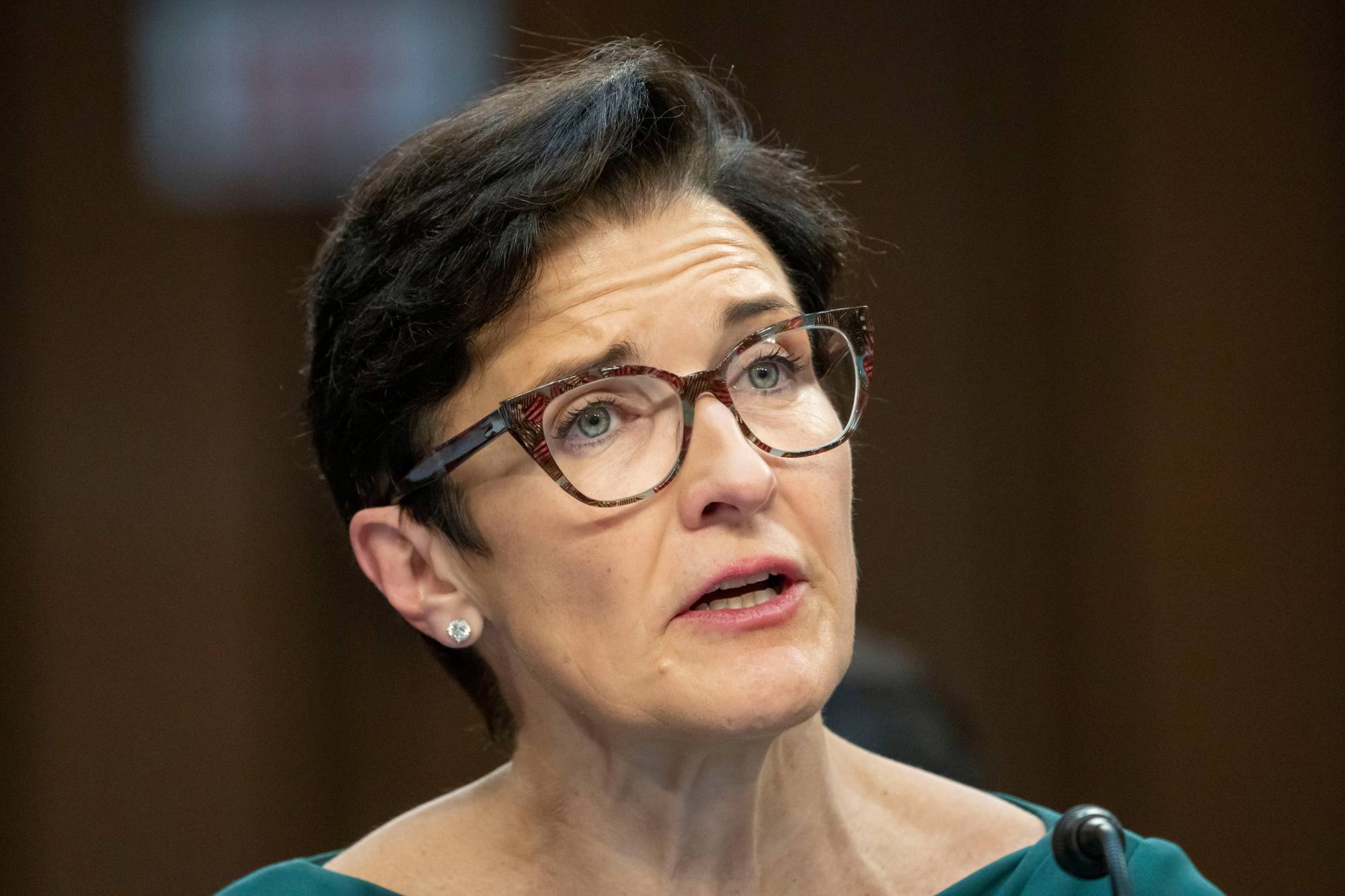
FILE - Jane Fraser, CEO, Citigroup, speaks during a Senate Banking, Housing, and Urban Affairs Committee oversight hearing to examine Wall Street firms on Capitol Hill, Wednesday, Dec. 6, 2023 in Washington. (AP Photo/Alex Brandon, File)
They are joined by leaders from key sectors driving Saudi Arabia’s economic transformation, including:
Tareq Amin, CEO of Humain
John Pagano, CEO of Red Sea Global and Managing Director of AlUla Development Company
Kamal Bahamdan, CEO of Safanad
Tareq AlSadhan, CEO of Saudi National Bank
Abdullah Al Zamil, Chair of SENAAT (formerly Zamil Industries)
The Board also retains long-serving members Amin Nasser, President and CEO of Aramco, Robert Wilt, CEO of Ma’aden, Rami Al Turki, President and CEO of Alturki Holding, and Charles Hallab, President and CEO of the US-Saudi Business Council.
“This Board represents an extraordinary alignment of global leadership at a pivotal moment in the bilateral relationship, one that is consistent with a reinvigorated and reimagined role for the Council in the US-Saudi partnership,” said Hallab.
“Their collective expertise across areas critical to both economies positions the Council to advance bilateral trade, investment, and business collaboration like never before. We are very excited for the next chapter, and we are also deeply grateful to our long-serving Board members for their commitment and contribution to the Council’s mission over the years.”
Olayan said she looked forward to translating the partnership into a meaningful collaboration, and long-term value for the two countries’ economies.
As for Fraser, she said: “The caliber of leaders joining our board signals the significant momentum of the US–Saudi business partnership.”
The formation of the Board comes at a time of accelerating economic engagement between the US and Saudi Arabia.
“With a refined and revitalized mission, the US-Saudi Business Council is reinforcing its role as a leading platform for private-sector leadership and engagement—strengthening connectivity between US and Saudi businesses, enabling strategic partnerships, and supporting the expansion of bilateral trade and investment,” USSBC said.
لم تشترك بعد
انشئ حساباً خاصاً بك لتحصل على أخبار مخصصة لك ولتتمتع بخاصية حفظ المقالات وتتلقى نشراتنا البريدية المتنوعة