

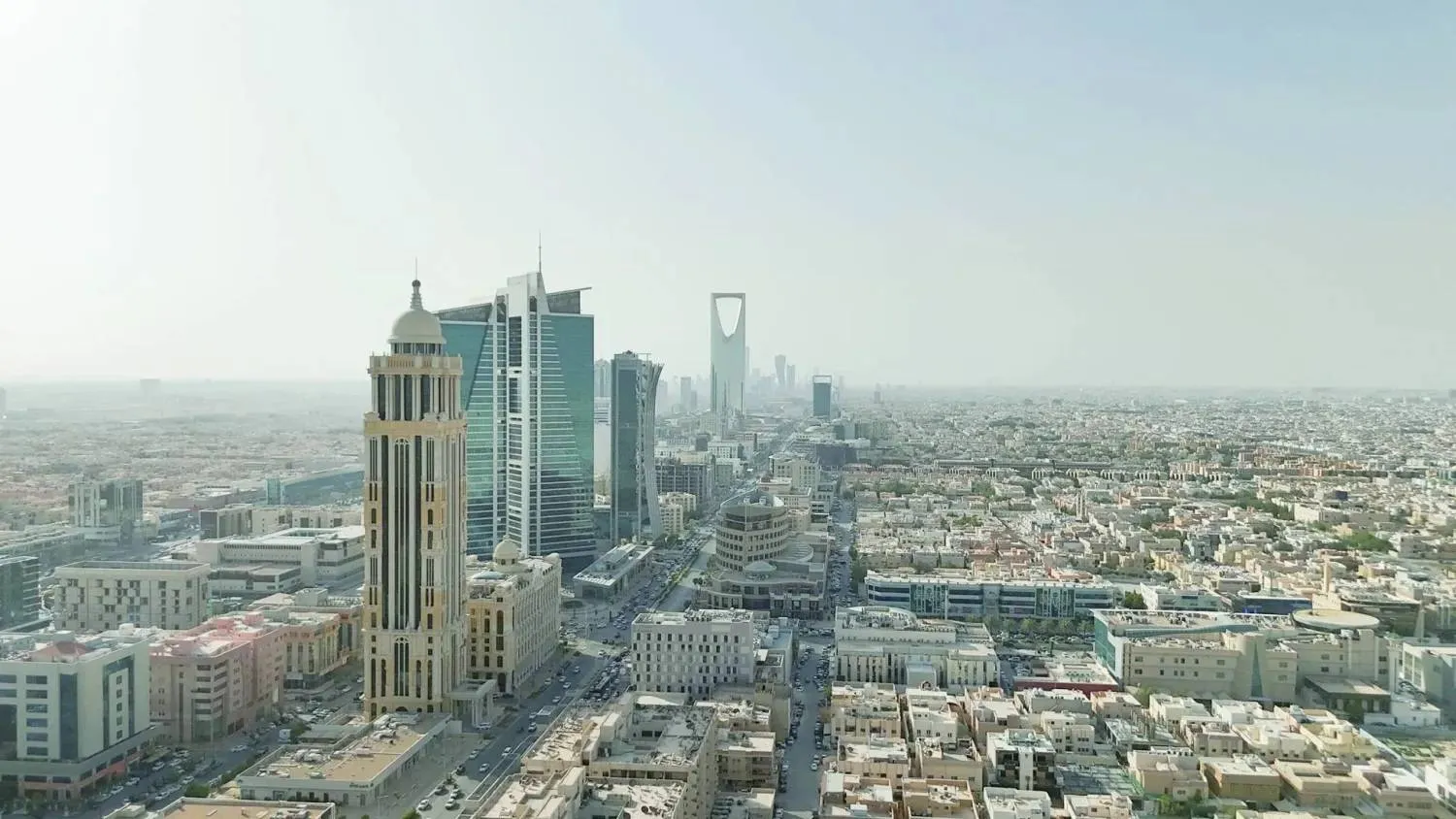

Saudi Arabia Officially Opens Property Ownership to Foreigners

A view of Riyadh, Saudi Arabia. (Reuters)
TT

Saudi Arabia Officially Opens Property Ownership to Foreigners

A view of Riyadh, Saudi Arabia. (Reuters)

Saudi Arabia opened a new chapter in its development drive on Thursday as a long-anticipated law allowing non-Saudis to own real estate came into force.

The step marks a pivotal shift in the Kingdom’s property framework, anchoring a revamped set of real estate laws designed to reposition the Saudi market from a largely domestic arena into a global investment destination.

The overhaul aims to draw foreign capital, individuals, and companies from across continents, capitalizing on the Kingdom’s political stability and steady economic expansion as one of the Middle East’s largest economies.

The updated system, approved by the Cabinet on July 8, 2025, caps a series of structural reforms under Vision 2030 and reflects the broader economic transformation reshaping the country. It seeks to deliver a secure and equitable investment environment aligned with international best practice.

Its objectives extend beyond financial considerations to include broader development goals, such as stimulating growth in the real estate sector by increasing project diversity and quality, and creating high-quality job opportunities for Saudi nationals in development and property-related services.

By enabling non-Saudis to own property, the Kingdom is laying the foundation for more dynamic and diverse communities, directly enhancing urban quality of life and fostering a competitive environment that raises standards for residential and commercial real estate projects alike. The move underscores stability and growth as defining features of the next phase.

Under the law, a “non-Saudi” is defined as a person who does not hold Saudi nationality, or owns a foreign company, a foreign non-profit entity, or any other non-Saudi legal person designated by a decision from the Cabinet.

'Saudi Real Estate' platform

As part of efforts to ensure transparency and protect rights, the General Authority for Real Estate announced that the “Saudi Real Estate” digital portal will serve as the official platform for managing ownership applications. User journeys have been designed to accommodate different categories:

Residents within the Kingdom can apply directly through the portal using their residency number, with requirements verified automatically and the process completed entirely online.

Non-residents outside the Kingdom must obtain the required digital identity from Saudi missions and embassies abroad before completing their application through the platform.

Foreign companies and entities without an existing presence in Saudi Arabia must first register with the Ministry of Investment through the “Invest Saudi Arabia” platform to obtain a unified number, then proceed to the “Saudi Real Estate” portal to complete the ownership process.

Geographic scope

The new system grants broad flexibility for ownership across the Kingdom, with particular focus on Riyadh and Jeddah as global economic and commercial hubs.

For Makkah and Madinah, a special regulatory framework has been established based on a “Geographic Zones Document,” details of which are set to be announced in the first quarter of 2026. The framework restricts ownership in the two holy cities to Muslims, whether inside or outside the Kingdom, and to Saudi companies wholly owned by Saudis, balancing investment openness with the cities’ religious status.

Under the law, a legally resident non-Saudi may own one residential property outside the designated geographic zones. Makkah and Madinah are excluded, with ownership there limited to Muslims.

Non-listed companies established under Saudi company law, in which one or more shareholders are non-Saudi or legal persons, are permitted to own property or acquire related rights within the designated zones, including Makkah and Madinah, for the purpose of conducting business activities and housing employees.

Listed companies, investment funds, and special purpose entities licensed under Saudi regulations may also own property and acquire related rights, including in Makkah and Madinah, in accordance with capital market laws, their executive regulations, and rules set by the Capital Market Authority in coordination with the Real Estate Authority and other relevant bodies.

Sustainable economic impact

The law translates Saudi Vision 2030 targets into action by attracting foreign direct investment and localizing real estate expertise through the entry of international developers and specialized companies.

The resulting activity is expected to stimulate related sectors, such as housing, trade, industry, and tourism, boosting the real estate sector’s contribution to non-oil gross domestic product on a sustainable basis.

Linking the ownership portal to the real estate title registration system provides the highest levels of legal certainty, strengthening foreign investor confidence in Saudi regulations and reinforcing the Kingdom's commitment to building a diversified, transparent, and innovation-driven economy.



CEO: Exxon Evacuated Non-essential Middle East Staff

An Exxon gas station sign in Dallas, Friday, March 6, 2026. (AP Photo/Tony Gutierrez)
TT

CEO: Exxon Evacuated Non-essential Middle East Staff

An Exxon gas station sign in Dallas, Friday, March 6, 2026. (AP Photo/Tony Gutierrez)

Exxon Mobil has evacuated non-essential employees from its operations in the Middle East, CEO Darren Woods said in an interview on Tuesday, as the US-Israel war on Iran continues.

Some operations have been scaled back to manage oil inventory levels as traffic through the Strait of Hormuz has been challenged, he said. ⁠Exxon is a ⁠minority partner in oil and gas projects in the UAE, Qatar and Saudi Arabia.

"Our first and highest priority is making sure our people remain safe, and we evacuated folks who weren't critical or essential to the operations that we were providing support for," Reuters quoted Woods as saying.

Traffic ⁠through the Strait of Hormuz, an important waterway between Iran and Oman that sees one-fifth of the world's oil supply pass through it, has effectively halted after Iran threatened to attack tankers that attempt to pass.

US President Donald Trump on Monday threatened to escalate the war with Iran if it blocked oil shipments from the Middle East, even as he predicted a quick end to the conflict.

With exports strained, oil producers have ⁠cut output ⁠at some oilfields as storage capacity runs out.

"The ability to manage ... inventory becomes very challenged, and many of the operations are pulling back simply to manage inventory levels as the logistics in the supply chain and the flow through the Strait get worked (through) with time," Woods said.

About 20% of Exxon's oil and gas production is in the Middle East, according to analysts from Jefferies. Nearly 60% of the US oil major's liquefied natural gas business is concentrated in the region, according to TD Cowen.


EU Opposes Removing Oil Sanctions on Russia to Cool Energy Prices

Pumpjacks operated by Aera Energy work the wells at the Midway-Sunset field near Taft in Kern County, California, on March 8, 2026. (Photo by Frederic J. BROWN / AFP)
TT

EU Opposes Removing Oil Sanctions on Russia to Cool Energy Prices

Pumpjacks operated by Aera Energy work the wells at the Midway-Sunset field near Taft in Kern County, California, on March 8, 2026. (Photo by Frederic J. BROWN / AFP)

EU economy chief Valdis Dombrovskis said Tuesday the European Union did not support removing sanctions on Russian oil despite soaring energy prices, AFP reported.

"We must continue to exert maximum pressure on Russia," he said when asked about US President Donald Trump's announcement he will waive some sanctions on oil, warning easing restrictions would "reinforce Russia's capacity to wage war, undermining Ukraine".


Airlines Hike Ticket Prices as Iran War Propels Fuel Costs

A Qantas logo is visible on the tail of an airplane at an airport in Sydney, Australia, September 18, 2025. (Reuters)
TT

Airlines Hike Ticket Prices as Iran War Propels Fuel Costs

A Qantas logo is visible on the tail of an airplane at an airport in Sydney, Australia, September 18, 2025. (Reuters)

Australia's Qantas Airways , Scandinavia's SAS and Air New Zealand announced airfare hikes on Tuesday, blaming an abrupt spike in the cost of fuel caused by the Middle East conflict.

Jet fuel prices, which were around $85 to $90 per barrel before US-Israeli strikes on Iran, have soared to between $150 and $200 per barrel in recent days, New Zealand's flag carrier said as it suspended its financial outlook for 2026 due to uncertainty over the conflict.

The war, which disrupted shipping via the world's most vital oil export route, has sent oil prices surging, upending global travel, pushing airline tickets on some routes sky-high, and sparking fears of a deep travel slump that could lead to widespread grounding of planes.

"Increases of this magnitude make it necessary to react in order to maintain stable and reliable operations," an SAS spokesperson said in a statement to Reuters, adding it had implemented a "temporary price adjustment".

The largest Scandinavian airline said last ‌year it had temporarily ‌adjusted its fuel hedging policy due to uncertain market conditions and that it had no ‌fuel ⁠consumption hedged for the ⁠following 12 months.

While several Asian and European airlines, including Lufthansa and Ryanair, have oil hedging in place, securing a part of their fuel supplies at fixed prices, Finnair warned that even the availability of fuel could be at risk if the conflict dragged on.

"A prolonged crisis could affect not only the price of fuel but also its availability, at least temporarily," a Finnair spokesperson said, adding that it had not seen this happening yet. It had hedged over 80% of its first-quarter fuel purchases.

AIRSPACE CHAOS IN THE MIDDLE EAST

Highlighting the airspace chaos in the Middle East, planes arriving in Dubai were briefly placed in a ⁠holding pattern on Tuesday due to a potential missile attack, flight tracking service Flightradar24 said on X. ‌The planes eventually landed.

Qantas said in addition to increasing international fares, it was exploring ‌options to redeploy capacity to Europe as airlines and passengers seek to evade disruptions in the Middle East, where drone and missile fire have ‌curtailed flights.

Airfares have soared on Asia-Europe routes due to airspace closures and capacity constraints, and Hong Kong's Cathay Pacific Airways said on ‌Tuesday it was adding extra flights to London and Zurich in March.

Air New Zealand said it had raised one-way economy fares by NZ$10 ($6) on domestic routes, NZ$20 on short-haul international services and NZ$90 on long-haul, with more adjustments to prices and schedules possible if jet fuel costs remain elevated.

Hong Kong Airlines said on its website it would raise its fuel surcharges by up to 35.2% from Thursday, with the sharpest increase on flights between ‌Hong Kong and the Maldives, Bangladesh and Nepal.

AIRLINE SHARES STABILISE AFTER SELLOFF

Some airline stocks rose and oil prices fell to around $90 a barrel on Tuesday from a high of $119 on Monday ⁠after US President Donald Trump said ⁠on Monday the war could be over soon. When markets opened in Europe, airline shares were up between 4% and 7%.

In Asia, airline shares showed signs of stabilising, with Qantas closing up 0.5%, Korean Air Lines rising 3% and Cathay Pacific up 3.6%. All had recorded sharp declines on Monday.

Fuel is the second-largest expense for air carriers after labor, typically accounting for a fifth to a quarter of operating expenses.

CONFLICTS SHRINKING AVAILABLE AIRSPACE

In addition to high fuel costs, tightening airspace also threatens to derail the global travel industry, as pilots reroute to avoid the Middle East conflict and capacity on popular routes fills up.

Emirates, Qatar Airways and Etihad typically jointly account for about one-third of the passenger traffic between Europe and Asia and fly more than half of all passengers from Europe to Australia, New Zealand and nearby Pacific Islands, according to Cirium.

European airlines have already struggled with the shortage of available airspace created by the war in Ukraine, with many avoiding Russian airspace and flying longer international routes. Now, with even less available airspace, they say their business has become even more challenging.