


Bessent Says Disappointed by EU-India Deal; South Korea Must Ratify Trade Deal

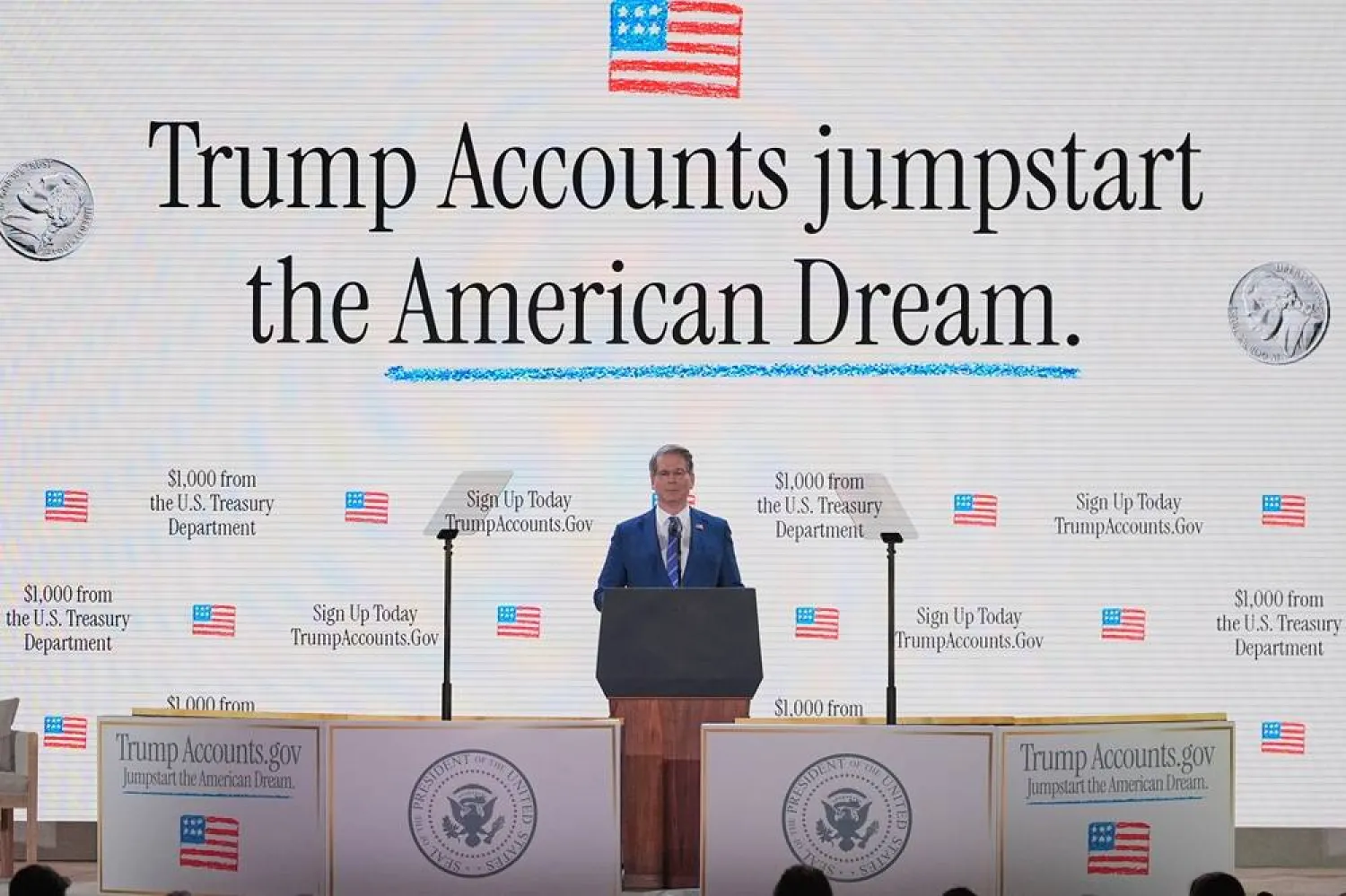
 Treasury Secretary Scott Bessent speaks during an event at Carnegie Mellon Auditorium, Wednesday, Jan. 28, 2026, in Washington. (AP)
Treasury Secretary Scott Bessent speaks during an event at Carnegie Mellon Auditorium, Wednesday, Jan. 28, 2026, in Washington. (AP)
TT

Bessent Says Disappointed by EU-India Deal; South Korea Must Ratify Trade Deal

 Treasury Secretary Scott Bessent speaks during an event at Carnegie Mellon Auditorium, Wednesday, Jan. 28, 2026, in Washington. (AP)
Treasury Secretary Scott Bessent speaks during an event at Carnegie Mellon Auditorium, Wednesday, Jan. 28, 2026, in Washington. (AP)

US Treasury Secretary Scott Bessent said on Wednesday he was disappointed by Europe's decision to strike a major trade agreement with India, saying it showed Europe put trade ahead of the interests of the Ukrainian people.

Bessent told CNBC that Europe had been buying refined products made in India with sanctioned Russian oil supplies, and had been unwilling to match higher US tariffs on Indian goods because they were separately negotiating a trade agreement.

The European Union on Tuesday finalized a long-delayed trade deal with India that aims to boost two-way trade and reduce the bloc's reliance on the United States amid growing ‌global trade tensions.

The deal ‌is expected to double EU exports to India ‌by ⁠2032 by eliminating or ‌reducing tariffs on 96.6% of traded goods by value, and will lead to savings of 4 billion euros ($4.8 billion) in duties for European companies, the EU said.

Asked whether this deal and others among countries excluding the United States would threaten the US, Bessent said: "They should do what's best for themselves, but I will tell you, I found, I find the Europeans very disappointing."

He said the deal made it clear why Brussels had balked ⁠at joining Washington's decision to impose 25% tariffs on India last year as part of a push to reduce ‌its purchases of Russian oil.

"The Europeans were unwilling to join ‍us, and it turns out, because they ‍wanted to do this trade deal," he said. "So, every time you hear a ‍European talk about the importance of the Ukrainian people, remember that they put trade ahead of the Ukrainian people."

Bessent last week had signaled the potential removal of the 25% additional US tariffs on India following a sharp reduction in Indian imports of Russian oil.

Bessent's disparaging comments about Europe came amid heightened tensions after President Donald Trump threatened to raise tariffs on imports from certain European countries over their opposition to his pursuit ⁠of Greenland. That tariff threat was later dropped, but it left many Europeans unsettled and anxious about the future of Transatlantic trade.

US officials remain frustrated that the EU has not enacted the tariff reductions it promised as part of a framework trade deal reached with Washington in July.

Those concerns were heightened this week when Trump raised duties on imports from South Korea to 25% from 15%, citing slow moves by the country's parliament to implement a framework trade agreement reached with Washington last year.

Bessent defended Trump's action, saying it was "helpful to get things moved along", adding that the South Korean parliament needed to ratify the trade deal.

Trump on Tuesday said he expected the United States and South Korea to ‌work out a solution, but he did not elaborate.

South Korean officials are due to arrive in Washington on Wednesday for talks with trade officials.



Amazon to Cut 16,000 Jobs Worldwide

This photograph shows the Amazon logo displayed outside of an Amazon Fresh grocery store in Torrance, California on July 29, 2025. (AFP)
TT

Amazon to Cut 16,000 Jobs Worldwide

This photograph shows the Amazon logo displayed outside of an Amazon Fresh grocery store in Torrance, California on July 29, 2025. (AFP)

US online retail and cloud computing giant Amazon said Wednesday that it would be cutting 16,000 jobs worldwide as part of a restructuring, as it focuses spending on artificial intelligence.

The job cuts, which follow already flagged plans to cut its workforce by 14,000 posts, are aimed at "reducing layers, increasing ownership, and removing bureaucracy," senior vice president Beth Galetti said in a statement.

Media reports from October had said the roughly 30,000 job cuts planned in total would impact nearly 10 percent of the 350,000 office jobs at Amazon, without affecting the distribution and warehouse workers that make up the bulk of its 1.5 million employees.

At the time the company refused to comment on the reports, which said they came amid increased investments in artificial intelligence.

Amazon did not give any breakdown of the latest job cuts on Wednesday, saying only that "every team will continue to evaluate the ownership, speed, and capacity to invent for customers, and make adjustments as appropriate."

The company will release its full-year 2025 results on February 5. In its last quarterly earnings statement in October, the company said it spent $1.8 billion on severance costs tied to planned job cuts.

Amazon said that new positions will be offered to employees where possible, without giving further details on which divisions will be affected by the cuts.

The layoffs are in line with a trend to trim white-collar management jobs across big tech. Microsoft in July said it had slashed a little less than four percent of its global workforce, about 15,000 jobs.

Facebook owner Meta has also cut jobs over the past year, in a move intended to remove organizational bloat following aggressive hiring during the pandemic.

Dutch tech giant ASML on Wednesday said it would cut hundreds of management jobs to improve internal organization, with HP and Oracle also announcing recent layoffs.

Like other tech giants, Amazon is making massive investments to grab a slice of the AI revolution pie.

It is particularly banking on the performance of its subsidiary Amazon Web Services (AWS), the world's leading cloud provider, which is engaged in a race against its fast-growing rivals, Microsoft Azure and Google Cloud.

And spending on developing new AI-based chips and services is growing exponentially. In December, Amazon announced that it would invest more than $35 billion in India.


Global Labor Market Conference Concludes in Riyadh with Signing of 90 Agreements

The conference was held under the patronage of Custodian of the Two Holy Mosques King Salman bin Abdulaziz Al Saud and organized by the Ministry of Human Resources and Social Development. (SPA)
TT

Global Labor Market Conference Concludes in Riyadh with Signing of 90 Agreements

The conference was held under the patronage of Custodian of the Two Holy Mosques King Salman bin Abdulaziz Al Saud and organized by the Ministry of Human Resources and Social Development. (SPA)

The third annual Global Labor Market Conference (GLMC 2026) concluded in Riyadh on Tuesday with the signing of 90 agreements between government entities and the private sector.

The deals aim to support labor-market development and are set to impact over 6 million beneficiaries within Saudi Arabia and beyond.

The event was held under the patronage of Custodian of the Two Holy Mosques King Salman bin Abdulaziz Al Saud and organized by the Ministry of Human Resources and Social Development, drawing an international audience of more than 10,000 participants, including 40 labor ministers and over 200 speakers and experts representing more than 100 countries.

The signed agreements cover skills development and leadership capacity building through training partnerships and international professional accreditation, and accelerating digital transformation with advanced technology solutions and artificial intelligence (AI) through deals to develop digital services, automation solutions, and cybersecurity.

Priority fields covered by the agreements include expanding opportunities for flexible employment and freelancing while connecting individuals to new economic opportunities, and establishing sustainable sectoral and developmental partnerships that link training with the actual labor market and support local economies.

The success of the third GLMC underscores Saudi Arabia’s commitment to its leading role in shaping the future of work globally by fostering innovation, strengthening partnerships, and empowering the workforce to ensure sustainable, resilient, and inclusive labor markets.


Dollar Struggles to Recover from Losses After Trump Comments

US dollar banknotes are seen in this illustration taken March 10, 2023. (Reuters)
TT

Dollar Struggles to Recover from Losses After Trump Comments

US dollar banknotes are seen in this illustration taken March 10, 2023. (Reuters)

The dollar struggled to bounce back Wednesday following another selloff fuelled by Donald Trump's suggestion he was happy with the currency's recent decline, while tech firms helped most equity markets extend their rally.

Traders are also keeping an eye on the Federal Reserve's latest meeting, hoping for some guidance on its plans for interest rates amid uncertainty over the US president's policies following his latest tariff threats.

The greenback has retreated across the board this week following reports that the New York Fed had checked in with traders about the yen's exchange rate, which fueled talk that US and Japanese officials were prepared to stage a joint intervention.

That led to speculation the White House was prepared to let the dollar weaken, and Trump did little to dismiss that when asked Tuesday if he was worried about the decline.

"No, I think it's great," he told reporters in Iowa as the unit hit its weakest level against the euro in four-and-a-half years and a two-and-half-month low against the yen. "Look at the business we're doing. The dollar's doing great."

He added: "I want it to be -- just seek its own level, which is the fair thing to do."

The dollar also sank against the pound, South Korean won and Chinese yuan, with a slight bump Wednesday doing little to recover its latest losses.

Observers said unease about Trump's latest tariff outbursts, including threats against European nations over their opposition to his Greenland grab and a warning to Canada over its trade talks with China, have also dented faith in US assets and weighed on the unit.

Meanwhile, US consumer confidence plunged to its lowest level since 2014, a survey showed, as households fret about inflation and the elevated cost of living.

Win Thin, at Bank of Nassau 1982 Ltd, said: "Foreign exchange typically is the leader in terms of showing market discomfort with a country's policies and economic outlook, so this dollar weakness bears watching."

Still, equity markets performed well in Asia after the S&P 500 clocked another record high in New York thanks to a surge in tech titans including Apple, Microsoft and Amazon.

That helped Seoul to be among the best performers again -- hitting another all-time peak -- as chipmakers Samsung and SK hynix rallied.

There were also big gains in Tokyo, Hong Kong, Shanghai, Taipei, Manila, Mumbai and Bangkok.

Jakarta plunged more than eight percent -- its heftiest fall in more than nine months -- after index compiler MSCI called on regulators to look into ownership concerns.

The plunge saw market heavyweights including PT Bumi Resources and PT Petrosea lose around 15 percent.

MSCI said: "investors highlighted that fundamental investability issues persist due to ongoing opacity in shareholding structures and concerns about possible coordinated trading behavior that undermines proper price formation".

Sydney, Singapore and Wellington dipped.

Traders are keeping a close watch on earnings this week from some of Wall Street's Magnificent Seven, with Microsoft, Meta, Tesla and Apple all reporting.

"These results will provide critical insights into the trajectory of the artificial intelligence trade," wrote Tony Sycamore, market analyst at IG.

"After losing momentum in the final months of 2025 due to growing scrutiny over return on investment, capital expenditure and real-world constraints, the market is eager to see if the AI narrative can regain traction in 2026.

"Forward guidance will be key, alongside scrutiny of margins and capex projections."

In company news, tech investment titan SoftBank jumped almost six percent after the Wall Street Journal reported it was in talks to pump an additional $30 billion into ChatGPT developer OpenAI.

That comes after it invested $22.5 billion last month for an 11 percent stake.