Jazan Port: Saudi Arabia’s Strategic Gateway to Horn of Africahttps://english.aawsat.com/business/5235322-jazan-port-saudi-arabia%E2%80%99s-strategic-gateway-horn-africa
Jazan Port: Saudi Arabia’s Strategic Gateway to Horn of Africa
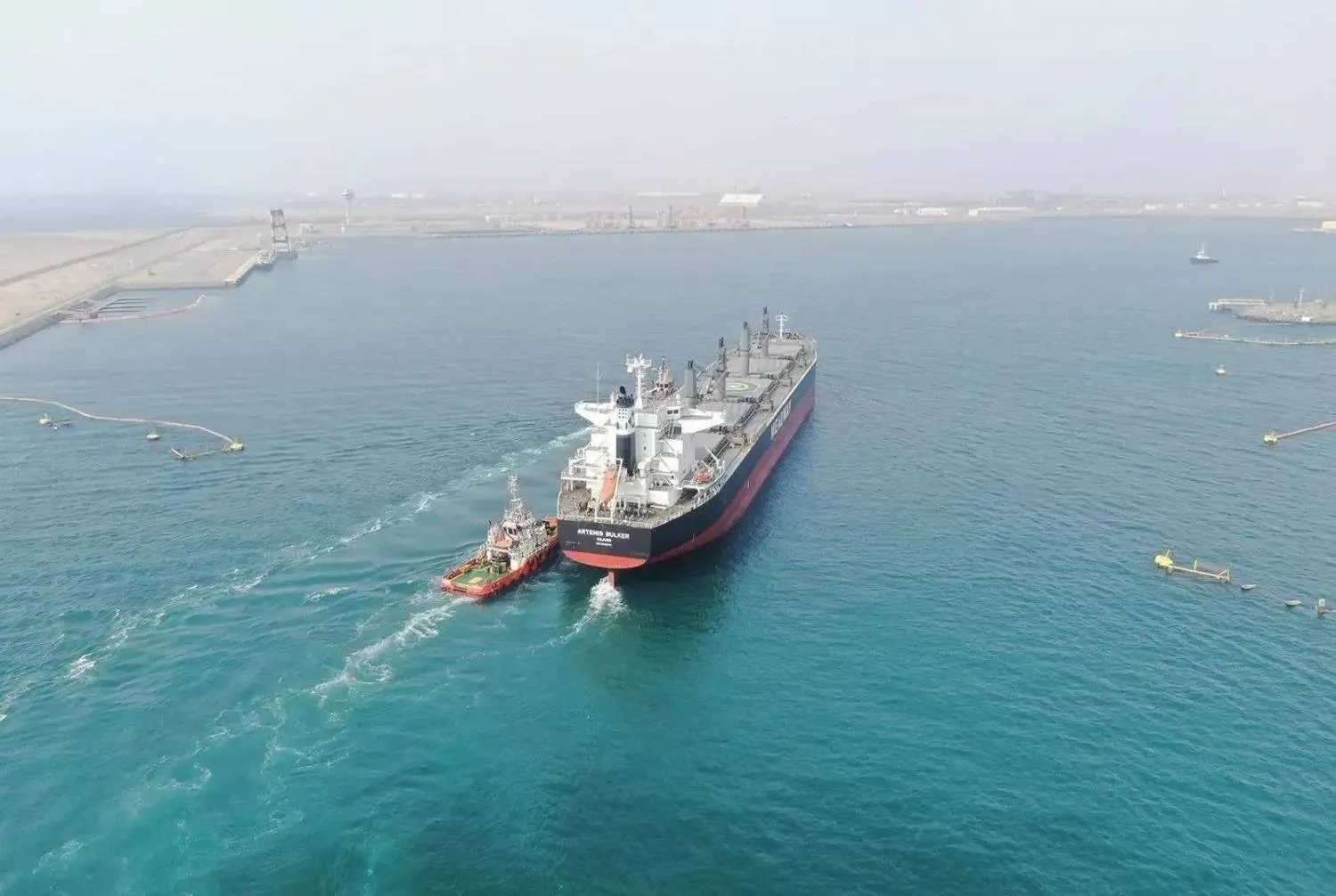
A vessel carrying an export shipment departs Jazan Port (SPA).
Saudi Arabia is accelerating efforts to transform Jazan Port in the Kingdom’s south from a regional maritime hub into a global logistics artery linking continents.
Through coordinated initiatives led by relevant authorities, the Kingdom is leveraging the port’s unique strategic location, not only as one of its most successful national projects but also as a key economic gateway to the Horn of Africa and global markets.
By redesigning import and export procedures and removing barriers facing investors, Saudi Arabia is laying the cornerstone for a new phase of trade flows extending from its economic core to distant international markets.
The Horn of Africa includes Somalia, Ethiopia, Eritrea, Djibouti, Kenya and Sudan, whose proximity to Jazan Port on the Red Sea strengthens its role as a strategic link between Saudi Arabia and African markets.
The Jazan region’s geographic closeness to the Horn of Africa also helps attract high-quality investments, particularly with the establishment of special economic zones aimed at boosting exports of agricultural, fisheries and other products.
Mohammed Mudhafar, head of the Environment, Water and Agriculture Sector Committee at the Jazan Chamber of Commerce, said the committee is working with relevant authorities to remove obstacles and facilitate import and export operations at the port. He noted that differences in decisions among multiple agencies had created challenges for investors.
Among the main obstacles, Mudhafar said, was the 21-day quarantine imposed on imported livestock at Jazan, which increased costs for companies and pushed them toward other ports.
He said this constraint was removed after coordination with the Ministry of Environment, Water and Agriculture and the National Center for Plant Pest and Animal Disease Prevention and Control (Wiqaa).
He added that coordinated efforts among government entities have helped resolve these issues, encourage investors and streamline trade flows through Jazan Port.
From the private sector perspective, Khaled Al-Nashiri, head of Khaled Al-Nashiri Trading Company, said the port has become a major commercial gateway to the Horn of Africa.
He pointed to clearer investment strategies, simplified procedures, direct communication with investors, and improved infrastructure and warehouse facilities.
He added that strong government support has facilitated import and export operations, driving rising demand following initial shipments of Saudi-made flour, food products and animal feed to Horn of Africa countries.
Once a key gateway in the 1980s and 1990s, Jazan Port is now re-emerging with greater capacity and organization, positioning itself as a major hub for trade in the coming years.
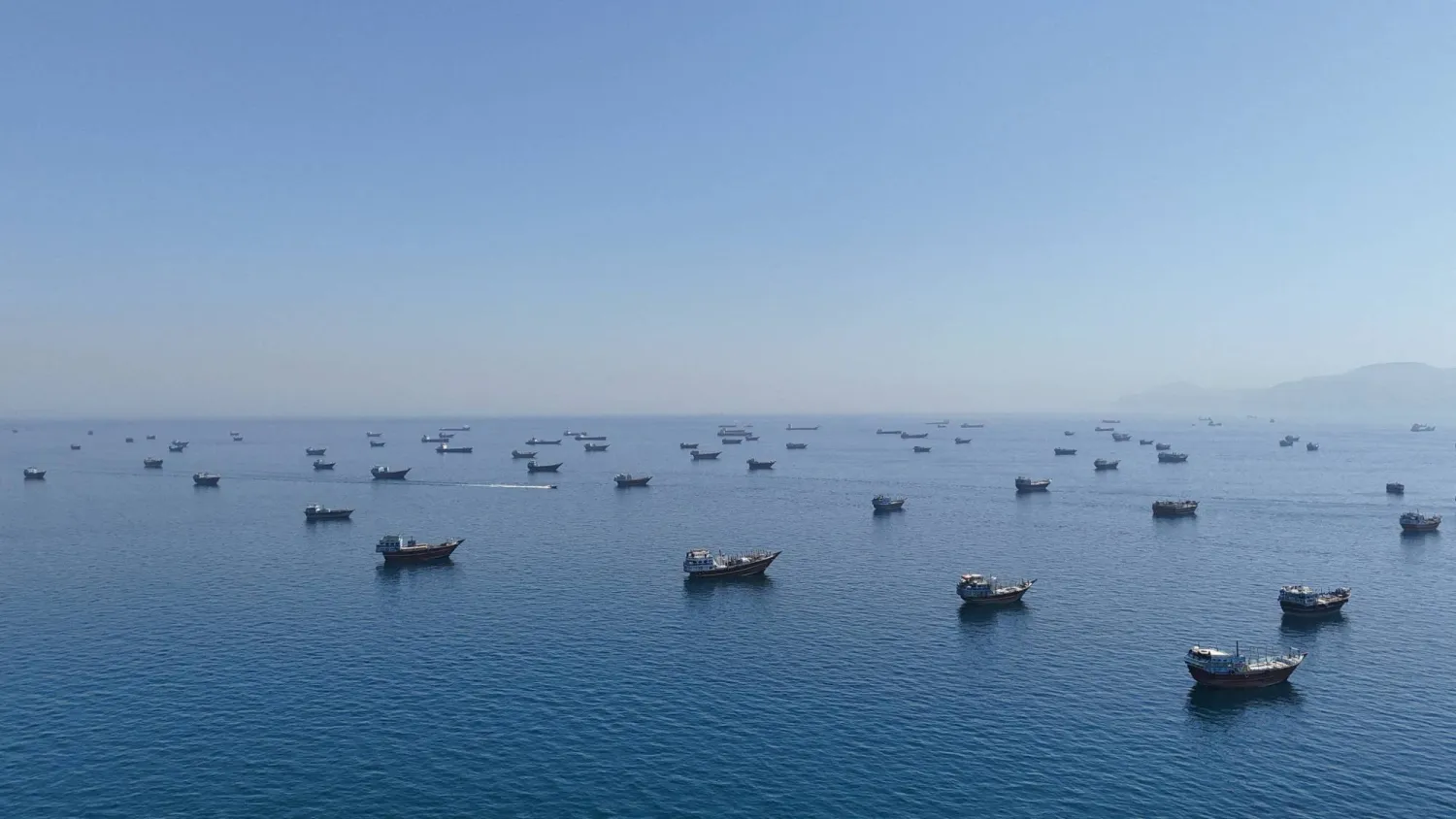
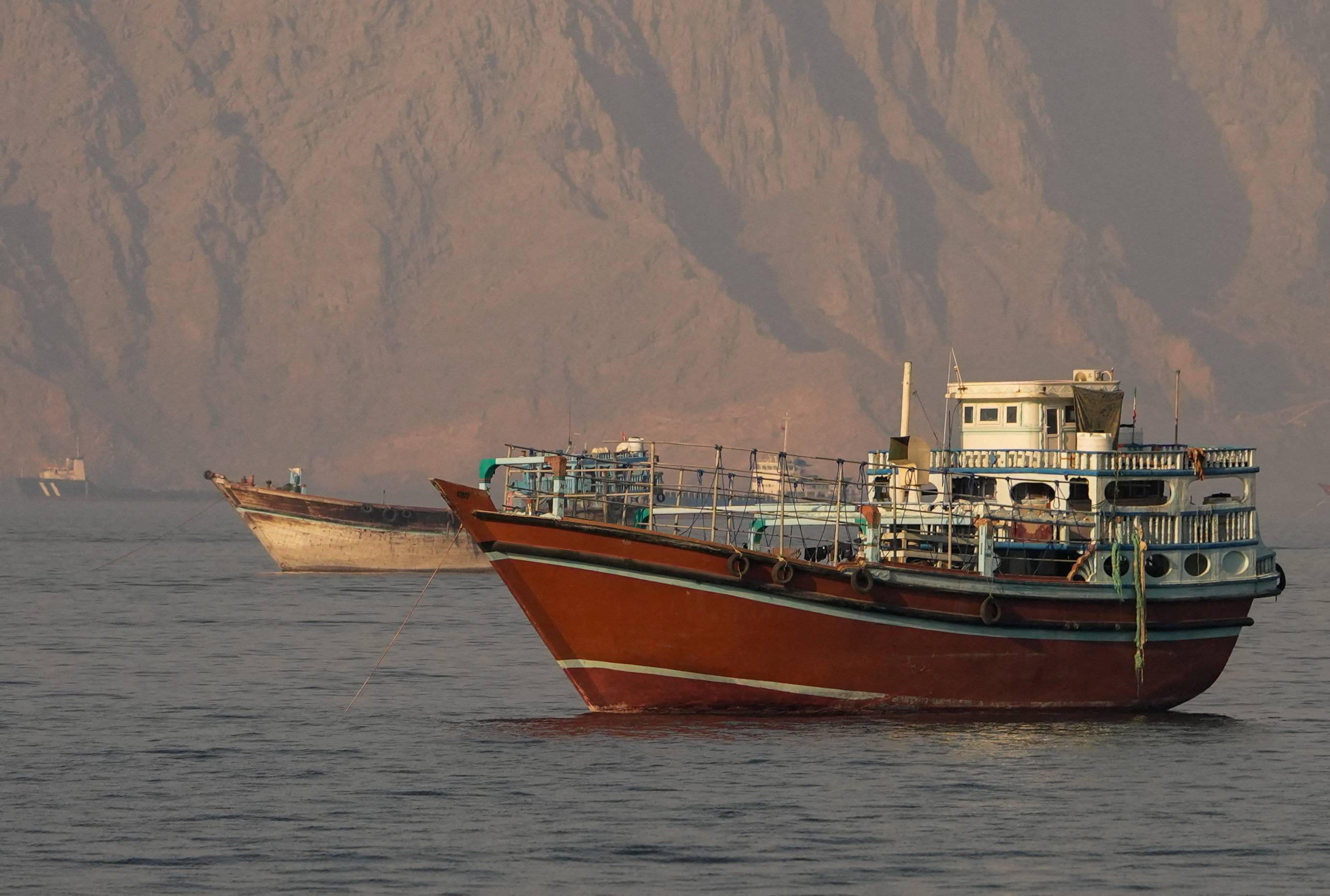
FILE PHOTO: A drone view of vessels anchored in the Strait of Hormuz as seen from Musandam, Oman, June 8, 2026. REUTERS/Stringer/File Photo
The recent breakthrough in the Strait of Hormuz crisis is more than a temporary development aimed at ensuring the flow of energy shipments. It represents a strategic shift with deep and direct economic and investment implications for the financial systems of the Gulf Cooperation Council (GCC) states. As this vital waterway serves as the main artery of global energy trade, carrying the bulk of Gulf oil and gas exports to international markets, the restoration of normal shipping activity opens new prospects for broader regional stability.
The United States and Iran recently announced a preliminary agreement to end the war in the Middle East and reopen the strategically important Strait of Hormuz after months of bloodshed and global economic disruption. US President Donald Trump said the strait, a critical route for global oil supplies that Iran had restricted since the start of the war, would be reopened. He added: “The deal with the Islamic Republic of Iran is now complete. Ships of the world, start your engines. Let the oil flow.”
Global markets reacted immediately to news of the preliminary agreement. Benchmark Brent crude futures fell more than 4.5 percent, dropping below $84 a barrel as investors awaited the signing of a formal treaty in Switzerland next Friday. The return of normal maritime traffic has opened new prospects for broader regional stability.
In comments to Asharq Al-Awsat, financial and economic adviser Dr. Hussein Al-Attas said the easing of the crisis goes beyond preventing disruptions to crude supplies and should instead be viewed as a structural support for financial stability. He noted that the benefits of renewed confidence far outweigh the temporary oil price spikes generated by geopolitical tensions.
Last week, the World Bank indicated that the expected gradual resumption of oil and gas flows through the Strait of Hormuz would help ease financial bottlenecks across GCC countries. It said the recovery of oil export growth would gradually support regional GDP growth, which is projected to reach 4.2 percent in 2027.
These optimistic recovery forecasts mark a turning point after a severe contractionary period. The World Bank noted in its structural analysis that the economic impact of the disruption was not uniform across GCC states, but depended largely on each country's reliance on the strait as its sole export outlet.
Kuwait and Iraq were identified as the most severely affected because neither has alternative maritime export routes outside the Arabian Gulf. The disruption created acute financing gaps and large budget deficits as millions of barrels per day remained stranded during months of restrictions.
Qatar faced complex logistical challenges in securing alternative shipping routes for liquefied natural gas exports bound eastward, resulting in delayed shipments, operational pressure on liquefaction facilities, and a sharp increase in insurance costs for Qatari tankers.
Major regional ports were also affected, particularly in re-export activity and logistics services. The financial and banking sectors in the UAE and Bahrain incurred direct costs as international funds increased the risk premium applied to investment assets in both countries.
In contrast, Saudi Arabia demonstrated considerable logistical and structural resilience during the crisis, benefiting from advanced infrastructure that enabled it to redirect more than 60 percent of its oil exports through the Red Sea via the East-West Pipeline. Likewise, Oman's ports on the Arabian Sea and Indian Ocean, including Sohar and Duqm, provided the Omani economy with geographic flexibility beyond the constraints of the Strait of Hormuz.
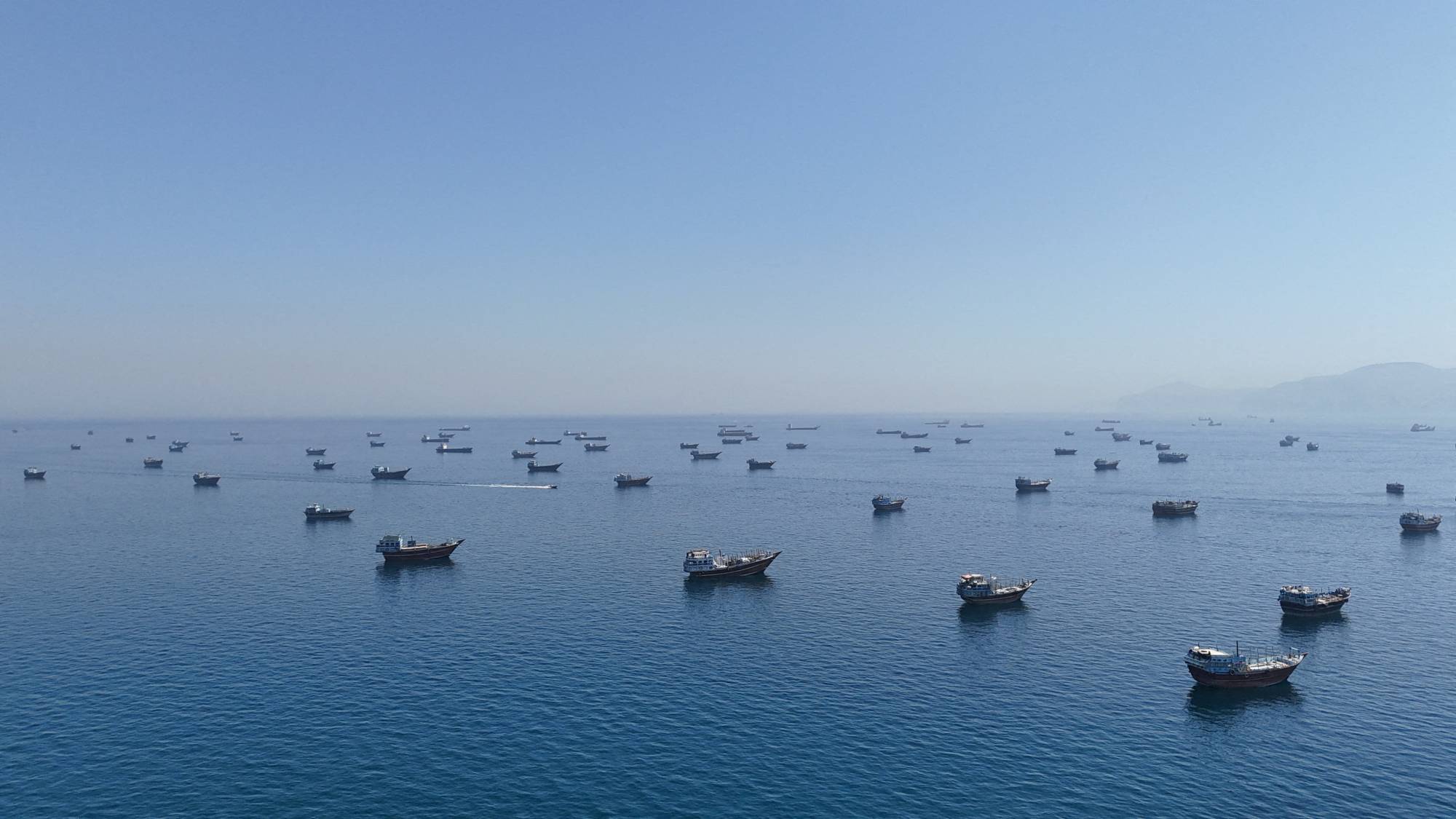
FILE PHOTO: A drone view of vessels anchored in the Strait of Hormuz as seen from Musandam, Oman, June 8, 2026. REUTERS/Stringer/File Photo
Filling Financial Gaps
Technical analyses of energy markets indicate that the gradual restoration of navigation through the strait will allow Gulf producers to return to normal export levels and generate the revenues needed to close multibillion-dollar financing and budget gaps that emerged as a result of the maritime restrictions.
The breakthrough also coincides with substantial pent-up demand from major Asian energy importers. Governments and refiners across Asia sharply curtailed consumption during the conflict and drew down inventories. They are now prepared to rebuild strategic reserves, ensuring sustained demand over the medium and long term.
Despite these positive prospects, energy experts quoted in a notable Associated Press report expect it will take several months before energy companies can fully restore operations to meet global demand. They noted that slow shipping and refining processes, along with lingering concerns about safe passage through the strait, mean the agreement's full positive impact will not be felt immediately.
In managing the crisis, Saudi Arabia's logistical and structural resilience again stood out. During the conflict, the Kingdom successfully utilized its advanced infrastructure to redirect more than 60 percent of its oil exports through the Red Sea via the East-West Pipeline, enabling it to maintain supply flows, seize market opportunities and mitigate export disruptions. This demonstrated the effectiveness and capability of Riyadh's alternative logistics infrastructure even under the most challenging geopolitical conditions.
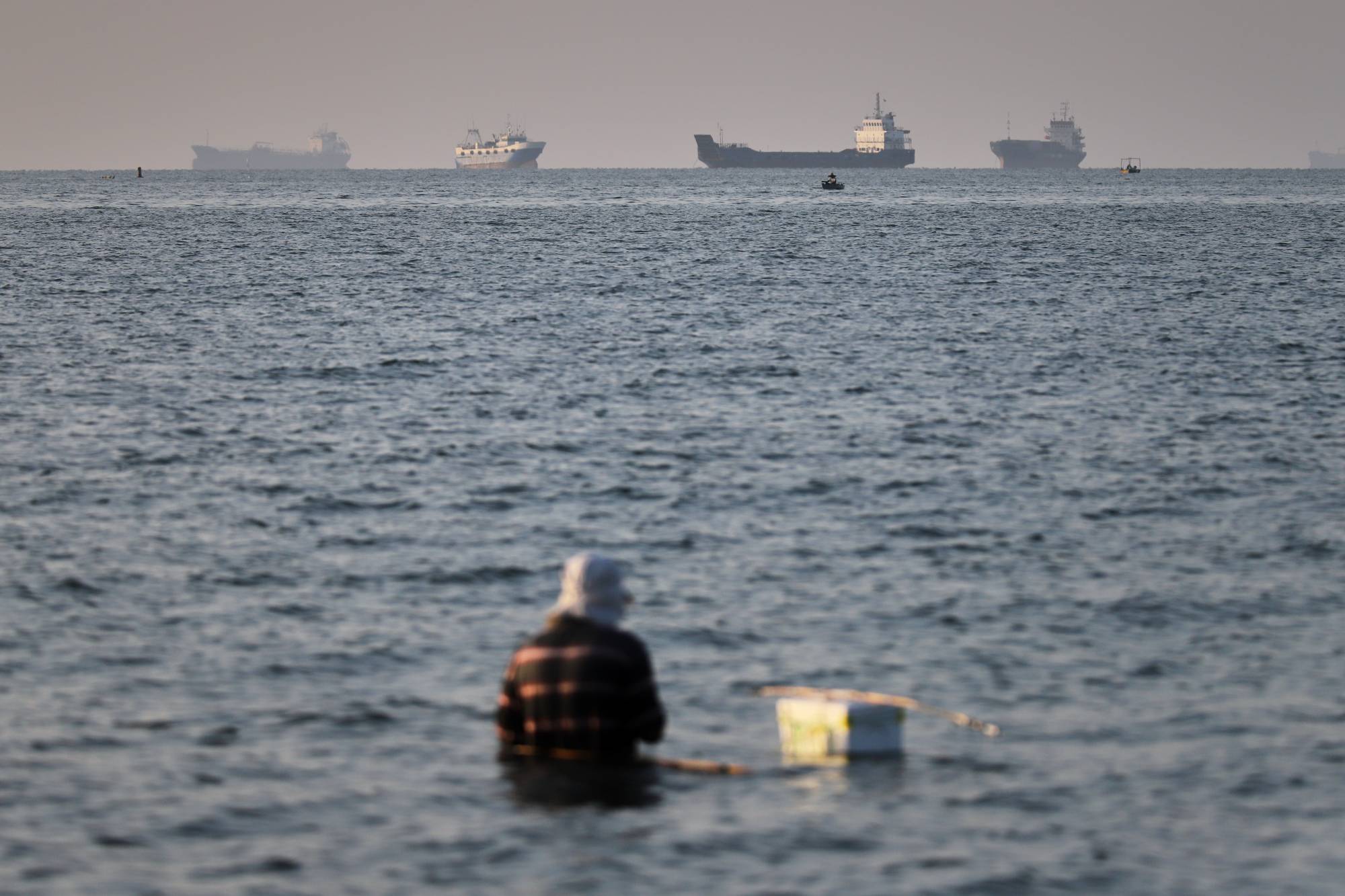
A person sits in shallow water as cargo and commercial vessels are anchored in the Strait of Hormuz off Bandar Abbas, Iran, Monday, June 8, 2026. (Amirhosein Khorgooi/ISNA via AP)
Declining Risk Premium
Al-Attas told Asharq Al-Awsat that the most immediate benefit of the breakthrough is the decline in the geopolitical risk premium. During periods of conflict and uncertainty over potential closures, this premium rises automatically across Gulf assets and markets, creating pressure on financial markets and increasing operating costs.
With tensions easing, the premium falls sharply, directly boosting the confidence of regional and international investors and encouraging a strong return of both short-term and long-term investment flows to regional markets.
This decline is also closely linked to a recovery in maritime logistics and lower transportation and insurance costs. Continued tensions in the strait had driven shipping rates and war-risk insurance premiums to record levels, affecting trade flows and supply chains across the Gulf and beyond.
As stability returns, these costs are expected to decline significantly, improving the efficiency of both regional trade and international shipping routes.
Vessels at the Strait of Hormuz, as seen from Musandam, Oman, June 14, 2026. REUTERS/Stringer
Momentum for Financial Markets
Al-Attas expects Gulf financial markets, including equities and fixed-income instruments, to respond positively to lower geopolitical risks. Investor appetite for blue-chip stocks is likely to increase, particularly in the banking, petrochemicals, transportation and logistics sectors, which serve as key drivers of regional exchanges.
The benefits will extend beyond equities. Gulf bonds and sukuk are expected to gain from lower yields and reduced risk premiums, increasing the attractiveness of sovereign and corporate debt instruments to global investment funds.
Greater clarity in the outlook also enhances the appeal of foreign direct investment. Global capital is constantly in search of stable and secure environments. As concerns over international shipping routes and energy corridors recede, Gulf countries become increasingly attractive destinations for foreign investment, particularly given the large-scale opportunities in tourism, industry and technology tied to national development plans and economic diversification efforts.
Regarding oil markets, Al-Attas said that although oil prices could ease somewhat as fears of supply shortages and disruptions fade, this price stability should be viewed as a positive development and a genuine gain over the medium and long term. Gulf states are not seeking temporary price spikes; rather, they benefit more from sustained global demand and the reliable, secure delivery of exports to both traditional and emerging customers.
This stability is also expected to improve the domestic business environment by accelerating major economic projects. Periods of uncertainty often lead companies and large investment groups to postpone expansion decisions or slow capital spending and liquidity deployment. With risks receding, private-sector decision-makers now have a clearer outlook for advancing strategic planning, investment expansion and hiring, supporting the region's long-term development goals.
Most Gulf Markets Gain on Iran Dealhttps://english.aawsat.com/business/5284240-most-gulf-markets-gain-iran-deal
Traders wait at the Bahrain Bourse in Manama_ Bahrain_ November 8_ 2020. REUTERS
Most Gulf equities rose in early trade on Monday after the US and Iran announced a preliminary deal to end the war and restore traffic through the Strait of Hormuz.
Pakistan's prime minister said the two countries are expected to sign a memorandum of understanding in Switzerland on Friday, following mediation by Islamabad.
Trump said on Sunday the waterway would reopen "toll free" and that the US blockade of Iranian ports would be lifted, while Iran's Mehr news agency reported the draft deal envisages reopening it within 30 days under Iranian arrangements.
Saudi Arabia's benchmark index gained 0.5%, with the country's biggest lender by assets, Saudi National Bank.
However, oil giant Saudi Aramco slipped 1.1%.
Brent crude futures fell $3.65, or 4.2%, to $83.68 a barrel by 0630 GMT.
Qatar's benchmark index advanced 1%, with Qatar National Bank, the region's largest lender, jumped 1.9%.
UAE bourses were closed for a public holiday.
Musk Says SpaceX Could Bring $1 Trillion in Revenue by 2030https://english.aawsat.com/business/5284233-musk-says-spacex-could-bring-1-trillion-revenue-2030
Founder, CEO, Chairman, and Chief Engineer of SpaceX, Elon Musk, speaks via videolink on the day of SpaceX's initial public offering (IPO) at the Nasdaq MarketSite in New York City, US, June 12, 2026. REUTERS/Brendan McDermid
Musk Says SpaceX Could Bring $1 Trillion in Revenue by 2030
Founder, CEO, Chairman, and Chief Engineer of SpaceX, Elon Musk, speaks via videolink on the day of SpaceX's initial public offering (IPO) at the Nasdaq MarketSite in New York City, US, June 12, 2026. REUTERS/Brendan McDermid
Elon Musk said on Sunday that his rocket company, SpaceX, could bring in $1 trillion in revenue by 2030, making the statement two days after the company went public, valuing it at over $2 trillion.
"And I would be surprised if revenue is not greater than $1T in 2031," he wrote on his social media platform X, replying to journalist and financial commentator Jon Erlichman.
SpaceX on Friday became the sixth-largest US firm, cementing Musk's status as the world's first trillionaire.
However, the company still makes far less money than similarly valued tech giants like Broadcom and Amazon.com.
In 2025, SpaceX's revenue jumped to $18.67 billion from $14.02 billion a year earlier, but the company swung to a net loss of $4.94 billion from a profit of $791 million.
Some Wall Street analysts are cautious about the company's growth.
Goldman had estimated that SpaceX's revenue would exceed $470 billion in 2030, while Morgan Stanley projected it would reach nearly $330 billion, according to a Wall Street Journal report from earlier this month.
لم تشترك بعد
انشئ حساباً خاصاً بك لتحصل على أخبار مخصصة لك ولتتمتع بخاصية حفظ المقالات وتتلقى نشراتنا البريدية المتنوعة