


Egypt's Non-oil Private Sector Output Keeps Growing, PMI Shows

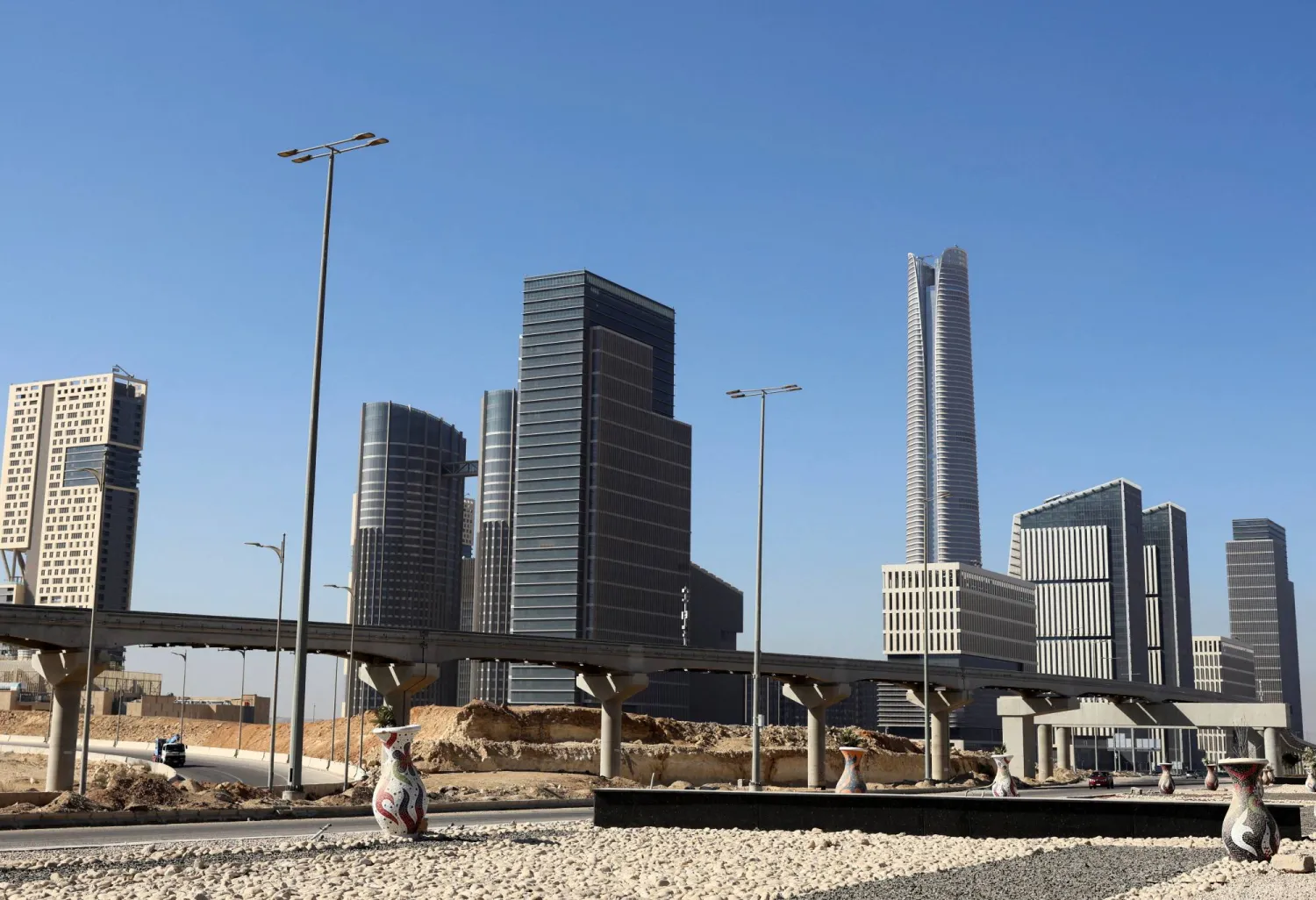
The construction site of the futuristic Iconic Tower skyscraper in a business district, built by China State Construction Engineering Corporation (CSCEC) in the New Administrative Capital (NAC) east of Cairo, Egypt, January 19, 2026. REUTERS/Mohamed Abd El Ghany
TT

Egypt's Non-oil Private Sector Output Keeps Growing, PMI Shows

The construction site of the futuristic Iconic Tower skyscraper in a business district, built by China State Construction Engineering Corporation (CSCEC) in the New Administrative Capital (NAC) east of Cairo, Egypt, January 19, 2026. REUTERS/Mohamed Abd El Ghany

Egypt's non-oil private sector output grew for the third consecutive month in January, marking the longest period of expansion since late 2020, S&P Global reported on Tuesday, but demand conditions eased.

The headline seasonally adjusted S&P Global Egypt Purchasing Managers' Index (PMI) fell slightly to 49.8 in January from 50.2 in December, indicating a ‌marginal weakening ‌in overall operating conditions. ‌A ⁠PMI reading ‌below 50.0 suggests contraction, while above 50.0 indicates growth.

Despite that decline, the PMI remained above its long-term average, reflecting a robust pace of non-oil GDP growth, Reuters reported. Output increased for the third month, ⁠driven by stronger demand from abroad, although domestic ‌sales slipped slightly after ‍two months of ‍expansion.

The reduction in backlogs of work, ‍the fastest in nearly three years, led to a significant decline in employment, the largest since October 2023.

"A note of caution was sounded by a decline in backlogs of work in January, ⁠which indicates that firms may have less room to expand in the coming months," said David Owen, Senior Economist at S&P Global Market Intelligence.

Companies also reduced their selling prices for the first time since mid-2020, as cost pressures eased.
Looking ahead, Egyptian firms remain cautiously optimistic, with expectations for activity ‌levels over the next 12 months only marginally positive.


Saudi Arabia's Non-oil Private Sector Continues to Expand

The Saudi capital Riyadh. Reuters
TT

Saudi Arabia's Non-oil Private Sector Continues to Expand

The Saudi capital Riyadh. Reuters

Saudi Arabia's non-oil private sector continued to expand at the start of 2026, a survey showed on Tuesday.

The seasonally adjusted Riyad Bank Saudi Arabia Purchasing Managers' Index fell to 56.3 in January from 57.4 in December, although firmly ‌in expansion territory.

Business activity was buoyed by strong market demand, new projects, and stronger client activity, although new order growth remained almost flat in January.

The New Orders sub-index rose to 61.9, from December's 61.8, with volumes driven by positive ⁠domestic conditions and a rise in export sales, particularly to ‌GCC and Asian countries.

"Survey evidence points to ongoing ‍strength in output and sales, underpinned by newly approved projects, steady customer enquiries, and improved investor activity, even as growth momentum moderated," said Naif Al-Ghaith, Riyad Bank's chief economist.

The rate of employment growth softened to the slowest in a year, despite ⁠a solid upturn in staffing numbers, as companies sought employees with technical expertise.

Saudi firms remained ‌optimistic in January about future output, supported by rising orders and resilient economic conditions.


India to Ramp Up Purchases of US Oil, Arms, Aircraft; Open Some Farm Access

FILE PHOTO: US President Donald Trump and Indian Prime Minister Narendra Modi shake hands, at the White House in Washington, D.C., US, February 13, 2025. REUTERS/Kevin Lamarque/File Photo/File Photo
TT

India to Ramp Up Purchases of US Oil, Arms, Aircraft; Open Some Farm Access

FILE PHOTO: US President Donald Trump and Indian Prime Minister Narendra Modi shake hands, at the White House in Washington, D.C., US, February 13, 2025. REUTERS/Kevin Lamarque/File Photo/File Photo

India has agreed to buy petroleum, defense goods, and aircraft from the US, while partly opening up its highly-guarded agriculture sector under a trade deal, according to a government official, as the two sides reconcile after months of tensions.

President Donald Trump announced a trade deal with India on Monday that slashes US tariffs on Indian goods to 18% from 50% in exchange for India halting Russian oil purchases and lowering trade barriers.

Trump said India agreed to buy more American goods with purchases rising to as much as $500 billion including energy, coal, technology, agricultural and other products.

The Indian government official, who ‌did not want ‌to be named, said India has agreed to ‌buy ⁠US goods including ‌telecom and pharmaceuticals and offered market access for some agricultural products, as part of New Delhi's commitments under the deal.

India recently offered select market access for agricultural products to the European Union under a trade deal.

The Asian nation has also lowered tariffs on imported cars to address Washington's immediate US demands to conclude the first tranche of the deal, the official added.

India's trade ministry did not ⁠immediately reply to an e-mail seeking comment.

India's exports to the US rose 15.88% year-on-year to $85.5 billion in ‌January-November, while imports stood at $46.08 billion, Indian government ‍data showed.

"The commitment to buy ‍US products covers sectors like pharmaceuticals, telecom, defense, petroleum and aircraft. It will ‍be done over the years," the official told Reuters.

The official said a more comprehensive pact with the US will be negotiated over coming months.

DEAL LIFTS SENTIMENT

The announcement of a trade deal between India and United States has reduced a great deal of global uncertainty, India's economic affairs secretary, Anuradha Thakur, said at an event in New Delhi on Tuesday.

It also lifted investor sentiment. ⁠India's benchmark stock index, the Nifty 50, was up nearly 3% and the rupee climbed over 1% to 90.40 per dollar in early trading.

The 18% tariff offered to India is lower than its Asian peers and comes right in time as exporters are still negotiating annual contracts with their US customers, the official said.

Among Asian nations, US tariffs on goods from Indonesia stand at 19% while the rate for Vietnam and Bangladesh stands at 20%.

"Lower tariffs will not only improve price competitiveness but also help Indian exporters integrate more deeply into US supply chains,” said S.C. Ralhan, president of the Federation of Indian Export Organizations.

Reduction in US ‌tariffs on most Indian goods will reinvigorate India's goods exports to the US, Moody's Ratings said in a statement on Tuesday.


UK House Prices Rise 1.0% in Year to January, Nationwide Says

A woman walks past houses ‘To Let’ in a residential street in London, Britain, September 27, 2022. REUTERS/Hannah McKay/File Photo 
TT

UK House Prices Rise 1.0% in Year to January, Nationwide Says

A woman walks past houses ‘To Let’ in a residential street in London, Britain, September 27, 2022. REUTERS/Hannah McKay/File Photo 

British house prices rose by a stronger-than-expected 1.0% in the 12 months to January, after a blip at the end of 2025 linked to uncertainty around finance minister Rachel Reeves' budget, figures from Nationwide showed on Monday.

Nationwide said house prices were 1.0% higher than a year earlier, the biggest rise since November 2025 when Reeves announced 26 billion pounds ($36 billion) of tax increases but delayed the introduction of most of them.

Monday's rise was above the 0.7% forecast in a Reuters poll of economists, and compared with an annual increase of 0.6% in December.

House prices rose 0.3% in monthly terms in January after a 0.4% fall in December, in line with the poll forecast.

“The start of 2026 saw a slight pick-up in annual house price growth,” Nationwide Chief Economist Robert Gardner said, adding that the dip in activity in December likely reflected uncertainty around potential property tax changes ahead of the budget.

“Housing market activity is likely to recover in the coming quarters, especially if the improving affordability trend seen last year is maintained,” Gardner said.

Nationwide said affordability and demand from first time buyers appeared to have improved over the past year, and that the number of mortgages approved for house purchases remained close to the levels before the coronavirus pandemic.

But separate figures last week from the Bank of England, which is expected to keep its main interest rate at 3.75% on Thursday, showed that the number of mortgages approved by lenders - a leading indicator for house purchases - had fallen in December to its lowest since June 2024.
