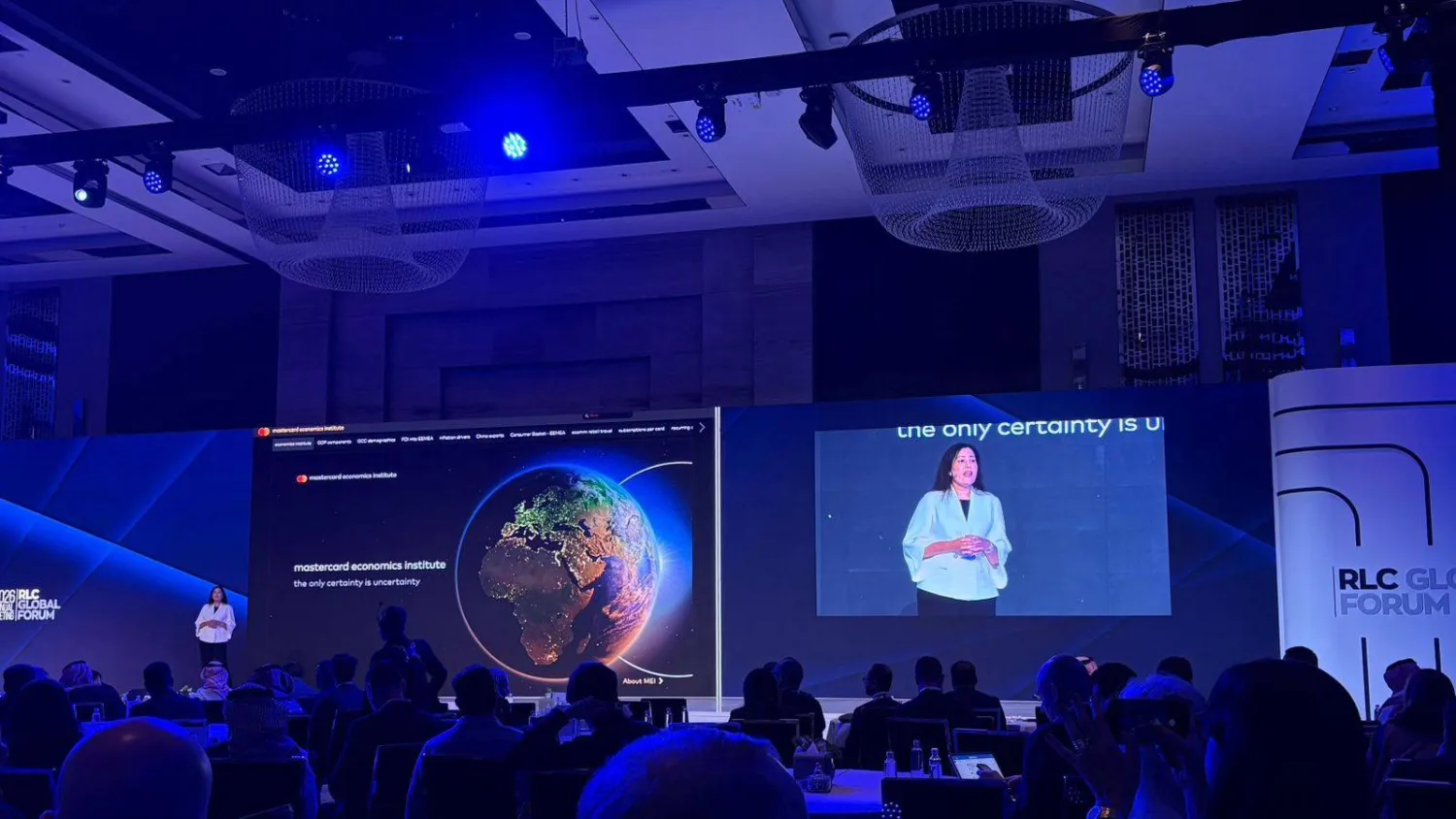

Khatija Haque, Chief Economist for Europe, the Middle East, and Africa at the Mastercard Economics Institute has predicted that consumer spending in the GCC countries will grow by 5 percent in 2026.
She emphasized that this upward trajectory is driven by investment momentum, population growth, improved income, and the receding pressures of living costs that have recently strained global markets.
During her participation in the Retail Leaders Circle forum held in Riyadh, Haque touched on the profound demographic shifts in the region as one of the main drivers of demand. Saudi Arabia has recorded a population growth of about 12 percent since 2020, while the number in the UAE has increased by 22 percent. The Sultanate of Oman recorded a remarkable increase of 80 percent.
This population boom has in turn led to a steady increase in the number of new families, which has raised the basic level of local consumer spending and created huge expansion opportunities for the retail sector.
The latest data issued by the Saudi Central Bank (SAMA) showed a qualitative leap in the volume of consumer spending within the Kingdom during 2025, with total spending rising to 1569.9 billion riyals (equivalent to $418.6 billion). This figure represents a strong annual growth of 11 percent compared to 2024, in which spending recorded about 1418.4 billion riyals (about $378.2 billion).
Labor market
Regarding the labor market, she pointed out that the increased participation of women, especially in Saudi Arabia, has brought about a fundamental change in consumption patterns.
The emergence of the “dual-income family” model has strengthened overall purchasing power and directed the financial surplus towards luxury and recreational goods and services instead of being limited to necessities.
Foreign direct investment flows in the technology and renewable energy sectors have also contributed to attracting high-income competencies that tend to settle and spend in the region for the long term.
As for prices, data indicated that the Gulf countries succeeded in maintaining low inflation rates with an average of 2 percent, which gave consumers more financial space. The flow of Chinese goods at competitive prices, along with falling interest rates, helped reduce financing costs and support the purchasing power of individuals.
This shift was evident in the increased spending on travel, electronics, and fast-food sectors, in addition to the large leap in e-commerce, which is increasingly dependent on artificial intelligence technologies, according to Haque.
She added that local e-commerce in Saudi Arabia witnessed a significant leap, with its share rising from less than 10 percent in 2019 to about 30 percent during 2025 within the retail sector alone.
Haque concluded by referring to travel and luxury behaviors, as she revealed that Gulf shoppers still give priority to acquiring luxury products and global brands inside physical stores. As for foreign travel trips, clothing topped the list of purchases, especially in European markets, with a new trend towards exploring tourist destinations in Eastern Europe, Africa, and Asia, in an indicator of the diversity of consumer interests and the expansion of their spending map globally.