


Cash-strapped Lebanon Finds Itself Sitting on a Gold Mine, as Precious Metal Prices Surge

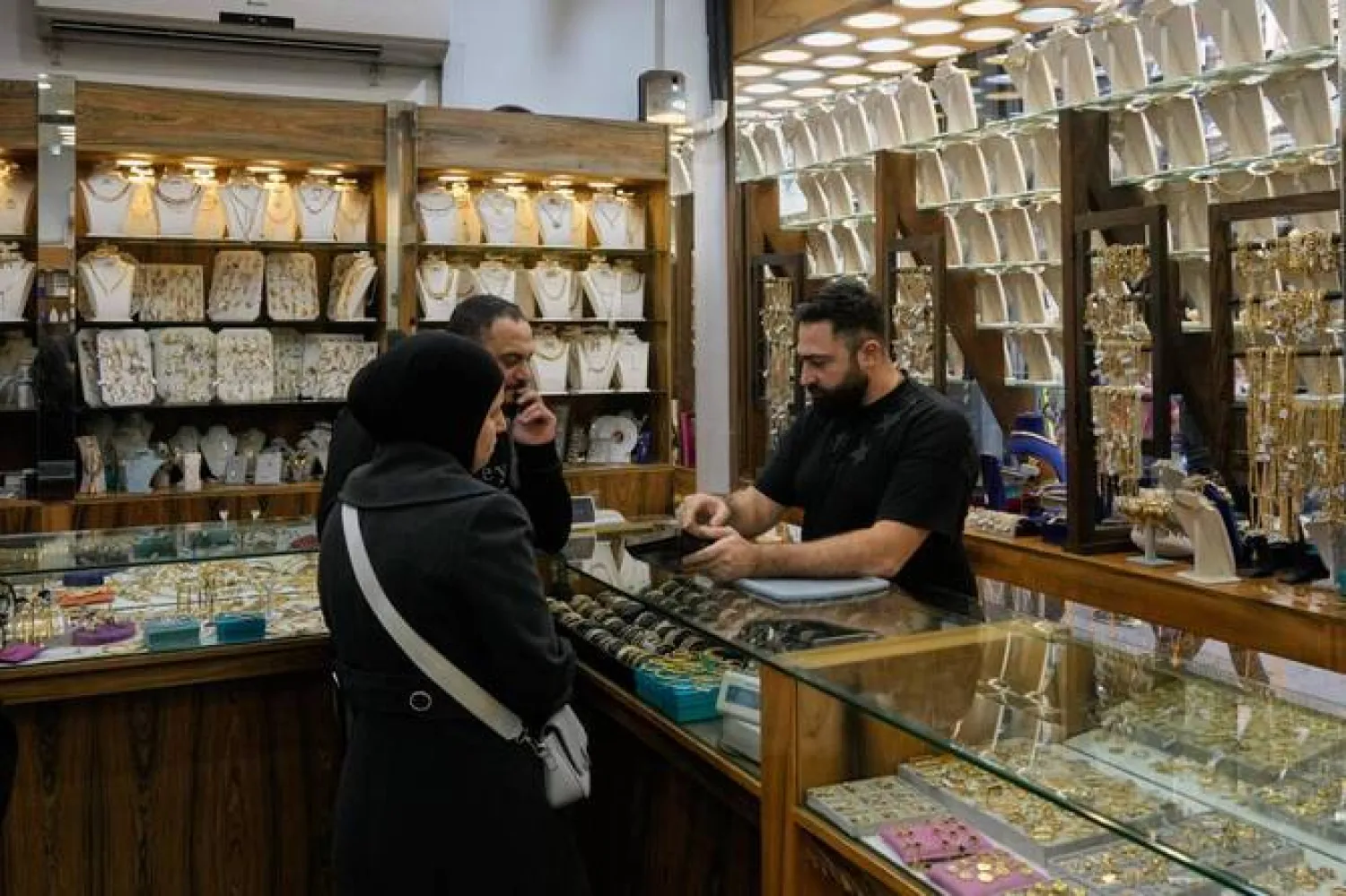
Meanwhile, many Lebanese are crowding marketplaces to buy gold and silver in hopes of recovering some of their losses. (AP)
TT

Cash-strapped Lebanon Finds Itself Sitting on a Gold Mine, as Precious Metal Prices Surge

Meanwhile, many Lebanese are crowding marketplaces to buy gold and silver in hopes of recovering some of their losses. (AP)

Tiny Lebanon sits on one of the largest gold reserves in the Middle East and its government is weighing whether it can use that stockpile to restore a crippled economy while its citizens are looking at gold as a way to protect their battered assets.

Lebanon’s economy hobbled into 2026 with ongoing inflation and state decay and no reforms to combat corruption in sight. Its banks collapsed in late 2019 in a crippling fiscal crisis that evaporated depositors’ savings and plunged about half its population of 6.5 million into poverty, after decades of rampant corruption, waste, and mismanagement. The country suffered some $70 billion in losses in its financial sector, further compounded by about $11 billion in the 2024 war between Israel and the Hezbollah militant group.

The price of gold recently soared to an all-time high of $5,354, before dropping back below $5,000, sparked by geopolitical instability and questions surrounding US President Donald Trump’s desire to lower interest rates that would ultimately devalue the dollar. Global central banks have been among the most avid buyers. Silver prices meanwhile have also surged due to industrial demand and the attractiveness of a much cheaper price than gold.

The central bank in Beirut has maintained a reserve of 286 tons of gold - some nine million ounces - since the 1960s. Only Saudi Arabia’s central bank holds more in the region.

The government is considering using some of its gold reserves to bail out the banks and pay back depositors who got wiped out. But doing so would not only go against historical precedent, but also violate a 1980s-era law. Meanwhile, those depositors would like to make up some of their losses by buying gold and silver, hoping that prices will bounce back from the downturn of recent days and hit new highs.

Lebanon’s untouchable asset

At one point the value of Lebanon’s gold reserves reached $50 billion — over double Lebanon’s own GDP. After years of economic crisis, and pushback against meaningful reforms to make the country viable again, some are again raising a sensitive question: Is it finally time to dig into this goldmine?

A senior banking official told The Associated Press that some banks are proposing to dig into the gold reserves to help pay back depositors whose money was lost during the country’s currency crisis, essentially partially bailing out the banks with the country’s only viable public asset. The officials spoke on condition of anonymity in line with regulations.

Lebanon banned the sale of its gold in 1986 in the middle of the country's civil war to protect state assets during a time of extreme instability. The gold reserves have never been touched -- not after 15-year civil war in 1990, and not after multiple wars with Israel.

Some economists have proposed using a small percentage of the gold, in tandem with wholesale reforms, to fix Lebanon’s ailing electricity sector or to breathe life back into the country’s devastated education and healthcare system for the public good.

Parliament would have to vote to allow the use of the gold reserves in any capacity. It’s a largely unpopular move that is not expected to be made anytime soon, especially months before general elections. When gold was brought up in a session last week, Speaker Nabih Berri quickly interjected to shut down the conversation. “Not feasible,” he said sternly.

A draft fiscal gap law that offers a framework of returning some depositors’ losses is languishing in parliament amid a debate over who would absorb the losses: Lebanon’s battered banks, largely reluctant to hold themselves accountable, or an indebted and wasteful state.

Most Lebanese distrust the authorities, who for years have dodged implementing meaningful reforms to fight corruption, reduce waste, and improve public services. Given that track record, many say the gold should remain untouched for future generations.

Softening the financial blow

While authorities debate the future of the country’s gold, many Lebanese depositors who lost most of their savings in the banks are now turning to gold and silver to own something more tangible while hoping it might even make up for some of their losses.

Crowds of people were lined up outside of Lebanon’s key metals trader on the northern outskirts of Beirut on a recent day, desperate to get inside and buy gold and silver coins, medallions, and bars.

They no longer trust the banks and are trying to get by in the middle of a messy cash economy beset with uncontrollable inflation and no meaningful reforms on the horizon.

“For those making up for losses, gold is not a safe haven — it’s the only haven,” said Chris Boghos, the managing director of Boghos SAL Precious Metals. Business is booming, as customers are now paying in advance to get their metal months later due to high demand.

Lebanon has had a troubled history in a volatile region, with numerous conflicts and economic shocks, and little trust that the structural issues will change.

“There has always been this propensity for the Lebanese people to go buy up gold in order to hedge against possible inflation, because this is a country that has seen multiple episodes of hyperinflation during its history,” said Sami Zoughaib, an economist at Beirut-based think tank The Policy Initiative.

Zoughaib says it’s an easy shift as well, given the long-tradition in the region of a groom or his family giving gold jewelry to the bride ahead of marriage as her own wealth, even among lower-income families. That tradition still largely continues even as many women have entered the workforce.

Outside one of Beirut’s gold markets Alia Shehade strolls along some of the storefronts. She says as a woman, her gold jewelry collection has made her feel safe in the middle of the financial crisis, referring to an Arabic saying that translates to “an adornment and treasure.”

“If a woman is in a tough situation ... she can sell her gold. And when gold prices go up, then she’s the winner,” she said. But she refuses to sell any of hers.

When looking at the reluctancy to sell gold among both the citizens and the authorities, Zoughaib said, “I think this just tells us just how important that gold is in the psychology of people."

"They are not even able to imagine a use case for it beyond being a hedge,” he said.


Gold Set for Weekly Drop as Oil Price Surge Weighs on Rate-cut Hopes

FILE PHOTO: A goldsmith weighs gold jewelry inside a showroom in Ahmedabad, India, July 31, 2025. REUTERS/Amit Dave/File Photo
TT

Gold Set for Weekly Drop as Oil Price Surge Weighs on Rate-cut Hopes

FILE PHOTO: A goldsmith weighs gold jewelry inside a showroom in Ahmedabad, India, July 31, 2025. REUTERS/Amit Dave/File Photo

Gold prices were on track for a second consecutive weekly drop, despite edging up on Friday, as surging energy prices due to the Middle East war dimmed prospects for near-term US interest rate cuts.

Spot gold was up 0.3% at $5,095.55 per ounce, as of 0633 GMT on Friday. US gold futures for April delivery fell 0.1% to $5,100.20.

The US 10-year Treasury yields eased, increasing the appeal of the non-yielding bullion. Bullion, however, has ‌lost more ‌than 1% so far this week. Since the war ‌started ⁠on February 28, ⁠it has dropped over 3% so far.

Fears of inflation and questions about the Federal Reserve's ability to cut interest rates if high oil prices persist are somewhat counteracting gold's appeal, said Tim Waterer, KCM Trade chief market analyst.

"Given the ongoing uncertainty about the duration and scope of the conflict in the Middle East, I expect gold to remain on the ⁠radar for investors as a safety play." Heightening geopolitical ‌tensions, Iran's Supreme Leader Mojtaba Khamenei said ‌on Thursday that Tehran will keep the strategic Strait of Hormuz closed as ‌leverage against the US and Israel, which has stoked concerns about ‌global energy supply and risk assets.

Oil prices rose above $100 a barrel, as attacks on oil tankers in the Gulf and warnings from Iran shattered prospects of quick de-escalation in the Middle East conflict. As oil prices surged, US President Donald ‌Trump again demanded Fed Chair Jerome Powell cut interest rates.

Traders, however, expect the Fed to keep rates ⁠steady in the current ⁠3.5%-3.75% range at the end of its two-day meeting on March 18, according to CME Group's FedWatch tool. While recent inflation data suggest price growth is under control, the war and the resulting spike in crude prices have yet to filter through the data.

Investors are awaiting the release of the delayed January Personal Consumption Expenditures Index, expected on Friday. Gold discounts in India widened this week to their deepest point in nearly a decade as demand stayed subdued and some traders steered clear of paying import duties, while the escalating Middle East war boosted safe-haven demand in China.

Spot silver was down 1% at $82.91 per ounce. Spot platinum lost 1% to $2,111.45 and palladium fell 1% to $1,603.


Iran War and Rising Fuel Costs Could Boost Panama Canal Traffic, Administrator Says

A cargo ship sails under Las Americas bridge through the Panama Canal, in Panama City, Thursday, March 12, 2026. (AP)
TT

Iran War and Rising Fuel Costs Could Boost Panama Canal Traffic, Administrator Says

A cargo ship sails under Las Americas bridge through the Panama Canal, in Panama City, Thursday, March 12, 2026. (AP)

Panama Canal Administrator Ricaurte Vásquez said Thursday that the conflict in the Middle East and rising fuel costs could ultimately benefit the interoceanic waterway as global shippers adjust routes.

In an interview with The Associated Press, Vásquez said that higher energy, fuel and navigation costs could make the Panama Canal a more attractive option for commercial traffic.

“When costs increase, in general when the price of marine fuel rises, the Panama Canal becomes a more attractive route,” Vásquez said.

Oil prices have risen amid the war in the Middle East, which has led to the temporary closure of the Strait of Hormuz by Iran in response to US and Israeli attacks. About one-fifth of the world’s oil passes through the waterway at the mouth of the Gulf.

If higher energy costs persist, routing cargo through Panama can cut voyages by between three and 15 days, depending on the route, while reducing fuel consumption, he said.

Vásquez said higher fuel costs are expected to affect container ships, bulk carriers and tankers transporting liquefied natural gas. If Middle Eastern supplies are disrupted, shipments may be replaced by other sources, including the United States, which could redirect some LNG cargo from Europe to Asia via Panama.

Gerardo Bósquez, an executive with the Panama Maritime Chamber, said a prolonged conflict could reshape global trade routes, with gas transport among the segments likely to benefit.

Vásquez cautioned that any changes will not be immediate and will depend on how long cargo operators expect the conflict and instability in the Gulf last.


ONS Data: UK Economy Lost Steam Unexpectedly at Start of 2026

FILE PHOTO: A direction sign is seen near the Bank of England building in London, Britain, February 3, 2025.  REUTERS/Toby Melville//File Photo
FILE PHOTO: A direction sign is seen near the Bank of England building in London, Britain, February 3, 2025. REUTERS/Toby Melville//File Photo
TT

ONS Data: UK Economy Lost Steam Unexpectedly at Start of 2026

FILE PHOTO: A direction sign is seen near the Bank of England building in London, Britain, February 3, 2025.  REUTERS/Toby Melville//File Photo
FILE PHOTO: A direction sign is seen near the Bank of England building in London, Britain, February 3, 2025. REUTERS/Toby Melville//File Photo

Britain's economy stagnated unexpectedly in January and expanded weakly in preceding months, according to official data on Friday that showed only tepid growth during the lead-up to the US-Israeli war in Iran.

The figures mean British gross domestic product has been essentially flat since June, ending January at the same level as six months earlier.

GDP rose during the three months to January by 0.2%, the Office for National Statistics ⁠said, against expectations ⁠in a Reuters poll of economists for a 0.3% increase.

The flat reading for January alone also dashed the median prediction for a 0.2% month-on-month increase.

Sterling slipped against the US dollar on the back of the figures, which showed no ⁠growth in the dominant services sector in January, against modest upticks in manufacturing and construction output.

Last month, the Bank of England said it expected the economy to grow 0.3% in the first quarter as a whole and 0.9% over 2026 as a whole - although that was before the conflict in Iran kicked off, prompting a surge in oil prices.

Earlier this week, finance minister Rachel Reeves ⁠said ⁠it was too soon to say how soaring energy prices would affect Britain's economy.

But investors see it as more exposed than other Western European economies due to its weak public finances, reliance on natural gas for electricity generation, and already high rates of inflation.

Financial markets no longer believe the Bank of England is likely to cut interest rates this year, and investors will be watching the central bank's communications carefully at next Thursday's interest rate announcement.
