


Iran War to Weigh More on Indian Growth than Inflation, Keeping Interest Rates Low

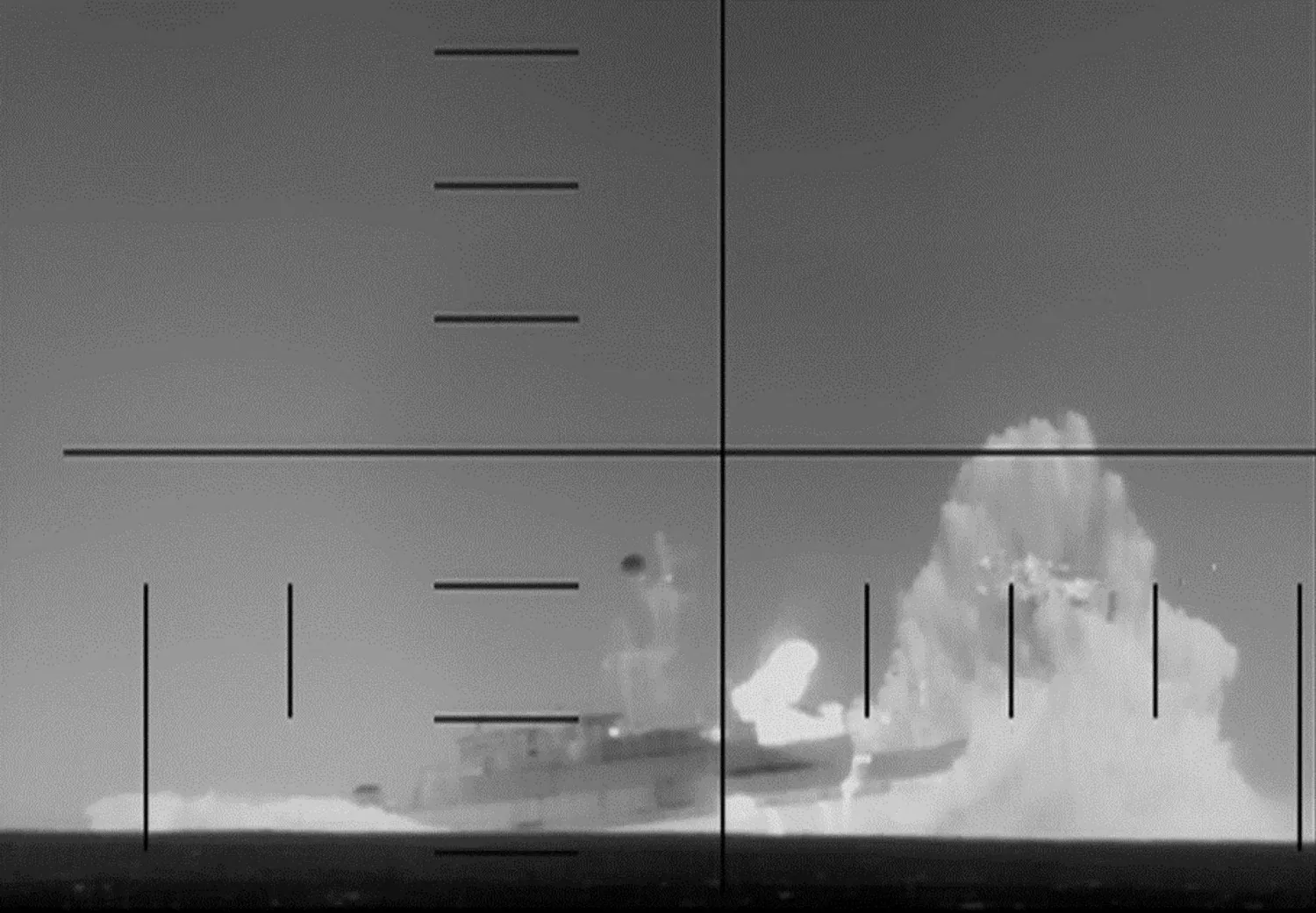
This frame grab from a video released by the US Department of Defense on March 4, 2026, shows what the Department of Defense says is periscope footage of a US Navy submarine firing on and sinking an Iranian warship in the Indian Ocean. (Photo by US Department of Defense / AFP)
TT

Iran War to Weigh More on Indian Growth than Inflation, Keeping Interest Rates Low

This frame grab from a video released by the US Department of Defense on March 4, 2026, shows what the Department of Defense says is periscope footage of a US Navy submarine firing on and sinking an Iranian warship in the Indian Ocean. (Photo by US Department of Defense / AFP)

The US and Israel's attack on Iran is expected to ‌weigh more on India's economic growth than its inflation, which will encourage the Reserve Bank of India to keep interest rates low, three sources familiar with policymakers' thinking and analysts said.

The conflict, which has rippled out across much of the Middle East, has pushed up oil prices by about 15%, disrupted gas flows from the region and triggered selloffs in Indian equity, debt and currency markets, with the rupee hitting a record low and bond yields rising due to concerns about India's current account deficit and the risk of higher inflation.

Despite a weaker rupee and higher crude prices, the central bank is unlikely to take a hawkish turn, all three sources familiar with policy deliberations said.

Current assessments could change, one of the sources cautioned, in case of extreme developments in the Middle East.

The thinking of policymakers appears to have diverged from the market reaction.

Interest rates have risen in emerging and global markets since the Gulf conflict broke out. Traders in India's swap markets have added to bets on at least one rate increase over the next 12 months.

"I don't feel the market has sufficiently priced the risk from oil prices rising significantly and there could be room for swap rates to move even higher ‌if Brent oil ‌holds above $80 per barrel over the next couple of weeks," said Ritesh Bhusari, joint general manager for ‌treasury at ⁠South Indian Bank.

The ⁠RBI's rate-setting panel, which meets for its next policy review in about a month, paused rate cuts at its last meeting in February after reducing the policy repo rate by 125 basis points in 2025.

The sources declined to be identified as they are not authorized to speak to the media. An email sent to the RBI on Wednesday seeking comment was not answered.

Conflict in the Middle East has muddied the picture for central bank policy projections globally. Traders have pushed back wagers on rate cuts by the Federal Reserve while adding to bets on a hike by the European Central Bank.

A rise in oil prices above $100 per barrel or a faster-than-expected pass-through of costs could run the risk of turning global monetary policy more hawkish, according to analysts at Goldman ⁠Sachs.

QUICKER HIT TO GROWTH

An immediate risk to India's growth comes from disruptions to gas supplies.

On Tuesday, Indian ‌companies reduced natural gas supplies to industries in anticipation of tighter flows from the Middle East, ‌a move that could hurt output in sectors including fertilizers and power.

If gas supply disruptions persist for more than four weeks, they could hurt economic growth ‌for at least a quarter, one of the sources said.

If oil prices remained above $90 to $95 a barrel for three to four quarters in ‌a row, the source said, India's expected 7%-plus economic growth in the next financial year would take a more sustained hit.

Under that scenario, growth could slow to about 6.5% from the current expectation for more than 7%, the person added.

Cuts in gas supplies to fertilizer and power companies could reduce output in those sectors in the near term, weighing on growth with a lag in the first and second quarters of the next fiscal year, a second source said.

“If oil prices ‌remain high for an extended period, the ‘Goldilocks phase’ for the Indian economy will end,” the person added.

INFLATION BUFFERS

Inflation, meanwhile, is likely to rise more modestly in the near term.

Retail fuel prices in India ⁠have not moved in tandem with global ⁠crude prices, as fuel retailers often hold prices steady. The government can also cut excise duties to shield consumers if global prices remain elevated, the first source said.

“There is plenty of room on the inflation front,” the third source said. “If inflation were closer to 5%, there might have been a case for a pre-emptive hike, but it is currently near the lower end of the RBI’s tolerance band.”

India's retail inflation was at 2.75% in January, closer to the lower end of the RBI's 2% to 6% tolerance range.

A 10% to 20% rise in global oil prices could lift Indian inflation by 25 to 50 basis points if fully passed through to consumers, according to a Deutsche Bank estimate. With a partial pass-through, consumer price inflation could rise to the 4.5% to 5% range, it said.

“If the fiscal authorities keep retail pump prices unchanged, the RBI would be less worried about near-term inflation risks and focus more on downside growth risks,” Citigroup chief India economist Samiran Chakraborty said in a note this week.

“This could perversely make the policy stance less hawkish than what the immediate market reaction to higher oil prices might suggest,” he said.

However, the central bank may also be constrained from delivering more rate cuts if oil prices remain elevated.

“While the RBI is unlikely to hike rates, if inflation were to rise towards 5% due to higher oil prices, it would also be unlikely to cut rates to support growth in such a scenario,” Deutsche Bank chief India economist Kaushik Das said.



Lagarde: ECB Has No Pre-set Response to Mideast Tensions

European Central Bank (ECB) President Christine Lagarde delivers the 2026 Annual Global Risk Lecture in honor of Robert Mundell, at Johns Hopkins University, in Bologna, Italy, March 5, 2026. REUTERS/Michele Lapini
TT

Lagarde: ECB Has No Pre-set Response to Mideast Tensions

European Central Bank (ECB) President Christine Lagarde delivers the 2026 Annual Global Risk Lecture in honor of Robert Mundell, at Johns Hopkins University, in Bologna, Italy, March 5, 2026. REUTERS/Michele Lapini

The European Central Bank has no pre-set stance as regards to geopolitical tensions from the conflict in the Middle East and will decide monetary policy on a "meeting-by-meeting" basis, President Christine Lagarde said on Thursday.

The ECB will take its decisions "in view of all the ⁠data that we can ⁠harness, and that we can analyze, and that we can scrutinize with sufficient confidence," Lagarde said in a Q&A session at the Johns Hopkins ⁠University in Bologna, Italy.

There is no "preset pace for our monetary policy stance. And I think that if you bring these two elements together, it places the ECB and the euro system in a good position to monitor very carefully and to try to understand ⁠what ⁠the consequences of the current shocks will be in the future," she added.

The US-Israeli war on Iran, which has spread to other countries in the Gulf, is threatening to drive up inflation and hit sluggish euro zone growth by making energy more expensive and disrupting supply chains.


Rising Fuel Prices Lash Airline Sector as Iran Conflict Widens

An Emirates Airbus A380 aircraft that has remained parked at the airport after the flight was cancelled, amid the U.S.-Israel conflict with Iran, at Incheon International Airport in Incheon, South Korea, March 5, 2026. REUTERS/Kim Hong-Ji
TT

Rising Fuel Prices Lash Airline Sector as Iran Conflict Widens

An Emirates Airbus A380 aircraft that has remained parked at the airport after the flight was cancelled, amid the U.S.-Israel conflict with Iran, at Incheon International Airport in Incheon, South Korea, March 5, 2026. REUTERS/Kim Hong-Ji

Airline shares seesawed on Thursday, as some regained ground on more flights taking off from the Middle East while others dipped on spiking oil prices after US-Israeli strikes on Iran sparked major disruption across the global aviation industry.

Governments have scrambled to arrange flights out of the Middle East for tens of thousands of citizens stranded by the intensifying conflict, which has closed most of the region's airspace due to the risk of missiles hitting planes.

Takeoffs from Dubai International Airport more than doubled on Wednesday, the latest data from Flightradar24 show, as activity slowly restarts at the world's busiest travel hub, which was brought to a near standstill amid the conflict.

Traffic remains far below normal levels, with global aviation disruption likely to take some time to normalize as the conflict shows little sign of easing. Air cargo has also been hit, disrupting the movement of perishables and aircraft parts.

"The past few days have been unprecedented," Dubai Airports CEO Paul Griffiths said on Thursday on LinkedIn in his first public remarks since the airstrikes began, adding that teams were pulling together and "navigating with confidence".

In a sign of the ongoing threat to airlines, Azerbaijan - part of one key flight corridor from Asia to Europe - temporarily closed part of its airspace near Iran after a drone strike in the southern Nakhchivan area near the Iranian border.

Flights appeared to still be crossing the country further to the north, according to realtime tracking from Flightradar 24.

The war has pummelled airline stocks since initial strikes last weekend on fears a protracted conflict could block key routes and raise fuel costs. Carriers have varying levels of Middle East exposure and different hedging strategies.

Some stocks rebounded on Thursday. Cathay Pacific Airways , Qantas Airways and Korean Air Lines rose. Japan Airlines edged down 1%.

Major Chinese carriers such as Air China, , China Eastern Airlines and China Southern Airlines fell between 1% and 4% in both Hong Kong and Shanghai.

Gary Ng, a senior economist at Natixis, said Asian airlines were sensitive to Iran's situation given the impact on routes, revenue and costs.

In Europe, Air France KLM was slightly higher, but Lufthansa, British Airways-owned IAG and budget carrier Ryanair dipped. Wizz Air, which flagged a $58 million hit to profits from the conflict, tumbled 10%.

Wizz Air's CEO told Reuters the financial hit should be limited to its current financial year that ends this month and said that the firm was shifting its capacity towards Europe.

REPATRIATION FLIGHTS RAMP UP

Emirates and Etihad are now operating limited services from Dubai and Abu Dhabi through safe air corridors. An Emirates spokesperson said more than 100 flights should depart from Dubai with passengers and cargo on Thursday and Friday.

Qatar Airways said it would run limited relief flights from Thursday for stranded passengers, departing from Muscat in Oman to six European destinations including London, Berlin and Rome as well as from Riyadh to Frankfurt.

Governments from the US to Canada and across Europe have arranged charter flights and helped secure seats on commercial services to repatriate citizens. More than 17,500 Americans have returned to the US since February 28.

A flight carrying Kenyans and others fleeing the UAE arrived in Nairobi on Thursday, including 13 children and their teachers who had been on a school trip to the Gulf.

"We were stuck there for five days ... it was scary, every day we would get alerts and the children would just lose it," school director Olive Tindika told Reuters, saying the children arrived in tears at teachers' hotel rooms whenever explosions lit up the sky.

"It was a very, very traumatising experience."

AIRLINE SECTOR OUTLOOK TIED TO IRAN CONFLICT

Jet fuel prices have soared globally since the strikes on Iran, hitting an all-time high in Singapore on concerns over supply disruption, S&P Global Platts said on Thursday.

Many Asian airline shares have rebounded or pared double-digit declines in recent days, though analysts said the gains may not last.

"I consider this rebound to be primarily short-term in nature," said Kenny Ng, a securities strategist at China Everbright Securities International. "Its sustainability will still depend on the ongoing situation in the Iranian conflict."

Restrictions on airspace have forced airlines to reroute flights, load extra fuel or make additional refuelling stops to guard against sudden diversions or longer flights on safer routes. Prices on some key global routes have risen sharply.

Marooned tourists and some expatriates have also tried to find their own way out of the Middle East through Saudi Arabia or Oman, where airspace remains open.


Gold Rises on Safe-haven Bid from Iran War

An employee displays gold bars at a store of the Korea Gold Exchange in Seoul (AFP)
TT

Gold Rises on Safe-haven Bid from Iran War

An employee displays gold bars at a store of the Korea Gold Exchange in Seoul (AFP)

Gold prices rose on Thursday, lifted by safe-haven demand amid an escalating war in the Middle East, though a stronger dollar and concerns around the US Federal Reserve's monetary policy capped gains.

Spot gold was up 0.4% at $5,156.11 per ounce as of 1030 GMT, while US gold futures for April delivery were up 0.7% at $5,168.20.

Gold, which hit a record $5,594.82 in January, initially jumped above $5,400 on Monday as the launch of the US-Israeli air war against Iran sparked safe-haven demand, but pulled back from those highs as the dollar also benefited from a flight to safety, Reuters reported.

Israel launched another large wave of strikes on Tehran on Thursday, targeting what it said was infrastructure belonging to the Iranian authorities, after Iranian missiles sent millions of Israelis rushing into bomb shelters.

"On the one hand, there may be greater safe-haven demand for gold given the ongoing conflict in the Middle East," said Hamad Hussain, a climate and commodities economist at Capital Economics.

"On the other hand, the risk of a prolonged period of higher energy prices that takes rate cuts off the table, and adds to the chance of rate hikes, could be capping further gains."

The US dollar rose about 0.2% after briefly retreating from three-month highs, as the fallout from the war roiled global markets and kept sentiment fragile.

Concerns about energy supply continued to drive up oil prices and stoke inflation fears.

Gold is considered a hedge against inflation in the long run, but also tends to thrive when interest rates are lower, as it is a non-yielding asset.

President Donald Trump on Wednesday officially nominated former Federal Reserve Governor Kevin Warsh to be the US central bank's next chair.

US economic activity grew slightly, prices continued to increase and employment levels were stable in recent weeks, the Federal Reserve said on Wednesday in its latest Beige Book report.

Markets expect the Fed to keep rates steady at its next policy meeting on March 18, according to CME Group's FedWatch tool.

Investors are looking out for the weekly US jobless claims data, due later today, and the US employment report for February on Friday for further clues on monetary policy this year.

Spot silver rose 0.8% to $84.1 per ounce. Platinum gained nearly 1% to $2,168.05, while palladium lost 0.9% to $1,659.35.