
Saudi Arabia Declares 2026 ‘Year of Artificial Intelligence’ to Boost Data Economy

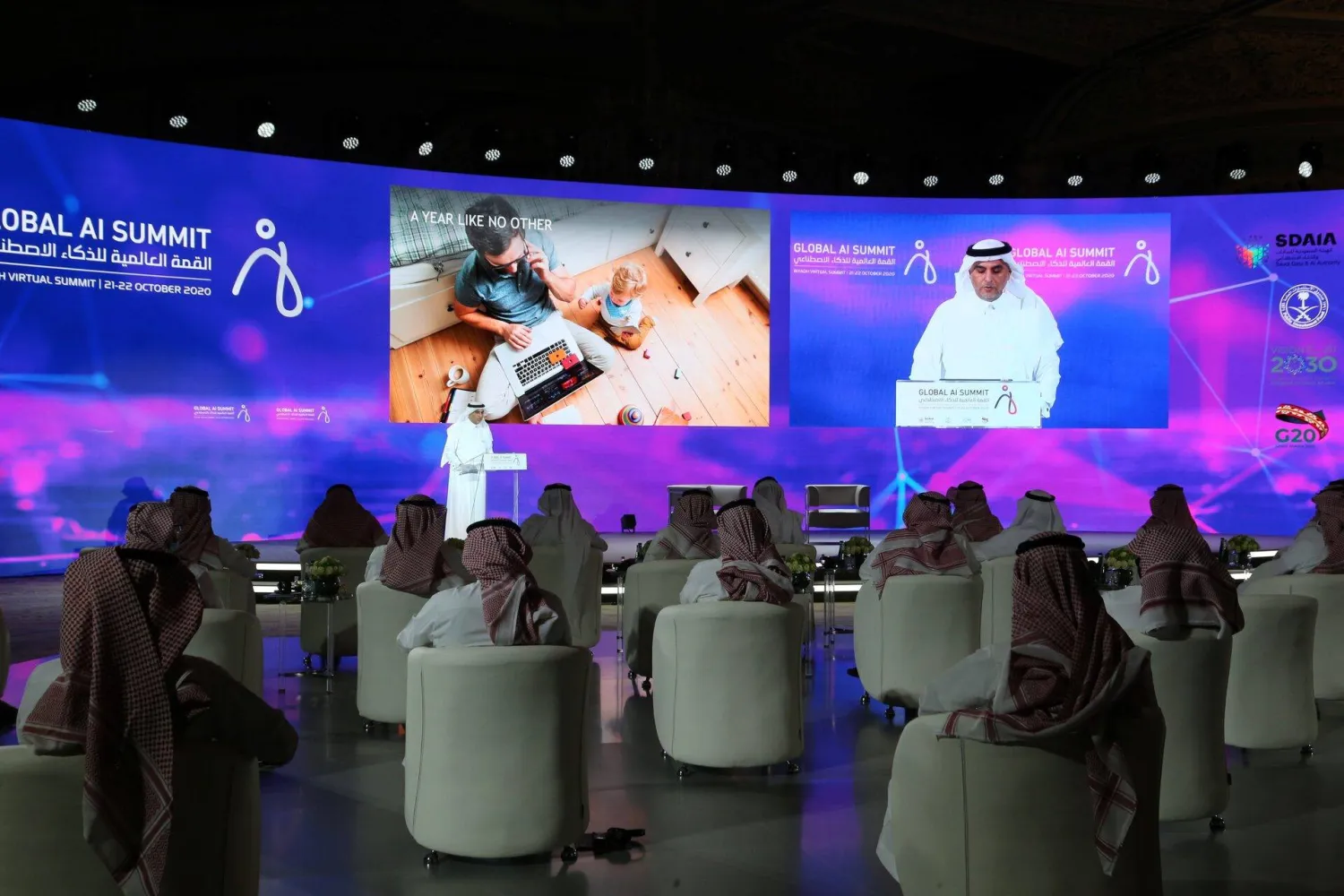
Abdullah Al-Ghamdi, President of Saudi Data and Al Authority, speaks during the Global Al Summit in Riyadh, Saudi Arabia October 21, 2020. REUTERS/Ahmed Yosri  
TT

Saudi Arabia Declares 2026 ‘Year of Artificial Intelligence’ to Boost Data Economy

Abdullah Al-Ghamdi, President of Saudi Data and Al Authority, speaks during the Global Al Summit in Riyadh, Saudi Arabia October 21, 2020. REUTERS/Ahmed Yosri  

As the global race toward a digital economy accelerates and the world enters a new era driven by algorithms, Saudi Arabia is positioning itself as a key player in the future of advanced technologies.

The Saudi Cabinet has declared 2026 the “Year of Artificial Intelligence,” a decision that reflects a strategic direction placing AI at the center of the Kingdom’s development policies in the coming years.

“This step embodies the vision of Crown Prince and Prime Minister Mohammed bin Salman, aimed at strengthening the Kingdom’s global standing in advanced technologies and creating broad national momentum around their role in shaping a smarter and more sustainable future,” said Abdullah Al-Ghamdi, president of the Saudi Data and Artificial Intelligence Authority (SDAIA), in a statement issued after the decision.

Al-Ghamdi added that the “Year of Artificial Intelligence” reflects Saudi Arabia’s scientific, cultural and humanitarian commitment to deploying these technologies in service of humanity and making them an effective tool for improving people’s lives worldwide.

He said the nationwide celebration of the year highlights the kingdom’s position as an international hub for advanced technologies and an influential actor in shaping global AI policy.

According to Al-Ghamdi, artificial intelligence has become one of the most powerful drivers of the global economy. Advanced economies increasingly rely on it to boost growth and improve quality of life by transforming vital sectors such as healthcare, education, transport, energy and security, while accelerating innovation and strengthening competitiveness.

Building a National AI Ecosystem

In recent years, the Saudi Data and Artificial Intelligence Authority, established by royal decree in 2019 with direct support from Crown Prince Mohammed bin Salman, has worked to build an integrated national ecosystem for data and artificial intelligence.

This effort has included expanding digital infrastructure, launching the National Strategy for Data and Artificial Intelligence, developing regulatory and governance frameworks, and introducing national platforms and programs to encourage the adoption of AI technologies across multiple sectors.

The authority has also hosted major international events in the field, most notably the Global AI Summit, which is preparing to hold its fourth edition in September under the patronage of the Crown Prince. The summit brings together leading experts, policymakers, and major technology companies from around the world.

These initiatives have helped Saudi Arabia achieve advanced rankings in several global indices related to data and artificial intelligence. They have also expanded the use of smart technologies across government, private and nonprofit sectors, improving service efficiency, boosting innovation, and stimulating the digital economy.

As part of efforts to build national capabilities, SDAIA trained more than one million Saudi citizens in artificial intelligence technologies within a single year through the SMAI initiative, reflecting the kingdom’s strategy of preparing a generation capable of working with emerging technologies and leading the country’s digital transformation.

Saudi Arabia’s AI sector is also experiencing rapid investment growth. Government spending on artificial intelligence and emerging technologies rose 56.25 percent in 2024 compared with 2023, according to the Saudi Press Agency.

Meanwhile, Saudi companies operating in the AI sector secured $9.1 billion in funding last year through 70 investment deals, while the number of companies working in the data and artificial intelligence sector has reached 664.

Expanding Technological Infrastructure

At the same time, Saudi Arabia has significantly expanded its technological infrastructure.

Data center capacity increased 42.4 percent between 2023 and 2024, alongside the launch of advanced projects such as the high-performance supercomputer Shaheen 3 and the development of global-scale data centers designed to support artificial intelligence applications.

In early 2026, the Kingdom also inaugurated Hexagon, the world’s largest government data center, with a capacity of 480 megawatts. Saudi Arabia now hosts nine cloud regions, four of which are under construction by global cloud service providers.

In addition, more than 430 government systems have been integrated into the National Data Lake, strengthening the country’s data infrastructure.

Saudi Arabia’s efforts extend beyond the domestic arena. The Kingdom has supported international initiatives promoting the responsible use of artificial intelligence in line with the United Nations Sustainable Development Goals.

Among the most notable initiatives is the establishment in Riyadh of the International Center for Artificial Intelligence Research and Ethics (ICAIRE) under the auspices of UNESCO.

As part of strengthening the national AI ecosystem, Crown Prince Mohammed bin Salman announced in May 2025 the launch of Humain, a company owned by the Public Investment Fund, Saudi Arabia’s sovereign wealth fund. The firm aims to develop and manage artificial intelligence solutions and invest across the sector.

The company is working on advanced AI models, including one of the most prominent large language models in Arabic. It is also developing next-generation data centers and cloud computing infrastructure, strengthening local technological capabilities and opening new opportunities for the digital economy both regionally and globally.

The Public Investment Fund and its portfolio companies are also supporting the AI ecosystem through investments and international partnerships, leveraging Saudi Arabia’s strategic geographic position between three continents, which facilitates connections between global data networks and enables rapid processing of vast data volumes.

The Kingdom’s rapidly growing economy and large youth population interested in emerging technologies are also contributing to capacity building, research and innovation in the field.


Saudi Arabia Named Top 10 Global Mining Investment Destination

A view of the skyline of the Saudi capital, Riyadh (SPA)
TT

Saudi Arabia Named Top 10 Global Mining Investment Destination

A view of the skyline of the Saudi capital, Riyadh (SPA)

Saudi Arabia has been named among the world’s top ten mining investment destinations in the Fraser Institute’s Annual Survey of Mining Companies 2025, one of the most respected global benchmarks for assessing mining investment environments and a key reference for international investors.

The report shows that the Kingdom’s mining sector has capped an unprecedented rise on the main ‘Investment Attractiveness Index,’ climbing 13 positions and improving its score by 14.3% within a single year, becoming the only Asian jurisdiction ranked among the world’s top ten mining destinations in 2025, SPA reported.

This milestone reflects a remarkable transformation of the Kingdom’s mining sector, rising from 104th place in 2013 to 23rd in 2024, and now firmly establishing Saudi Arabia as a top ten global destination for mining investment.

This global recognition is based on strong gains in the two fundamental sub-indices. In the ‘Policy Perception Index,’ Saudi Arabia jumped from 20th place last year to 4th globally, scoring 94.99. In the ‘Mineral Potential Index,’ it grew from 24th to 16th, with a score of 73.33. These results reinforce the Kingdom’s message that its investment competitiveness rests on two interlinked criteria: promising geological resources and a modern regulatory framework supported by clear and efficient governance.

Across the detailed policy criteria, Saudi Arabia achieved exceptional results, ranking first globally in three key categories. The Kingdom ranked first globally in ‘Uncertainty Concerning the Administration & Regulations,’ reflecting clarity of mining regulations and executive administration, It recorded a remarkable 558% improvement, driven by the implementation of the new Mining Investment Law and its legal system, the establishment of ESNAD (Saudi Mining Services Company) to strengthen oversight and compliance, and the automation of licensing procedures through the Ta’adeen digital platform.

Saudi Arabia also ranked first globally in ‘Regulatory Duplication and Inconsistencies,’ reflecting success in coordinated efforts across government entities. In addition, the Kingdom ranked first globally in the ‘Taxation Regime,’ strengthening investor confidence and improving the financial competitiveness of mining projects.

In related indicators, Saudi Arabia ranked second globally in ‘Uncertainty Concerning Environmental Regulations’ and third globally in ‘Uncertainty Concerning Disputed Land Claims.’ These results reflect the strength, clarity, and stability of the Kingdom’s environmental regulatory framework, as well as the effectiveness of policies governing land claims and community development. The rankings highlight the impact of coordinated efforts with the Ministry of Environment, Water and Agriculture, alongside structured approaches to managing community engagement requirements around mining operations.

The Kingdom also recorded a significant improvement in the ‘Infrastructure indicator,’ which includes access to roads and energy availability. This progress reflects ongoing efforts to enhance infrastructure, notably through the launch of the Mining Infrastructure Enablement Initiative at the fifth edition of the Future Minerals Forum, held in January.

These top rankings were accompanied by exceptional qualitative leaps, averaging over 100% in other critical criteria. The ‘Legal System’ criterion

improved by 211%, while the ‘Quality of Geological Database’ rose by 203% due to the inclusion of extensive geological survey data, establishing a more transparent and reliable investment environment.

Commenting on the achievement, Vice Minister of Industry and Mineral Resources for Mining Affairs Eng. Khalid bin Saleh Al-Mudaifer said the Kingdom’s entry into the global top ten reflects the depth of reforms implemented under Saudi Vision 2030 in the mining sector.

He noted that the ranking demonstrates the maturity and resilience of Saudi Arabia’s investment environment as the Kingdom positions itself to meet rising global demand for minerals.

Looking ahead, the vice minister added that the ministry will continue to strengthen the sector as a driver of industrial and economic growth by developing legislative and regulatory frameworks that enhance investor confidence and reinforce the Kingdom’s long-term competitiveness.

In addition, he said the Fraser Institute results provide independent international recognition of the rapid transformation underway in Saudi Arabia’s mining sector.

He further noted that ongoing efforts focus on improving the investor experience through greater transparency, faster licensing procedures, and reduced exploration risks, while strengthening supply chain localization and supporting the creation of high-quality employment opportunities.

These regulatory developments are translating into tangible investment outcomes. In 2025, Saudi Arabia issued 61 exploitation licenses for mine development, with investment valued at $11.73 billion (SAR44 billion), compared with 21 licenses in 2024, which represents an increase of 221%.

Active exploration companies increased from six in 2020 to 226 in 2024, representing more than 38‑fold growth. Meanwhile, the number of active exploration mining licenses reached 1,018 by 2025, compared with 500 licenses in 2020, reflecting a growth of approximately 104%.

Saudi Arabia’s Ministry of Industry and Mineral Resources continues to attract investment and facilitate the investor journey through competitive exploration licensing rounds. These rounds have seen unprecedented international interest from leading global mining companies and consortia, including Barrick Gold, Ivanhoe Electric, Shandong Gold, Hancock Prospecting, and Zijin Mining.

As part of these efforts, the ministry recently launched the 11th licensing round, opening competition for exploration licenses across eight mining sites in the regions of Riyadh, Hail, and Aseer, covering a total area of 1,878 km² and targeting deposits of gold, silver, copper, zinc, and iron ore.

To support early‑stage exploration and reduce financial risk, the report also highlighted the ‘Exploration Enablement Program’ as an effective tool for supporting exploration companies. The Kingdom has allocated over $182.67 million (SAR685 million) to the program for the period 2024–2030, targeting exploration licenses in their first five years and requiring participating companies to share geological data to accelerate knowledge exchange and improve the quality of investment decisions.

This advanced ranking and historic progress reflect Saudi Arabia’s continued success in advancing the objectives of Vision 2030: positioning mining as the third pillar of the national industrial base and strengthening the Kingdom’s role as a leading global investment destination and a trusted partner in securing future mineral supply chains.

The survey evaluated 68 mining jurisdictions worldwide, based on 256 responses from senior executives representing global mining companies.


Oil Jumps 7% as Iran Escalates Attacks on Gulf Shipping

09 March 2026, China, Hong Kong: Oil Storage Tanks at the SINOPEC Oil Terminal at Tsing Yi in Hong Kong. Photo: Vernon Yuen/Nexpher via ZUMA Press Wire/dpa
TT

Oil Jumps 7% as Iran Escalates Attacks on Gulf Shipping

09 March 2026, China, Hong Kong: Oil Storage Tanks at the SINOPEC Oil Terminal at Tsing Yi in Hong Kong. Photo: Vernon Yuen/Nexpher via ZUMA Press Wire/dpa

Oil prices rose sharply on Thursday as Iran stepped up attacks on oil and transport facilities across the Middle East, fuelling concerns of a prolonged conflict and potential disruptions to oil flows through the Strait of Hormuz.

Brent futures climbed $6.41, or 7%, to $98.45 a barrel by 1235 GMT, having hit $100 per barrel in earlier trading, while US West Texas Intermediate crude was up $5.98, or 6.85%, at $93.23.

Prices extended gains on Thursday, after US Energy Secretary Chris Wright told CNBC that the Navy cannot escort ships through the Strait of Hormuz now but it was "quite likely" that could happen by the end of the month. Brent hit $119.50 a barrel on Monday, its highest since mid-2022, then dropped after US President Donald Trump said the Iran war could be over soon. The war in the Middle East is causing the biggest oil-supply disruption in the history of global markets, the International Energy Agency said on Thursday, a day after approving the release of a record volume of 400 million barrels of oil from strategic stockpiles.

Middle East Gulf countries have cut total oil production by at least 10 million barrels per day - a volume equalling almost 10% of world demand, the agency said in its latest monthly oil market report, Reuters reported.

A detailed breakdown has not been provided yet, so there is some scepticism in the market that the full volume will actually be released, Energy Aspects analysts said, adding that a total of 400 million barrels of mostly crude and some products inventories is only equivalent to 25 days of the current disruption to flows.

Goldman Sachs forecast Brent crude prices would average $98 per barrel in March and April before declining to $71 by the fourth quarter, but warned that in an upside-risk scenario, where flows through the strait are disrupted for a month, the March and April average could surge to $110.

"The only way to see oil prices trade lower on a sustained basis is by getting oil flowing through the Strait of Hormuz," ING analysts said. "Failing to do so means that the market highs are still ahead of us."
Explosive-laden Iranian boats appear to have attacked two fuel tankers in Iraqi waters, setting them ablaze and killing one crew member on Wednesday after projectiles struck four vessels in Gulf waters, according to port, maritime security and risk firms.


IEA: World Faces Largest-ever Oil Supply Disruption on Middle East War

This photograph shows the entrance to the International Energy Agency (IEA) headquarters in Paris on March 11, 2026. (Photo by Ludovic MARIN / AFP)
TT

IEA: World Faces Largest-ever Oil Supply Disruption on Middle East War

This photograph shows the entrance to the International Energy Agency (IEA) headquarters in Paris on March 11, 2026. (Photo by Ludovic MARIN / AFP)

The war in the Middle East is creating the biggest oil supply disruption in history, the International Energy Agency said on Thursday, a day after it agreed to release a record volume from strategic stockpiles to offset shortages and a spike in prices.

Global supply is expected to drop by 8 million barrels per ⁠day in March, the ⁠IEA said in its latest monthly oil market report, due to the blocking of the Strait of Hormuz, a narrow channel along the Iranian coast, since the US and Israel began a campaign of airstrikes on Iran on February 28.

Middle East Gulf countries including Iraq, Qatar, Kuwait, the United Arab Emirates and ⁠Saudi Arabia have cut total oil production by at least 10 million bpd - a volume equal to almost 10% of world demand - as a result of the conflict, Reuters quoted the IEA as saying.

The agency added that, without a rapid restart of shipping flows, these losses were set to increase.

"Shut-in upstream production will take weeks and, in some cases, months to return to pre-crisis levels depending on the degree of field complexity and the timing for workers, equipment and resources to return to the region," the agency said.

The ⁠IEA, which ⁠advises industrialized countries, on Wednesday agreed to release a record 400 million barrels of oil from strategic stockpiles held by member nations to combat a spike in global crude prices since the start of the US-Israeli war on Iran, with the US contributing the bulk of the supply.

Oil prices rose on Thursday, as Iran stepped up attacks on oil and transport facilities across the Middle East, raising fears of a prolonged conflict and continued oil-flow disruptions through the Strait of Hormuz.

Brent crude, which hit $119.50 a barrel on Monday, its highest since mid-2022, was up more than 6% on Thursday at just below $98 a barrel.