Oil Hovers around $100, Stocks Mixed as Iran War Rages

An oil pump is pictured at an obsolete oilfield, with wind turbines in the background, in Sargentes de la Lora on March 13, 2026, near Burgos in northern Spain, where oil first flowed in Spain in 1964.  (Photo by CESAR MANSO / AFP)
An oil pump is pictured at an obsolete oilfield, with wind turbines in the background, in Sargentes de la Lora on March 13, 2026, near Burgos in northern Spain, where oil first flowed in Spain in 1964. (Photo by CESAR MANSO / AFP)
TT

Oil Hovers around $100, Stocks Mixed as Iran War Rages

An oil pump is pictured at an obsolete oilfield, with wind turbines in the background, in Sargentes de la Lora on March 13, 2026, near Burgos in northern Spain, where oil first flowed in Spain in 1964.  (Photo by CESAR MANSO / AFP)
An oil pump is pictured at an obsolete oilfield, with wind turbines in the background, in Sargentes de la Lora on March 13, 2026, near Burgos in northern Spain, where oil first flowed in Spain in 1964. (Photo by CESAR MANSO / AFP)

Oil prices hovered around $100 a barrel Monday and stocks fluctuated as the Iran war moved into a third week with both sides showing no sign of backing down and diplomats trying to ensure safe passage for tankers through the crucial Strait of Hormuz.

Crude shot up in the opening minutes after the US president said at the weekend that forces struck military targets on Kharg Island, a scrubby stretch of land in the Gulf that handles almost all of Iran's oil exports.

He also warned attacks could expand to energy infrastructure if the Iranian republic interferes with transit through Hormuz, which has been effectively closed since the US-Israel operations began on February 28.

Iran's Fars news agency reported soon after that no oil infrastructure was damaged in strikes.

Trump urged other countries to send warships to keep the waterway open but offered no specifics or commitments from the US side, saying he hoped China, France, Japan, South Korea and the UK would take part.

He later wrote Saturday in a Truth Social post: "The Countries of the World that receive Oil through the Hormuz Strait must take care of that passage, and we will help -- A LOT!

"This should have always been a team effort, and now it will be."

However, Japan said Monday it was "not at the moment considering issuing a maritime security operation", while Australia announced it would not send any navy ships to the region.

Trump said Tehran wanted a deal to end the fighting, but that he was not prepared to make one on current terms, without giving further details.

Iran's Foreign Minister Abbas Araghchi said his country was not interested in talks with Washington.

"We don't see any reason why we should talk with Americans, because we were talking with them when they decided to attack us," he told CBS's "Face The Nation" in an interview aired Sunday.

"There is no good experience talking with Americans," adding that "we never asked for a ceasefire, and we have never asked even for negotiation".

However, he did say he was ready to speak to countries "who want to talk to us about the safe passage of their vessels".

"I cannot mention any country in particular, but we have been approached by a number of countries" seeking such safe passage, he added.

Meanwhile, traders hoping for an early end to the conflict were left disappointed after Trump's top economics adviser Kevin Hassett said the Pentagon estimates it could take up to six weeks, though the operation was ahead of schedule.

Both main crude contracts advanced. Brent shot up around three percent to as high as $106.50 before paring the gains, while West Texas Intermediate sat around $99.

And with worries growing about a possible energy crisis that could hammer the global economy, equity markets remained under pressure.

Tokyo, Shanghai, Sydney, Seoul, Wellington, Manila and Jakarta were all down, though Hong Kong, Singapore and Taipei edged up.

"Equities may welcome any sign that Hormuz could be reopened, but with further strikes still being threatened and diplomacy still patchy, conviction is low," said Charu Chanana at Saxo Markets.

Adding to economic concerns was data showing Friday that fourth-quarter US gross domestic product expanded 0.7 percent, much slower than the initial reading of 1.4 percent.

And delayed figures showed the Federal Reserve's preferred inflation gauge dipped to 2.8 percent in January before energy prices shot higher.

"Developments over the weekend, while no more disconcerting than at the end of last week, don't offer any obvious pretext for a less pessimistic start to the new trading week," warned National Australia Bank's Ray Attrill.

Also in view this week are policy meetings at seven major central banks including the Fed, Bank of England and the European Central Bank.

While they are expected to stand pat on interest rates, any remarks on the impact of the war on their respective economies will be closely followed.


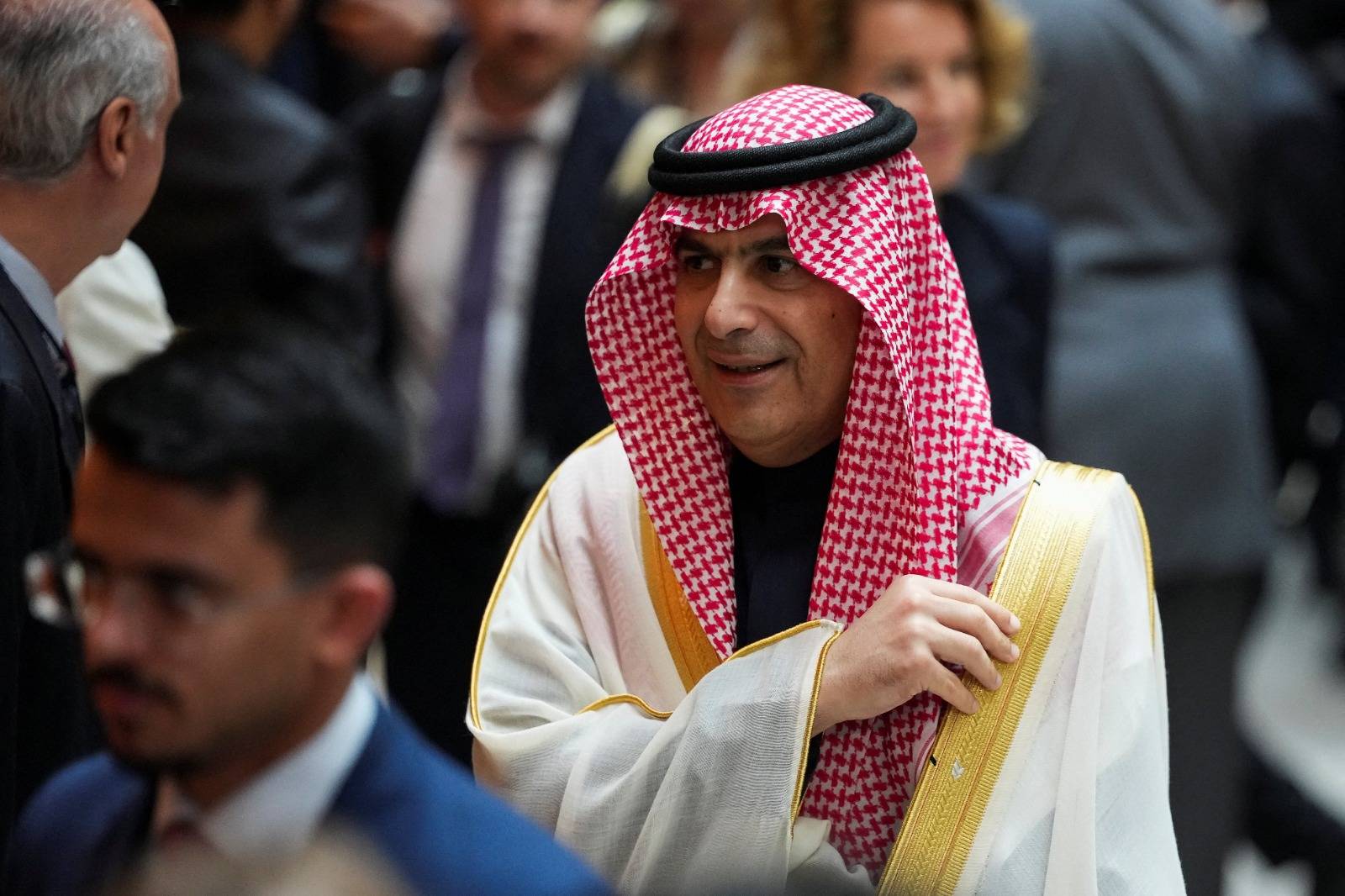
Sudanese Energy Minister to Asharq Al-Awsat: Joint Teams with Saudi Arabia to Turn Agreements into Projects

Sudanese Minister of Energy and Petroleum Al-Mutasim Ibrahim meets Saudi Assistant Minister of Energy Mohammed Abdulrahman on the sidelines of the World Petroleum Congress (X)
TT

Sudanese Energy Minister to Asharq Al-Awsat: Joint Teams with Saudi Arabia to Turn Agreements into Projects

Sudanese Minister of Energy and Petroleum Al-Mutasim Ibrahim meets Saudi Assistant Minister of Energy Mohammed Abdulrahman on the sidelines of the World Petroleum Congress (X)

Sudan has established working teams to explore energy partnerships with Saudi Arabia, paving the way to turn bilateral discussions into projects aimed at rehabilitating war-damaged facilities and restoring the country's oil refining and electricity generation capabilities.

Sudanese Minister of Energy and Petroleum Al-Mutasim Ibrahim told Asharq Al-Awsat that cooperation is focused on four main areas: securing fuel supplies, developing oil exploration blocks in the Red Sea, establishing a refinery in Port Sudan, and rehabilitating electricity infrastructure.

The initiative comes as Sudan seeks to restore its energy sector following extensive damage to its facilities, particularly the Al-Jaili refinery, which previously met more than 60 percent of domestic demand. The country currently relies on imports of petroleum products.

Ibrahim said discussions with Saudi officials focused on investment opportunities and technical cooperation, with working teams established to assess the scope of the proposed projects and the mechanisms for implementing them.

He explained that his participation in the World Petroleum Congress, held in Riyadh last week at Saudi Arabia's invitation, provided an opportunity to strengthen consultations on energy issues of mutual concern.

The meetings also explored ways to attract the investment and expertise needed to rebuild and develop Sudan's energy sector, supporting the country's economic recovery.

Ibrahim said he met officials from the Saudi Ministry of Energy and its affiliated entities, as well as representatives of Saudi Aramco, SABIC, ACWA Power and the Saudi electricity regulator.

He explained that cooperation with Aramco focuses on importing petroleum products and ensuring regular supplies to Sudan, particularly given the damage caused by the war to its energy facilities.

Among the most severely affected is the Al-Jaili refinery, which previously supplied more than 60 percent of the country's domestic petroleum needs.

The minister said the visit resulted in understandings to establish working teams to explore partnership and investment opportunities in rehabilitating damaged energy facilities.

These include electricity grids, power and water facilities, restarting the Al-Jaili refinery, and expanding refining capacity in Port Sudan and the Red Sea region.

Four Areas of Partnership

Ibrahim said discussions with Saudi Assistant Minister of Energy Mohammed Abdulrahman focused on four main areas of cooperation.

The first involves strengthening the partnership with Aramco to secure regular supplies of petroleum products and support stability in Sudan's domestic market, particularly after the war damaged the country's production and refining facilities.

The second focuses on opportunities to develop oil exploration blocks in the Red Sea, including encouraging Saudi private-sector investment in exploration and production activities and capitalizing on opportunities in Sudan's petroleum industry.

The third concerns a proposed oil refinery in Port Sudan, which the minister said presents opportunities for technical and investment cooperation with Saudi Arabia, enhancing Sudan's refining capabilities and strengthening energy security.

The fourth involves rehabilitating electricity infrastructure and rebuilding facilities damaged during the war, including exploring ways to provide necessary equipment, exchange technical expertise and develop local capabilities.

Ibrahim stressed that the joint working teams would assess the nature and scale of cooperation required to rehabilitate electricity grids, power stations and water facilities.

Their findings would help determine the next steps and translate the understandings reached into concrete programs and projects.

Rehabilitating Refineries

Ibrahim unveiled a plan to rehabilitate and rebuild Sudan's refinery infrastructure, electricity networks, thermal and hydropower stations, and solar energy facilities.

He explained that the first phase accounts for 20 percent of the overall rehabilitation plan.

Sudan is simultaneously working on refinery designs and promoting investment opportunities in the sector.

The minister said a Sudanese engineering team has been in China for more than a month, working with Chinese counterparts to oversee the required designs and incorporate modern technologies.

He added that a Sudanese engineering and technical team is working to complete the first phase of the rehabilitation plan.

Meanwhile, Khartoum is seeking to attract Turkish, Belarusian and Russian investment across various stages of the energy industry, including exploration and prospecting.

Ibrahim said Sudan is also looking to attract Saudi investment in refining, particularly the proposed Port Sudan refinery, which remains under study.

Other options being examined include expanding refining capacity and developing an additional refinery in the Red Sea region, either as a reserve facility or for commercial operations.

He added that the Al-Jaili refinery in Khartoum has been offered to investors with the aim of restarting operations using the latest technologies after the damage it sustained during the war.

Electricity Needs

Ibrahim said the Ministry of Energy is working to secure electricity and energy supplies for vital sectors, including industry and agriculture.

He noted that the ministry has provided energy supplies for agricultural projects, including the Gezira Scheme.

The minister said the ministry has managed to supply Khartoum with electricity covering more than 80 percent of its needs.

However, he cautioned that fully restoring power generation capacity at stations and dams, along with the associated infrastructure, would require approximately three years.

Ibrahim emphasized that drawing on Saudi Arabia's experience in developing and improving the efficiency of electricity systems is a key area of cooperation.

He said the partnership could also include providing equipment and exchanging technical expertise to help rehabilitate damaged networks and facilities.

Shipping Disruptions

Ibrahim acknowledged that disruptions to shipping through the Strait of Hormuz and the Bab el-Mandeb Strait amid the US-Iranian war have affected energy prices in Sudan.

He attributed the impact to rising maritime insurance costs and associated price premiums.

However, he stressed that Sudan is not currently experiencing shortages of imported petroleum products.

The ministry's plan, he said, aims to secure the energy requirements of vital sectors while rehabilitating domestic facilities and strengthening refining capacity.

Ibrahim added that Sudan's participation in the International Energy Forum and the World Petroleum Congress in Saudi Arabia provided an opportunity to learn about modern technologies and solutions in energy and related industries.

He said the experience could open the door for Sudan to benefit from Saudi expertise in developing its energy sector.


SAMA Governor: Saudi Infrastructure Sustains Oil Supplies, Regional Trade Amid Conflict

Officials at the meeting of the International Monetary and Financial Committee of the International Monetary Fund in Bangkok. (X)
TT

SAMA Governor: Saudi Infrastructure Sustains Oil Supplies, Regional Trade Amid Conflict

Officials at the meeting of the International Monetary and Financial Committee of the International Monetary Fund in Bangkok. (X)

Saudi Arabia’s diversified energy infrastructure and logistics networks have enabled the Kingdom to maintain oil supplies and regional trade despite the widening economic fallout from the Middle East conflict, said Saudi Central Bank (SAMA) Governor Ayman Al-Sayari.

Addressing the International Monetary and Financial Committee (IMFC) of the International Monetary Fund in Bangkok, chaired by Saudi Finance Minister Mohammed Al-Jadaan, Al-Sayari highlighted the Kingdom’s ability to withstand the crisis, supported by prudent policies, substantial financial and nonfinancial buffers, and a well-capitalized banking sector.

He stressed Saudi Arabia’s commitment to supporting economic activity and preserving monetary and financial stability without compromising fiscal sustainability.

Al-Sayari stressed that energy security depended not only on the availability of supplies but also on their reliable and affordable delivery to international markets.

He called for sustained investment throughout the energy supply chain, from production and refining to storage and diversified transport routes, as well as across all energy sources, including oil and gas.

The conflict’s initial impact, concentrated in energy markets and major shipping corridors, had gradually spread to trade, transportation, inflation, financing conditions and investor confidence.

Disruptions had also extended beyond crude oil and natural gas to refined petroleum products, particularly transportation fuels, as well as fertilizers and essential production inputs, increasing price pressures and threatening food security and production.

While rerouting supplies and drawing down inventories had helped cushion the immediate shock, those measures had reduced the capacity to absorb further disruptions, Al-Sayari cautioned.

Banking sector withstands shocks

Turning to the domestic economy, Al-Sayari highlighted the resilience of Saudi banks, whose capital and liquidity positions remain robust, with financial soundness indicators among the strongest in the region.

He attributed the Kingdom’s ability to preserve domestic stability to decades of prudent economic management, effective risk management and strategic investment, explaining that its extensive energy and logistics infrastructure had also helped maintain oil supplies and regional commerce and mitigate the impact of disruptions in global energy markets.

He underlined that Saudi Arabia would continue adjusting its response as the conflict evolved, preserving room to address further developments while maintaining fiscal discipline.

Saudi Central Bank (SAMA) Governor Ayman Al-Sayari. (IMF)

Vision 2030 strengthens economic foundations

Al-Sayari said Saudi Vision 2030, now entering its tenth year, had reinforced the Kingdom’s economic foundations by expanding non-oil activity, increasing private sector participation and strengthening institutions and reform implementation.

He underlined the government’s commitment to productivity-enhancing reforms, greater private investment opportunities, more efficient public spending and sound public finances.

The next phase would focus on further diversification, deeper financial markets and human capital development, alongside improvements in infrastructure and institutional capacity to support sustainable and inclusive growth.

IMF urged to implement institutional reforms

On international cooperation, Al-Sayari called on the IMF to prioritize the implementation of recently reviewed institutional reforms covering economic surveillance, program design and conditionality, financial sector assessments and the debt sustainability framework for low-income countries.

Fund-supported programs should reflect individual countries’ circumstances, needs and capacity to implement reforms with conditions focused on measures essential to their success, he remarked.

He also advocated closer coordination between surveillance, lending and technical assistance, as well as timely and orderly resolution of unsustainable debt and stronger cooperation among creditors.

Al-Sayari reiterated Saudi Arabia’s support for IMF capacity development, including its $279 million pledge and backing for the Fund’s regional office in Riyadh.

He also drew attention to risks stemming from volatile capital flows, rising sovereign bond yields and the expanding role of nonbank financial institutions.

Artificial intelligence and stablecoins presented implications for both productivity and financial stability, underscoring the importance of strengthening analysis and oversight to address emerging risks, he noted.


Asian Shares are Mixed with Tech Stocks Volatile, and Oil Falls on Trump's Russian Sanctions Waiver

Passersby walk past a stock market indicator board in Tokyo, Japan, 15 October 2026. EPA/FRANCK ROBICHON
TT

Asian Shares are Mixed with Tech Stocks Volatile, and Oil Falls on Trump's Russian Sanctions Waiver

Passersby walk past a stock market indicator board in Tokyo, Japan, 15 October 2026. EPA/FRANCK ROBICHON

Asian shares were mixed Monday as volatility in technology stocks persisted, while US equity futures edged higher ahead of another week of American corporate earnings results.

Oil prices fell more than 1% after US President Donald Trump’s decision to waive sweeping sanctions on Russia, including on Russian energy, The Associated Press said.

A sell-off of technology shares from Asia to Wall Street recently put downward pressure on stock markets, as investor concerns grow over the sustainability of the artificial intelligence boom.

South Korea’s benchmark Kospi index was up 1.1% to 5,729.58 on Monday, after falling sharply last week. The Kospi is down more than 18% over the past month, and still well below the 9,000 mark it crossed in June at its peak on the global AI frenzy.

Samsung Electronics was up 0.7%, while memory chipmaker SK Hynix fell 0.9%.

Japan’s Nikkei 225 lost 0.8% to 64,799.03. Japanese chip equipment maker Tokyo Electron lost 2.1%, and OpenAI investor SoftBank Group dropped 3.6%.

Hong Kong’s stock market was closed because of a holiday. The Shanghai Composite index edged 0.2% higher to 3,722.20, after China reported better-than-expected growth of 4.5% for its economy in the July-September quarter.

CXMT, China’s leading memory chipmaker, fell more than 7% despite the company forecasting a strong profit for the first nine months.

Taiwan’s Taiex fell 1%. Shares of Taiwan Semiconductor Manufacturing Co., or TSMC, the world’s biggest contract chipmaker, were down 0.6%.

Australia’s S&P/ASX 200 was 0.3% higher at 8,832.20.

India’s Sensex edged down 0.1%.

Indonesia’s benchmark stock index fell another 5% to its lowest level since 2020, after it plunged over 11% on Friday following a warning from index provider MSCI that it would downgrade the country from its “emerging market” status.

On Friday, Wall Street’s benchmark S&P 500 declined 1.1%. The Dow Jones Industrial Average fell 0.3%, and the technology-heavy Nasdaq composite sank 2.1%.

Investors this week are watching for more big corporate earnings results from the US, including Meta, Netflix, General Motors, Tesla and IBM. Strong company earnings have been one factor that’s been keeping US stocks robust lately.

Oil prices were down early Monday, with Brent crude, the international standard, falling 1.8% to $107.86 per barrel.

Benchmark US crude dropped 1.6% to $97.43 per barrel.

Oil fell after Trump on Friday signed an executive order to put new broad US sanctions against Russia on hold just days before they were to come into effect, drawing disappointment from Ukraine, with the move likely resulting in more energy exports from Russia.

Trump's decision came not long after he said earlier this month he had reached a diesel deal with Russia in an attempt to bring down elevated US fuel prices ahead of the Nov. 3 midterm elections.

But even with the decline, oil prices have remained elevated compared with those seen before the Iran war. Global oil supply risks are still high amid tensions in the Middle East, including uncertainty surrounding oil transport in the Strait of Hormuz, adding upward pressure to prices.

The US dollar fell slightly to 158.09 Japanese yen from 158.10 yen. The euro was trading at $1.1231, down from $1.1234.