
ESCWA: Conflict Could Cut Arab Economic Output by $150 Billion in 1 Month

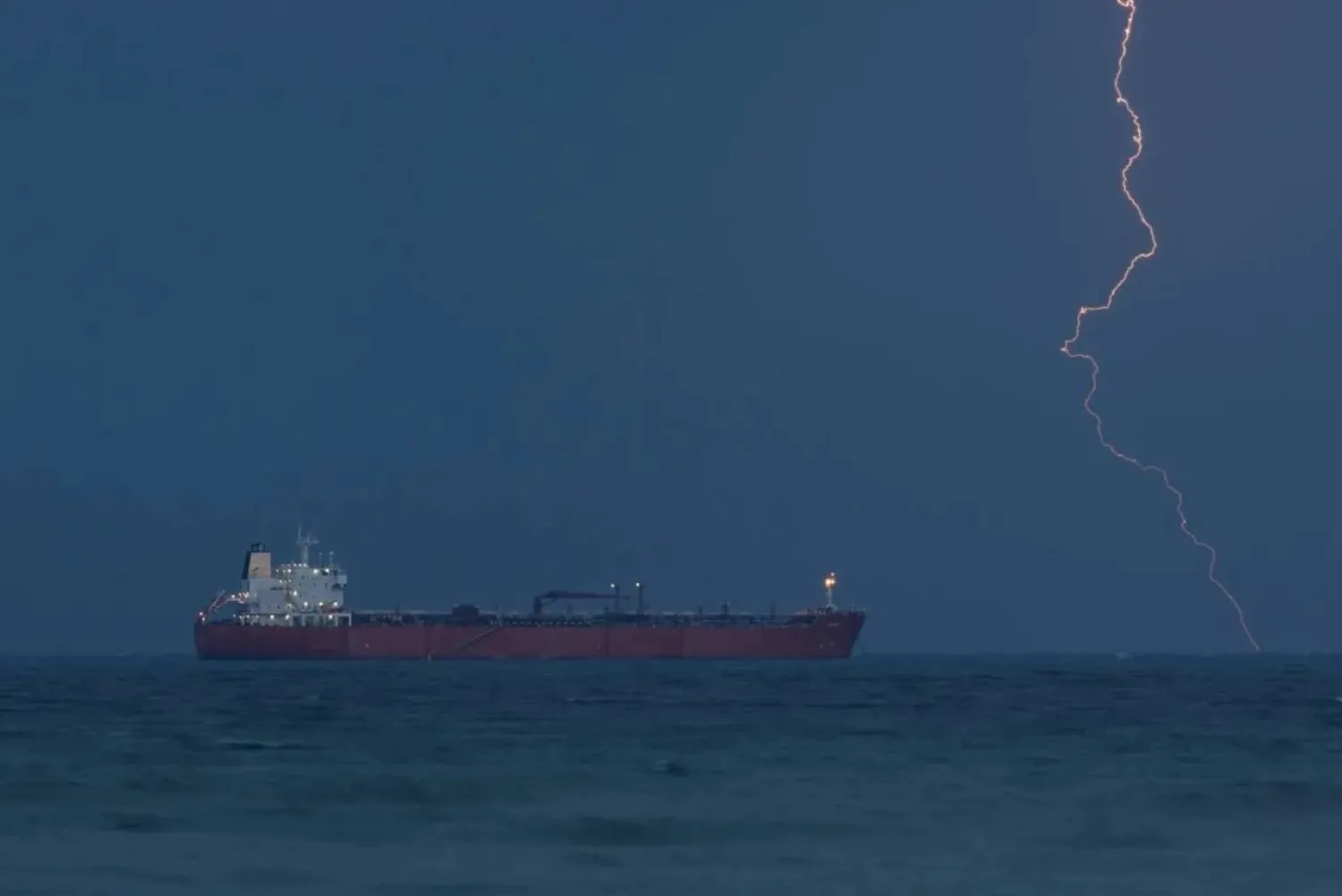
The tanker RARITY sits at anchor as lightning flashes in the distance, amid the US-Israeli conflict with Iran, off Sultan Qaboos Port in Muscat, Oman, March 21, 2026. REUTERS/Stelios Misinas
TT

ESCWA: Conflict Could Cut Arab Economic Output by $150 Billion in 1 Month

The tanker RARITY sits at anchor as lightning flashes in the distance, amid the US-Israeli conflict with Iran, off Sultan Qaboos Port in Muscat, Oman, March 21, 2026. REUTERS/Stelios Misinas

The regional war is imposing heavy economic costs across the Arab region, with preliminary estimates pointing to about $63 billion in regional losses within two weeks, the United Nations Economic and Social Commission for Western Asia (ESCWA) warned in a recently issued policy brief.

Under the title “Conflict and its shockwaves: escalation of a crisis in the Arab region,” the brief warns that if the conflict continues for a month, losses could reach nearly $150 billion, or 3.7% of regional GDP.

ESCWA comprises 21 Arab States: Algeria, Bahrain, Egypt, Iraq, Jordan, Kuwait, Lebanon, Libya, Morocco, Mauritania, Oman, State of Palestine, Qatar, Saudi Arabia, Somalia, Sudan, Syria, Tunisia, United Arab Emirates, Djibouti and Yemen.

The brief affirmed that GCC economies represent the most immediate and globally visible transmission channel of the conflict.

It said the current conflict risks disrupting energy markets, maritime trade routes, aviation networks, supply chains and financial flows, and heightening humanitarian pressure.

It noted that the assessment of GDP losses in the first two weeks assumes a war lasting two weeks and incorporates a reduction in oil production in affected countries of nearly 20 million barrels per day due to disruption to logistic networks.

Concerning natural gas markets, the North-West European liquefied natural gas (LNG) benchmark rose from approximately $28.80/MMBtu to $50.95/MMBtu, representing an 80% increase following disruptions to Qatari LNG production at Ras Laffan and Mesaieed, which together account for roughly 19% of global gas supply.

ESCWA said the conflict has also generated severe disruptions to maritime trade flows through the Strait of Hormuz.

Daily vessel arrivals at Gulf ports declined from 95–137 vessels per day before the strikes to around 5 vessels per day by early March 2026, representing a decline of approximately 96–97% in shipping activity.

Based on average cargo values for crude oil, gas, containerized goods and bulk commodities, the implied economic value of disrupted trade is estimated at approximately $2.4 billion per day.

For the first two weeks of the war and under an escalation scenario of one month, ESCWA said cumulative trade losses could reach around $30 billion in the first two weeks and around $55–60 billion within one month.

Also, the brief said transport and logistics networks represent one of the most immediate operational channels through which the conflict affects regional economies.

Airspace closures and security risks forced airlines to suspend operations across major Gulf aviation hubs.

Between 28 February and 12 March 2026, a total of 18,441 flights were cancelled across nine major regional airports, namely Dubai, Doha, Abu Dhabi, Kuwait, Bahrain, Riyadh, Jeddah, Muscat and Beirut.

Using airport-specific revenue estimates based on airline financial data, the estimated airline revenue loss from cancelled flights during the first 12 days of the conflict is approximately $1.9 billion, equivalent to an average of around $102,000 per cancelled flight.

If disruptions persist, cumulative losses could reach around $2.2 billion in the first two weeks and around $3.6 billion within one month.

The repercussions of the current war have extended to hit the economic and social depths of ESCWA's member states.

In Lebanon, Israeli strikes are already generating significant socioeconomic impacts. Escalating airstrikes and widespread displacement had claimed 634 lives by 11 March, and forced over 816,000 to flee their homes.

In Egypt and Tunisia, at $100 per barrel of oil, the additional annual oil import cost amounts to about $6.8 billion compared with levels assumed in their national budgets for 2026.

In the State of Palestine, Somalia, Sudan and Yemen, poverty has risen sharply and continue to face chronically high poverty levels.

According to ESCWA, many Arab economies entered the crisis with high debt and limited fiscal space.

Even before this war, 210 million people (43% of the region’s population) lived in conflict-affected settings, including 82 million needing humanitarian assistance.

ESCWA placed an assessment of the economic costs of the war using two scenario-based approaches that reflect the duration and intensity of the escalation.

Preliminary analysis captures estimates of the impacts observed during the first two weeks of the conflict, while scenario A considers the effects if the war extends to one month.

Scenario B represents a more severe escalation in which the war persists for a year or longer, and generates systemic and potentially catastrophic economic and humanitarian consequences.

The UN agency said the current escalation presents risks that extend beyond immediate economic disruptions.

Rising living costs, weaker job creation and increasing pressure on already strained social protection systems could deepen poverty and inequality while exacerbating an already chronic humanitarian crisis.

“These pressures may also undermine food and water security and risk reversing progress toward the Sustainable Development Goals across the Arab region,” it noted.

ESCWA said in the most severe scenario, the conflict extends beyond a month to one year, escalating major disruption in critical maritime and energy corridors, particularly the Strait of Hormuz and Red Sea shipping routes.

Under this scenario, it added, the shock becomes systemic, affecting global oil and gas supply chains and generating widespread supply-chain disruptions across trade routes linking Asia, Europe and the Middle East.


Saudi Arabia’s Mawani Adds 5 Shipping Services

Yanbu Commercial Port. SPA
TT

Saudi Arabia’s Mawani Adds 5 Shipping Services

Yanbu Commercial Port. SPA

The Saudi Ports Authority (Mawani) said Monday that it has added five new maritime shipping services to enhance the connectivity of the Kingdom’s ports with global markets.

The move was done in partnership with major global shipping lines MSC, CMA CGM, Maersk, and Hapag-Lloyd, with a total capacity exceeding 63,000 TEUs, supporting the smooth flow of goods, enhancing supply chain efficiency, and reinforcing the Kingdom’s position as a global logistics hub, Mawani said.

It also announced a trade bridge connecting Sharjah in the United Arab Emirates with the Kingdom.

This step enhances logistics integration and supports the smooth flow of goods between the two countries with high operational efficiency, Mawani added.


China Limits Fuel Price Hike to Cushion Impact of Rising Oil Prices

A rider passes by motorists queue to pump gasoline at a petrol station in Beijing, Sunday, March 22, 2026. (AP Photo/Andy Wong)
TT

China Limits Fuel Price Hike to Cushion Impact of Rising Oil Prices

A rider passes by motorists queue to pump gasoline at a petrol station in Beijing, Sunday, March 22, 2026. (AP Photo/Andy Wong)

China intervened to cushion rising fuel prices on Monday, increasing regulated ceiling prices for retail gasoline and diesel but limiting the hike to about half what would normally be applied under the government's pricing mechanism.

However, the adjustments brought on by rising oil prices linked to the US-Israeli war on Iran were still the largest on record, lifting price limits close to levels seen in 2022 following Russia's invasion of Ukraine.

The state ⁠planner, the National ⁠Development and Reform Commission, said on Monday it would raise the maximum retail prices for gasoline and diesel by 1,160 yuan ($167.93) per metric ton and 1,115 yuan per metric ton, respectively, starting from Monday midnight, Reuters reported.

The NDRC reviews retail gasoline and diesel ⁠prices every 10 working days and applies adjustments reflecting changes in international crude oil prices, while taking into account average processing costs, taxes, distribution expenses, and appropriate profit margins.

Under the current pricing mechanism, gasoline and diesel prices would have been set to rise by 2,205 yuan per metric ton, and 2,120 yuan per metric ton, respectively, according to NDRC.

"To cushion the impact, ease the burden on downstream users, and support ⁠economic ⁠and social stability, authorities introduced temporary controls within the existing pricing framework," the state's planner said in an announcement.

Oil prices rose on Monday after Iran's Revolutionary Guards said they would target Israel's power plants and those supplying US bases in the Middle East in retaliation against any attack on its electricity sector.

Brent crude futures were up $1.57 to $113.76 a barrel by 0731 GMT. US West Texas Intermediate was at $101.32 a barrel, up $3.09, or 3.15%.


IEA Head Says Global Economy Faces ‘Major, Major Threat’ from Iran War

International Energy Agency Executive Director Fatih Birol speaks at the National Press Club in Canberra, Australia, Monday, March 23, 2026. (Lukas Coch/AAP Image via AP)
TT

IEA Head Says Global Economy Faces ‘Major, Major Threat’ from Iran War

International Energy Agency Executive Director Fatih Birol speaks at the National Press Club in Canberra, Australia, Monday, March 23, 2026. (Lukas Coch/AAP Image via AP)

The head of the International Energy Agency said Monday that the global economy faces a “major, major threat” because of the Iran war.

“No country will be immune to the effects of this crisis if it continues to go in this direction,” Fatih Birol said at Australia’s National Press Club in Canberra on Monday.

The crisis in the Middle ⁠East, he said, has had a worse impact on oil than the two oil shocks of the 1970s combined, and a worse effect on gas than the Russia-Ukraine war.

Israel launched a new wave of attacks early Monday against Tehran. US President Donald Trump also warned the United States will “obliterate” Iran’s power plants if Tehran doesn’t fully open the Strait of Hormuz within 48 hours. That prompted Iran to say it would respond to any such strike with attacks on US and Israeli energy and infrastructure assets.

Trump is facing increasing pressure at home to secure the strait as oil prices soar.

One major fear is that the war could knock out oil and gas production in the Middle East for a long time, which would mean high prices could last a while and cause inflation to rip higher around the world. The US stock market has a history of bouncing back relatively quickly from past conflicts in the Middle East and elsewhere, as long as oil prices don’t stay too high for too long.

Iran on Monday renewed strikes on its neighbors.

“The situation is very severe,” Birol said in Australia.

The oil crises of 1973 and 1979, he said, lost together 10 million barrels per day, causing "major economic problems around the world, the recessions.

And today, only as of today, we lost 11 million barrels per day — so more than two major oil shocks put together.”

After Russia’s invasion of Ukraine, he said, the gas markets, especially in Europe, “lost about 75 billion cubic meters, 75BCM. And as of now, as a result of this crisis, we lost about 140BCM, almost twice (as much).”

According to The Associated Press, Birol said 40 energy assets in nine countries across the region were “severely or very severely damaged.”

“Some of the vital arteries of the global economy, such as petrochemical, such as fertilizers, such as sulfur, such as helium — their trade is all interrupted, which would have serious consequences for the global economy,” he said.

He said the International Energy Agency, “in order to comfort the markets,” earlier released 400 million barrels of oil, “which is historic. We have never released so much oil to the markets. ... The single most important solution to this problem is opening up the Hormuz Strait as things stand now.”

The official added that he was consulting with governments in Europe, Asia, North America and the Middle East about the prospect of releasing further stockpiled oil.

“We will see, we will look at the markets,” he said. “If it is necessary, of course, we will do it, but we will look at the conditions, we will analyze, assess the market and discuss with our member countries.”