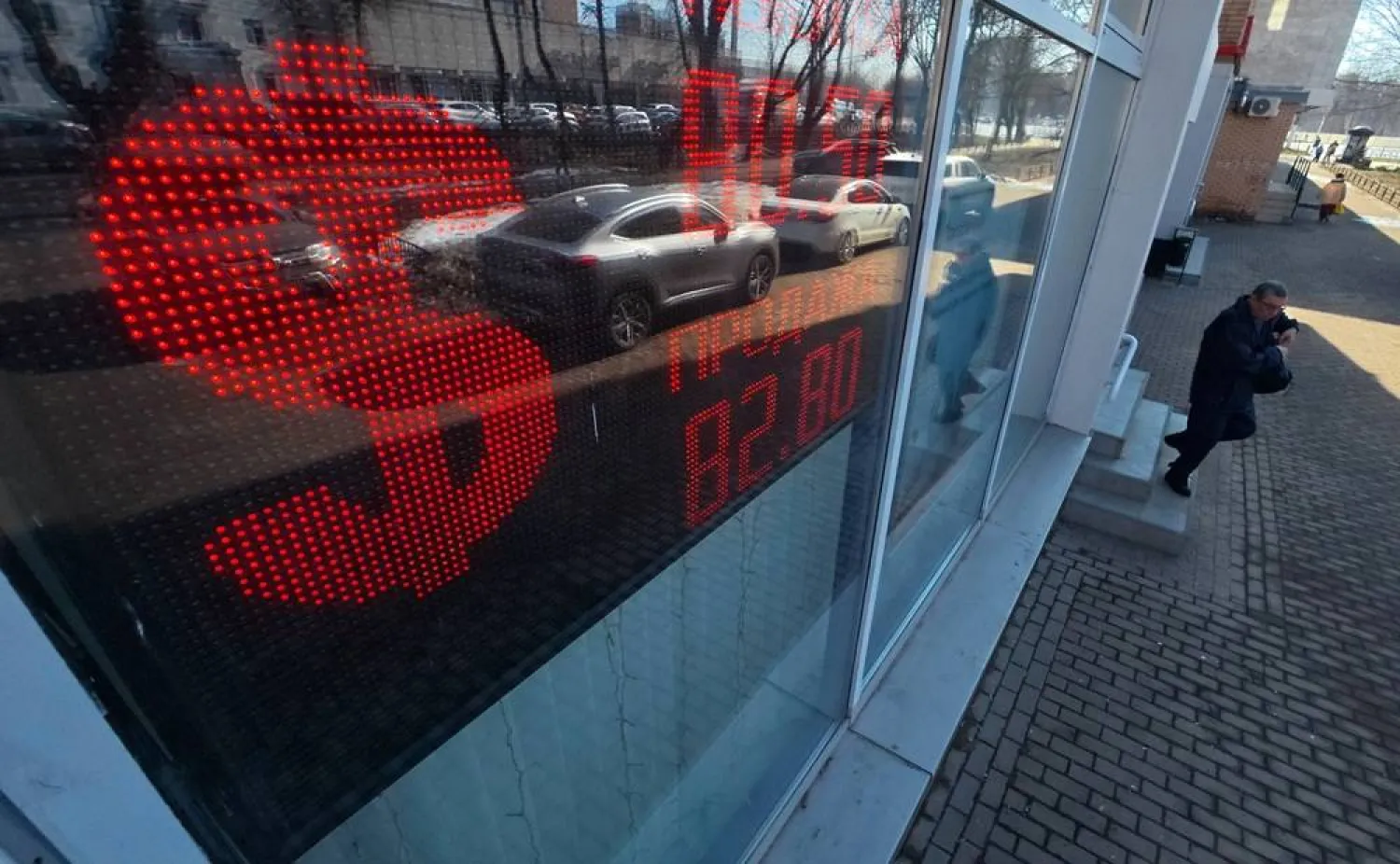

The dollar hovered near multi-month peaks on Friday as investors sought safety in the shadow of an intensifying Middle East war and mounting doubts over any path to de-escalation.
Markets were on edge following another rollercoaster week as US President Donald Trump again extended a deadline for striking Iran's energy facilities into April, even as Washington and Tehran offered starkly conflicting accounts of diplomatic progress.
The Pentagon is also looking at sending up to 10,000 additional ground troops to the Middle East, the Wall Street Journal reported on Thursday, doing little to bolster investor hopes of an imminent end to the war.
That kept the dollar bid as investors flocked to the safe-haven currency and ramped up expectations of a US rate hike by the year-end, owing to the inflationary pulse from higher-for-longer energy prices.
The yen, on the other hand, was left on the cusp of 160 per dollar and stood at 159.58. The euro was nursing losses and tacked on 0.1% to $1.1540, while sterling was little changed at $1.3339.
"It doesn't look like the conflict will end anytime soon," said Carol Kong, a currency strategist at Commonwealth Bank of Australia. "The dollar is king while this conflict lasts."
"If we're right about this conflict being protracted, I think oil prices will just keep rising and it will push the dollar higher, at the expense of net energy importers like the Japanese yen and the euro," she added.
The darkening market mood sent the risk-sensitive Australian dollar down to a two-month trough, though it later rebounded and traded 0.2% higher at $0.6903. The New Zealand dollar languished near its lowest level since January and last stood at $0.5769.
Against a basket of currencies, the dollar was marginally weaker at 99.83, but still on track for a 2.2% rise this month, which would mark its biggest gain since July last year.
Investors are now pricing in an over 40% chance of a 25-basis-point rate hike from the Federal Reserve by September, according to CME Fedwatch tool, in a sharp reversal from more than 50 bps worth of easing expected before the war.
The Bank of England and the European Central Bank are also seen tightening policy, with the hawkish sea change in rate expectations hammering bonds and sending yields rising.
"A more prolonged disruption to energy supplies would deliver a larger hit to activity that would meet most definitions of a global recession and prompt a broader monetary tightening cycle," said analysts at Capital Economics in a note.
Yields on US Treasuries edged slightly higher on Friday, following a sharp rise overnight, with the two-year yield at 3.9899%. The benchmark 10-year yield was up about 1 bp to 4.4278%.