


Worries About Global Economic Pain Deepen as the War in Iran Drags on

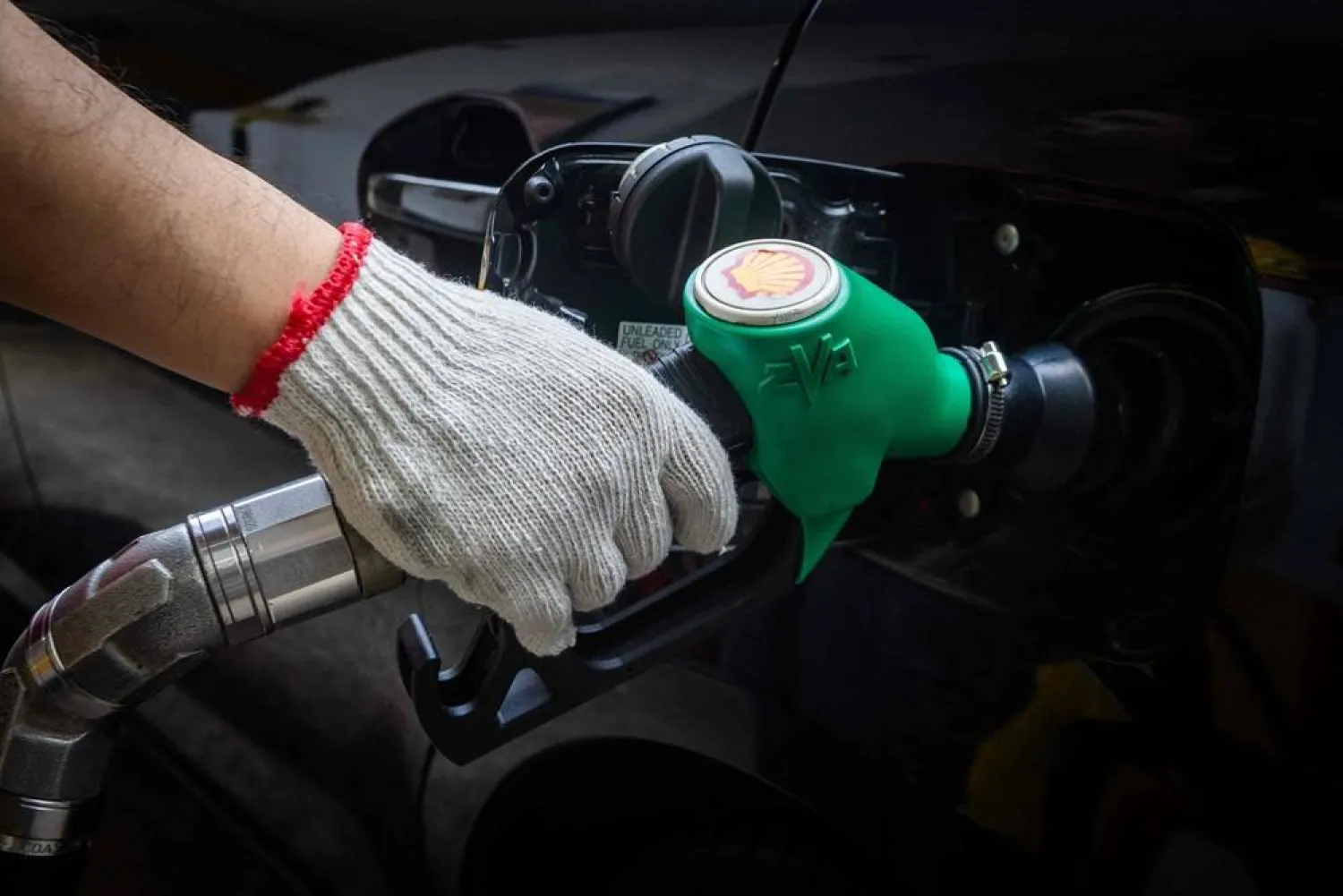
A worker refills the tank of a car at a gasoline station in Macau on March 27, 2026. (AFP)
TT

Worries About Global Economic Pain Deepen as the War in Iran Drags on

A worker refills the tank of a car at a gasoline station in Macau on March 27, 2026. (AFP)

US and Israeli attacks on Iran have driven up prices, darkened the outlook for the world economy, sent global stock markets reeling and forced developing countries to ration fuel and subsidize energy costs to protect their poorest.

Ongoing strikes and counterstrikes on Persian Gulf refineries, pipelines, gas fields and tanker terminals threaten to the prolong the global economic pain for months, even years.

“A week ago or certainly two weeks ago, I would have said: If the war stopped that day, the long-term implications would be pretty small,” said Christopher Knittel, an energy economist at the Massachusetts Institute of Technology. “But what we’re seeing is infrastructure actually being destroyed, which means the ramifications of this war are going to be long-lived.”

Iran has hit Qatar’s Ras Laffan natural gas terminal, which produces 20% of the world’s liquefied natural gas. The March 18 strike wiped out 17% of Qatar’s LNG export capacity and repairs will take up to five years, state-owned QatarEnergy said.

The war caused an oil shock from the get-go. Iran responded to US and Israeli attacks Feb. 28 by effectively closing off the Strait of Hormuz, a transit point for a fifth of the world’s oil, by threatening tankers trying to pass through.

Gulf oil exporters like Kuwait and Iraq cut production because there was nowhere for their oil to go without access to the strait. The loss of 20 million barrels of oil a day delivered what the International Energy Agency calls the “largest supply disruption in the history of the global oil market.”

The price for a barrel of Brent crude oil climbed 3.4% on Friday to settle at $105.32. That was up from roughly $70 just before the war began. Benchmark US crude rose 5.5% to settle at $99.64 per barrel.

“Historically, oil price shocks like this have led to global recessions,” Knittel said.

The war also has dredged up a bad economic memory from the oil shocks of the 1970s: stagflation.

“You’re raising the risk of higher inflation and lower growth,” said the Harvard Kennedy School's Carmen Reinhart, a former World Bank chief economist.

Gita Gopinath, former chief economist at the International Monetary Fund, recently wrote that global economic growth, expected before the war to register 3.3% this year, would be 0.3 to 0.4 percentage points lower if oil prices averaged $85 a barrel in 2026.

Fertilizer shortages and price hikes hurt farmers

The Gulf accounts for a big share of exports of two key fertilizers, a third of urea and a quarter of ammonia. Producers in the region enjoy an advantage: easy access to low-cost natural gas, the primary feedstock for nitrogen fertilizers.

Up to 40% of world exports of nitrogen fertilizer pass through the Strait of Hormuz.

Now that the passage is blocked, urea prices are up 50% since the war and ammonia 20%. Big agricultural producer Brazil is especially vulnerable because it gets 85% of its fertilizer from imports, Alpine Macro commodity strategist Kelly Xu wrote in a commentary. Egypt, a big fertilizer producer itself, needs natural gas to make the stuff and production falters when it can’t get enough.

Eventually, higher fertilizer prices are likely to make food more expensive and less abundant as farmers skimp on it and get lower yields. The squeeze on food supplies will land hardest on families in poorer countries.

The war also has disrupted world supplies of helium, a byproduct of natural gas and a key input in chipmaking, rockets and medical imaging. Qatar makes helium at the Ros Laffan facility and supplies a third of the world’s helium.

Rationing gas and limiting the air conditioning

“No country will be immune to the effects of this crisis if it continues to go in this direction,” International Energy Agency head Fatih Birol said on March 23.

Poorer countries will be hit hardest and face the biggest energy shortages “because they will be outbid when competing for the remaining oil and natural gas,” said Lutz Kilian, director of the Center for Energy and the Economy at the Federal Reserve Bank of Dallas.

Asia is especially exposed: More than 80% of the oil and LNG that passes through the Strait of Hormuz is headed there.

In the Philippines, government offices are now open just four days a week and bureaucrats must limit the use of air conditioning to nothing cooler than 75°F (24°C). In Thailand, public workers have been told to take the stairs instead of elevators.

India is the world’s second-biggest importer of liquefied petroleum gas, which is used in cooking. The Indian government is giving households priority over businesses as it allocates its limited supply and absorbing most of the price increases to keep costs low for poor families.

But LPG shortages have forced some eateries to shorten hours, close temporarily or drop dishes like curries and deep-fried snacks requiring a lot of energy.

South Korea, dependent on energy imports, is restricting the use of cars by public employees and has reinstated fuel price caps that had been dropped in the 1990s.

Crisis hits a vulnerable US economy

The United States, the world’s largest economy, is somewhat insulated.

America is an oil exporter, so its energy companies stand to benefit from higher prices. And LNG prices are lower in the US than elsewhere because its export liquefaction facilities already are running at 100% capacity. The US can’t export any more LNG than it already is, so gas stays home, keeping domestic supplies abundant and prices stable.

Still, higher gasoline prices are weighing on American consumers already frustrated by the high cost of living. According to AAA, the average price of a gallon of gasoline has risen to nearly $4 a gallon from $2.98 a month ago.

“Nothing weighs more heavily on consumers’ collective psyche than having to pay more at the pump,” Mark Zandi, chief economist at Moody’s Analytics, and his colleagues wrote in a commentary.

The US economy already was showing signs of weakness, expanding an annual pace of just 0.7% from October through December, down from a rollicking 4.4% from July through September. Employers unexpectedly cut 92,000 jobs in February and added just 9,700 a month in 2025, the weakest hiring outside a recession since 2002.

Gregory Daco, chief economist at EY-Parthenon, has raised the odds of a US recession over the next year to 40%. The risk when times are "normal'' is just 15%.

Recovery will take time

The world economy has proven resilient in the face of repeated shocks: a pandemic, Russia’s invasion of Ukraine, resurgent inflation and the high interest rates needed to bring it under control.

So there was optimism it also could shrug off the damage from the Iran war. But those hopes are fading as the threats to the Gulf's energy infrastructure continue.

“There is no economic upside to the conflict with Iran,” Zandi and his colleagues wrote. "At this point, the questions are how much longer the hostilities will continue and how much economic damage they will cause.”



Egypt to Cut Red Tape for Business and List up to Four State Firms

Egypt’s Investment and Foreign Trade Minister Mohamed Farid Saleh speaks during an interview in London, Britain June 4, 2026. REUTERS/Marc Jones
TT

Egypt to Cut Red Tape for Business and List up to Four State Firms

Egypt’s Investment and Foreign Trade Minister Mohamed Farid Saleh speaks during an interview in London, Britain June 4, 2026. REUTERS/Marc Jones

Egypt will step up efforts to cut red tape to spur on local businesses and it expects to list as many as four state-owned firms on the stock exchange over the next 12 months, its Investment and Foreign Trade Minister Mohamed Farid Saleh told Reuters.

Planned reforms aim to streamline company formation but also ease capital raising and make M&A processes easier, especially for non-listed firms, Saleh said.

"Within the coming 12 months, the priority would be in the area of the ease of doing business for already existing companies to facilitate their life... This is quite a hefty job," Saleh told Reuters on the sidelines of a visit to London.

He also predicted more than half a dozen companies would be floated on the country's stock exchange over the next 12 months, including a number of state-run ones.

State-owned enterprises still play an outsized role across Egypt's economy, with the IMF saying progress in reducing their footprint has been slower than expected.

Saleh said the government had got the ball rolling, having announced in March plans to sell up to a 20% share of Misr Life Insurance - something it has promised to do for more than 15 years - and could raise roughly 14 billion Egyptian pounds ($270 million).

"We're expecting three to four IPOs from our side, from the government side, and around four to five from the private sector," he said. He declined to name other state-owned companies that could be sold or how much such transactions could raise.

The minister said he expected flows of foreign direct investment in the fiscal year to end-June to rise 10% to 15% from $12.2 billion in fiscal 2024/2025.

Saleh said the government would not veer from its commitment to a floating exchange rate. Egypt's pound has been one of the world's hardest-hit currencies by the Iran war, falling nearly 8% since the conflict began. That has driven up inflation and threatened to reignite worries about the overall trajectory for the pound.

"Investors can deal with volatility, they don't deal with uncertainty," he said. "We were very clear and adamant about our policy direction... We are solely targeting inflation." He also said the government would maintain fiscal discipline, regardless of the situation in the region.

Asked about the seventh review of the country's IMF program, which is expected to be finalized in the coming weeks, Saleh said the government had achieved or even surpassed targets set on metrics such as its fiscal deficit and primary surplus.

A follow-on program with the Fund once the current one expires by year-end was currently not on the cards, he said.

"When you go and enter into a program, it is because of financial needs and because of other aspects. Those things are not present as we speak."


Oil Edges Lower after Oman Says Mina al Fahal Operations Proceeding Normally

Oil pumpjacks operating in a farmer’s field near Calgary, Alberta, Canada, November 26, 2025. (Reuters)
TT

Oil Edges Lower after Oman Says Mina al Fahal Operations Proceeding Normally

Oil pumpjacks operating in a farmer’s field near Calgary, Alberta, Canada, November 26, 2025. (Reuters)

Oil prices edged lower after Oman said operations at Mina al Fahal port were proceeding normally, following a Reuters report that oil loadings had been suspended after an explosion.

Brent crude futures fell by 50 cents, or 0.53%, to $94.53 a barrel by 0915 GMT after settling down 2.84% in the previous session.

US West Texas Intermediate crude was at $92.61 a barrel, down 43 cents, or 0.46%, following a 3.1% loss on Thursday.

Both contracts still looked set to post their first weekly gains in three weeks, with Brent up 2.7% and WTI around 6%.

The contracts rose after fighting flared in the Middle East as US-Iran war peace talks dragged on while traffic in the Strait of Hormuz, where a fifth of the world's oil passes, remained limited, Reuters reported.

Petroleum Development Oman said on Friday that operations at Mina Al Fahal port were proceeding normally, after three sources told Reuters earlier that oil loading had been suspended following an explosion near its mooring berths.

Oman exports 800,000 to 900,000 barrels per day of crude from the terminal.

Hezbollah leader Naim Qassem rejected on Thursday a US-brokered agreement between Israel and the Lebanese government to halt the fighting. Iran has made a ceasefire in Lebanon a condition for any peace deal with Washington.

US President Donald Trump said on Thursday he believed progress was being made between Israel and Lebanon and that Lebanon deserved to have peace.

"Any optimism remains heavily clouded by a tangled web of headlines and counter-headlines," IG market analyst Tony Sycamore said in a note. OPEC is sticking to its oil demand growth forecast of 1.2 million barrels per day for this year, Secretary General Haitham Al Ghais said on Thursday, despite the Middle East conflict and closure of the Strait of Hormuz.

Iranian oil exports have fallen to their lowest level in six years mainly due to the US naval blockade, according to shipping data, although weak demand in China has depressed prices for the oil.


FAO: World Food Prices Slip in May, Still Near Three-year High

A shopper buys vegetables with her son at a street market in Urcos, Peru, Tuesday, June 2, 2026. (AP Photo/Rodrigo Abd)
TT

FAO: World Food Prices Slip in May, Still Near Three-year High

A shopper buys vegetables with her son at a street market in Urcos, Peru, Tuesday, June 2, 2026. (AP Photo/Rodrigo Abd)

World food prices slipped in May from a revised April level, with vegetable oil prices falling for the first time this year while cereals and sugar jumped, the United Nations Food and Agriculture Organization said on Friday.

The FAO Food Price Index, which measures changes in a basket of globally traded food commodities, averaged 130.8 points in May, ⁠0.2% down from ⁠its revised April level of 131.0, but up 2.9% from a year earlier, Reuters reported.

Despite the small downward correction for the April data, the index remained near its highest level since January 2023 and 18.4% below its March 2022 peak. Cereal prices rose more than 2.6% on the month, with wheat up for a fourth straight month on smaller export harvest prospects, including in ⁠the United States, and higher fuel and fertilizer costs linked to the Iran conflict.

Maize prices were also supported by stronger import demand and tighter supplies in Brazil and the US, the agency said.

By contrast, vegetable oil prices fell 4.6% from last month, their first monthly decline this year, as lower palm and soy oil prices outweighed gains in rapeseed and sunflower oil. After rising for five consecutive months, international palm oil prices declined, reflecting expectations of weaker global import demand and uncertainty in crude oil markets.

Vegetable oil prices on average were still more than 20% above last year, as ⁠elevated energy costs ⁠following the effective closure of the Strait of Hormuz raised demand for biofuels made using organic materials, such as oil-rich plants.

Sugar prices jumped 7.5% from last month to 95.1 points, but remained 13.1% below their level a year ago. The increase was mainly driven by concerns over an anticipated tightening of global sugar supplies in the coming months.

In a separate cereal supply report, the FAO said it expected world cereal production - including rice in milled equivalent - to shrink 2% in 2026/27 to 2.98 billion tons.

Production of all major cereals is anticipated to decline, albeit for many from record levels reached in 2025, with the largest year-on-year decrease in percentage terms forecast for wheat and the smallest for maize and barley.