


Private Sector Drives Saudi Tourism with Investments Worth $58 Billion

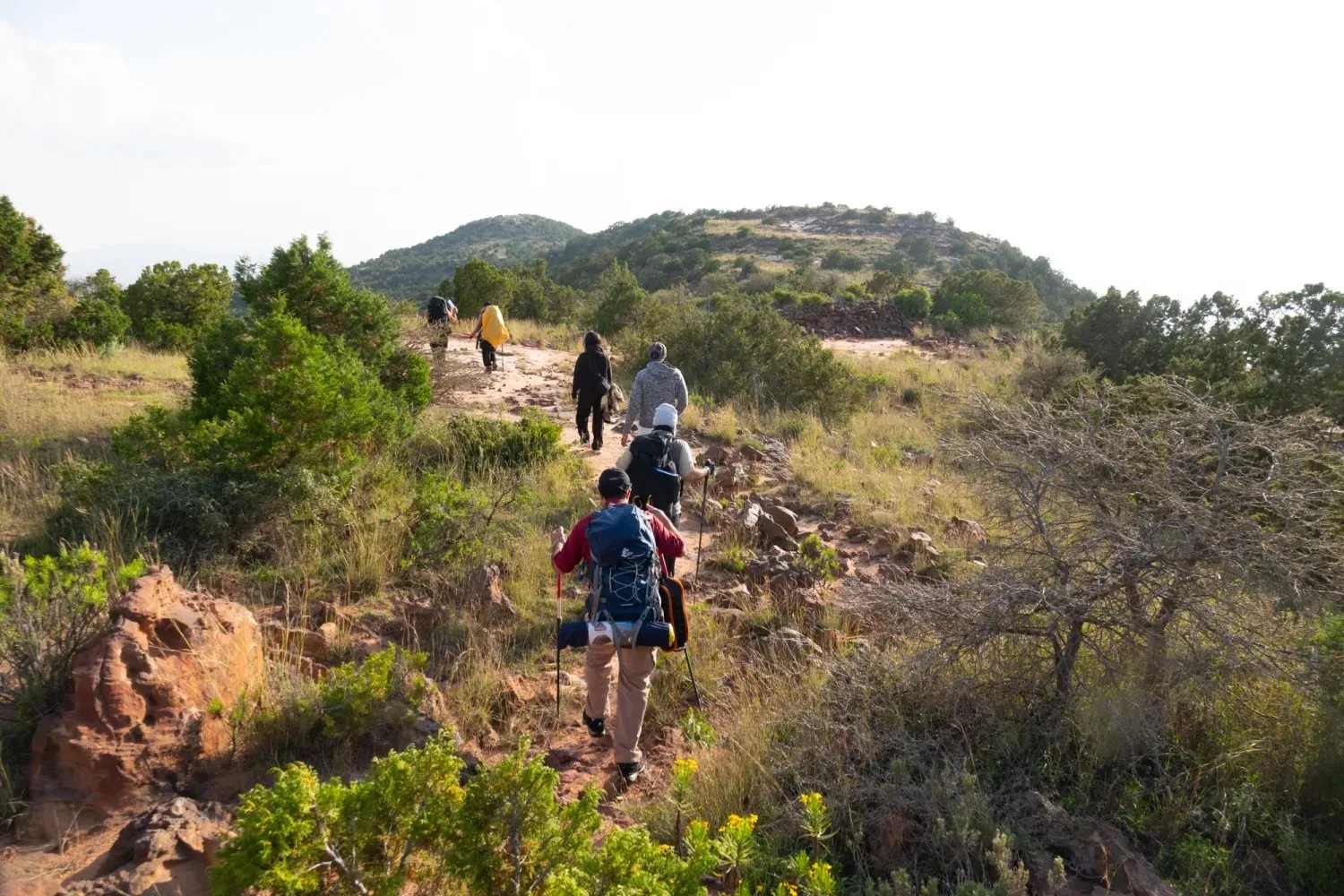
A mountain climbing trip in Tanomah, southern Saudi Arabia
TT

Private Sector Drives Saudi Tourism with Investments Worth $58 Billion

A mountain climbing trip in Tanomah, southern Saudi Arabia

Saudi Arabia’s private sector has emerged as a key engine of growth in the Kingdom’s rapidly expanding tourism industry, with investments totaling SAR219 billion ($58.4 billion), officials said, highlighting its growing role in developing destinations and enhancing the market’s appeal.

Speaking at the fourth edition of the Future Investment Initiative conference in Miami, Saudi Tourism Minister Ahmed Al-Khateeb said the Kingdom offers a model of a market fully prepared to attract investment, stressing that private sector participation is central to this success.

“The role of the private sector and its active participation are fundamental pillars, contributing around 48 percent of total tourism investment,” he stated.

Private sector role

Mahmoud Abdulhadi, Deputy Minister of Tourism for Destination Enablement, told Asharq Al-Awsat that total committed investments in the sector have reached SAR452 billion, with the private sector contributing SAR219 billion ($58.4 billion) and the Public Investment Fund accounting for SAR233 billion ($62.1 billion), reflecting a strategic partnership to support sustainable growth.

He added that Saudi Arabia ranked fifth among G20 economies in 2024 in terms of investment intensity, with investments accounting for 30 percent of gross domestic product — among the highest rates globally.

Between 2019 and 2024, the Kingdom attracted 56 major tourism projects valued at $1.9 billion, he said.

Abdulhadi added that investors benefit from a broad range of incentives, including long-term tax exemptions for multinational companies, wage support for roles subject to Saudization policies, reductions and exemptions on municipal licensing fees, and financing for projects of all sizes through the Tourism Development Fund.

He noted that the private sector accounts for around 60 percent of new hotel rooms and is leading investment projects across 10 regions of the Kingdom. Saudi Arabia has attracted more than 50 international hotel brands and over 40 new investors since 2020.

Record figures for 2025

Saudi Arabia’s tourism sector recorded strong performance in 2025, with about 122 million domestic and international tourists — up 5 percent from the previous year — while total tourism spending reached SAR301 billion ($80.3 billion), a 6 percent increase year-on-year.

Domestic tourists accounted for 92.9 million visitors, spending SAR128.2 billion ($34.2 billion), while international arrivals reached 29.3 million, with spending of SAR172.6 billion ($46 billion). The Kingdom aims to attract 150 million tourists annually by 2030.

Future investment priorities

Abdulhadi said investment priorities for the next five years include expanding hospitality capacity, enhancing booking and tourism promotion platforms, and developing a diverse range of tourism experiences spanning coastal, urban, heritage and adventure offerings.

Additional focus will be placed on agritourism, tourism supply chains and logistics services, creating significant opportunities for private sector participation and supporting sustainable growth.

He explained that Saudi Arabia has introduced mechanisms to ensure the sustainable growth of tourism projects, including covering 15–20 percent of capital expenditure for private investments, municipal fee exemptions for up to seven years, corporate income tax exemptions for foreign investments over the same period, up to 100 percent reductions in value-added tax on hotel rooms, and full support for land lease costs for up to 20 years.

Supporting sustainable growth

Abdulhadi underlined that the adoption of the 2025 Saudi Investment Law allows full foreign ownership, strengthens investor protections and facilitates capital flows, further enhancing the investment climate alongside specialized training programs developed in partnership with universities and educational institutions.

“This integrated ecosystem, together with public-private partnerships, represents the foundation for achieving Vision 2030 targets,” he said, including raising tourism’s contribution to GDP to 10 percent and creating more than 1.6 million jobs.



Aluminium Prices Jump after Gulf Attacks

Aluminum is the most widely used metal after steel (X)
TT

Aluminium Prices Jump after Gulf Attacks

Aluminum is the most widely used metal after steel (X)

Aluminium prices climbed around six percent in early trading on Monday after Iran attacked two major plants in the Gulf that produce the widely used metal, raising concerns over supply disruptions.

Gains later reduced, though prices were still up 4.2 percent at $3,435 per ton on the London Metal Exchange.

"Escalation and expansion of the Middle East conflict sent crude oil and aluminium up at the open," noted Ipek Ozkardeskaya, an analyst at Swissquote Bank.

Iran's Revolutionary Guards said they launched missile and drone strikes on aluminium plants in Bahrain and the United Arab Emirates over the weekend.

The US-Israeli war on Iran and resulting closure of the Strait of Hormuz has already restricted shipments of ⁠aluminium to export markets ⁠in the United States and Europe.

Aluminium Bahrain, which runs the world's largest single-site smelter, said it was assessing the damage from the Iranian strikes. Emirates Global Aluminium, meanwhile, said its plant sustained "significant damage.”

Following sanctions on Russian aluminium over the war in Ukraine, "the Middle East became a crucial supplier to the European Union and countries including the US and Japan", analysts from ANZ bank said.

"Any further disruption to deliveries would add upward pressure on aluminium prices and premiums," they added.


WTO Suffers Fresh Blow as Reform Push Hits a Wall at Cameroon Meeting

Delegates attend the World Trade Organisation (WTO) 14th ministerial meeting in Yaounde, Cameroon, March 28, 2026.  WTO/Handout via REUTERS
Delegates attend the World Trade Organisation (WTO) 14th ministerial meeting in Yaounde, Cameroon, March 28, 2026. WTO/Handout via REUTERS
TT

WTO Suffers Fresh Blow as Reform Push Hits a Wall at Cameroon Meeting

Delegates attend the World Trade Organisation (WTO) 14th ministerial meeting in Yaounde, Cameroon, March 28, 2026.  WTO/Handout via REUTERS
Delegates attend the World Trade Organisation (WTO) 14th ministerial meeting in Yaounde, Cameroon, March 28, 2026. WTO/Handout via REUTERS

World Trade Organization talks broke up with no agreement on Monday on a plan for reform or even on extending a moratorium on e-commerce, piling more pressure on the trade body that finds itself increasingly sidelined by economic nationalism.

The four-day ministerial talks in Cameroon's capital Yaounde ended in the early hours with Brazil blocking a bid by the US and others to prolong a moratorium on duties for electronic transmissions like digital downloads and streaming.

Expectations for progress had been low before the talks but there had been hopes the moratorium at least would be renewed. In the end, even that proved impossible amid resistance from Brazil, and trade ministers could not agree to extend it for more than two years, which was not ⁠enough for the ⁠United States, diplomats said.

US officials and business groups expressed frustration at the impasse, and the failure to reach a joint decision was described as a "major setback for global trade" by Britain's Business and Trade Secretary Peter Kyle. The talks were deemed a test of the WTO's relevance after a year of huge trade turmoil and more recent major disruptions due to the US-Israeli war on Iran.

Agreeing on an ⁠e-commerce moratorium was seen as key to securing support for the WTO from the US, which under President Donald Trump has retreated from global multilateral bodies as he pursues his "America First" agenda.

The WTO said progress was made on a reform roadmap before time ran out, and discussions on issues like reworking its rules to render subsidy use more transparent and make decision-making easier are expected to continue in Geneva in May.

The US and the European Union argue that China in particular has taken advantage of the current rules to their detriment.

Diplomats worked throughout Sunday to close the gap between Brazil's initial two-year ⁠proposal and ⁠the US, which wanted a permanent extension, by drafting a plan for a four-year extension with a one-year sunset buffer, concluding in 2031, Reuters reported.

Brazil later proposed a four-year extension, with a review clause halfway through, but that failed to win support.

Developing countries have opposed a lengthy extension, arguing that the moratorium denies them potential tax revenue.

A US official said Brazil had opposed a "near-consensus document" saying "it's not US vs Brazil. It's Brazil and Türkiye v 164 members." A Brazilian diplomat said "the US wanted the sky," and that it was not prudent to pursue a longer extension given the rapid changes under way in digital trade.

Another diplomat present at the talks said US Trade Representative Jamieson Greer made delegates "uncomfortable" as he suggested there "would be consequences," if the US did not secure a long-term moratorium extension.


Dollar Bides Time as Markets Brace for Drawn-Out Middle East War

US dollar banknotes are seen in this illustration taken March 24, 2026. (Reuters)
TT

Dollar Bides Time as Markets Brace for Drawn-Out Middle East War

US dollar banknotes are seen in this illustration taken March 24, 2026. (Reuters)

The US dollar held broadly steady on Monday, poised for its strongest monthly gain since July as investors fret about the ramifications of a long war in the Middle East, denting the yen past the crucial 160 level and spurring intervention jitters.

Markets have been rattled this month after the conflict effectively shut the Strait of Hormuz, a chokepoint for about a fifth of global oil and gas flows, driving Brent crude toward its biggest monthly rise and unsettling rate expectations.

The war, sparked by US and Israeli strikes on Iran on February 28, has since spread across the Middle East, with fears of a ground offensive and the entry of Yemen's Iran-aligned Houthis on Saturday further souring sentiment.

Pakistan said it was preparing to host "meaningful talks" to end the conflict in coming days even though Tehran said it is ready to respond if the United ‌States launches a ‌ground operation.

Investors were largely unmoved by comments from US President Donald Trump that Washington has ‌held "direct ⁠and indirect" talks with ⁠Iran and that its new leaders have been "very reasonable."

The US dollar was a touch weaker in Asian hours but mostly held onto its recent gains. The euro was 0.1% higher $1.15145, yet was staring at a 2.5% drop in March, its weakest monthly performance since July.

Sterling was at $1.3271, little changed on the day but set for a drop of 1.7% this month. The dollar index, which measures the US currency against six other units, was 0.2% lower at 100.1.

"What stands out is how quickly probabilities have shifted. Only two weeks ago, US boots on the ground in Iran was seen as a low-probability ⁠outcome," said Chris Weston, head of research at Pepperstone.

"That has clearly changed, reinforcing the ‌need for markets to remain open-minded. The playbook is to sell rallies ‌in risk and maintain volatility hedges"

For now, the broader market focus is firmly on oil prices as Brent crude futures sit at $115.53 ‌per barrel, up about 59% in March, its strongest monthly surge on record.

"Where the USD goes from here ‌is simply a view on oil. Where oil goes, the USD goes," said Prashan Newnaha, senior rates strategist at TD Securities.

Elevated oil prices have reignited inflation concerns, prompting US rate futures to begin pricing in the risk of a Federal Reserve rate hike later this year, a sharp shift from earlier this year when traders were betting on as many as two rate cuts in 2026.

At ‌the same time, investors are increasingly weighing the longer-term economic toll of a prolonged war.

"Central banks find themselves in the most uncomfortable of positions: facing prices that argue ⁠for tightening while growth signals ⁠argue for caution," said Marc Chandler, chief market strategist at Bannockburn Capital Markets.

"It is stagflation's calling card, and it arrived before most were ready to receive it."

FRAIL YEN BACK IN SPOTLIGHT

The Japanese yen firmed to 159.70 per dollar after hitting 160.47 earlier in the session, its weakest level since July 2024 when Tokyo last intervened in the currency markets.

The reversal came as Japan geared up its threat of yen intervention and signaled that further falls in the currency could justify a near-term interest rate hike. The yen has dropped over 2% in March on higher oil price worries.

Japan's top currency diplomat Atsushi Mimura said authorities may need to take "decisive" steps if speculative moves persist in the currency market, while Bank of Japan Governor Kazuo Ueda said the central bank will closely watch yen moves as they affect the economy and prices.

The risk-sensitive Australian dollar has struggled in March, as fears over global growth driven by higher energy costs and supply-chain disruptions have outweighed support from expectations of rate hikes at home.

The Aussie hit a two-month low of $0.6843 and was headed for a monthly drop of about 3.5%, its steepest decline since December 2024. The New Zealand dollar weakened 0.3% to $0.57355, down 4.3% in March.