

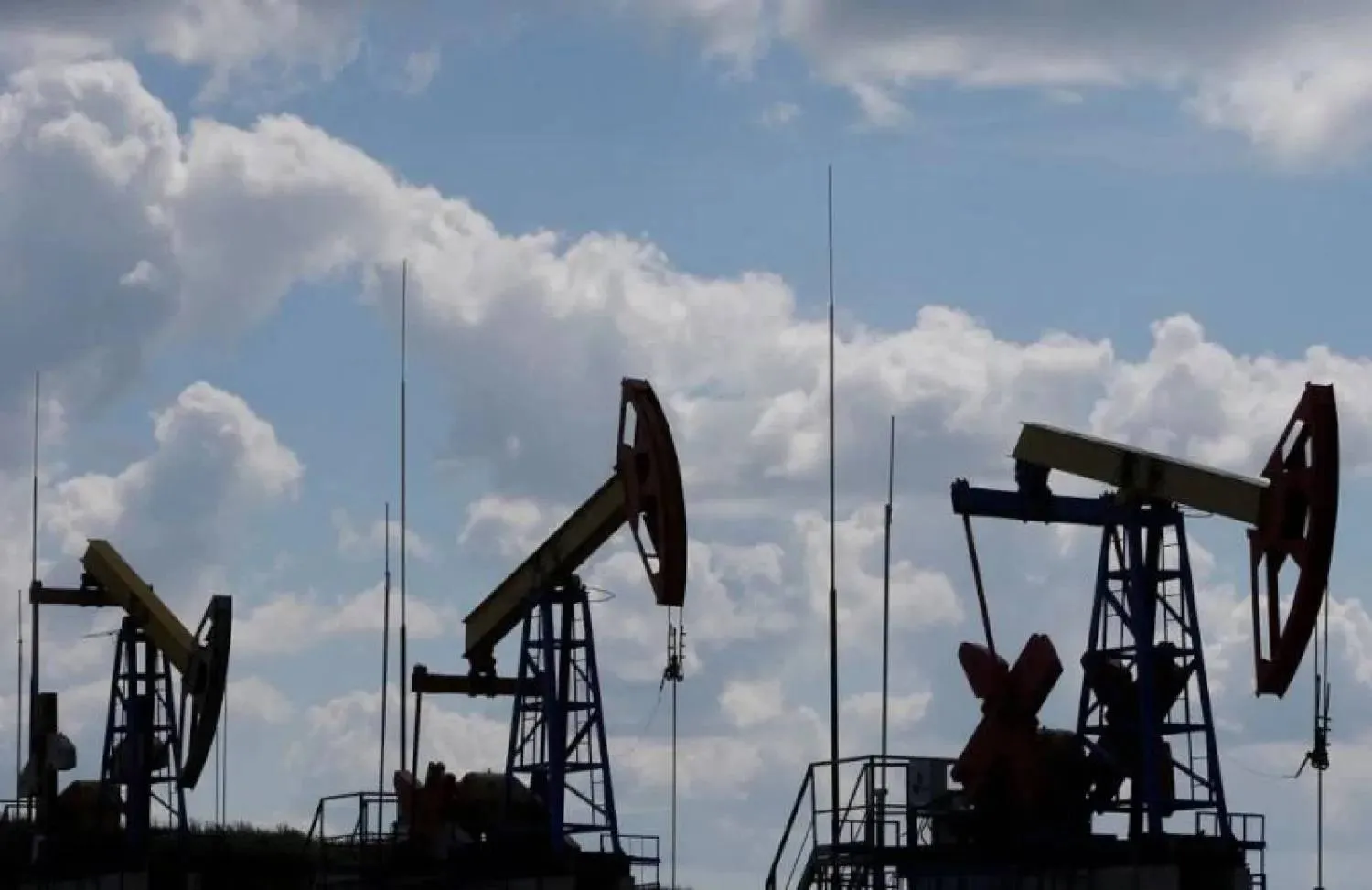

Oil Slides as Middle East Uncertainty Keeps Markets on Edge

Concerns are growing in Europe about an economic recession as oil prices rise (Reuters)
TT

Oil Slides as Middle East Uncertainty Keeps Markets on Edge

Concerns are growing in Europe about an economic recession as oil prices rise (Reuters)

Oil reversed earlier gains on Wednesday as uncertainty over the situation in the Middle East unnerved markets and US President Donald Trump again suggested the US-Israeli war with Iran could be nearing an end.

The front-month Brent contract for June fell $1.06, or 1%, to $102.91 per barrel at 1106 GMT, having dropped to a session low of $98.35. US West Texas Intermediate crude futures for May slipped $1.44, or 1.4%, to $99.94 per barrel, after falling to $96.50 earlier.

Prices rose earlier on Wednesday but then uncertainty over the Middle East conflict prompted investors to lock in gains.

"Oil prices fell after US President Trump signalled a potential end to the war with Iran," ING said in a report.

Oil supply disruptions from the Middle East will increase in April and will hit Europe as the closure of the Strait of Hormuz hits exports further, International Energy Agency head Fatih Birol said on Wednesday.

Brent futures for June delivery settled down more than $3 on Tuesday following unconfirmed media reports that Iran's president was ready to end the war.

Trump told reporters on Tuesday that the US could end the military campaign within two to three weeks and that Iran does not have to make a deal to end the conflict, his clearest declaration yet that he wants to wind down the month-long war.

Still, analysts expect that energy flows through the Strait of Hormuz would be slow to return to levels before the conflict even if a ceasefire were announced.

"Even if the Strait reopens, clearing the vessel backlog would take time, with production, exports and LNG flows normalising only gradually rather than immediately," ING said.

According to a Wall Street Journal report, Trump has indicated he could end the war before reopening the Strait of Hormuz, the route through which 20% of global oil and liquefied natural gas trade flows.

"Even with diplomatic channels reportedly still active and intermittent comments from the US administration predicting a short end to the conflict, the combination of limited tangible diplomatic progress, continued maritime attacks and explicit threats against energy assets keeps supply risks skewed to the upside," LSEG analysts said in a note.

Illustrating the impact of the closure of the Strait of Hormuz, crude oil output from the Organization of the Petroleum Exporting Countries dropped by 7.5 million barrels per day in March compared with the previous month, as producers were forced to cut output because storage is full.

US crude oil output also fell, dropping by the most in two years in January after a severe winter storm knocked production offline, data from the Energy Information Administration showed on Tuesday.



Hapag-Lloyd Says One Ship Has Crossed Strait of Hormuz

Hapag-Lloyd employees monitor the status of cargo ships in the Strait of Hormuz on a screen, in Hamburg, Germany, Wednesday, April 15, 2026. (AP Photo/Ebrahim Noroozi)
TT

Hapag-Lloyd Says One Ship Has Crossed Strait of Hormuz

Hapag-Lloyd employees monitor the status of cargo ships in the Strait of Hormuz on a screen, in Hamburg, Germany, Wednesday, April 15, 2026. (AP Photo/Ebrahim Noroozi)

Container shipping group Hapag-Lloyd said on Friday that one of its ships has crossed the Strait of Hormuz but did not have any information on the circumstances or timing.

Four out of initially six ships remain in the Gulf, after one ship's charter agreement expired, meaning it no longer belongs to the Hapag-Lloyd fleet, a spokesperson added.

The four ⁠Hapag ships remaining ⁠in the Gulf are staffed with 100 crew, who are well-supplied with food and water, Reuters quoted him as saying.

Scores of tankers and other vessels remain stuck in the Gulf as the United States is ⁠struggling to keep control of the Strait of Hormuz, one of the world's busiest shipping corridors.

The Iran war, launched by the US and Israel on February 28, has been paused since a ceasefire on April 8.

The US and Iran met in Pakistan in an attempt to end hostilities, but talks ended without agreement and ⁠a ⁠second round has yet to take place.

Tehran says it will not consider opening the strait until the US lifts its blockade of Iran's shipping, which Washington imposed during the ceasefire and Tehran calls a violation of that truce.

This week, Iran flaunted its grip over the strait with a video of commandos in a speedboat storming a huge cargo ship.


TotalEnergies to Invest in $1.2 Billion Power Project in Kazakhstan

FILE PHOTO: The logo of French oil and gas company TotalEnergies is seen at a petrol station in Paris, France, March 25, 2026. REUTERS/Abdul Saboor/File Photo
TT

TotalEnergies to Invest in $1.2 Billion Power Project in Kazakhstan

FILE PHOTO: The logo of French oil and gas company TotalEnergies is seen at a petrol station in Paris, France, March 25, 2026. REUTERS/Abdul Saboor/File Photo

French energy major TotalEnergies on Friday said it would invest in a Kazakhstan-based onshore wind and energy storage project, valued at $1.2 billion, and plans to sell the produced electricity to the country's government under a 25-year agreement signed in 2023.

The Mirny project, which is scheduled to reach full capacity in 2029, ⁠combines one gigawatt ⁠of wind capacity with 600 megawatt hours of battery energy storage, enough to supply about 1 million people in Kazakhstan, Reuters quoted the company as saying.

The launch of the project would ⁠contribute to Kazakhstan's target of increasing the share of renewables in electricity generation to 15% by 2030, Olivier Jouny, senior vice president for renewables at TotalEnergies, said in a statement.

Roughly 75% of the investment is financed externally through an agreement with an international consortium made of eight banks and entities, including the ⁠European ⁠Bank for Reconstruction and Development, Société Générale and China Construction Bank, TotalEnergies said.

TotalEnergies, jointly with partners Samruk Energy and KazMunayGas, controls a 60% stake in the project.

At the beginning of 2026, TotalEnergies had more than 34 GW of gross renewable power generation capacity, and it aims to achieve more than 100 terawatt hours of net electricity production by 2030.


Oil Rises on Concern Over Escalating Middle East Tensions

HUNTINGTON BEACH, CALIFORNIA - APRIL 23: A pumpjack stands idle in the Huntington Beach oil field on April 23, 2026 in Huntington Beach, California. Mario Tama/Getty Images/AFP
TT

Oil Rises on Concern Over Escalating Middle East Tensions

HUNTINGTON BEACH, CALIFORNIA - APRIL 23: A pumpjack stands idle in the Huntington Beach oil field on April 23, 2026 in Huntington Beach, California. Mario Tama/Getty Images/AFP

Oil rose on Friday on concerns of a renewed military escalation in the Middle East after Iran released footage of commandos boarding a cargo ship in the Strait of Hormuz, and a lack of progress in re-opening the key waterway.

Navigation through the strait, which before the war carried about a fifth of global oil output, remains effectively blocked. Iran's capture of two cargo ships highlighted Washington's difficulties in trying to control the passage.

Brent crude futures were up $1.93, ⁠or 1.8%, to $107 a ⁠barrel at 0805 GMT, while US West Texas Intermediate futures were up 76 cents, or 0.8%, at $96.61, Reuters reported.

For the week, Brent is up 18% and WTI 15%, the second-largest weekly gains since the war began.

Both contracts settled more than 3% higher on Thursday after reports that air defenses were engaging targets over Tehran and of a ⁠power struggle between Iran's hardliners and moderates.

"There is no de-escalation in sight," said Tamas Varga of oil broker PVM.

US President Donald Trump said Iran may have loaded up its weaponry "a little bit" during a two-week ceasefire, but added that the US military could eliminate it in a single day. On Wednesday, he said he would indefinitely extend the ceasefire to allow for further peace talks.

The ceasefire is increasingly looking like a preparatory phase for more war, Haitong Futures said in a report. If peace talks fail to make ⁠progress by ⁠the end of April and fighting resumes, oil prices could climb to new highs for the year, it added.

"There's set to be fresh financial pain ahead as key shipments from the region remain blocked," said Susannah Streeter, chief investment strategist at UK investment service Wealth Club. "That is set to keep costs elevated for a vast array of commodities."

As investors and governments around the world look for a lasting peace, Trump said he would not set a "timetable" for ending the conflict and that he wanted to make "a great deal."

"Don't rush me," he said when asked how long he was willing to wait for a long-term deal.