


Oil Prices Rally, Stocks Mixed after Trump's Latest Iran Threat

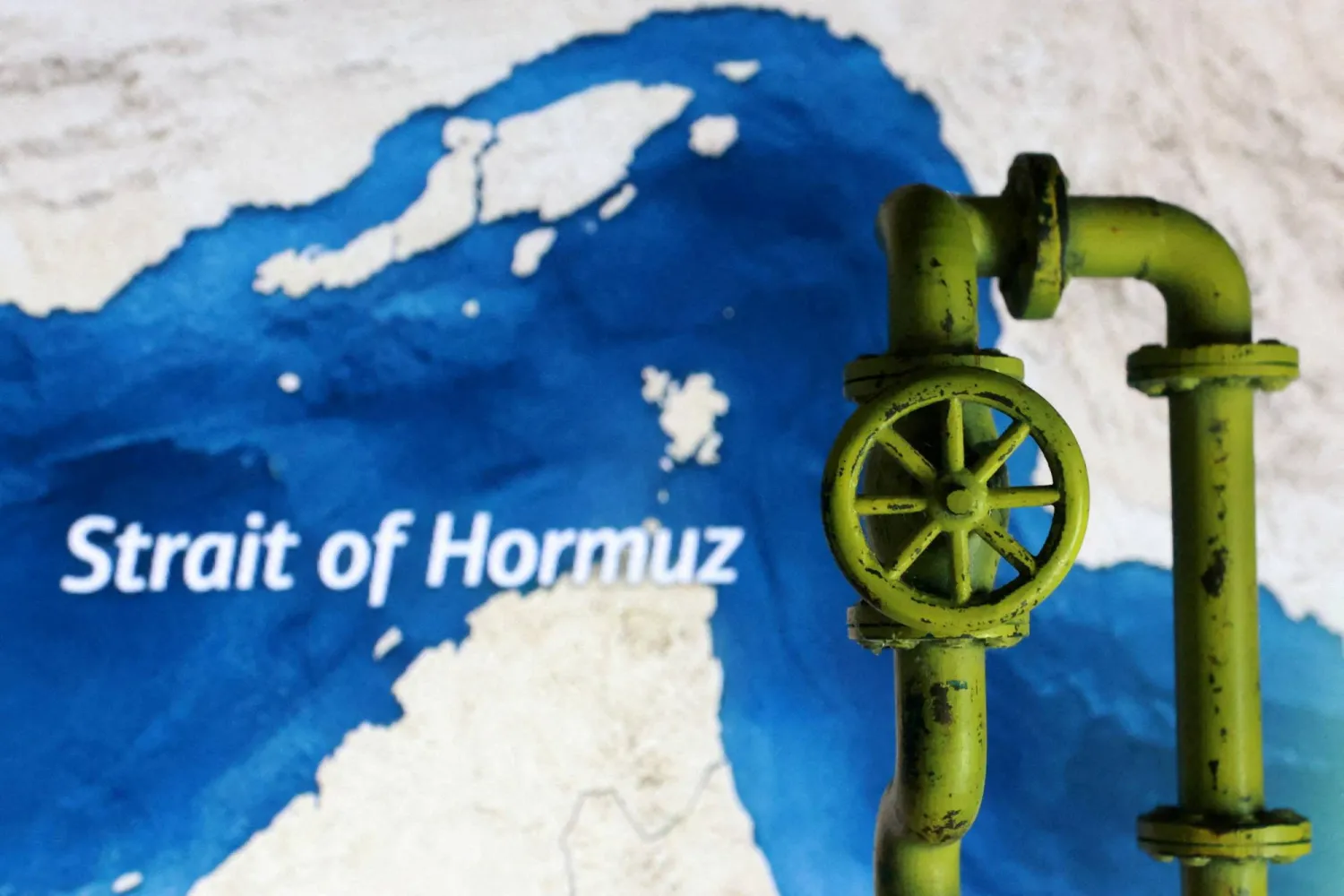
FILE PHOTO: A map showing the Strait of Hormuz and a 3D printed oil pipeline are seen in this illustration taken March 23, 2026. REUTERS/Dado Ruvic/Illustration/File Photo/File Photo
TT

Oil Prices Rally, Stocks Mixed after Trump's Latest Iran Threat

FILE PHOTO: A map showing the Strait of Hormuz and a 3D printed oil pipeline are seen in this illustration taken March 23, 2026. REUTERS/Dado Ruvic/Illustration/File Photo/File Photo

Oil prices rose Tuesday while equities were mixed as investors assessed Donald Trump's latest deadline for Iran to reopen the strategic Strait of Hormuz or be "decimated".

As the Middle East war entered its sixth week, the US president warned Tehran that its civilian infrastructure would be destroyed if it did not let ships through the waterway, through which a fifth of global crude and gas passes.

The remarks came as he and Iran said a proposal touted by international mediators for a 45-day ceasefire was not yet ready, AFP reported.

Trump told a news conference that "the entire country" of Iran "could be taken out in one night and that night might be tomorrow night", if his ultimatum to reopen the Strait by 0000 GMT Wednesday was not met.

"We have a plan... where every bridge in Iran will be decimated by 12 o'clock tomorrow night, where every power plant in Iran will be out of business, burning, exploding and never to be used again," Trump said, brushing aside accusations that such a move would be a war crime.

"I mean complete demolition by 12 o'clock, and it'll happen over a period of four hours -- if we wanted to."

The threat came after a profanity-laced social media post on Easter Sunday in which he vowed Iran would be "living in Hell" if it didn't reopen the Strait.

Tehran said that if such an attack went ahead, it would retaliate by striking energy infrastructure in the Gulf, which could deal a further blow to already thin oil supplies and hammer the global economy.

Both main oil contracts rose Tuesday, with West Texas Intermediate topping $115 -- its highest in a month -- and Brent sitting around $111.

Equity markets fluctuated, with Tokyo, Singapore, Manila and Jakarta down while Shanghai, Sydney, Seoul, Wellington and Taipei rose. Hong Kong was closed for a holiday.

That followed a positive start to the week on Wall Street.

"Financial markets are oscillating in a narrow, uneasy range as traders sized up the countdown to Donald Trump's Iran deadline," wrote Stephen Innes at SPI Asset Management.

"Tentative ceasefire optics (were) offering brief relief but never fully offsetting the lingering risk of escalation," he added.

"For now, the rhetoric has tightened, the threats sharpened, and yet the market is not capitulating, conditioned by repetition to expect de-escalation just before the edge.

"Traders are no longer reacting to what is said, but to when it is usually walked back."

The hit to fuel supplies from the Middle East has forced governments around the world to unveil economic support measures amid fears of another spike in inflation.

On Tuesday, the Philippines said inflation jumped to a forecast-topping 4.1 percent in March, its highest level in nearly two years.

US figures last week showed growth in the country's services activity cooled last month as companies monitored the higher energy prices and braced for supply chain disruptions.

In company news, Samsung rallied around one percent after estimating first-quarter profit soared 755 percent to an all-time high of $37.9 billion thanks to strong sales of chips crucial for artificial intelligence.

It also said sales were expected to surge 68 percent on-year to hit $88 billion in January-March.



Spain's Repsol Reportedly Wins Back Control of Venezuelan Oil Operations

FILE PHOTO: Logo of the Spanish oil company Repsol at a gas station in Vecindario, on the island of Gran Canaria, Spain, January 9, 2026. REUTERS/Borja Suarez/File Photo
TT

Spain's Repsol Reportedly Wins Back Control of Venezuelan Oil Operations

FILE PHOTO: Logo of the Spanish oil company Repsol at a gas station in Vecindario, on the island of Gran Canaria, Spain, January 9, 2026. REUTERS/Borja Suarez/File Photo

Spanish energy group Repsol is poised to take back operational control of its Venezuelan oil assets and boost production following a deal signed with the South American government, the Financial Times reported on Thursday.

Repsol is expected to announce the agreement as early as Thursday, FT added, citing a person familiar with ⁠the matter.

The agreement ⁠will include plans to triple production from its Venezuelan oil operations within three years and establish a "guaranteed" payment system that will avoid previous pitfalls under which the capital city ⁠of Caracas failed to pay up, according to the report.

Reuters could not immediately verify the report. Repsol did not immediately respond to Reuters' request for a comment.

Venezuela holds one of the largest oil reserves in the world but has dilapidated energy infrastructure.

In 2023, Repsol reached an agreement with Venezuela to continue operating its ⁠facilities ⁠there. The deal later lapsed after US President Donald Trump revoked licenses granted to Repsol and other Western companies to operate in the country.

After the US captured President Nicolas Maduro in January, Washington eased sanctions on Venezuela's energy sector, issuing general licenses that allow global energy companies to operate oil and gas projects in the OPEC member.


China's Economy Beats Forecasts, but War Darkens Outlook

China's exports have helped support the economy but there are concerns about the impact on trade from the Middle East crisis. CN-STR/AFP
TT

China's Economy Beats Forecasts, but War Darkens Outlook

China's exports have helped support the economy but there are concerns about the impact on trade from the Middle East crisis. CN-STR/AFP

China's economy expanded more than expected in the first three months of the year, with official data Thursday indicating resilience in the face of a Middle East crisis that threatens to hit global growth.

The figures came despite a surge in world energy prices caused by the US-Israel war on Iran, which has stymied shipping through the crucial Strait of Hormuz, through which a fifth of the world's oil and natural gas passes.

Analysts say China's diversified energy supply shields it from immediate shocks, though a potential global downturn caused by the war could weaken demand for its exports, which have been propping up the country's economy.

Gross domestic product in the world's second-largest economy expanded 5.0 percent year-on-year in January-March, according to the National Bureau of Statistics (NBS).

The reading was slightly higher than an AFP forecast of 4.8 percent based on a survey of economists.

During the first quarter, China's economy "achieved a strong start to the year, further demonstrating its resilience and vitality", the NBS said in a statement announcing the data.

The reading came days after the International Monetary Fund cut its 2026 global growth projection, warning that the world economy could be "thrown off course" by the Middle East war.

It also reduced its forecast for China to 4.4 percent growth, from a previous estimate of 4.5 percent.

"The global economy is facing this next test of resilience as signs of unevenness lie beneath the surface," it said, noting that China's "domestic activity -- especially in the housing sector -- lags behind exports".

Beijing has set a 2026 target of 4.5-5.0 percent growth -- the lowest in decades.

A years-long crisis in the property sector and a persistent slump in domestic spending have left leaders reliant on exports to meet growth targets.

- Trade headwinds -

Outbound shipments have boomed, exemplified by the country's whopping $1.2 trillion trade surplus last year.

But data this week showed export growth slowed sharply in March, indicating that war in the Middle East was already taking a toll.

Thursday's NBS data also showed retail sales grew 1.7 percent on-year in March, well short of a Bloomberg forecast of 2.4 percent.

Industrial production rose 5.7 percent, the NBS said, beating a Bloomberg estimate of 5.3 percent but well down from the 6.3 percent seen in January and February combined.

The first-quarter acceleration in growth was fueled by exports, Zichun Huang of Capital Economics wrote in a note.

"We think growth will soften a bit over the rest of the year," she said.

"While the Chinese economy is holding up well, it is becoming ever more dependent on external demand," she said, noting that the Iran war "is likely to add to this trend".

A major international trade fair kicked off this week in Guangzhou -- a metropolis in China's southern manufacturing heartland -- where attendees told AFP the war is impacting their business.

Chinese exporters and Middle Eastern buyers at the opening day of the Canton Fair on Wednesday gloomily told AFP the Iran war had pummeled orders and led to price hikes.

Wang Jun, the deputy head of China's customs administration, this week acknowledged "many uncertainties and instabilities in the external environment".

"The impact of international geopolitical conflicts on global industrial and supply chains is still evolving in a complex manner," he said.


Saudi Arabia, US Sign Tax Information Exchange Agreement

Al-Jadaan and Bessent shake hands after signing the Tax Information Exchange Agreement in Washington. (X)
TT

Saudi Arabia, US Sign Tax Information Exchange Agreement

Al-Jadaan and Bessent shake hands after signing the Tax Information Exchange Agreement in Washington. (X)

Saudi Minister of Finance Mohammed Al-Jadaan has held a series of meetings in Washington, D.C. to discuss strengthening bilateral economic cooperation and addressing challenges facing the global economy.

Al-Jadaan began his meetings on Wednesday by holding talks with US Treasury Secretary Scott Bessent. They discussed the latest developments in the global economy and financial issues of common interest.

They signed a Tax Information Exchange Agreement to enhance tax cooperation, as well as facilitate the exchange of knowledge and technical expertise between the two sides.

As part of strengthening European economic relations, Al-Jadaan met with French Minister of the Economy, Finance, and Industrial, Energy, and Digital Sovereignty Roland Lescure.

The two sides discussed economic developments in the world, focusing on exploring new ways to deepen financial and industrial cooperation between the Kingdom and France, in a way that serves common interests.

Regarding relations with Pakistan, the Minister of Finance discussed with both his Pakistani counterpart, Muhammad Aurangzeb, and the Governor of the State Bank of Pakistan, Jameel Ahmad, prospects for financial and economic cooperation.

The discussions addressed ways to support financial stability and enhance joint work between financial institutions in both countries.