


IMF: Middle East War Means 'All Roads' Lead to Higher Prices, Slower Growth

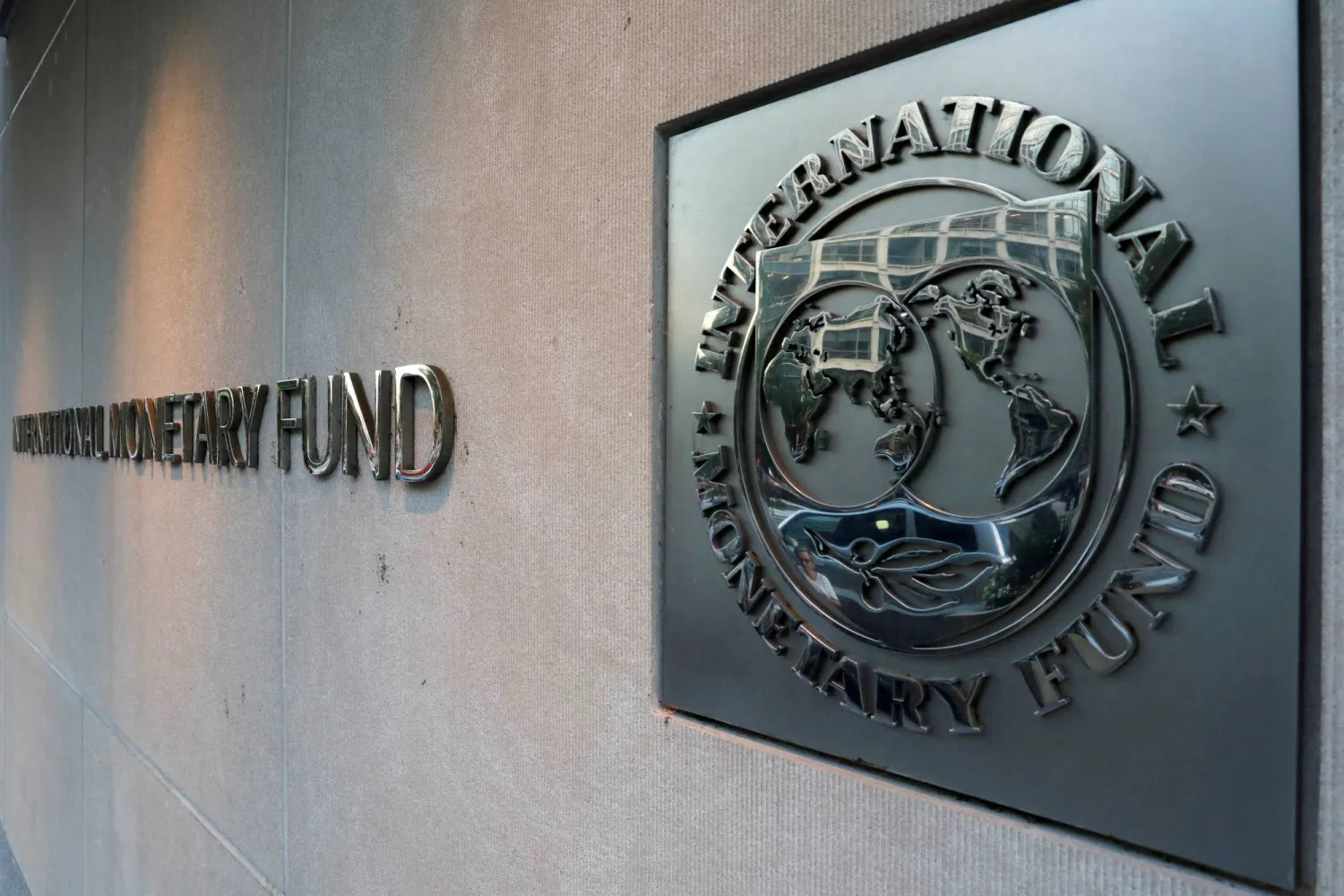
FILE PHOTO: International Monetary Fund (IMF) logo is seen outside the headquarters building in Washington, US, September 4, 2018. REUTERS/Yuri Gripas/File Photo
TT

IMF: Middle East War Means 'All Roads' Lead to Higher Prices, Slower Growth

FILE PHOTO: International Monetary Fund (IMF) logo is seen outside the headquarters building in Washington, US, September 4, 2018. REUTERS/Yuri Gripas/File Photo

The war in the Middle East will lead to higher inflation and slower global growth, the head of the International Monetary Fund told Reuters on Monday, ahead of a forecast for the world economy planned by the global lender for next week.

The war has triggered the worst-ever disruption in global energy supply, with millions of barrels of oil production shuttered due to Iran's effective blockage of the Strait of Hormuz, crucial for shipping one-fifth of the world's oil and gas.

Even if the conflict is swiftly resolved, the IMF is set to reduce its forecast for economic growth and bump up its outlook for inflation, Kristalina Georgieva, managing director of the IMF, said.

The war is expected to dominate discussions among finance officials from around the world at next week's spring meetings of the IMF and World Bank in Washington.

The Fund is expected to release a range of scenarios in its upcoming World ‌Economic Outlook due ‌on April 14. It signaled a possible downgrade in a March 30 blog post, citing ‌the asymmetric ⁠shock of the ⁠war and tighter financial conditions.

Without the war, Georgieva said the IMF had expected a small upgrade in its projection for global growth of 3.3% in 2026 and 3.2% in 2027 as economies continue to recover from the pandemic.

"Instead, all roads now lead to higher prices and slower growth," said Georgieva, who will preview the spring meetings in a speech on Thursday. World Bank President Ajay Banga will present his view at an Atlantic Council event on Tuesday.

"We are in a world of elevated uncertainty," the IMF chief said, citing geopolitical tensions, technological advancements, climate shocks and demographic shifts.

"All of this means that after we recover from this shock, we need to keep our eyes open for the ⁠next one." The war has shrunk global oil supply by 13%, Georgieva said, with the impact rippling ‌through oil and gas shipments and into related supply chains such as helium ‌and fertilizers.

Even a rapid end to hostilities and a fairly rapid recovery will result in a "relatively small" downward revision of the growth forecast and an ‌upward revision of its inflation forecast, she said. If the war is protracted, the effect on inflation and growth will be ‌greater.

POOR COUNTRIES WILL BE HIT HARDEST

Poor, vulnerable countries with no energy reserves will be hardest hit, Georgieva added, noting that many countries had little to no fiscal space to help their populations weather the price increases caused by the war, which in turn also increased the prospects of social unrest.

Georgieva said some countries had already asked for funding help, but did not name them. She said the IMF could augment some existing lending programs ‌to meet countries' needs. Eighty-five percent of the IMF's members are energy importers.

Broad energy subsidies were not the answer, she said, urging policymakers to avoid government payments that could further inflame ⁠inflationary pressures.

The impact has been ⁠asymmetric, hitting energy-importing countries hardest, but even energy exporters such as Qatar are feeling the effect from Iranian strikes against their production facilities.

Qatar expects it will take three to five years to restore 17% of its natural gas production because of the damage, Georgieva said, while the International Energy Agency has reported 72 energy facilities have been damaged in the war, one-third of which have suffered significant damage.

"Even if the war is to stop today, there would be a lingering negative impact to the rest of the world," she said.

FOOD SECURITY A CONCERN

After the US and Israel attacked on February 28, Iran effectively closed the Strait of Hormuz, sending the price of crude oil and liquefied natural gas sharply higher.

The international Brent crude benchmark settled near $110 on Monday, with cash benchmarks sourced to the Middle East at a substantial premium to that price.

The heads of the IMF, IEA and World Bank said last week they would form a coordinated effort to assess the energy and economic effects of the war. Georgieva said the IMF was also engaging with the United Nations' World Food Program and Food and Agriculture Organization on food security.

The World Food Program said in mid-March that millions of people will face acute hunger if the war continues into June. Georgieva said the IMF did not see a food crisis yet, but that could happen if the delivery of fertilizers was impaired.



Saudi Economy Grows 2.8% as Non-Oil Sector Drives Expansion

A container ship at a Saudi port (SPA)
TT

Saudi Economy Grows 2.8% as Non-Oil Sector Drives Expansion

A container ship at a Saudi port (SPA)

Saudi Arabia’s economy maintained positive growth despite regional tensions and oil market volatility, reflecting strong fundamentals and the continued impact of diversification efforts. Expansion in non-oil activities remained the key driver, supporting stability and strengthening the economy’s ability to adapt to global shifts.

The General Authority for Statistics said in flash estimates that real GDP grew 2.8% in the first quarter of 2026 from a year earlier, with non-oil sectors contributing about 60% of the increase.

All major sectors posted gains. Non-oil activities rose 2.8%, the oil sector grew about 2.3%, and government activities increased 1.5% year on year.

Growth momentum

Economists told Asharq Al-Awsat the first-quarter expansion highlights the Kingdom’s structural shift, with oil no longer the main engine of growth. Non-oil sectors now lead, accounting for roughly 60% of the expansion.

They said the figures show diversification policies are delivering tangible results, strengthening economic stability and improving resilience to global and regional volatility. Sustained momentum, they added, reflects successful policies to build a broader, more durable production base and support long-term growth.

Mega projects

Naif Al-Ghaith, chief economist at Riyad Bank, said the economy is moving toward a more diversified and sustainable model, with growth set to accelerate as reforms continue and mega projects expand.

“All indicators point to a positive outlook in the medium and long term. Despite geopolitical events, the consumer confidence index in March showed an expansionary trend, as did the Riyad Bank Purchasing Managers' Index in April, along with private sector optimism, signaling a faster recovery in growth momentum in the coming quarters,” he said.

Al-Ghaith said the data confirm strong progress in diversification driven by non-oil growth, adding that the economy is building solid foundations away from oil volatility. He said government policies have opened new investment opportunities in sectors including tourism, entertainment, technology, energy and infrastructure.

He added that the state continues to invest billions in mega projects to generate future revenues, alongside efforts by the Public Investment Fund to accelerate diversification through targeted local and international investments.

Geopolitical challenges

Hisham Abu Jameh, senior adviser at Naif Al Rajhi Investment, said the first-quarter performance reflects a balance between growth and the ability to absorb temporary external pressures, with GDP maintaining a positive pace despite geopolitical risks and energy market swings.

He said the economy is no longer heavily reliant on oil and is better positioned to absorb shocks thanks to more diverse income sources.

Abu Jameh said the non-oil sector remains a key stabilizer. Despite slower growth than in previous periods, it continues to expand, supported by sectors such as tourism, services and logistics.

He said this reflects the success of reforms under Saudi Vision 2030 and of ongoing efforts to boost investment and private-sector participation.

Sector contributions

Data from the General Authority for Statistics showed non-oil sectors led growth, contributing 1.7 percentage points, followed by oil at 0.7 percentage points and government activities at 0.3 percentage points. Net taxes on products added 0.2 percentage points.

Seasonally adjusted data showed GDP fell 1.5% in the first quarter from the fourth quarter of 2025, driven by a 7.2% drop in oil activities. Non-oil sectors grew 0.8%, while government activities rose 0.2%.

On a seasonally adjusted basis, oil activities were the main drag, cutting 1.7 percentage points from growth. Non-oil and government activities each added 0.1 percentage points.


Oil Prices Whipsaw while US Stocks Glide Near their Record Heights

Facilities of the PCK Schwedt refinery in Schwedt, northeastern Germany, are seen at the company's plant on April 30, 2026 - (File Photo by Tobias SCHWARZ / AFP)
TT

Oil Prices Whipsaw while US Stocks Glide Near their Record Heights

Facilities of the PCK Schwedt refinery in Schwedt, northeastern Germany, are seen at the company's plant on April 30, 2026 - (File Photo by Tobias SCHWARZ / AFP)

Oil prices whipsawed on Thursday and surged toward their highest levels since the war with Iran began, only for the leaps to quickly vanish. The US stock market, meanwhile, is gliding following more strong profit reports from big companies like Alphabet.

The S&P 500 rose 0.1% and is a bit below its all-time high set earlier this week, as companies continue to deliver fatter profits for the start of 2026 than analysts expected despite high oil prices and uncertainty about the economy. The Dow Jones Industrial Average was up 413 points, or 0.8%, as of 10 a.m. Eastern time, and the Nasdaq composite was 0.3% lower, Reuters reported.

Alphabet led the way and rose 5.8% after the owner of Google and YouTube reported profit for the latest quarter that almost doubled analysts’ expectations. Investments in artificial intelligence “are lighting up every part of the business,” CEO Sundar Pichai said.

The steadiness on Wall Street followed manic swings in the oil market, where prices surged overnight on worries that the Iran war will affect the flow of crude for a long time. Iran has closed the Strait of Hormuz to oil tankers, keeping them pent up in the Arabian Gulf and away from customers worldwide, while a US Navy blockade is preventing Iran from selling its own oil.

Traders are always buying and selling contracts for different kinds of oil, going out for many months. In the most actively traded part of the market for Brent crude, the international standard, the price got as high as $114.70 overnight for a barrel of Brent to be delivered in July. It then regressed to $109.80, down 0.6%, which is still well above the roughly $70 per barrel that Brent was selling for before the war.

So far during the war, the peak price for the most actively traded Brent contract is $119.50, which was set last month.

In a less actively traded corner of the Brent market, the price for a barrel to be delivered in June briefly went above $126 overnight before pulling back toward $114.

That easing, along with the continuing flood of better-than-expected profit reports from US companies, helped to keep Wall Street stable near its records.

Caterpillar, Eli Lilly, O’Reilly Automotive and Royal Caribbean all rallied more than 6% after delivering profits for the latest quarter that topped analysts’ expectations. That’s crucial for investors because stock prices tend to follow the track of corporate profits over the long term.

Still, a better-than-expected result isn’t always enough to boost a stock’s price if it’s already shot much higher.

Meta Platforms tumbled 9.9% even though the company behind Facebook and Instagram made more profit last quarter than expected. Investors focused more on Meta’s increased forecast for how much it will spend on data centers and other investments this year as it builds out its AI capabilities, up to a range of $125 billion to $145 billion.

Doubts are still high among some investors about whether all the AI spending by Meta and other companies will produce enough profit and productivity to make it worth it.

Microsoft fell 4.5% after it likewise raised its forecast for investments and other capital spending. But analysts also said accelerating trends at its Azure business were encouraging.

Amazon slid 0.8% after blowing past analysts’ expectations for earnings in the latest quarter.

In the bond market, Treasury yields eased after oil prices gave up their big overnight gains. Reports also suggested that US economic growth accelerated by less in the first three months of the year than economists expected, while a measure of inflation worsened in March by about as much as expected.

A separate report said that fewer US workers applied for unemployment benefits last week in an indication of fewer layoffs even though companies are announcing large cuts to workforces.

The yield on the 10-year Treasury eased to 4.38% from 4.42% late Wednesday.

In stock markets abroad, indexes were mixed.

London’s FTSE 100 jumped 1.3% after the Bank of England kept its main interest rate on hold.

Germany's DAX returned 0.7%, and France's CAC 40 slipped 0.2% after the European Central Bank also held its own interest rates steady. That followed similar decisions by the US Federal Reserve on Wednesday and the Bank of Japan on Tuesday to keep their rates unchanged.

Hong Kong’s Hang Seng lost 1.3%, while stocks added 0.1% in Shanghai after a report said China’s factory activity slowed slightly in April but remained in expansion territory for the second month.


Saudi GDP Grows 2.8% in First Quarter

The Saudi capital, Riyadh (SPA)
TT

Saudi GDP Grows 2.8% in First Quarter

The Saudi capital, Riyadh (SPA)

Saudi Arabia's real gross domestic product grew 2.8% in the first quarter, year-on-year, preliminary government estimates showed on Thursday.

Non-oil activities grew 2.8% in the quarter, and oil activities increased 2.3% from the prior-year period, the General Authority of Statistics data ⁠showed.

On a quarterly basis, growth shrank 1.5% in the three months to March 31 compared to the fourth quarter, driven by a decline in oil activities.

Oil activity decreased 7.2% from the fourth quarter, while non-oil activity was almost flat.