


Saudi Food Self-Sufficiency Shields Economy from Hormuz Crisis

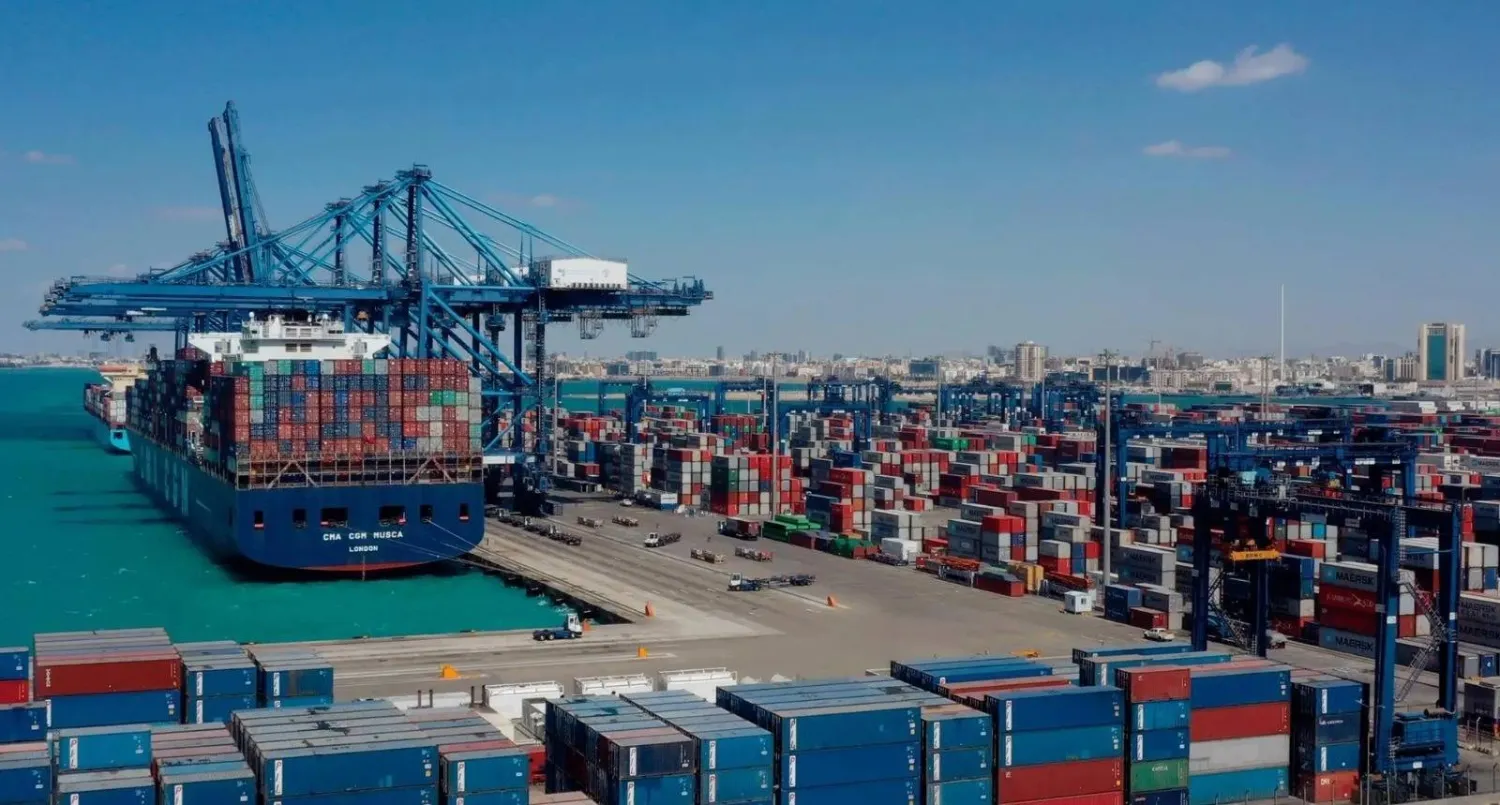
Containers are seen at a port in Saudi Arabia. (SPA)
TT

Saudi Food Self-Sufficiency Shields Economy from Hormuz Crisis

Containers are seen at a port in Saudi Arabia. (SPA)

The closure of the Strait of Hormuz has pushed global energy and food security to the brink. Saudi Arabia responded by positioning itself as a stabilizing force, turning its western coastline into a lifeline that not only protected its domestic market but also helped offset shortages in neighboring countries.

A proactive strategy that raised self-sufficiency in key food products above 100% helped the Kingdom mitigate the fallout from the geopolitical crisis. Backed by efficient logistics and strong local content, Saudi food security has evolved beyond a statistical benchmark into a pillar capable of absorbing global shocks and keeping goods flowing smoothly amid turbulence.

Official data underlines that shift. The General Authority for Statistics’ 2024 food security report showed record increases in self-sufficiency across several plant and animal products compared with 2023, with some exceeding 100%.

The gains were driven by sustained investment in agriculture, stronger domestic supply chains and diversified import sources. Together, they shielded the local market from sharp disruptions, helping stabilize prices and maintain supply, reinforcing food security as a core pillar in managing global crises.

Ports have been central to that effort. Shura Council member Fadel bin Saad Al-Buainain said Saudi Arabia’s strategic location on the Red Sea and the Gulf provides multiple high-efficiency ports supported by integrated logistics that sustain flows of goods and cargo.

He said the Kingdom faced no difficulty meeting demand or exporting goods after the closure of the Strait of Hormuz, successfully using Red Sea ports as an alternative route. That ensured uninterrupted flows, avoided shortages or price spikes, and strengthened confidence in government measures to contain the impact of geopolitical tensions.

Saudi efforts extended beyond its borders. Al-Buainain said the Kingdom helped compensate for shortages in Gulf states whose imports were disrupted, using Red Sea ports, expanding storage capacity, activating fast-track transit agreements and linking Gulf ports to move goods, alongside overland transport.

“These are tremendous efforts that went beyond the Kingdom’s borders to reach all Gulf states, reinforcing cooperation and integration and underscoring the importance of the Gulf Cooperation Council,” he told Asharq Al-Awsat.

Strengthening local content has been key. Al-Buainain said the Kingdom achieved significant self-sufficiency, particularly in agriculture, alongside other goods including oil-sector industrial parts, whose local availability helped facilities recover quickly after what he described as Iranian attacks.

Sustained local supply has been central to curbing inflation and stabilizing prices, while strategic reserves of essential goods have served as an effective buffer, enabling the state to absorb shocks and meet market demand without disruption, he stressed.

The availability of imports does not guarantee price stability, as rising costs, particularly in air freight, have driven price increases in markets rather than shortages, he added.

Strategic reserves also help regulate prices, Al-Buainain said, noting the role of the Ministry of Commerce in pricing stockpiles at reasonable levels and preventing exploitation during crises.

Saudi Arabia’s transport and logistics system has leveraged its strategic location to generate economic returns while strengthening national security in its broader sense, including food, medical and commodity security, whether sourced locally or imported through western ports.

Osama bin Ghanem Al-Obaidy, an adviser and professor of commercial law, said the Kingdom’s push to develop agriculture and livestock sectors had driven self-sufficiency rates above 100% in several products, reflecting the strength of local production and its ability to meet both domestic and external demand.

Those efforts helped maintain supply and stabilize prices during the Hormuz crisis, which disrupted shipments and drove up shipping and insurance costs, contributing to a sharp rise in global food prices, particularly wheat and rice, he told Asharq Al-Awsat.

Al-Obaidi said the crisis strained global supply chains, causing bottlenecks in goods and vital fertilizers as shipping through the strait declined. Saudi western ports, led by Jeddah Islamic Port and Yanbu, have become key logistics hubs, securing domestic supply while serving as vital arteries for neighboring countries.

Data from the statistics authority showed shrimp self-sufficiency at 149%, dairy products at 131% and table eggs at 103%.

Vegetable self-sufficiency also reached high levels, with eggplant at 105%, okra at 102%, cucumbers at 101% and zucchini at 100%. Dates recorded the highest rate among fruits at 121%, followed by figs at 99%.

In livestock, data from the Ministry of Environment, Water and Agriculture showed the Kingdom met 61% of its red meat needs locally, with production exceeding 270,000 metric tons. That stability boosted market resilience and its ability to meet rising demand, especially during peak seasons.

In poultry, a key component of the Ramadan food basket, self-sufficiency reached 72%, with production surpassing 1 million metric tons. The surplus not only met local demand but also supported exports, alongside tighter oversight to ensure market stability and protect supply chains from external shocks.

The result has reinforced Saudi Arabia’s position as a global contributor to sustainable food security, backed by an outward investment strategy that includes stakes in major producers such as Brazil’s BRF and Ukraine’s MHP, helping secure supplies at source.



Saudi Stock Market Edges Lower in First Session of the Week

An investor monitors a stock screen at the Saudi financial market in Riyadh (AFP)
TT

Saudi Stock Market Edges Lower in First Session of the Week

An investor monitors a stock screen at the Saudi financial market in Riyadh (AFP)

Saudi Arabia’s stock market index ended trading slightly lower, falling 0.25 percent to close at 10,968 points, amid trading turnover of around SAR2.9 billion, the lowest level since January 2026.

Mining giant Maaden fell 2 percent to close at SAR62.7, while SABIC declined by the same percentage to SAR59.4. Arabian Drilling slipped 1 percent to SAR86.6.

In the banking sector, Saudi National Bank shares fell 0.26 percent to SAR38.5.

Meanwhile, Saudi Aramco, the index’s heaviest-weighted stock, rose 0.3 percent to close at SAR27.78.

ACWA Power also gained 2 percent to SAR181.10.

Kingdom Holding rose 6 percent to SAR11.01, while Solutions climbed 4 percent to close at SAR229.6.


Oman Inflation Rises 3.2% in April

Shoppers at a food and beverage store in Oman. (Reuters)
TT

Oman Inflation Rises 3.2% in April

Shoppers at a food and beverage store in Oman. (Reuters)

Oman’s consumer price index (CPI) rose 3.2 percent in April compared with the same month in 2025, based on 2018 as the reference year.

The National Center for Statistics and Information said in data carried by the Oman News Agency on Sunday that average inflation during the period from January through April increased by 2.6 percent.

The data showed that the miscellaneous personal goods and services group recorded the highest increase at 9.2 percent, followed by food and non-alcoholic beverages at 6.2 percent, and transport at 6 percent.

The food and non-alcoholic beverages group recorded increases across most categories in April compared with the same month last year, led by vegetables at 25 percent, followed by fruits at 11.6 percent, and fish and seafood at 6.1 percent.

The data also showed varying inflation rates across Oman’s governorates at the end of April compared with the corresponding period last year. Al Dhahirah Governorate recorded the highest increase at 4.4 percent, followed by Al Dakhiliyah and Muscat governorates at 3.7 percent, and Al Buraimi Governorate at 3.5 percent.


Gulf, International Initiative to Assess War’s Impact on Private Sector

A previous meeting of the Federation of GCC Chambers in Riyadh. (SPA)
TT

Gulf, International Initiative to Assess War’s Impact on Private Sector

A previous meeting of the Federation of GCC Chambers in Riyadh. (SPA)

Asharq Al-Awsat has learned of a joint initiative by the Federation of GCC Chambers and the International Labor Organization to conduct a rapid assessment of the impact of the war on the private sector and labor markets across Gulf Cooperation Council countries.

The initiative is expected to contribute directly to the formulation of actionable recommendations aimed at preserving labor market stability and supporting business continuity.

The initiative seeks to assess the impact of the current crisis and conflict on private sector institutions, with particular focus on small and medium-sized enterprises, as well as on labor markets across GCC states.

According to the information obtained, the Federation of GCC Chambers has asked private sector companies and institutions across member states to document the impact of the war, whether they market their products domestically or in regional and international markets.

The federation is also seeking to determine the effects of the current regional crisis on supply chains and private sector operations, including delays in receiving imported inputs, shortages of critical materials affecting operations, higher transportation and logistics costs, and disruptions in the distribution of goods and services to markets and customers.

It is also examining the direct impact of disruptions to maritime trade routes, including the Strait of Hormuz, on businesses, particularly in terms of rerouting shipments through alternative routes or transport methods, difficulties shipping or receiving goods by sea, increased shipping and insurance costs, declining import and export volumes, and shipment or order delays and cancellations.

The federation has further requested information on the extent to which the crisis has affected overall operating expenses, whether significantly, moderately or not at all, as well as its impact on companies’ investment plans, including whether firms intend to cancel, reduce or indefinitely postpone investments, or instead increase spending to adapt, restructure or respond to new conditions.

Among the challenges the federation is seeking to assess are companies’ ability to cover operating and fixed costs, revenue conditions, and the immediate measures taken regarding their workforce in response to the crisis, including reducing working hours, shifting employees to part-time arrangements, freezing recruitment and hiring, cutting wages and benefits, or reallocating staff to different roles and functions.

Secretary-General of the Gulf Cooperation Council Jasem Albudaiwi recently said that a series of Gulf economic and financial achievements had strengthened regional integration and reinforced financial stability in the face of evolving challenges.

Speaking during the 125th meeting of the GCC Financial and Economic Cooperation Committee in mid-May, Albudaiwi said the current war crisis requires Gulf states to move beyond traditional coordination toward a higher level of practical integration and effective response.

He said the accelerating crises and growing economic challenges facing the region underscore the urgent need for a conscious response and measures capable of mitigating their impact on GCC economies, which have long been characterized by openness and deep engagement with the global economy.

Albudaiwi also stressed the need to expedite the completion of key joint Gulf projects, including transportation and logistics initiatives, while accelerating implementation of the GCC railway project and strengthening the regional electricity interconnection network.

He further called for studying the establishment of oil and gas pipeline networks, a GCC water interconnection project, strategic Gulf stockpile zones, and measures to ensure adequate liquidity reserves at central banks.