




Saudi Arabia is steadily consolidating its position as the Middle East’s largest tourism economy, underpinned by strong investment momentum and sweeping structural reforms under Vision 2030.
Data from the World Travel & Tourism Council (WTTC) showed a sharp rise in the sector’s contribution, reaching $178 billion in 2025. This represents about 46 percent of the region’s tourism economy, with growth of around 7.4 percent — above the regional average of 5.3 percent — underscoring an exceptional pace of expansion that has turned the Kingdom into a global destination where tourism, entertainment and digital solutions converge.
123 million tourists
This performance builds on momentum since the launch of Vision 2030. The total number of domestic and international tourists reached about 123 million in 2025, highlighting Saudi Arabia’s growing appeal as a global destination.
The business segment has also emerged as a key growth driver, with the Kingdom strengthening its position as a regional hub for exhibitions, conferences and international events, supporting more diversified and sustainable tourism demand.
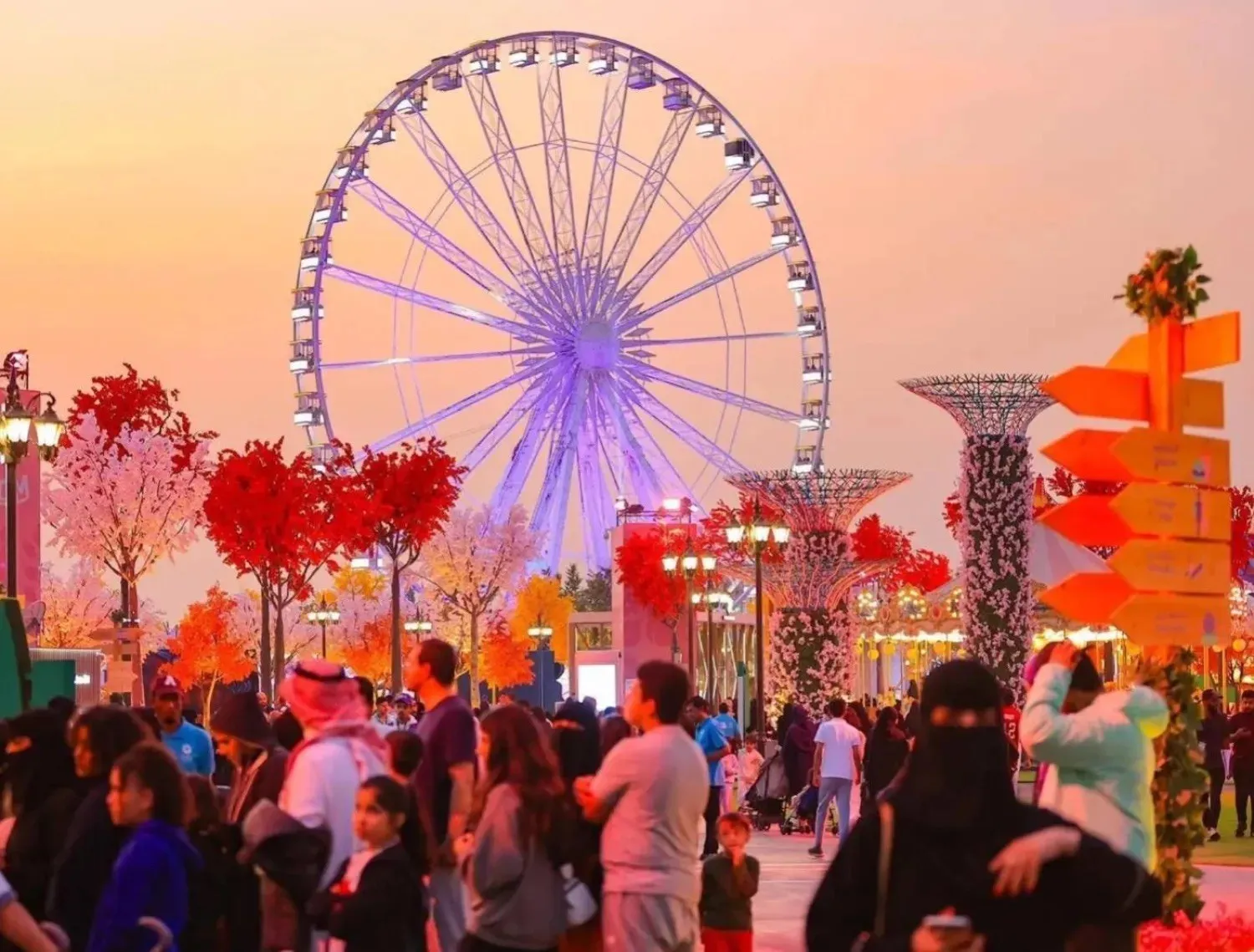
This momentum is also evident in the entertainment sector, now a major pillar of tourism demand, as large-scale events expand and draw rising visitor numbers, reinforcing integration across the tourism ecosystem.
Webook tops $800 million in sales
Saudi ticketing platform Webook said transaction volumes on its platform reached SAR 3 billion (about $800 million), alongside expansion across four continents, its chief executive Nadeem Bakhsh told Asharq Al-Awsat.
Company data show that the platform, launched in 2016, has hosted more than 7,000 events and sold over 35 million tickets. It currently serves more than 17 million users across more than 180 countries, reflecting growing demand for digitally enabled live events.
Bakhsh said the demand generated by changes in the Saudi market “could not be efficiently met by major global companies,” adding that the platform was developed in a competitive environment “where only the best model survives.”
He revealed that the platform has handled ticketing operations for major events, including Riyadh Season and matches in the Roshn Saudi League, as well as international esports events, requiring high operational capacity to process millions of transactions in short periods.
On international expansion, the company has entered markets across the Middle East, North Africa and Asia, with recent expansion into Europe, supported by partnerships with sports teams, festivals and global artists.
Fighting the black market
To improve efficiency, Bakhsh said the platform is investing in artificial intelligence to enhance user experience through personalized recommendations and to manage high demand, alongside advanced systems to combat fraud and ticket resale on the black market.
IPO plans
On a potential listing, Bakhsh said: “We continuously study various options and strategies to finance growth, as any company seeking sustainable expansion would. Among the options theoretically available is an IPO, but there is no final decision or announced timeline at this stage.”
He added that “the company’s current focus is on business development and strengthening the platform’s value and partnerships in the markets where we operate.”
Major events drive growth
The developments come as Saudi Arabia’s entertainment sector expands rapidly, driven by public and private investment, becoming a key engine of tourism demand. Riyadh Season 2025 attracted more than 17 million visitors, with participation from over 2,100 companies, 95 percent of them local.
At the same time, the exhibitions and conferences sector is expanding quickly, now comprising more than 17,000 companies compared with around 400 in 2018, alongside 923 accredited event venues, reflecting the scale of transformation and the sector’s growing contribution to the national economy.


