


Regional Turmoil Drives Growth at Egyptian Ports While Cutting Suez Canal Revenues

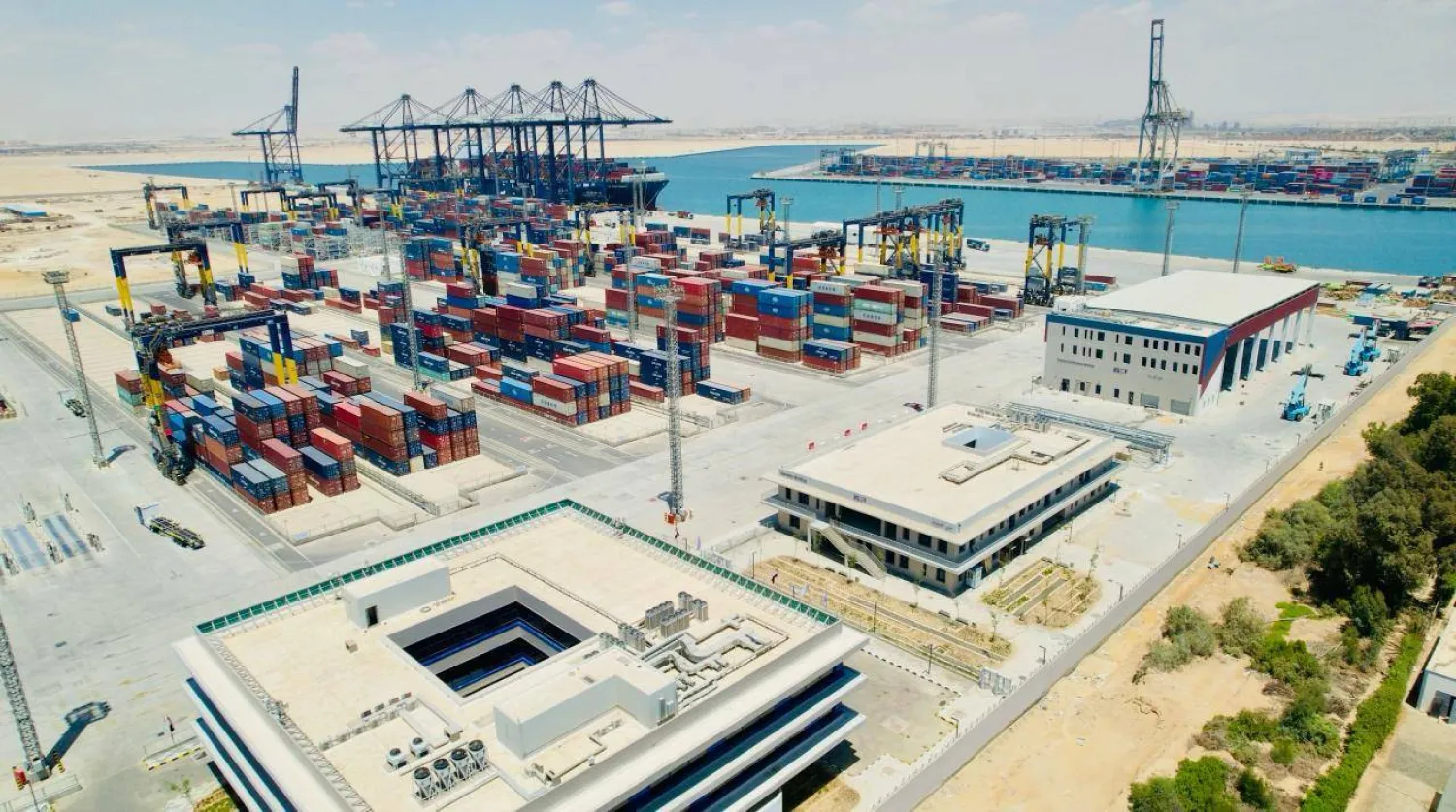
Egypt has an extensive network of seaports along both the Red Sea and the Mediterranean. (Egyptian Ministry of Transport)
TT

Regional Turmoil Drives Growth at Egyptian Ports While Cutting Suez Canal Revenues

Egypt has an extensive network of seaports along both the Red Sea and the Mediterranean. (Egyptian Ministry of Transport)

The Suez Canal may have incurred heavy losses due to regional tensions and instability in recent years — from the war in Gaza to the conflict involving Iran — those same disruptions have contributed to a significant surge in activity at Egyptian ports and in transit trade.

However, Egyptian economists said the strong increase in container traffic at the country’s ports is not enough to compensate for the canal’s losses.

They stressed that government initiatives, including efforts to expand transit trade, may only help reduce part of the revenue shortfall.

At the end of April, Egyptian President Abdel Fattah al-Sisi said Egypt had lost nearly $10 billion in Suez Canal revenues because of attacks on ships in the Bab el-Mandeb Strait.

Egyptian ports have experienced increased activity in recent months amid supply-chain disruptions linked to the Iran conflict. Maritime connections with regional countries have expanded, including the launch of the NEOM–Safaga multimodal logistics corridor linking Gulf Cooperation Council countries with Europe.

The Egyptian government has also reinforced trade links between the Gulf and Europe through the “Ro-Ro” shipping line connecting Damietta Port with Italy’s Port of Trieste to increase trade volumes.

In the energy sector, oil flows through Egypt’s SUMED pipeline rose following disruptions in global energy supply chains caused by the closure of the Strait of Hormuz.

Amr El-Samadouni, secretary-general of the International Transport and Logistics Division at the Cairo Chamber of Commerce, said the recent tensions in the Strait of Hormuz have “strengthened Egypt’s position as a regional hub for logistics services and supply-chain management.”

In a statement, El-Samadouni said the developments provide Egypt with “an important opportunity to offset part of the decline in Suez Canal revenues by attracting a share of urgent shipments that cannot tolerate long delays, especially in sectors linked to fast-moving trade and time-sensitive supply chains.”

According to a statement by Egypt’s Ministry of Transport on Thursday, the country’s port sector recorded a major increase in cargo and container handling. Egyptian ports handled 11.1 million twenty-foot equivalent units (TEUs) in 2025, compared with 8.9 million in 2024, representing growth of 24.3 percent.

Transit container traffic also increased sharply, reaching 6.7 million containers in 2025, a rise of 36 percent. The number of ships calling at Egyptian ports climbed to 17,288 voyages in 2025, up 6.6 percent, according to the ministry.

Egypt has an extensive network of seaports along both the Red Sea and the Mediterranean and is investing heavily in upgrades to strengthen its role in regional and international trade.

The Ministry of Transport said the modernization program aims to transform Egypt into a regional hub for transport, logistics, and transit trade while boosting the ports’ ability to attract investment and handle growing trade volumes.

Despite the improvements in port activity, “they cannot compensate for the losses of the Suez Canal,” said Walid Gaballah, a member of the Egyptian Association for Political Economy, Statistics and Legislation.

He noted that revenues from trade and container handling “may reduce the losses but cannot fully replace them,” adding that shipping traffic through the canal has yet to return to pre-Gaza war levels.

Gaballah told Asharq Al-Awsat that continued regional instability makes recovery in Suez Canal traffic increasingly difficult.

Egyptian economist Mostafa Badra also said there can be no direct comparison between canal revenues and port trade income. “There is no substitute for the canal as a major source of foreign currency,” he told Asharq Al-Awsat, noting that revenues generated by port trade remain far below the canal’s earnings under normal conditions.

Badra added that the government’s port-development strategy is intended to strengthen Egypt’s logistics capabilities and reinforce the Suez Canal’s role as a global trade corridor while primarily supporting domestic trade. By contrast, he said, the canal itself remains a vital artery in global supply chains.

Egypt recently rose three places in the UNCTAD Liner Shipping Connectivity Index, ranking 19th globally, first in Africa, and second in the Arab world, according to the Ministry of Transport.



Real Estate Authority to Asharq Al-Awsat: Strong Interest from International Investors in Saudi Market

Participants at the Saudi Luxury Real Estate Exhibition in London listen to a presentation on one of the projects (Asharq Al-Awsat)
TT

Real Estate Authority to Asharq Al-Awsat: Strong Interest from International Investors in Saudi Market

Participants at the Saudi Luxury Real Estate Exhibition in London listen to a presentation on one of the projects (Asharq Al-Awsat)

Saudi Arabia's real estate market is entering a new phase of openness to international capital, driven by new regulations governing non-Saudi ownership of property and defining the geographic areas where such ownership is permitted. The move reinforces the Kingdom's efforts to establish itself as a global destination for real estate investment, amid growing interest from international investors and investment funds.

Government entities and a number of real estate development companies are seeking to attract investors to the Saudi market through participation in the inaugural Saudi Luxury Real Estate Exhibition, in strategic partnership with the General Real Estate Authority. The event brings together a number of Saudi real estate developers, along with investors, family offices and industry specialists from Britain and international markets.

Taiseer bin Mohammed Al-Mufarrej, official spokesman for the General Real Estate Authority, said the authority's participation in the Saudi Luxury Real Estate Exhibition reflects its role in raising awareness of the Kingdom's new real estate regulatory framework, particularly the recently approved system governing non-Saudi ownership of property, as well as informing investors about the geographic areas designated for ownership.

Al-Mufarrej told Asharq Al-Awsat that the authority's presence at the exhibition goes beyond explaining the new regulations to include direct engagement with investors, answering their questions and clarifying the process for beneficiaries, whether they are buyers, investors or real estate brokers, through to the completion of transactions related to non-Saudi ownership.

He noted that the Saudi Properties platform serves as a key channel for real estate transactions covered by the new system. The authority is using its participation to familiarize investors with the "customer journey" and the mechanisms for using the platform, providing a clearer picture for those seeking to enter the Saudi market and capitalize on the opportunities available.

International Funds Show Interest

The authority's participation was not limited to its exhibition booth. Alongside the event, it organized a series of workshops, panel sessions and roundtables aimed directly at investors, in cooperation with a number of Saudi government entities and private-sector institutions.

Al-Mufarrej revealed that a roundtable was held specifically for international investment funds, with participation from the Saudi-British Business Council. The initiative reflects growing interest in attracting institutional capital to Saudi Arabia's real estate sector, while broadening the investor base targeted by the new regulations.

He said the meetings provided an opportunity for direct dialogue with investors and for hearing their questions about ownership mechanisms, available opportunities and the nature of the market, at a time when the sector's regulatory environment is undergoing changes aimed at enhancing transparency and making the market more attractive to investors both inside and outside the Kingdom.

Riyadh and Jeddah... Makkah and Madinah

According to Al-Mufarrej, the authority's participation demonstrated a high level of interest in the system governing non-Saudi property ownership, from both investors and exhibition visitors seeking real estate in the Kingdom.

He noted that interest is not limited to Riyadh and Jeddah, but also extends to Makkah and Madinah, which are attracting particular attention because of their religious significance and the distinctive nature of real estate demand in the two cities.

"We have seen a very significant impact in raising awareness among investors, visitors and even those looking for property in the Kingdom," he said, noting that inquiries covered the country's major cities, foremost among them Riyadh and Jeddah, as well as Makkah and Madinah.

These developments take on added significance as Saudi Arabia seeks to increase the real estate sector's contribution to the economy and diversify investment channels, alongside major projects, urban expansion and the population and economic growth taking place across the Kingdom's cities.

A "Global Destination for Real Estate Investment"

Al-Mufarrej described attendance at the exhibition as strong, pointing to a notable presence of investors, media outlets and influencers. He viewed this as evidence of the changing perception of the Saudi real estate market among overseas investors.

He said the response to the exhibition "clearly demonstrates that the Kingdom of Saudi Arabia has become a destination for real estate investment in the world," pointing to strong demand among investors and prospective property buyers, whether for investment, ownership or residential purposes.

International interest in the sector comes as Saudi Arabia's real estate market undergoes a broad restructuring of its regulatory and investment framework. The focus is shifting from simply offering real estate opportunities to building a more transparent and accessible environment for investors, beginning with clarity over the areas where ownership is permitted and extending to the procedures and platforms through which investment transactions are conducted.

Al-Mufarrej said the timing of the exhibition coincided with these transformations, making it a platform for raising awareness of the new regulations and engaging directly with investors. He described the event as having come "at a very appropriate time" and contributing to greater awareness of the Kingdom's ownership system.

The growing presence of international investors reflects a broader shift in the Saudi market. Real estate opportunities are no longer driven solely by domestic demand. The Kingdom is increasingly positioning its property sector as a channel for attracting international investment, leveraging regulatory reforms, major projects and the transformation of Saudi cities under the objectives of Saudi Vision 2030.


Gold Inches Lower ahead of Fed Chair Warsh's Jackson Hole Remarks

A man walks past a gold shop at the Grand Baazar in Istanbul - AFP
TT

Gold Inches Lower ahead of Fed Chair Warsh's Jackson Hole Remarks

A man walks past a gold shop at the Grand Baazar in Istanbul - AFP

Gold prices ticked lower on Friday, with investors awaiting Federal Reserve Chair Kevin Warsh's remarks at the Jackson Hole symposium later in the day to gauge the central bank's monetary policy direction.

Spot gold was down 0.1% at $4,594.61 per ounce by 1203 GMT. It touched a more than three-month high of $4,696.18 on Tuesday, following the US. Treasury's announcement of support measures for long-duration bonds.

US gold futures lost 0.4% at $4,647.20, Reuters reported.

"I think price action has been pretty constructive recently, and we're not seeing a great deal of movement because we're waiting for Warsh's speech at Jackson Hole," said Kyle Rodda, senior financial market analyst at Capital.com.

Fed officials shared their concerns about the US inflation landscape on Thursday, as central bankers gathered in Jackson Hole. Kansas City Fed President Jeffrey Schmid and Cleveland Fed President Beth Hammack reiterated their belief that the central bank needs to raise interest rates to help curb inflation.

The policymakers spoke a day after data showed that the Personal Consumption Expenditures Price Index, the central bank's main inflation gauge, stood at 3.7% in the 12 months through July.

Traders see a 36% chance of a US rate hike in September and a 74% chance by December, according to the CME FedWatch tool. Fed Chair Warsh is scheduled to speak at around 1400 GMT.

Gold tends to lose appeal in a high interest rate environment as it offers no yield.

"It's quite possible that we will see gold recapture the $5,000 mark, at least by the end of the year. But again, it all depends on the changing language of the Fed and what they do with policy," said Rodda.

Gold discounts in India, meanwhile, plunged this week, as demand fell sharply on market speculation that the government could consider rolling back a recent hike in import duties.

Spot silver rose 1.5% to $70.32 per ounce, platinum was up 2.6% at $1,894.85 and palladium gained 4.4% to $1,409.74 an ounce, with all metals on track for a weekly gain.


Saudi Arabia, Syria Sign Four Agreements to Boost Transport and Logistics Ties

Saudi Arabia, Syria Sign Four Agreements to Boost Transport and Logistics Ties
TT

Saudi Arabia, Syria Sign Four Agreements to Boost Transport and Logistics Ties

Saudi Arabia, Syria Sign Four Agreements to Boost Transport and Logistics Ties

Minister of Transport and Logistic Services Saleh Al-Jasser concluded an official visit to Syria, where he met with Syrian President Ahmed al-Sharaa to review bilateral relations and discuss expanding joint initiatives, and led a delegation of public- and private-sector officials to enhance cooperation across the transport and logistics sectors.

The visit resulted in the signing of four key agreements and memoranda of understanding. In the roads and railways sectors, Al-Jasser and Syrian Minister of Transport Yarob Badr signed two memoranda to bolster cooperation, technical studies, and the exchange of expertise, SPA reported.

In civil aviation, discussions with President of the Syrian General Authority of Civil Aviation and Air Transport Omar Al-Hosari led to an air transport agreement to enhance air connectivity.

Additionally, Al-Jasser and Syrian Minister of Communications and Information Technology Abdulsalam Haykal signed a bilateral agreement in postal services.

Al-Jasser also met with President of the Syrian General Authority for Borders and Customs Qutaiba Badawi to discuss developing maritime ports, logistics zones, and dry ports, as well as facilitating the movement of freight and goods.

The signed agreements establish a comprehensive framework to advance joint infrastructure projects, facilitate trade flows, and expand public-private partnerships between the two nations.