


A Bachelor’s in Rare Earths? In China, There Are Schools for That

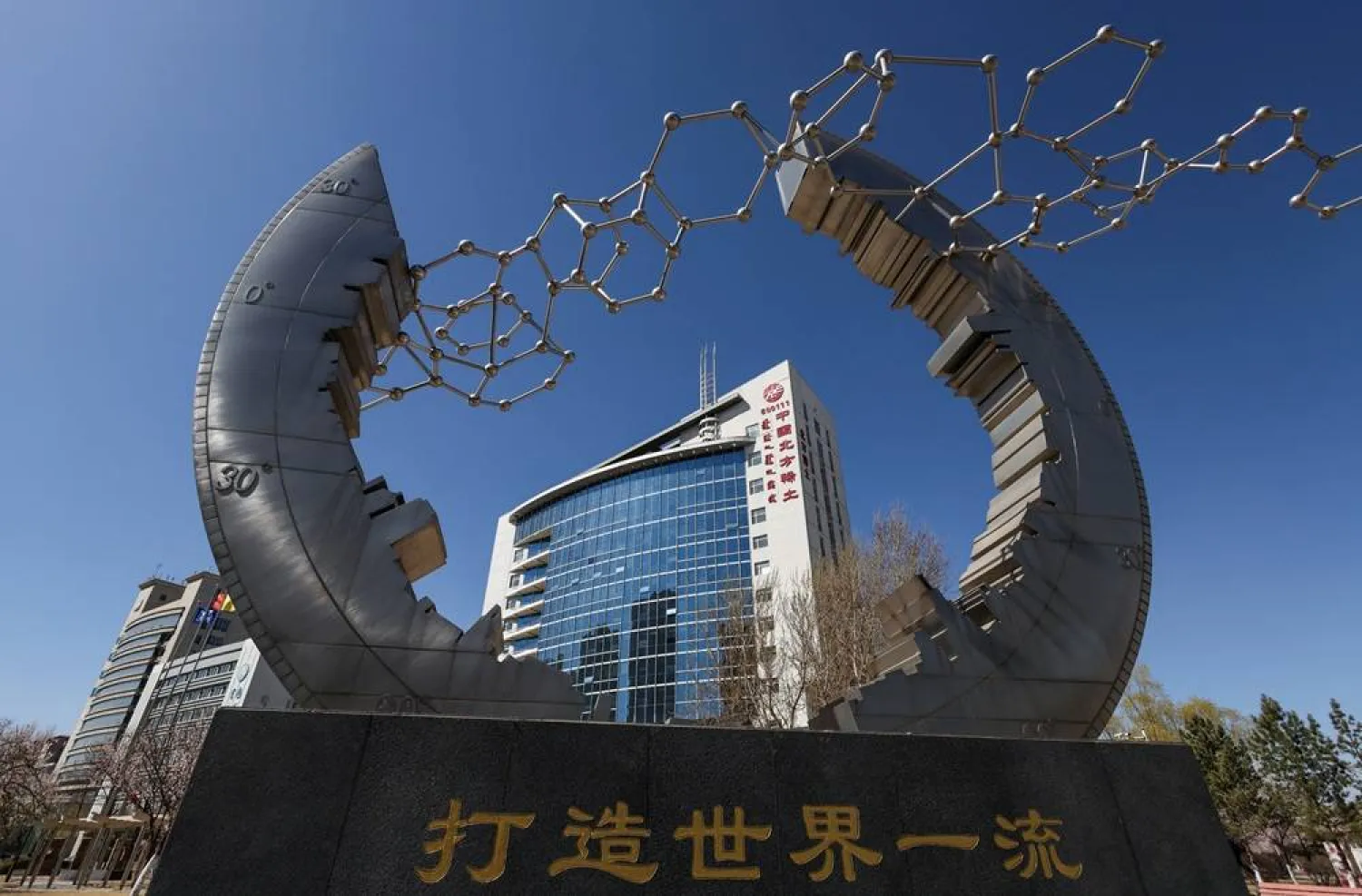
 A monument featuring a stylized molecular structure stands outside the office building of China Northern Rare Earth Group, with the Chinese characters “Build a world-class” inscribed on its base, in the country’s industry hub city Baotou, China, April 6, 2026. (Reuters)
A monument featuring a stylized molecular structure stands outside the office building of China Northern Rare Earth Group, with the Chinese characters “Build a world-class” inscribed on its base, in the country’s industry hub city Baotou, China, April 6, 2026. (Reuters)
TT

A Bachelor’s in Rare Earths? In China, There Are Schools for That

 A monument featuring a stylized molecular structure stands outside the office building of China Northern Rare Earth Group, with the Chinese characters “Build a world-class” inscribed on its base, in the country’s industry hub city Baotou, China, April 6, 2026. (Reuters)
A monument featuring a stylized molecular structure stands outside the office building of China Northern Rare Earth Group, with the Chinese characters “Build a world-class” inscribed on its base, in the country’s industry hub city Baotou, China, April 6, 2026. (Reuters)

Every year, several hundred young adults head to the steppes of northern China to learn about rare earths at schools like the Inner Mongolia University of Science and Technology.

After completing undergraduate study, they may venture a few kilometers up the six-lane Rare Earths Street in Baotou, where they can work for state-owned refiners that convert the critical minerals into magnets that power jet engines, electric vehicles and wind turbines. Or, the graduates may pursue further studies at the nearby Baotou Rare Earth Research Institute – roughly 150 km (93 miles) from the world’s largest rare earths mine.

US President Donald Trump and other Western leaders have pledged billions of dollars in investments to break China's chokehold on rare earths refining – a powerful lever Beijing has wielded in its trade war with Washington. But China still holds a significant advantage in the pipeline of talent that it has developed over decades in places like Baotou.

China has created an ecosystem of more than 40 specialist rare-earth laboratories that produce cutting-edge research, supplemented by at least 11 universities and technical colleges that collectively enroll more than 500 students annually in rare earths degree programs, a Reuters examination has found. That accumulated expertise sustains Beijing's grip on global supplies of refined rare earths.

Several US institutions have begun incorporating more of a focus on rare earths in their curriculum, though Reuters could not identify a school outside China that offers a specific undergraduate degree. The Ames National Laboratory in Iowa, whose remit goes beyond the mineral sciences, is also well regarded for its rare earths research.

The mining industry, however, has historically held little appeal for US students, many of whom see it as dirty and dated, executives and professors have said.

US institutions awarded just over 200 generalist undergraduate mining and metallurgical engineering degrees in 2023, the latest year with nationwide figures available, according to data compiled by the Colorado-based Society for Mining, Metallurgy ‌and Exploration.

Reuters for the ‌first time has tallied the scale of China's rare earths research and education system, drawing on research papers, course materials, and interviews with 11 Western mining executives and researchers ‌who have ⁠spent extensive time ⁠in China. The examination reveals a close relationship between academia and industry that helps Chinese companies produce rare earths quickly and at low cost.

"In China, I used to hire kids right out of university and they’re immediately productive," said Constantine Karayannopoulos, former chief executive of rare earths companies Neo Performance Materials and Molycorp. "Anywhere else I need to train them for three years."

Beijing is now tightly guarding this expertise: It has over the years increased restrictions on exports of rare earths technology and equipment.

China has also limited contact between industry professionals and foreigners, with some technicians having been ordered to surrender their passports, according to three people familiar with the matter.

They did not identify the government entity that confiscated the travel documents but said the crackdown intensified after Trump's "Liberation Day" tariffs in April 2025.

The National Development and Reform Commission, which is responsible for macroeconomic planning, and China's industry ministry did not respond to questions about the crackdown and how the country fosters rare earth experts. None of the Chinese research institutes cited in this story responded to comment requests.

US Department of Energy spokesperson Olivia Tinari said in response to questions about Washington's rare earths rivalry with Beijing that the agency was "investing in American workers, scaling innovation, and expanding domestic production of critical materials."

Billions of federal dollars have flowed into US mining schools, research programs and other related areas since 2024 ⁠as the country seeks to rebuild mining expertise. The US Congress is also considering legislation that would fund international cooperation with allies for mining education.
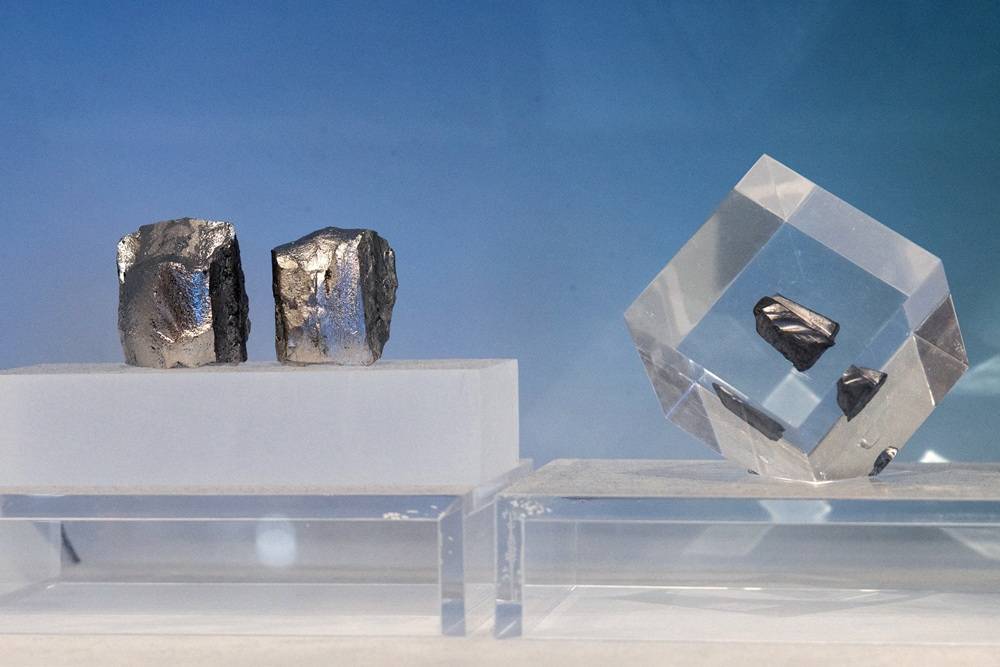
Hydrogen‑storage alloy ingots sit on displayed in the rare earth elements production section of the exhibition on China’s manufacturing achievements at the National Museum in Beijing, China, March 24, 2026. (Reuters)

SCHOOLS OF ROCK

Rare earths can be ‌difficult and costly to process. Refineries must contend with the 17 different rare earths that possess nearly identical chemical properties, a complexity which makes them difficult to isolate ‌from each other.

Extracting neodymium and praseodymium to use in electric vehicles, for example, requires first removing the less-desirable lanthanum and cerium that are more abundant in the Earth's crust. That separation process involves an intricate cocktail of acids, bases and other chemicals.

The West dominated rare ‌earths refining until the late 20th century. The process can, however, be environmentally damaging, leaving byproducts that can poison soil and water unless properly stored.

Excessive exposure to some types of rare earths can also harm the respiratory and nervous ‌systems.

Chinese researchers have documented the contamination of groundwater around a major storage site in Baotou, which is located near one of China’s major rivers. The government has also acknowledged that refining had caused “severe damage” to the environment.

China’s rare earth industry benefited in the 1980s and 1990s from generous tax incentives and an abundant supply of cheap labor. The government and affiliated entities continue to fund research institutes, and state lenders have offered financing on preferential terms to firms that mine critical minerals.

By the 1990s, the processing industry was "wiped out" in the West, said Ed Richardson, chief executive of US magnet producer Thomas & Skinner. "Therefore, the schools have not been educating mining students for this task."

In contrast, researchers, universities and industry continue to collaborate closely in China. Scientists at the National Engineering Research Center for Rare Earths in Beijing developed a new technology, which ‌state-owned Gansu Rare Earth New Materials adopted in 2023 at a refining facility that can churn out 50,000 metric tons of highly processed rare earths annually.

That is five times what Australia's Lynas Rare Earths, the largest rare earths company outside China, produced in the 2025 fiscal year.

China produces over 90% of the world's processed rare earths and rare ⁠earth magnets.

Gansu Rare Earth New Materials did not return a ⁠request for comment.

A spokesperson for Lynas, which has previously used Chinese consultants, said that China has “excellent facilities and research capability.” The company has since developed its own technical expertise, the spokesperson said.

Course materials published by some of the universities and reviewed by Reuters also show a heavy focus on meeting the needs of industry.

Students majoring in rare earths engineering at the Inner Mongolia University receive more than 100 hours of teaching in courses, such as rare earths chemistry and material science. One of the foundational courses is done in partnership with rare-earths labs and companies, and students have the option of attending lectures at corporate facilities.
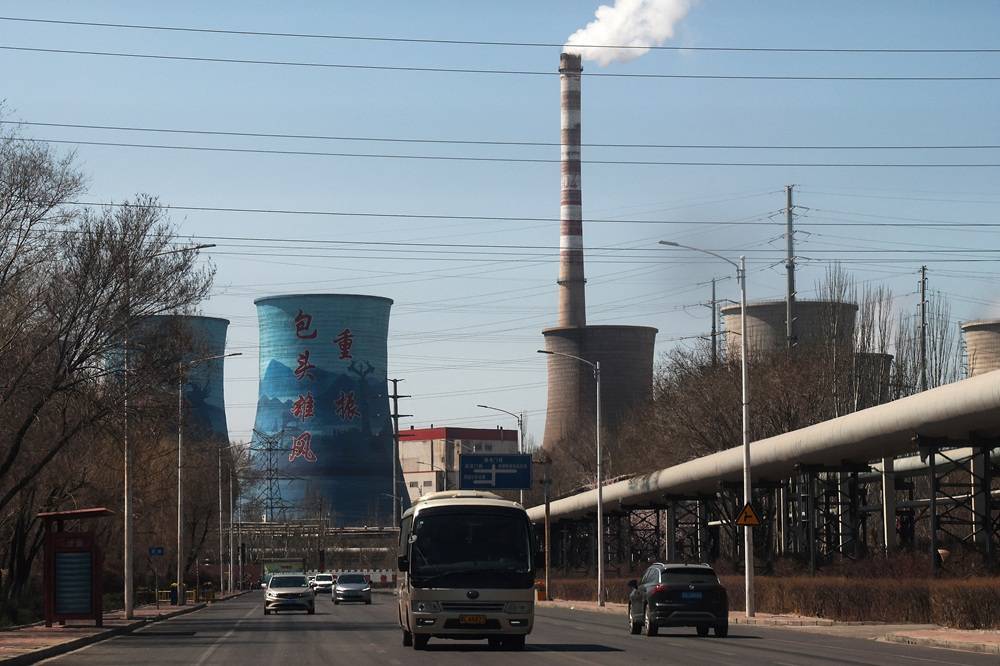
Vehicles drive along a road with facilities of Inner Mongolia Baotou Steel Union, also known as Baogang Group, forming the background, in China’s rare earth industry hub city Baotou, Inner Mongolia, China, April 6, 2026. (Reuters)

The 70 students that the Jiangxi University of Science and Technology (JXUST) told state media are set to enroll in its newly created rare earths degree will study the supply chain from processing and metallurgy to magnets. Before graduating, students will also work on research projects with companies.

David Parker, a rare earths expert at Britain's Durham University who reviewed the Chinese institute's course outline for Reuters, described it as "highly specialized" and reflective of the "pre-eminent position of China in rare earth science and engineering."

The education provided at the school “ensures a supply of knowledgeable and informed young people, who are well placed to find employment," he said.

Chinese rare earths engineering postgraduates are often more narrowly focused in their fields of research than would be the case elsewhere, said Portuguese physicist Luís Carlos, who has visited research institutes in the country for nearly 20 years.

"But if you think about people as small parts of a big machine, then this is good for the machine," he said.

PIPELINE PROBLEM?

Some Chinese universities have explicitly acknowledged that they are training geopolitical assets.

Rare earths are "core bargaining chips" in global politics, Li Chaozhong, dean of JXUST's rare earths program, told state broadcaster CCTV in April.

The university's new program is designed not only for science, he said. It is "also to ensure that China continues to maintain its global leading position in the development of rare earth resources."

There are some examples of groundbreaking work in the West.

Valor Metals, for instance, is using processes developed by the University of Illinois at Urbana-Champaign that the company says are potentially 10 times cheaper and faster than those deployed in China. The technology, however, has not been tested at scale.

The Colorado School of Mines, widely regarded as one of the world's top mining schools, is developing two new critical minerals research facilities with the Energy Department to complement existing programs. It expects the first to open in 2027.

The school's mining-related undergraduate programs have in recent years gained more attention and enrollment.

"The US minerals industry needs to be clear that we need the talent and that this is a great career path," said Kunal Sinha, Valor's CEO.



Report: Multi-Level Partnerships a Safeguard for Gulf Security

Gulf leaders in a group photo during the Gulf Cooperation Council summit in Kuwait in 2024 (SPA).
TT

Report: Multi-Level Partnerships a Safeguard for Gulf Security

Gulf leaders in a group photo during the Gulf Cooperation Council summit in Kuwait in 2024 (SPA).

A recent analytical report says Gulf states are well positioned to play a larger role in shaping the regional security architecture in the aftermath of the war against Iran by adopting a multi-level security approach that combines greater self-reliance with broader international partnerships.

The report, prepared by Ambassador Alessandro Minuto-Rizzo, President of the NATO Defense College Foundation and former Deputy Secretary General of the North Atlantic Treaty Organization (NATO), was published by the Gulf Research Center in Jeddah. It says partnership with NATO represents an important avenue for developing Gulf defense capabilities, offering opportunities to benefit from the alliance's accumulated military and operational expertise while enhancing strategic dialogue and exchanges in the fields of security and defense.

Multi-Level Approach

Minuto-Rizzo argues that the next phase will require Gulf states to adopt a multi-level security strategy based on diversifying partnerships and strengthening self-reliance, while maintaining strategic ties with the United States and expanding engagement with Europe and NATO.

He says Gulf countries handled the war against Iran with considerable political prudence, seeking to avoid being drawn into military confrontation despite coming under attack and sustaining direct damage. He notes that Gulf states have in recent years continued a policy of diplomatic opening toward Tehran.

The President of the NATO Defense College Foundation points to the restoration of Saudi-Iranian relations through Chinese mediation and notes that Gulf states sought to de-escalate tensions following the outbreak of the war while strengthening contacts with potential security partners such as Pakistan, Egypt and Türkiye.

In his report, published in Views on the Gulf, a journal of the Gulf Research Center, he argues that the Gulf states' decision not to respond directly with military force to Iranian attacks was not a sign of weakness. Rather, it reflected a deep political understanding of the risks of widening the conflict and turning it into a full-scale regional war with consequences that could prove difficult to contain.

A Saudi Royal Air Defense Forces company during a graduation ceremony at Fort Bliss, United States (Ministry of Defense).

The US Role in the Region

According to Minuto-Rizzo, the United States remains the cornerstone of Gulf security despite growing debate over the past two decades about the nature of Washington's role in the region. In this context, he recalls discussions within NATO at the beginning of the century, in which he participated, regarding the Gulf's importance as a strategic partner, stressing that the region has remained firmly on Washington's security agenda.

At the same time, he says the recent war exposed the limits of some traditional assumptions about deterrence. He argues that one reason for the shortcomings exposed by the crisis was the United States' decision to enter a war against Iran that proved more complex than initially anticipated.

Nevertheless, the ambassador does not expect any significant reduction in the US presence in the Gulf given the region's strategic importance, although US-Israeli relations could see more visible divergences on certain issues in the future.

US sailors watch a US Marine Corps F-35B stealth fighter land (CENTCOM).

Lessons Learned

The President of the NATO Defense College Foundation believes one of the key lessons of the war is the need to establish clear political and strategic objectives before engaging in any military confrontation. He warns against underestimating Iran as a regional power that will remain an influential actor regardless of the war's outcome.

As for the future of regional security, the former NATO official argues that a multi-level security approach represents the most realistic option for Gulf states, particularly if members of the Gulf Cooperation Council succeed in strengthening security and military integration.

"Security partnerships do not fully align in terms of objectives and interests, but diversifying them helps build a stronger safety net capable of addressing challenges," he says.

Smoke rises above the UAE emirate of Fujairah after earlier Iranian strikes (AFP).

Minuto-Rizzo argues that NATO provides an advanced institutional framework for security cooperation that goes beyond traditional bilateral relationships, citing the Istanbul Cooperation Initiative as a mechanism that offers broad opportunities for training, coordination and capacity-building between the alliance and Gulf countries.

He says renewing partnership with NATO could open significant opportunities for Gulf states, particularly Saudi Arabia, to benefit from the alliance's accumulated military and operational expertise while also enhancing strategic dialogue and consultation between military and political leaders, helping anticipate crises and prevent their escalation.

Minuto-Rizzo also stresses the importance of strengthening Europe's presence in the Gulf, arguing that Europe can make a meaningful contribution to regional security and stability through balanced partnerships based on shared interests rather than purely military considerations.

The President of the NATO Defense College Foundation concludes that the most important message for Arab states is the need to take control of their strategic decision-making and overcome divisions that have weakened the region for decades. Building a stable security architecture, he says, requires combining self-reliance with diversified international partnerships in a way that ensures balance and stability in a region that continues to face complex and constantly evolving challenges.

Two US AH-64 Apache attack helicopters fly over the Strait of Hormuz (CENTCOM).


Gold Falls as Renewed Middle East Tensions Fuel Inflation Fears

Gold bracelets on display for sale at a gold shop in Istanbul's Grand Bazaar (AFP)
TT

Gold Falls as Renewed Middle East Tensions Fuel Inflation Fears

Gold bracelets on display for sale at a gold shop in Istanbul's Grand Bazaar (AFP)

Gold prices fell on Monday as renewed US-Iran tensions pushed the dollar and oil prices higher, fuelling fears of inflation and reinforcing the higher-for-longer interest rate outlook.

Spot gold was down 0.7% at $4,506.49 per ounce at 1158 GMT after hitting a two-week high on Friday. The yellow metal dropped nearly 2% in May, its third consecutive monthly fall.

US gold futures for August delivery fell 1.2% to $4,536.70.

The dollar edged higher, making greenback-priced bullion more expensive for holders of other currencies, Reuters reported.

The US said it struck Iranian military sites over the weekend and Iran's Revolutionary Guards on Monday said they had targeted a US base in response, the latest exchange of attacks amid negotiations to end the three-month-old war.

"The optimism surrounding negotiations between the US and Iran aimed at ending the standoff in the Strait of Hormuz faded over the weekend," ActivTrades analyst Ricardo Evangelista said. "As a result, energy prices rebounded, reviving inflation concerns and reinforcing hawkish Federal Reserve expectations."

Brent crude oil prices gained more than 3% after the latest strikes. Higher oil prices can accelerate inflation and keep interest rates higher for longer. While gold is traditionally seen as a hedge against inflation, it loses its appeal in a high-interest-rate environment as a non-yielding asset.

Traders are now pricing in a Fed rate hike this year, with a 39% chance of a quarter-point increase in December, according to CME Group's FedWatch tool.

A host of Fed board members are set to speak this week, while major data releases are scheduled to include the ISM survey of manufacturing and the May payrolls report on Friday.

"Traders will be closely watching this week's key data releases as these have the potential to reshape expectations regarding the future path of Fed monetary policy, influencing demand for the US dollar and, consequently, the performance of gold prices," Evangelista said.

Spot silver rose 0.6% to $75.69 per ounce, platinum gained 1.3% to $1,941.15 and palladium was steady at $1,355.00.


Saudia to Expand Its Fleet with Delivery of 12 New Aircraft in 2026

Saudia Airlines will fly in pilgrims from across the globe. (SPA)
TT

Saudia to Expand Its Fleet with Delivery of 12 New Aircraft in 2026

Saudia Airlines will fly in pilgrims from across the globe. (SPA)

Saudia Airlines has finalized a deal with Airbus to receive 12 new aircraft in 2026 as part of its ongoing fleet expansion and modernization program.

By implementing this strategy, the airline aims to improve the efficiency of its current operations, expand its reach to new international markets, and enhance the overall travel experience for its guests, SPA reported.

The arrival of the Airbus A321neo marks another milestone in Saudia’s 2026 aircraft delivery program, following the introduction of its first Airbus A321XLR.

The airline expects to receive additional modern aircraft over the course of the year as it continues to strengthen and modernize its fleet.

The continued expansion of Saudia’s fleet supports the objectives of the Kingdom’s national strategies for the aviation, tourism, entertainment, and sports sectors, while also enhancing services for pilgrims.