


Regional War Weighs on Output, New Business Growth in UAE

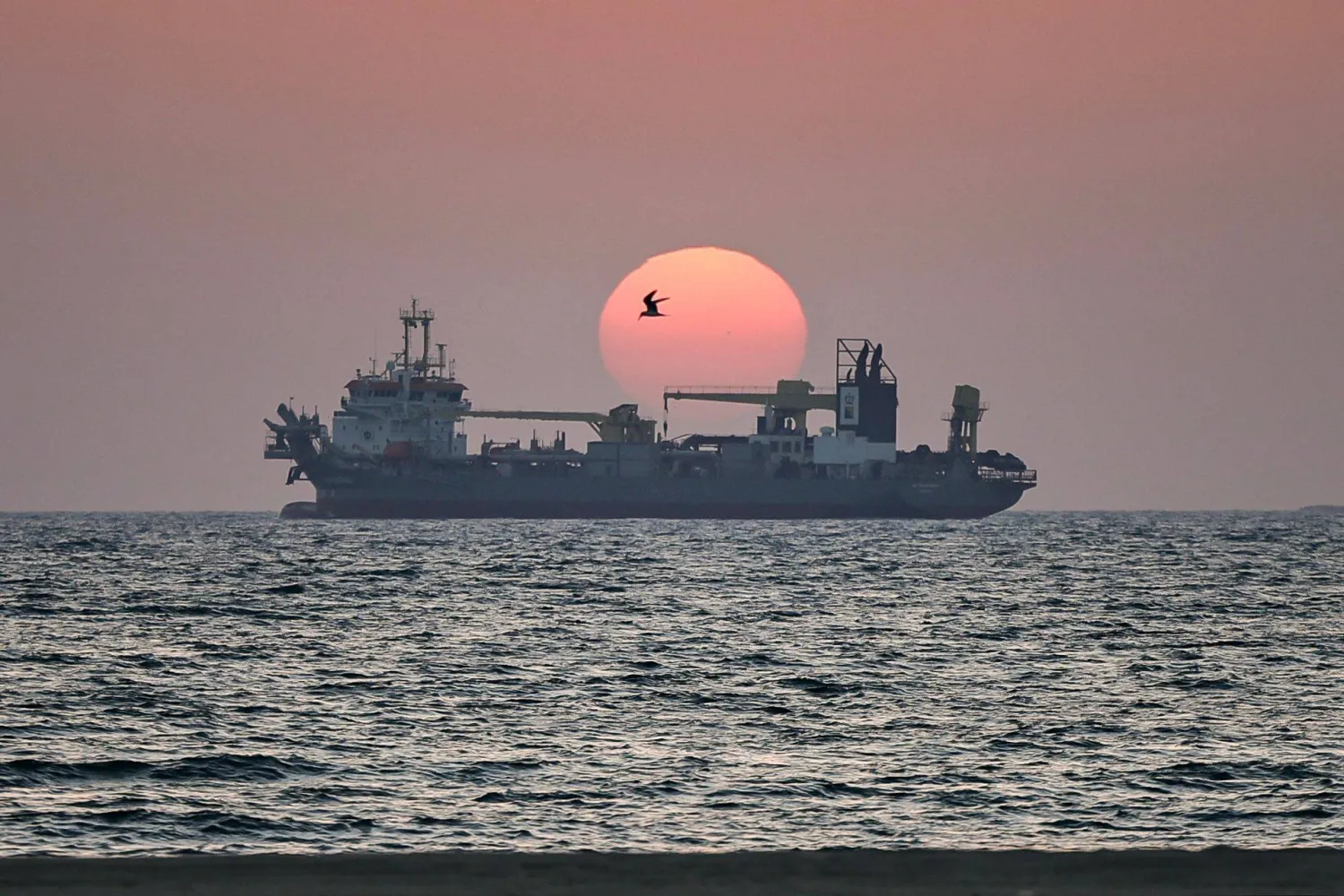
The sun sets over a vessel off the coast of Dubai on June 2, 2026. (Photo by FADEL SENNA / AFP)
TT

Regional War Weighs on Output, New Business Growth in UAE

The sun sets over a vessel off the coast of Dubai on June 2, 2026. (Photo by FADEL SENNA / AFP)

The UAE's non-oil private sector expanded only modestly in May as war in the region and the effective closure of the Strait of Hormuz weighed on output and new business growth, a business survey showed on Wednesday.

The seasonally adjusted S&P Global UAE Purchasing Managers' Index rose to 52.6 in May from 52.1 in April, remaining above the 50 mark separating growth from contraction.

"The continued cut-off to maritime trade had a cascading effect through the UAE economy in May... ⁠Export orders declined in ⁠May, driven by both the actual shipping disruption as well as the continued sense of uncertainty over how long the conflict will last," Reuters quoted David Owen, principal economist at S&P Global Market Intelligence, as saying.

Input deliveries were delayed to the greatest extent since the ⁠height of the COVID-19 pandemic in April 2020, Owen said.

Output growth accelerated to a three-month high but remained weaker than the survey's long-run average. New business also rose only modestly, close to April's 62-month low, while export sales contracted again, though the pace of decline eased markedly.

The new orders subindex inched up to 52.6 in May from April's 52.5.

Backlogs of work increased at the slowest pace in nearly three years ⁠as ⁠firms found more capacity to clear outstanding orders, but job creation eased to its weakest pace since October 2025 and cost pressures remained elevated on higher material and transport costs.

But surveyed businesses remained optimistic about the year-ahead outlook.

The UAE's non-oil GDP grew 6.8% in 2025 from a year earlier, outperforming overall GDP growth at 6.2% last year.



OECD Cuts 2026 Global Growth Forecasts Over Mideast War Fallout

A drone view of vessels anchored in the Strait of Hormuz as seen from Musandam, Oman, June 3, 2026. (Reuters)
TT

OECD Cuts 2026 Global Growth Forecasts Over Mideast War Fallout

A drone view of vessels anchored in the Strait of Hormuz as seen from Musandam, Oman, June 3, 2026. (Reuters)

The war in the Middle East has dented economic growth prospects worldwide, with a more severe shock likely if no effective ceasefire is agreed before 2027, the OECD warned Wednesday.

Global economic growth is now forecast to slip to 2.8 percent for 2026 if Gulf exports of oil and gas return to pre-conflict levels in the third quarter, the group of 38 industrialized countries said in its quarterly update.

Previously the OECD had forecast full-year global growth of 2.9 percent.

But if the Middle East war continues into next year, however, global growth could slow to 2.1 percent, the OECD said -- well below the average annual growth of 3.4 percent seen from 2013 to 2019, before the Covid pandemic.

"The longer the disruptions last, the larger the economic and social costs become," the group's chief economist Stefano Scarpetta said in the report.

Many countries would risk falling into recession, he noted, and a drop in investment spending -- "including in energy-intensive AI" -- would likely push up unemployment.

Sustained high prices for energy as well as fertilizer and other key products from hydrocarbon production in the Gulf would weigh especially hard on developing countries that have "higher shares of energy and food in household consumption".

Even if the war sparked by US and Israeli strikes on Iran in late February ends in the coming weeks, the OECD forecast global inflation rising to 4.0 percent this year from 3.4 percent in 2025.

In this "time-limited disruption scenario", the group expects US growth to slow to 2.0 percent this year and 1.8 percent in 2027, after growing 2.1 percent last year.

In the eurozone, where many countries are highly dependent on energy imports, GDP growth will slump to 0.8 percent this year after 1.4 percent last year, assuming a Mideast ceasefire is secured in the coming weeks.


Saudi Non-oil Private Sector Activity Hits 3-month High in May

The Saudi capital, Riyadh (Reuters)
TT

Saudi Non-oil Private Sector Activity Hits 3-month High in May

The Saudi capital, Riyadh (Reuters)

Saudi Arabia's non-oil private sector expanded at the fastest pace in three months in May as domestic demand improved and supply chains stabilized, while business optimism remained subdued amid conflict in the region, a survey showed on Wednesday.

The seasonally adjusted Riyad Bank Saudi Arabia Purchasing Managers' Index, compiled by S&P Global, rose to 52.8 in May from 51.5 in April. The 50 mark separates growth from contraction, Reuters reported.

Output accelerated at the ⁠fastest pace in ⁠three months after March's downturn following the start of the Iran war, as firms cited normalizing working conditions, revived contracts and stronger local demand.

Export sales fell for a third straight month, hit by shipping disruption, higher freight and fuel costs, geopolitical tensions and stronger competition. The pace of decline eased only modestly from April's survey-record contraction.

However, supply chains improved, with suppliers' delivery times shortening for the first time in three months as ⁠firms relied ⁠more on local vendors. Backlogs of work rose for an 11th consecutive month, albeit moderately.

“Overall, the latest PMI reading supports the expectation that Saudi Arabia’s non-oil economy will continue its upward trend during the remainder of 2026," said Naif Al-Ghaith, Riyad Bank's chief economist.


Gold Eases as Middle East Tensions Lift Oil, US Economic Data in Focus

Gold bangles are displayed at a jewellery store in Mumbai, India, March 20, 2025. (Reuters)
TT

Gold Eases as Middle East Tensions Lift Oil, US Economic Data in Focus

Gold bangles are displayed at a jewellery store in Mumbai, India, March 20, 2025. (Reuters)

Gold prices slipped on Wednesday, as renewed hostilities in the Middle East pushed crude higher and stalled US-Iran talks, while investors awaited upcoming U.S. economic data.

Spot gold fell 0.5% to $4,460.36 per ounce by 0702 GMT, after rising more than 1% in the previous session. US gold futures for August delivery slipped 0.7% ‌to $4,488.90.

Gulf hostilities ‌flared anew, with the US military ‌saying Iranian ⁠missile attacks on ⁠Bahrain, Kuwait and other regional targets were either thwarted or failed.

US Secretary of State Marco Rubio said on Tuesday that President Donald Trump's negotiating team has not offered Iran sanctions relief in exchange for reopening the Strait of Hormuz and insisted that any sanctions relief was tied ⁠to Tehran giving up its nuclear program.

"The market ‌is now looking at ‌the possibility that this ceasefire with Iran may not hold even ‌though Trump is going to push for a peace ‌deal resolution," said Kelvin Wong, a senior market analyst at OANDA.

"If we start to see further escalation, that could also dampen whatever recovery that gold might have had."

Oil prices rose more ‌than 1%, deepening concerns over inflation and interest rate hikes.

Cleveland Federal Reserve President Beth ⁠Hammack said ⁠on Tuesday the US central bank may need to raise interest rates soon should already-high inflation pressures continue to mount.

Investors are now awaiting the US nonfarm payroll data, due later in the day, and employment report due on Friday to gauge the Fed's monetary policy path.

Although gold is typically viewed as a hedge against inflation, it tends to lose its appeal as a non-yielding asset in a high interest-rate environment.

Spot silver fell 1.1% to $74.27 per ounce, platinum lost 0.5% to $1,928, and palladium fell 0.6% to $1,361.75.