
The Syrian Petroleum Company has signed a major implementation contract with US companies ConocoPhillips and Novaterra Energy to develop gas fields and raise production, marking the most significant strategic breakthrough in economic and political ties between Damascus and Washington since the fall of Bashar al-Assad’s government in late 2024.
The agreement is the first major US energy deal in Syria in years. It also offers the clearest sign yet that the country has entered a phase of “integrated implementation” after US President Donald Trump’s decision to lift sanctions in July 2025.
The contract follows earlier US moves, beginning in early 2026, through memoranda of understanding with other companies, including Chevron for offshore exploration and HKN Energy for the onshore Rmeilan fields.
But the ConocoPhillips deal stands out as the largest binding implementation contract to develop Syria’s domestic gas sector, backed by Gulf and European alliances and financing aimed at ending the country’s acute energy crisis.
Energy experts say the deal, based on understandings reached last November, will go beyond the technical oil and gas sector. They see it as an international “vote of confidence” that could help break the financial bottleneck facing Syria’s new government, whose 2026 budget deficit is estimated at about $1.8 billion.
The US return comes as major regional and international players move into Syria’s energy sector through parallel contracts and partnerships with Saudi companies, including ADES, as well as Qatari and French firms. Together, these moves place Syria’s gas sector on the edge of a promising new phase that could drive recovery and reconstruction.
The contract puts earlier understandings into effect. In November 2025, the Syrian Petroleum Company signed a memorandum of understanding with ConocoPhillips and Novaterra Energy. Technical, legal and commercial talks followed, culminating in the latest agreement.
Importance of the contract
Syrian academic and energy expert Ziad Arbash said the deal matters because it turns a memorandum of understanding into an implementation contract. It sends a strong signal to global markets, he said, that Syria has become an attractive destination for oil and gas investment.
He said the agreement would also raise the “level of oil activity” in Syria in tangible ways: more work teams, engineers and technicians in the fields, modern rigs and equipment built to the latest technical standards, and stronger infrastructure and logistics to support company operations.
Arbash told Asharq Al-Awsat that every additional company operating in Syria helps draw in others. That, he said, lowers operating costs through economies of scale and the exchange of expertise, while creating a competitive environment that benefits the national economy.
A vote of confidence
The contract could have a wider ripple effect. For Arbash, the presence of a company the size of ConocoPhillips in the Syrian market is “a vote of confidence for other companies.”
He said it reduces the perceived risks of investing in Syria and demonstrates the Syrian government’s commitment to creating an investment environment that can attract major international firms.
Recent indicators point in the same direction. The Syrian Petroleum Company signed a contract with Saudi Arabia’s ADES to develop gas fields in April, after signing a memorandum of understanding with US company Chevron and a Qatari company in February. Reports have also pointed to alliances between US and Saudi companies to invest in northeastern Syria.
Breaking the financial bottleneck
The new Syrian government inherited a shattered economy from the previous government and is struggling with a budget deficit of about $1.8 billion.
According to figures presented by Finance Minister Yisr Barnieh at an April news conference announcing the 2026 budget, revenues are estimated at about 959 billion Syrian pounds, or around $8.7 billion, against spending of 1,056.7 billion pounds, or about $10.5 billion.
Arbash described the contract as “a pivotal step in overcoming the financial bottleneck” in the state budget through two linked tracks.
The first is easing the import bill. Syria currently depends on imports and regional supplies to improve electricity provision. At its pre-war peak, gas output stood at about 28 million cubic meters per day. It has since fallen to roughly a third of that level.
The government aims to raise production to about 15 million cubic meters per day next year. The contract is expected to add between 4 million and 5 million cubic meters per day within one year of work beginning. According to Arbash, that would sharply reduce the cost of importing oil and petroleum products, while better securing local gas needs for electricity and other vital sectors.
The second track is “exports and revenues.” Once Syria achieves a production surplus, it could move toward exports, generating hard currency that would ease pressure on the state budget and strengthen its ability to finance reconstruction and development projects.
Current estimates suggest the first phase of the project could increase production within one year of work beginning. Arbash urged caution, however, saying: “Let us be realistic and add another year before reaching the increase of 5 million cubic meters per day.”
An important breakthrough in bilateral relations
The contract was signed as relations between Syria’s new authorities and the Trump administration continue to improve after the fall of Bashar al-Assad’s rule in late 2024.
Arbash said the agreement represents an important breakthrough in relations between the two countries. It is the first implementation contract with a major US oil and gas company since Assad’s fall, reflects a shift in US policy toward Syria, and opens a channel for direct economic cooperation that could positively impact other political files.
The signing came as Damascus continues efforts to attract US investment. Syrian Energy Minister Mohamed al-Bashir discussed investment opportunities in the oil and gas sector with US officials last week.
According to Arbash, the deal could pave the way for broader normalization between the two countries, especially as other US companies enter the scene, including Baker Hughes, Hunt Energy and Argent LNG, which are preparing a comprehensive plan to develop Syria’s energy sector.
Current state of gas fields and production
Syria’s gas sector faces a long road back from the deep supply deficit left by 14 years of conflict. A United Nations report estimates direct and indirect losses to the oil and gas sector at more than $115 billion between 2011 and 2023.
Current production data published on the US Embassy in Damascus page shows a total domestic gas supply of only 7-10 million cubic meters per day. That is a steep fall from the pre-war peak of up to 30 million cubic meters per day.
Demand, meanwhile, has risen to between 23 million and 30 million cubic meters per day, driven mainly by the severe shortage in electricity generation. The gap leaves a daily shortfall of up to 15 million cubic meters, placing heavy constraints on power plants.
That is why Damascus has set its sights on a strategic goal for 2030: using the new international partnerships to double gas production before the end of the decade.
Infrastructure
The sector suffered heavy damage during the war, including to fields, facilities and transmission lines. Sanctions also obstructed maintenance for years. Still, Arbash said that developing proven gas reserves estimated at about 285 billion cubic meters could allow current production to return to its pre-war peak of 28 million cubic meters per day within four years.
Syria needs about 23 million cubic meters of water per day to ensure continuous electricity supplies.
For now, the country relies on imports and regional supplies to improve electricity provision. These include a project to supply Azerbaijani gas through Türkiye with Qatari financing, providing about 3.4 million cubic meters per day, or to supply it directly from Qatar through Jordan.
Syria is currently focused on rehabilitating infrastructure at existing fields through contracts with companies such as Saudi Arabia’s ADES. It also aims to double production through strategic partnerships with international companies, as reflected in the contract with ConocoPhillips and Novaterra Energy.
For Arbash, the signing marks “a qualitative shift in Syria’s energy sector” at a critical moment. Syria, he said, is trying to overcome its financial bottleneck, raise the “level of oil activity,” restore international confidence, attract additional Arab and Western investment, and “open a new page in Syrian-US relations through direct economic cooperation.”
“With expectations that the fruits of this contract will begin to appear within a year, and with parallel projects involving Saudi, Qatari and French companies, Syria’s gas sector is entering a promising phase that could become a main driver of economic recovery and a way out of the suffocating financial crisis, provided there is transparency in tendering and implementation,” Arbash said.
Where are the fields?
The agreements quickly had an impact on the ground. The Syrian Petroleum Company recently took over oil and gas fields that had been controlled by the Kurdish-led autonomous administration in the northeast, extending government control over resources concentrated in three main areas.
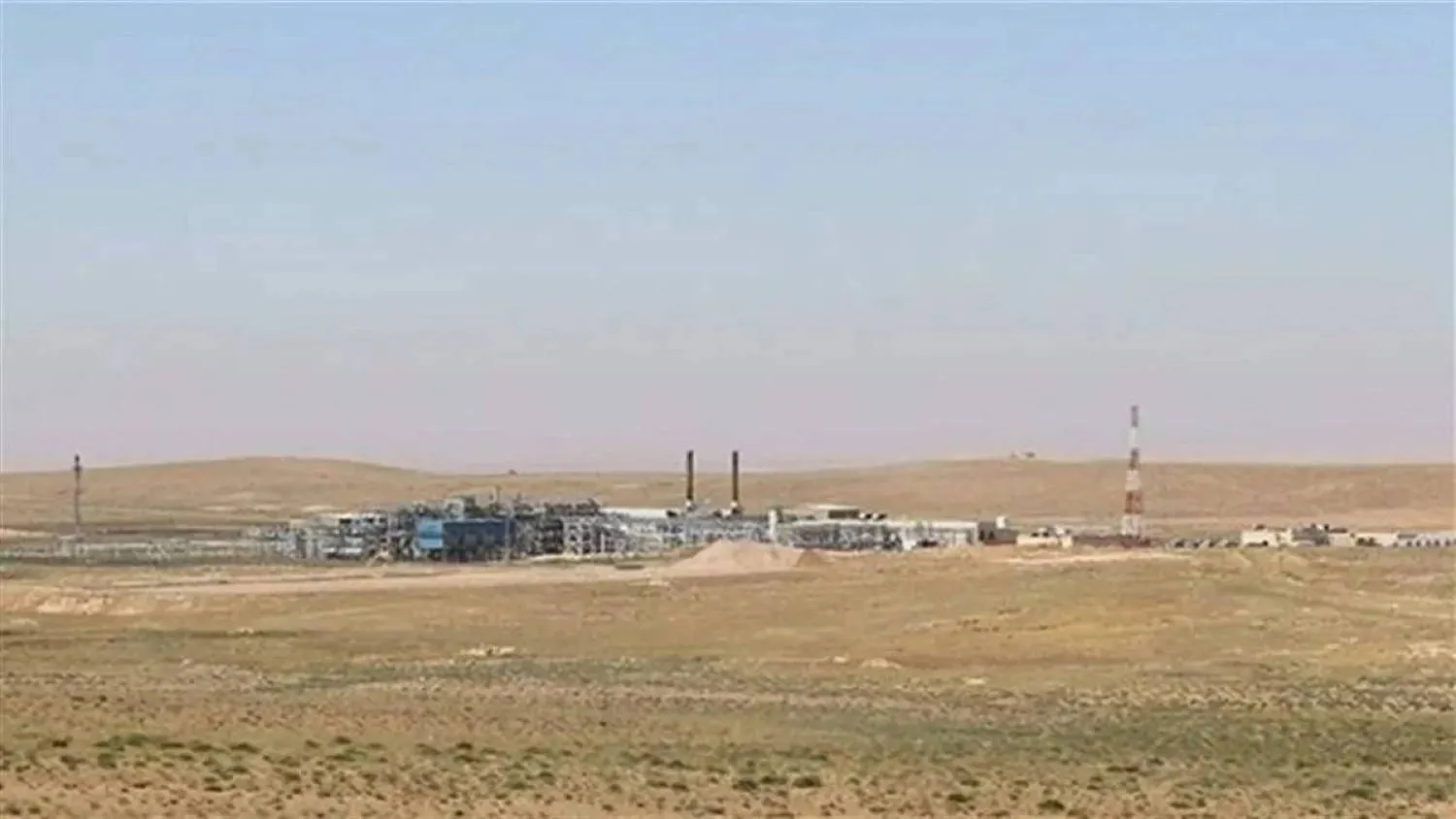
The eastern region, including Deir Ezzor and Hasakah, includes the Conoco field northeast of Deir Ezzor. ConocoPhillips established the field in 2001 with a capacity of 4.7 billion cubic meters a year. It produced 13 million cubic meters per day before halting operations because of attacks. The region also includes the al-Jabsa field in Hasakah. Together, the two fields accounted for 53% of Syria’s production before 2011.
The central region and the Homs desert include al-Shaer, the country’s largest field, with a production capacity of 35 million cubic meters per year in 2010. The area also includes the al-Jihar field west of Palmyra, as well as the al-Mahr and al-Jazal fields.
Arbash concluded that, based on these combined indicators, Syria’s gas sector is entering a promising phase capable of leading economic recovery and easing the suffocating financial crisis, provided the highest standards of “transparency in tendering and implementation” are upheld.