


Lebanon Under Pressure to Dismantle the Parallel Economy and Exit the FATF Grey List

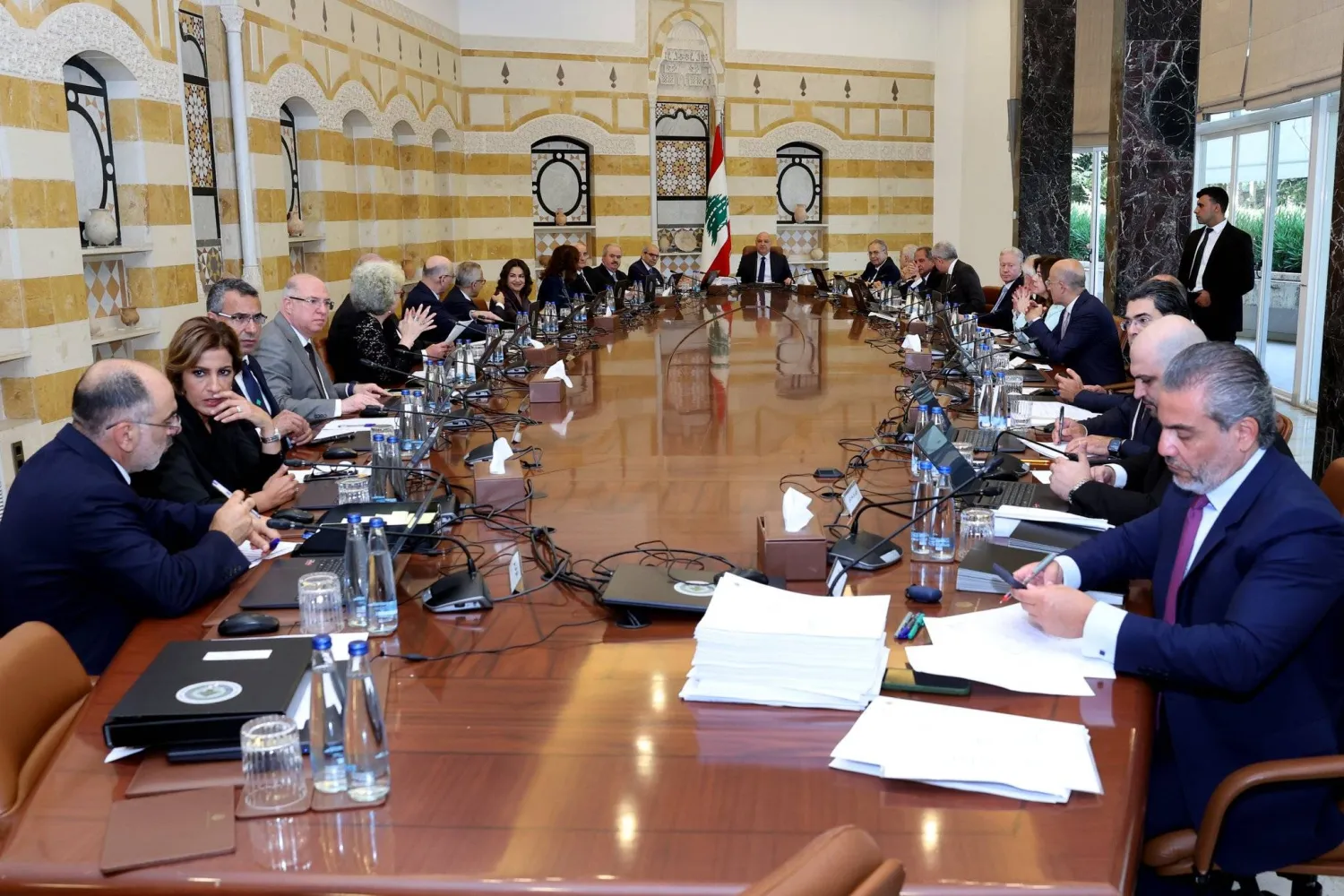
A Cabinet session chaired by President General Joseph Aoun at Baabda Palace (Lebanese Presidency).
TT

Lebanon Under Pressure to Dismantle the Parallel Economy and Exit the FATF Grey List

A Cabinet session chaired by President General Joseph Aoun at Baabda Palace (Lebanese Presidency).

The decision by the Financial Action Task Force (FATF) to keep Lebanon on its "grey list" of jurisdictions with strategic deficiencies in combating money laundering and terrorist financing has not triggered any new repercussions for cross-border financial transactions. Rather, it has served as a warning to the government's executive and monetary authorities that the grace period is nearing its end for completing the legal and procedural measures needed to dismantle the "parallel economy" and curb illicit cash flows operating outside the formal financial sector.

While the devastating consequences of the recent war on the humanitarian, reconstruction and economic fronts have provided mitigating grounds, according to a senior financial official, to explain the slow pace of reforms required from the relevant authorities, particularly administrative, judicial and security bodies, they do not diminish the risks associated with prolonging Lebanon's sovereign stay in an environment of growing suspicion generated by the parallel economy and the continued exploitation of the financial system's persistent fragility.

Intertwined Tracks

The financial official, who spoke to Asharq Al-Awsat, said it is no secret that the political and economic tracks have become deeply intertwined, to the point of running in parallel and perhaps advancing simultaneously. The objectives of establishing the state's exclusive control over arms and restoring the legitimacy of financial and commercial activities now go hand in hand, requiring the authorities to make an explicit commitment to international requirements and conditions that would secure external support to end the war as a first priority and launch the recovery process through the International Monetary Fund, paving the way for Lebanon's safe exit from the catastrophic deterioration of most of its sovereign and financial ratings.

International pressure, from both governments and institutions, continues to emphasize the need to curb illicit financial channels, including designated non-financial businesses and professions as well as certain non-bank financial institutions, particularly those linked to Hezbollah. Foremost among them is Al-Qard Al-Hassan Association, along with similar activities targeted by the international community and international financial institutions.
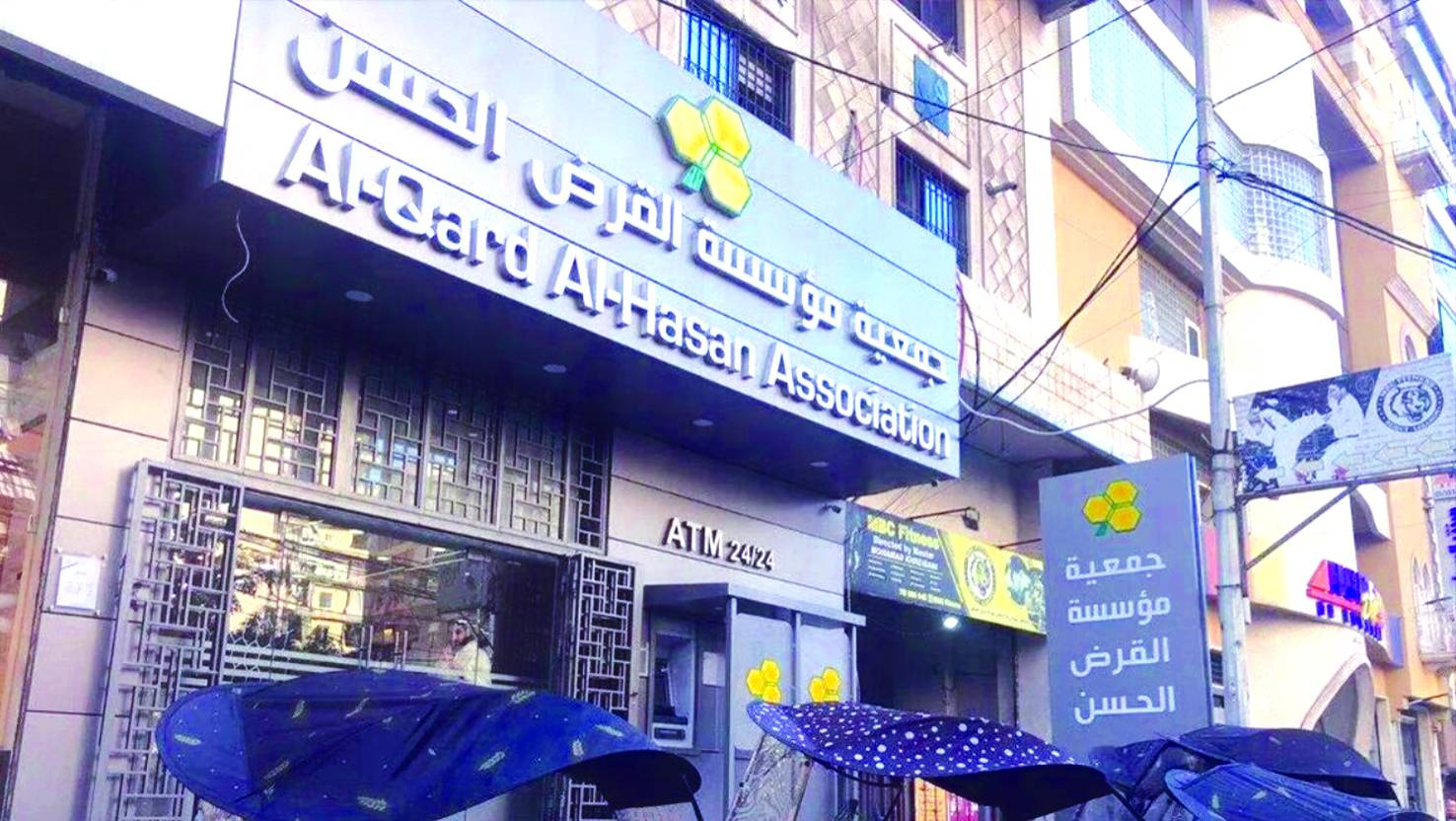
One of Al-Qard Al-Hasan institution's buildings in Beirut's southern suburbs (file photo- AP)

Positive Assessment of the Legitimate Financial Sector

Despite Lebanon's continued placement on the grey list, the country's legitimate financial sector continues to receive a positive assessment based on an integrated legal and administrative framework that complies with the strictest international standards. Particular recognition has been given to the central bank's measures aimed at rigorously verifying the sources and destinations of funds, restricting cash and electronic payments, financial transactions and transfers to banks and licensed financial companies, and strengthening the judiciary's central role in combating all forms of financial crime.

According to statements by Banque du Liban Governor Karim Souaid, removing Lebanon from the grey list is a top priority because the country cannot play a credible role in the global financial system unless it achieves that objective. He noted that remaining on the list affects not only Lebanon's reputation but also restricts correspondent banking relationships and increases the cost of financial transactions.

Accordingly, the governor stressed that "no honest account of this crisis can ignore the parallel economy, including illicit financial flows, money laundering operations and corrupt practices that have infiltrated and weakened Lebanon's financial system." He also reaffirmed the central bank's firm and non-negotiable commitment to the principles of disclosure, transparency and accountability.

Banque du Liban has already implemented a broad package of measures in line with this approach. These include engaging specialized firms to combat the "parallel economy," deploying advanced financial monitoring tools, strengthening Know Your Customer (KYC) requirements, enhancing due diligence procedures, enforcing beneficial ownership transparency requirements, significantly improving the quality of suspicious transaction reports, and strengthening cooperation with relevant regional and international financial bodies.
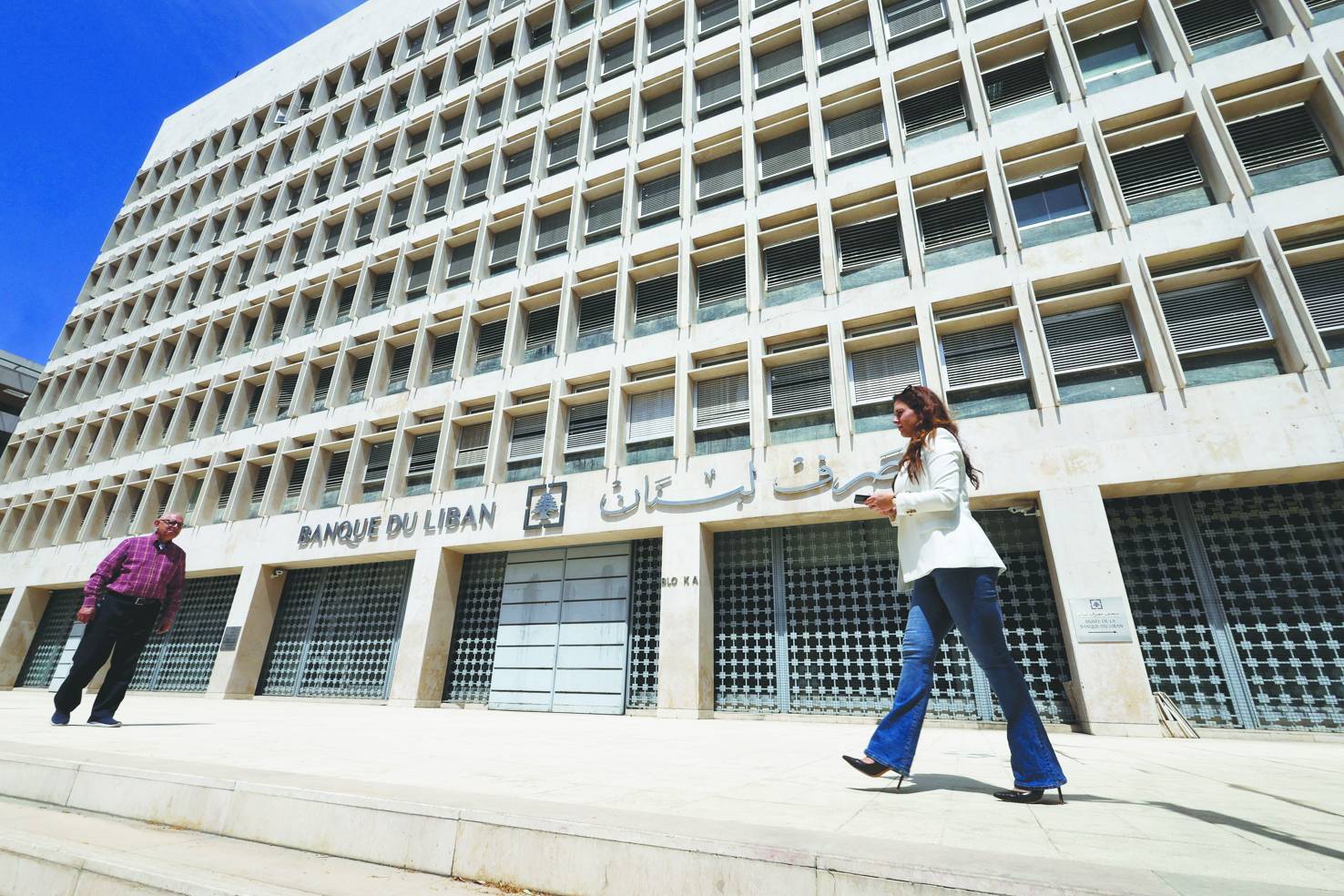
People walk outside Lebanon's Central Bank building in Beirut, Lebanon April 4, 2025. REUTERS/Mohamed Azakir

Forensic Audit

In coordination with the Ministries of Finance and Justice, the central bank has also launched a forensic audit conducted by Alvarez & Marsal. The firm's mandate extends well beyond reviewing the funds disbursed by the central bank at the request of previous governments to finance the subsidy program. It covers all payments made up to the end of 2023, funds transferred to commercial banks through international transfers, and payments made by the central bank on behalf of the state.

The governor also affirmed that the central bank is cooperating with Lebanese judicial authorities by providing all information and financial analyses permitted by law in support of judicial proceedings. It is likewise cooperating with judicial authorities in Switzerland, France, Germany, Liechtenstein, Luxembourg, the United Kingdom and other countries where legal proceedings involving illicitly transferred Lebanese funds are underway.

Lebanese President General Joseph Aoun meets with the Governor of the Central Bank of Lebanon in Baabda (X)

Lebanon's Commitments

Under the latest FATF assessment issued at the end of last week, Lebanon has committed at the highest political level to work with the organization to strengthen the effectiveness of its anti-money laundering and counter-terrorist financing framework, despite the country's difficult social, economic and security challenges. This requires continued coordination in implementing the agreed action plan to address the identified strategic deficiencies.

The action plan comprises ten key points identified in the Mutual Evaluation Report. The foremost priority is conducting targeted assessments of money laundering and terrorist financing risks and ensuring that the necessary policies and mitigation measures are in place. It also calls for strengthening mechanisms that ensure the effective and timely execution of requests for mutual legal assistance, extradition and asset recovery.

Without ranking them by importance, the authorities are also required to strengthen designated non-financial businesses' and professions' understanding of money laundering and terrorist financing risks and to impose effective, proportionate and dissuasive sanctions for violations of AML/CFT obligations. They must also ensure that beneficial ownership information is continuously updated and that adequate sanctions and appropriate measures are in place to mitigate risks associated with legal persons, particularly companies and other legal entities.

In the same context, the authorities are expected to make greater use of financial intelligence, reports and analytical products produced by the Special Investigation Commission (SIC), while demonstrating a sustained increase, both quantitatively and qualitatively, in money laundering investigations, prosecutions and court judgments in line with the identified level of risk.

The obligations also include improving asset recovery mechanisms and strengthening the ability to detect and intercept the illicit cross-border movement of cash, precious metals and precious stones. Likewise, Lebanon is expected to pursue terrorist financing investigations and strengthen information-sharing with foreign partners regarding such investigations, in accordance with the recommendations of the Mutual Evaluation Report.

In addition, the authorities are required to strengthen the immediate and effective implementation of targeted financial sanctions, particularly among designated non-financial businesses and professions and certain non-bank financial institutions. They must also implement targeted, risk-based oversight of higher-risk non-profit organizations while ensuring that legitimate activities carried out by those organizations are neither disrupted nor discouraged.



FAO: World Food Prices at Highest Since 2022 as Supply Risks Mount

A vendor loads coconuts into a cart to transport them by tricycle in Quezon City, Metro Manila, Philippines, 04 September 2026. EPA/ROLEX DELA PENA
TT

FAO: World Food Prices at Highest Since 2022 as Supply Risks Mount

A vendor loads coconuts into a cart to transport them by tricycle in Quezon City, Metro Manila, Philippines, 04 September 2026. EPA/ROLEX DELA PENA

World food prices rose in August to their highest since late 2022, as adverse weather and war disruption in the Gulf and Black Sea heightened concern over supply of staples, the United Nations' Food and Agriculture Organization said on Friday.

Extreme heat and drought in Europe, the threat of a severe El Nino weather pattern and trade upheaval caused by the Ukraine and Iran wars have unsettled agricultural markets, pushing grain prices to three-year highs and sugar to a one-year ⁠peak.

The FAO Food ⁠Price Index, which tracks monthly changes in a basket of internationally traded food commodities, averaged 133.3 points in August, up from July's revised reading of 130.8.

That was the highest score since November 2022, though nearly 17% below a record peak from March 2022, ⁠after Russia's full-scale invasion of Ukraine.

"August’s increase in global food prices is a warning that the risk premium is returning to food markets: climate shocks, geopolitical tensions and disrupted trade logistics are converging to tighten supply expectations," FAO Chief Economist Maximo Torero said in a statement, according to Reuters.

The FAO's price benchmarks for cereals, vegetable oils, sugar, meat and dairy all rose in August.

The extreme weather in Europe affected prospects for the maize and sugar beet ⁠harvests ⁠as well as livestock output, while the anticipated El Nino phenomenon fueled concerns for vegetable oil and sugar output, it said.

Escalating attacks in the Black Sea have curtailed grain shipments from Russia and Ukraine in their 4-1/2-year-old war, while the US-Iran conflict was still straining flows of fertilizer for crops.

In a separate report, the agency cut its 2026 global cereal production forecast by 3.4 million metric tons from July to 2.980 billion tons, now 2.0% below 2025, though still the second-largest harvest on record.


Nepal Floods Could Cost Insurers Over $130 Mln Even Before Death, Injury Claims

People hold onto a cage on a makeshift zip line as they cross the Trishuli River from Koloni following deadly flash floods that damaged bridges and temporarily stranded residents, in Nuwakot district, Nepal, September 4, 2026. REUTERS/Adnan Abidi
TT

Nepal Floods Could Cost Insurers Over $130 Mln Even Before Death, Injury Claims

People hold onto a cage on a makeshift zip line as they cross the Trishuli River from Koloni following deadly flash floods that damaged bridges and temporarily stranded residents, in Nuwakot district, Nepal, September 4, 2026. REUTERS/Adnan Abidi

The devastating flood in Nepal last week could result in commercial insurance losses exceeding 20 billion Nepali rupees ($132.3 million), with hydropower projects accounting for most claims, according to a top official at one of the country's leading insurers.

The insurance cover, when paid out, covers losses borne by the operators of the power plants.

Life insurance, personal accident and workers' compensation claims are expected separately as authorities verify deaths and missing persons in inaccessible areas.

The disaster on Nepal's border with China's Tibet region caused an estimated $2.56 billion in economic losses in the Himalayan nation of 30 million people, the country's disaster authority chief told Reuters on Friday, leaving more than 1,200 dead and many more missing.

Eleven ⁠Nepali hydropower projects ⁠lie in the affected region, some covered by standard commercial insurance policies that are still being assessed, Toton Chakraborty, CEO of Oriental Insurance Company Nepal, told Reuters.

Oriental Insurance Nepal, a unit of the New Delhi-based Indian insurer, is among the leading insurers in the region.

"Hydropower projects along the affected river corridor have suffered the largest damage. In many cases, access roads and above-ground infrastructure have been washed away," he said.

Projects including Rasuwagadhi, Upper Trishuli-3A, Chilime and Devighat, were directly affected, ⁠while assessments at five others are ongoing, he said.

Data from the Nepal Insurance Authority show the regulator has so far received 583 flood-related claims worth 25.87 billion Nepalese rupees ($171.13 million) as of August 31.

Chakraborty said these figures largely reflect insured exposure rather than final claims, which will only be clear once detailed surveys are completed.

Claims could rise further if repairs delay project commissioning, as some policies compensate developers for lost revenue resulting from postponed commercial operations, he said.

Nepal's non-life insurance market is small by global standards. The country's 14 non-life insurers generated premiums of about 5.3 billion Nepali rupees ($35.06 million) during July-August, regulatory data showed, compared with 314 billion Indian rupees ($3.3 billion) written by Indian insurers during a similar period.

The market is supported by domestic reinsurers ⁠Nepal Re and Himalayan ⁠Re, alongside international players including India's GIC Re and Germany's Hannover Re.

The floods could have lasting implications for insurance coverage of Himalayan infrastructure, four industry executives said.

The Himalayan region faces severe risks from earthquakes and any future glacial floods, a senior UN official told Reuters this week.

"The recent mountain floods in South Asia may lead insurers to further review hydropower and infrastructure risks, particularly in highly exposed locations," said Benjamin Ng, power leader for Asia at Aon, an international insurance broker.

Insurers may increasingly impose exclusions, lower sub-limits and narrow coverage, resulting in higher premiums and more selective underwriting, Ng said.

Other recent Himalayan catastrophes include the 2023 glacial lake outburst flood in India's Sikkim and the flash flood in the northern Indian state of Uttrakhand in 2021.

The latest floods could reshape industry views on risk accumulation and glacial lake outburst flood exposure, said Sanjay Mokashi, chief underwriting officer at Indian state-owned reinsurer GIC Re.


Gold Heads for Modest Weekly Gain as Investors Await US Payrolls Data

Gold jewelry is displayed at an exhibition in Kabul, Afghanistan, 03 September 2026. (EPA)
TT

Gold Heads for Modest Weekly Gain as Investors Await US Payrolls Data

Gold jewelry is displayed at an exhibition in Kabul, Afghanistan, 03 September 2026. (EPA)

Gold prices were steady on Friday and poised for a modest weekly gain, as traders' attention turned to key US payrolls data for clues on the Federal Reserve's next interest rate decision.

Spot gold held its ground at $4,469.26 per ounce, as of 0633 GMT. Prices jumped 2% on Thursday as traders scaled back expectations for a September rate ‌hike after Fed ‌Governor Christopher Waller said he would support ‌leaving ⁠rates unchanged if data ⁠continued to show inflation pressures moderating.

US gold futures for December delivery fell 0.5% to $4,515.70.

Traders are pricing in an about 50% chance of a Fed rate hike later this month, according to the CME FedWatch Tool.

The US nonfarm payrolls report is due at 1230 GMT.

"Weak figures and a ⁠rise in unemployment could weaken the case for ‌a rate hike. In ‌this case, gold could recover. However, the metal could remain exposed to ‌changing sentiment, with inflation data releases coming next week," ‌said Ross Maxwell, global strategy operations lead, VT Markets.

"The market continues to benefit from central bank demand, which could limit the extent of any decline."

Though gold is often viewed as an inflation ‌hedge, elevated interest rates tend to weigh on the non-yielding asset.

Data on Thursday showed the ⁠number of ⁠Americans filing claims for unemployment benefits rose marginally last week amid low layoffs, pointing to stable labor market conditions.

Meanwhile, US Vice President JD Vance said the fighting between Washington and Tehran was not a war and declined to provide a timeline for when the conflict would be over, underscoring the challenge the Trump administration faces as the hostilities enter their seventh month and mid-term elections loom.

Among other metals, spot silver fell 0.5% to $66.59 per ounce. Platinum lost 1.2% to $1,803.53 and palladium declined nearly 1.3% to $1,403.03, with both metals on track for slight weekly declines.